



How much Ukraine spends on protecting its energy system and why it is (not) working
Ukraine is spending tens of billions of hryvnias to protect critical energy infrastructure from massive Russian attacks. Yet three years after those attacks began, some structures remain unfinished, and in some cases, the process has been delayed by corruption.
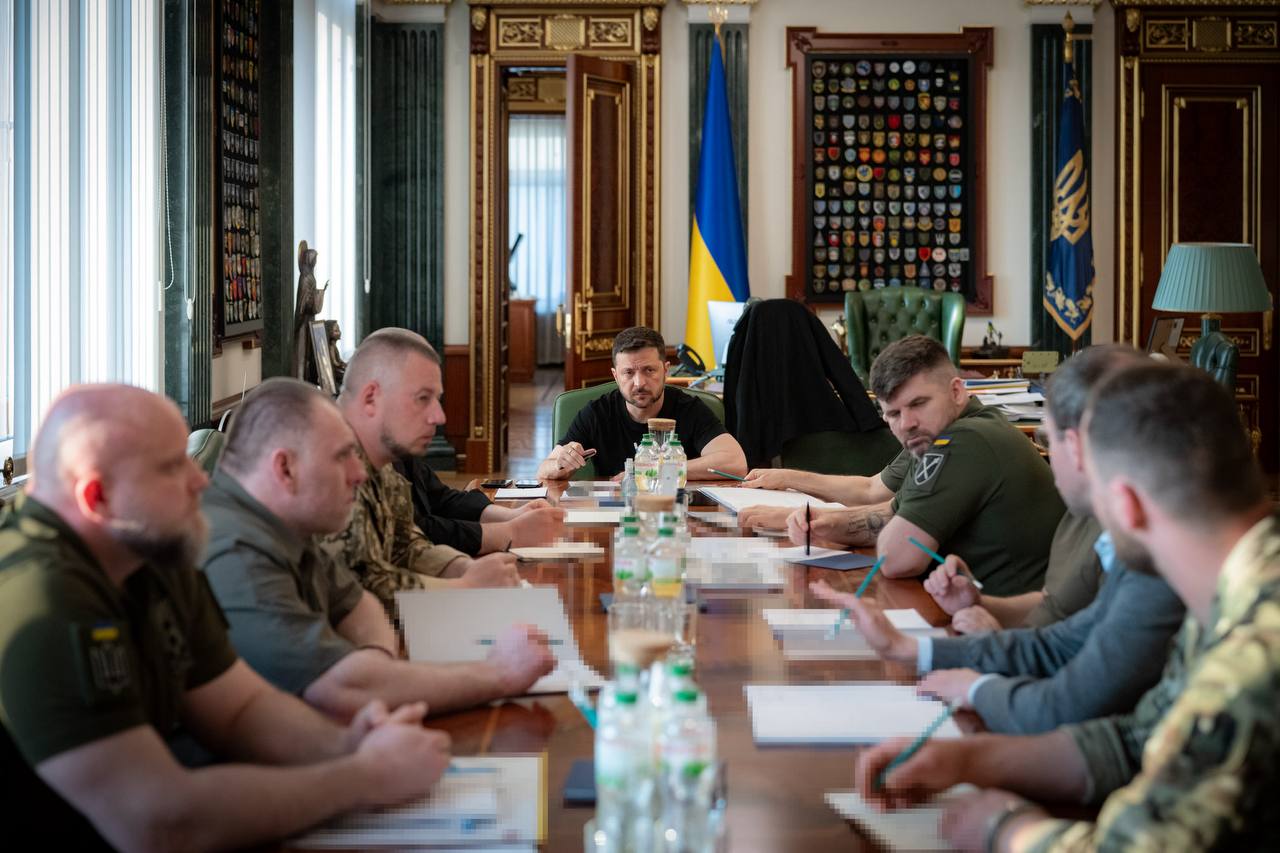
President Zelenskyy during a meeting on infrastructure protection in June 2025
In June this year, President Volodymyr Zelenskyy held a meeting with the government focused on protecting the country’s energy infrastructure from Russian attacks.
"Russia is planning further attacks on our energy sector... Our partners’ intelligence services have the relevant data. Specifically regarding the Russian threat to the infrastructure of our nuclear generation in Ukraine, the data have been passed by Ukraine’s energy minister to the IAEA and to Mr Witkoff (the US special envoy - ed.)," the head of state reported following the meeting.
One would think that, in addition to hoping for help from partners, the Ukrainian authorities should have sped up the construction of protective structures at critical energy facilities, including on the premises of nuclear power plants.
Yet just a few weeks after that meeting, shadow curators of the energy sector were discussing whether there was any need at all to continue building protective structures for transformers at nuclear power plants. And if it was needed, how to secure a "kickback" from the contractor and in what amount.
At least that is what emerges from part of the recordings released by the National Anti-Corruption Bureau of Ukraine (NABU) as part of the special operation "Midas" into corruption schemes in the energy sector, which investigators believe were organised by Timur Mindich, a former business partner of the president.
Massive strikes on Ukraine’s power system have been going on, with pauses, for more than three years. Over this period, Russia has changed its shelling tactics several times, while Ukraine has channelled tens of billions of hryvnias into protecting these facilities. Business Censor has tried to find out how this money has been spent.
How Russia changed its attack tactics
In autumn 2025, the Russian army resumed massive strikes on Ukraine’s energy facilities, but its tactics had changed. At the beginning of the war, Russia tried to "switch off" the entire power system with large-scale missile attacks on Ukrenergo substations across Ukraine. Now, however, Russia’s attacks are aimed at completely destroying individual energy facilities, explained Ukrenergo head Vitalii Zaichenko.
The Russians have also begun striking Ukrzaliznytsia’s distribution substations and small substations of regional power companies, primarily in frontline regions. This became possible above all thanks to increased production of Shahed-type attack drones, said Vadym Skibitskyi, deputy head of the Defence Intelligence of Ukraine.
"In 2022-2023, when the winter was the hardest, the Russians launched 400 Shaheds at energy facilities over the entire heating season, whereas now they launch 400 Shaheds in a single night," recalls former Ukrenergo head Volodymyr Kudrytskyi.
He notes that Ukraine has also been preparing to repel the attacks: over this period, mobile fire groups, air-defence drones and physical protection at critical facilities have been deployed. However, in some cases, the construction of fortifications was slowed down by corruption, Kudrytskyi adds.
Oleksandr Kharchenko, director of the Energy Research Centre, confirms that not enough protective structures have been built around energy facilities, but says the pace of construction was also affected by the previous winter, when Ukraine almost got through it without having to impose power cuts.
"After the winter of 2024 it became clear that we had learned to repel attacks on the energy sector and that they were bringing the Russians almost nothing, and almost everyone relaxed. I don’t think it was impossible to foresee that the attacks would change format. And they did change format, for the third time since the start of the war. But indeed, after 2024 the winter cooled everyone down, everyone relaxed, no one thought the threat of strikes on the energy sector would come back with such force," the expert adds.
Building protection for Ukrenergo substations
The idea of building engineering structures to protect critical energy system facilities arose after the start of massive shelling in October 2022. They led to what remains the only full blackout in Ukraine’s history and the introduction of power cuts throughout the winter.
The first waves of attacks mainly targeted high-voltage substations of Ukrenergo’s transmission system rated at 220, 330 and 750 kV. Accordingly, they were the first facilities selected for protection.
As early as December 2022, the Cabinet of Ministers instructed the General Staff and the State Emergency Service to jointly develop standard types of protective structures and draw up a list of substations that play the most important role in ensuring the reliable operation and resilience of Ukraine’s united energy system (UES).
In summer 2023, the volume of construction of fortification (protective) structures was divided between the Restoration Agency (22 substations) and Ukrenergo (63 substations), and three levels of protection to be built were defined:
- Level I protection involved installing sandbags (big bags) and gabions to shield critical substation components from shrapnel;
- Level II protection meant building concrete protective structures around autotransformers capable of withstanding strikes by attack drones;
- Level III protection envisaged the construction of large, permanent structures designed to protect critical substation components from direct hits by individual missiles.
It is worth noting that a single substation can cover several dozen hectares, so Level II and III protection was only planned for the most valuable equipment that is difficult to replace – high-power autotransformers. In addition to physical fortifications, key energy facilities are also protected by air defence units and electronic warfare systems.

What has the Restoration Agency built?
From the outset, all protective structures were expected to be built with funding from international partners. The Restoration Agency held numerous consultations with potential donors in 2023–2024, but to no avail, according to a report by the Verkhovna Rada’s Temporary Investigative Commission (hereinafter referred to as TIC) on possible violations of legislation in the energy sector. As a result, virtually all of the Agency’s expenditures were covered by the state budget.
According to the TIC, in total, the regional Services for the Restoration and Development of Infrastructure signed 44 contracts for the construction of fortification structures:
- 22 contracts for Level II protection fortifications worth a total of UAH 19.3 billion;
- 22 contracts for Level III protection fortifications worth a total of UAH 98.26 billion.
It is worth noting that the construction of Level III protection fortifications proved so expensive that work at most sites had to be halted as early as summer 2024. At the time, the government explained that international partners did not see any point in financing such an expensive project until this technology had been tested.
"As of today, our partners do not see any point in continuing construction at all the sites at once. For now, where construction has started, we are negotiating to mothball the projects and to keep only one or two that are closest to completion," Prime Minister Denys Shmyhal said in September 2024.
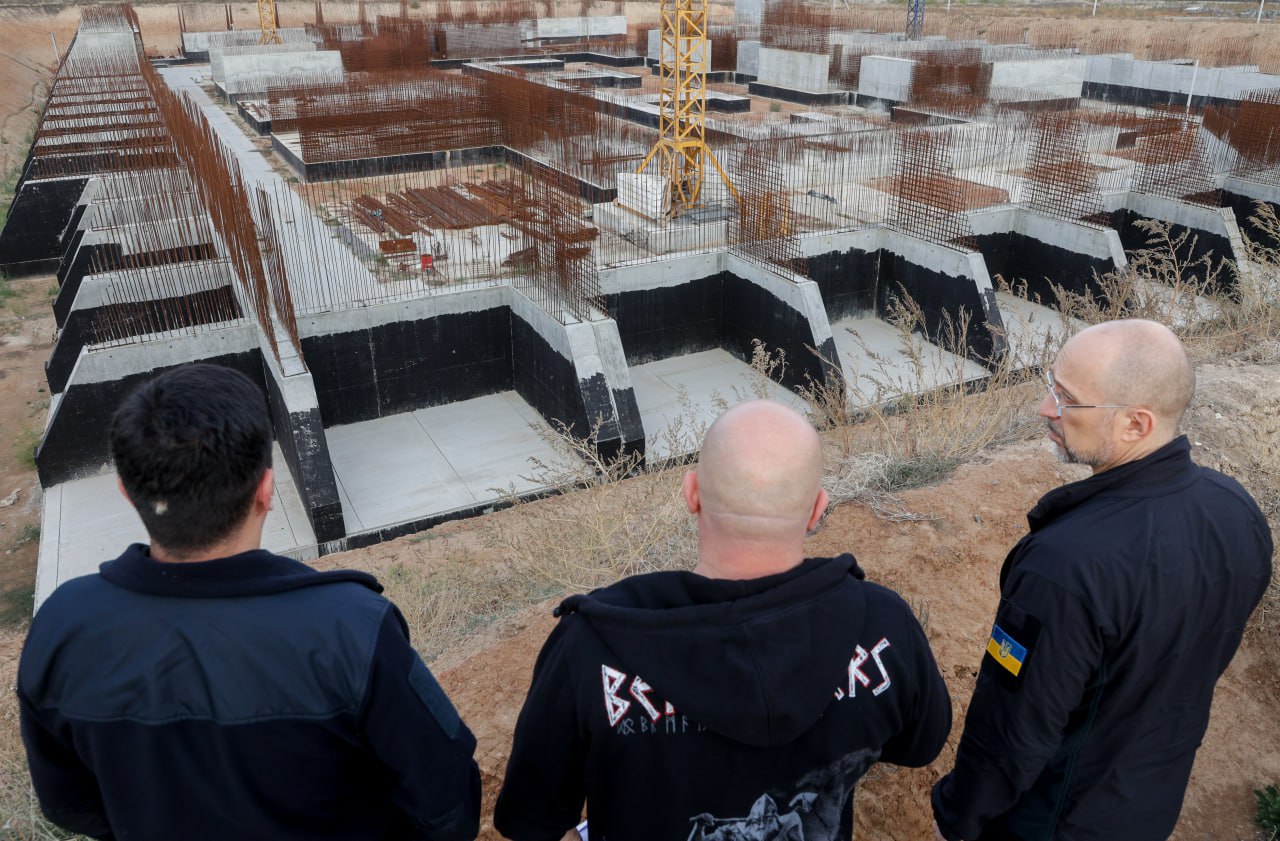
According to the TIC, as of October 2025, not a single Level III protection structure has been completed, all construction work was halted nearly a year ago, and there is no justification for finishing them.
According to estimates by the Accounting Chamber, a total of UAH 35.9 billion was earmarked in 2023–2024 to finance the Restoration Agency’s project, of which UAH 29.97 billion actually came in and only UAH 18.71 billion was spent.
According to the Restoration Agency itself, in 2023–2025, UAH 39.2 billion was allocated for building protective structures, and UAH 27.78 billion was actually used. The smallest amount was allocated in 2024, when Mustafa Naiiem stepped down as head of the Agency, citing "systemic obstruction" in his work.
| How much did the Restoration Agency spend on protecting Ukrenergo substations? | |||
| Allocated Used | |||
| 2023 | 18.9 billion including: Level II – UAH 9.4 billion Level III – UAH 9.5 billion | 13.05 billion UAH including: Level II – UAH 4.66 billion Level III – UAH 8.39 billion | |
| 2024 | 8.8 billion UAH | 4.76 billion UAH | |
| 2025* | 11.5 billion UAH including: Level II – 3.62 billion UAH Level III – 7.88 billion UAH | 9.97 billion including: Level II – UAH 2.4 billion Level III – UAH 7.57 billion | |
| Total | 39.2 billion UAH | UAH 27.78 billion | |
| Data: Recovery Agency * as of 28 November 2025 | |||
According to the TIC, as of October 2025 at 20 substations where the Restoration Agency is the customer for Level II protection works, 25 autotransformers have been moved into protective structures and connected to the grid (one of them was later destroyed), three transformers are in the process of being connected under protection, and construction of protection for another three transformers is ongoing.
At the same time, in a response to a request from Business Censor, the Restoration Agency said that the main construction works on Level II protective structures had been completed for 38 critical elements at 20 electrical substations, with their degree of readiness ranging from 95% to 100%.
"Level II protective structures have already demonstrated high reliability, effectively shielding critical equipment at electrical substations and confirming their ability to withstand strikes at more than 14 substations in various regions of Ukraine," said Agency head Serhii Sukhomlyn.
According to him, subject to funding, the main construction works will be completed by the end of this year on another eight critical elements at two substations (including 750 kV electrical substations).
"However, given the lack of stable funding, work on Level III facilities has been suspended. Their construction readiness stands at 10–56%," Sukhomlyn added.
What has Ukrenergo built?
Ukrenergo began looking for funding sources to build protective structures (first Level I and later Level II) as early as summer 2022. Unlike the Restoration Agency, the company managed to secure funding from international partners.
According to the TIC report, Ukrenergo raised a total of €725 million (over $840 million at the current exchange rate). Of this, about €312 million was earmarked specifically for building protective structures (including €107 million in grants). Another portion of the funds was used to build up a reserve of equipment.
In addition, in 2023–2024, Ukrenergo’s tariff included about UAH 270 million to finance design work for the construction of protective structures.
"In other words, the overwhelming majority of the funds used by Ukrenergo to design and build fortification structures were neither state budget funds nor transmission tariff funds (except for the portion used to repay loan funds over time)," the TIC report stresses.
The company first installed Level I protection for key equipment and then, from the second half of 2023, began building Level II protection.
However, this work has also not yet been fully completed. The company says the delays are due to the need to adjust designs in line with new data from the General Staff, as well as numerous comments on the project documentation from the State Emergency Service, with which a consolidated list of requirements was only agreed upon in August 2024.
The company also paid UAH 409.01 million in 2024 to purchase electronic warfare systems for key facilities. However, as of the end of last year, only 10 of Ukrenergo’s 22 priority facilities were fully equipped with electronic warfare systems, the TIC’s data show.
Overall, however, Level II protection has proved effective. According to the same TIC report, there has been only one recorded case when a Russian missile, in a direct hit, penetrated a Level II protective structure and destroyed the transformer it was shielding. Several more transformers were lost in the second half of last year as a result of missile and drone strikes on facilities where Level II protection had not yet been completed.
In total, as of October 2025, at substations where the customer for the construction of the second level of protection is NPC Ukrenergo, 44 autotransformers have been moved to protective structures and connected to the grid, 2 transformers have been moved to protective structures and work is underway to connect them, and work is continuing on the construction of protection for 42 autotransformers.
However, according to Ukrenergo CEO Vitalii Zaichenko, shelters have already been built for the key substations.
"At present, half of Ukrenergo’s transformer equipment is protected by Level II defences – that is, massive reinforced-concrete structures that protect against direct drone strikes and missile fragments. The remaining key high-voltage substations designated by the government will receive Level II protective structures in the first half of 2026," said the head of Ukrenergo in an interview with RBC-Ukraine.
He adds that the company has now started building "Level II-plus" protection, covering not only transformer equipment with concrete shelters but also the main control nodes of the substation.
What is the cost of protection for Ukrenergo's facilities?
According to the TIC, the combined spending by the Restoration Agency and Ukrenergo on building fortification structures at transmission substations exceeded UAH 40 billion as of October 2025. However, the cost of these structures varied significantly between the different customers.
Back in 2024, the outlet Nashi Hroshi pointed out that under the contracts signed by Ukrenergo, the cost of building Level II protection for a single transformer averaged up to UAH 120 million. The State Restoration Agency did not officially disclose the value of its contracts, but according to the outlet’s data, protecting one transformer there costs between UAH 200 million and UAH 500 million.
The Verkhovna Rada’s Temporary Investigative Commission also concluded that prices at Ukrenergo’s construction sites were generally in line with market levels, whereas at the State Restoration Agency’s sites they were three to four times higher than market prices.
The head of the TIC, Oleksii Kucherenko (Batkivshchyna), noted that these agreements should be investigated by law enforcement agencies.
"I can name the cost of Level II shelters. By the way, as it turned out, they differ greatly. At Ukrenergo, the starting price for a shelter was UAH 69 million. Then it rose on average to 120 million. At the Restoration Agency, the starting price was UAH 250 million and then it went up very sharply. So at the very least, this money needs to be checked," the deputy said.
How much generating companies spend on protection
It is difficult to reliably protect large power plants from Russian strikes because of the scale and cost of works. Therefore, generating companies mostly focus on building physical protection for transformer substations on their sites and for critical elements of their equipment.
"Protecting a large thermal power plant would mean roughly five years of work and a sarcophagus like at the Chornobyl nuclear power plant. That would probably be tens of billions of hryvnias for a single facility. This is an absolutely unrealistic scenario. We can only protect individual elements of such a plant, which would allow it to continue operating partially in the event of a strike," explained State Restoration Agency head Serhii Sukhomlyn in a recent interview with Liga.net.
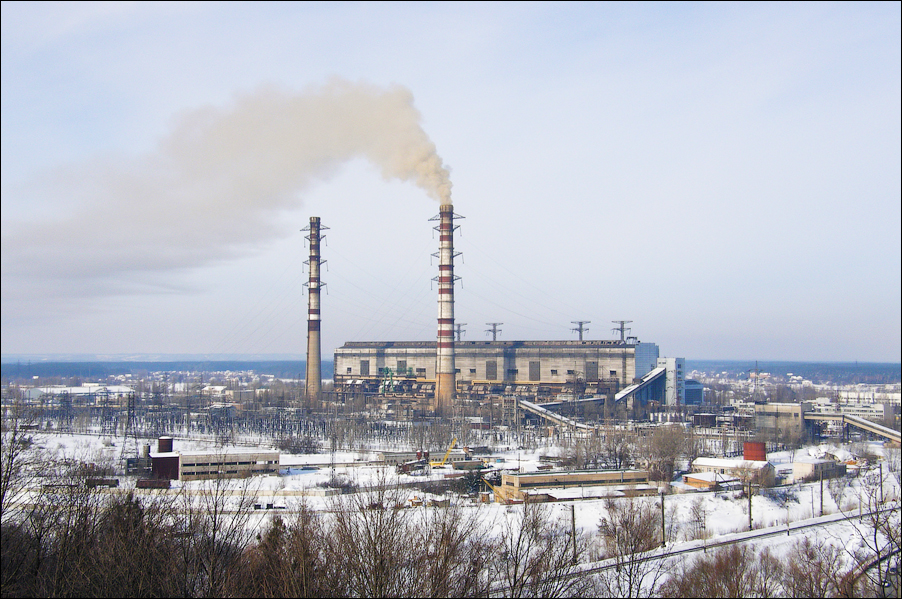
The only effective way to protect thermal power plants from Russian missile attacks may be air defence, said Dmytro Sakharuk, executive director of the largest private energy holding company DTEK.
For this reason, the company is primarily focused on the rapid restoration of destroyed facilities. According to the energy holding itself, DTEK invested almost UAH 10 billion in the repair and restoration of thermal power plants in 2022-2024.
Combined heat and power plants (CHPs) also cannot be fully equipped with Level II protection; it can only be applied to certain elements, Deputy Head of the Kyiv City State Administration Petro Panteleiev has likewise noted.
According to him, the substations of the municipal utility Kyivteploenergo currently have Level I protection, while Level II protection and distributed cogeneration facilities, which will immediately be equipped with Level II protection, are now being built. In total, the company plans to spend UAH 2.7 billion on this work.
"These are exclusively funds from the city and municipal enterprises. No state budget funds have been allocated to Kyiv for these needs," Panteleiev said in an interview with Hromadske.
However, last year, the largest state-owned generating companies also began commissioning the construction of protective structures for equipment that can be shielded, in particular, electrical substations located on their premises.
It is unknown what kind of protection was ordered, as this information is classified for security reasons during martial law. But BusinessCensor asked them what had already been done.
Energoatom
In September 2024, Prime Minister Denys Shmyhal stated that nuclear power plants must also be protected from Russian attacks, placing responsibility for this on Energy Minister Herman Halushchenko and Energoatom CEO Pavlo Kotin.

That same month, President Volodymyr Zelenskyy, in an address to the UN, said that "Putin is planning attacks on our nuclear power plants and their infrastructure, aiming to disconnect the plants from the power grid."
Only after Zelenskyy’s statement did Energoatom begin signing contracts for the design and construction of protective structures at the three nuclear power plants located in government-controlled territory. In October last year, the company signed three contracts worth UAH 2.8 billion, followed later by two more worth almost UAH 4 billion.
It is not known what specific type of protection was ordered, but the company did publish data on the value of the procurements and the contractors in the Prozorro system. These show that the construction of protective structures at each of the three nuclear power plants was contracted to a separate company:
- Kyiv Energy Construction Company LLC was awarded a contract worth 1.71 billion hryvnias for the protection of the Khmelnytskyi NPP;
- two contracts to build protective structures for the South Ukraine nuclear power plant, worth a total of UAH 2.86 billion, were signed with Yuzhenerhobud PrJSC;
- two agreements for protective structures for the Rivne Nuclear Power Plant for a total amount of UAH 2.31 billion were concluded with Zakhidelektromontazh LLC.
It is also unknown how far construction of the protective structures has progressed and how much money has already been spent. In its response to a request from Business Censor to comment on these issues, Energoatom said that data on work schedules and on the status of construction of the protective structures constitute restricted information. The state-owned company did not provide even a general or indicative answer.
It is possible that this position is related to the fact that the construction of protective structures at Energoatom's facilities was discussed by the figures involved in the so-called "Mindich tapes," some of which were made public by NABU in November. They contain conversations between Energoatom's executive director of security, Dmytro Basov ("Tenor"), and former advisor to the Minister of Energy, Ihor Myroniuk ("Rocket").

In particular, in July 2025, they lament that from previous contracts worth UAH 3 billion, they received only "90" and discuss a project to protect substations worth UAH 4 billion. The figures on the tapes then decide to wait another month for a more lucrative offer. And at the end of September, the members of the scheme discussed how to raise the kickback on these contracts from 10% to 15%.

The chairman of the board of Energoatom, Petro Kotin, unexpectedly resigned from his post in August this year, when the "Mindich tapes" were only being discussed at the rumour level.
Ukrhydroenergo
Ukrhydroenergo is the second-largest state generating company by installed capacity, counting facilities in government-controlled territory. It began commissioning the construction of protection against Russian attacks for its facilities back in 2022.
According to estimates by the publication "Nashi Hroshi," between 2022 and 2024, Ukrhydroenergo ordered the installation of anti-drone protection and the restoration of various hydroelectric power plants after missile strikes for a total amount of almost 20 billion hryvnia.
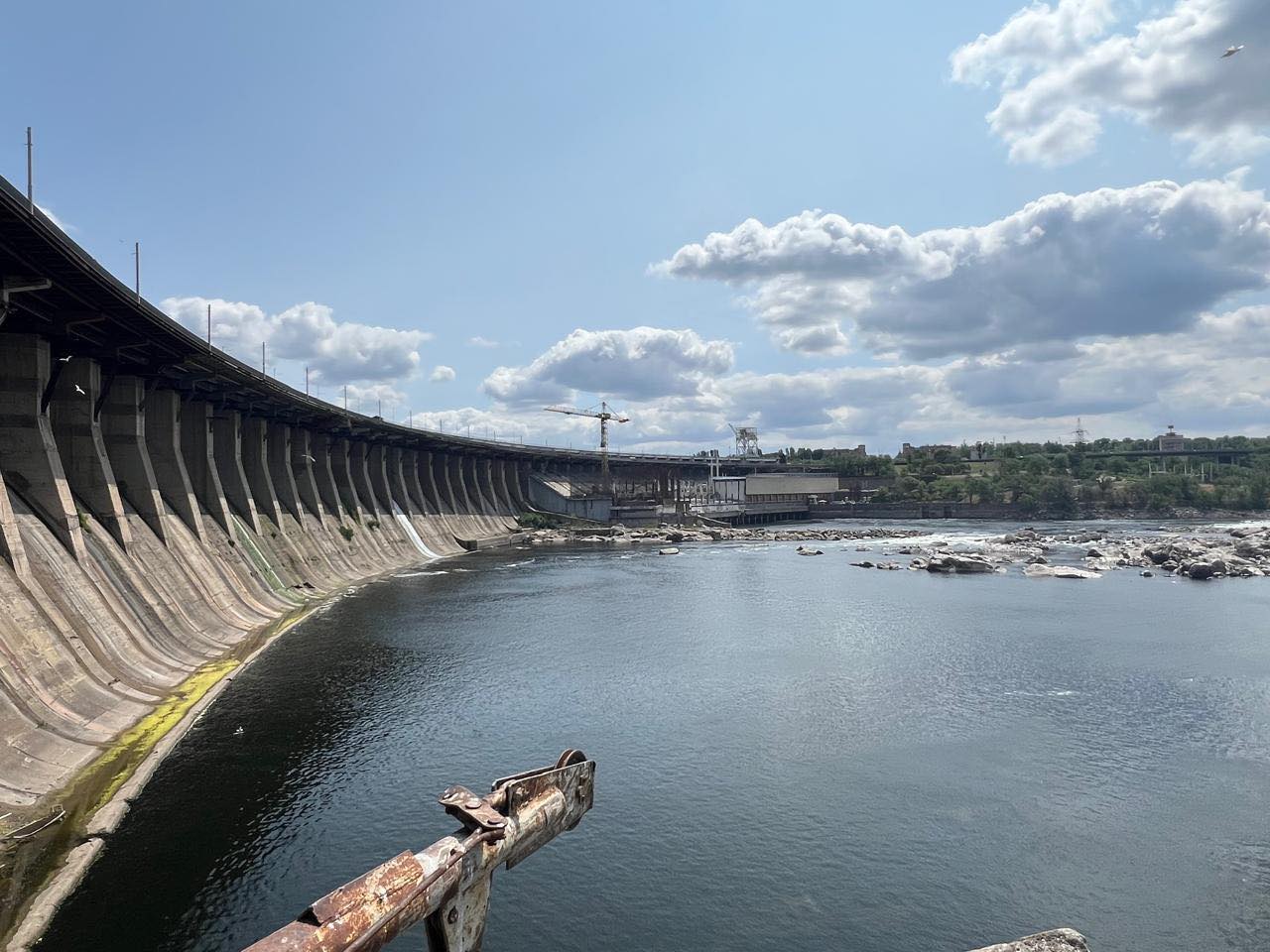
Already then, however, journalists noted that questions could be raised about whether the selected contractors were capable of fulfilling the tasks.
In particular, the largest contract, worth UAH 4.36 billion, to build protection for the Dnipro HPP went to BK Adamant LLC. The company previously belonged to the Ukrbud corporation when it was controlled by scandal-hit former MP Maksym Mykytas. It is now registered in Zakarpattia and owned by Uzhhorod resident Roman Topazly.
Before this contract, the company’s biggest tender win had been a UAH 326 million project to rehabilitate a landfill in the village of Pidhirtsi near Kyiv six years earlier.
Another large contract for the construction of protection for the Dniester Pumped Storage Power Plant, worth 4.19 billion hryvnias, was awarded to the Zhytomyr-based private enterprise Elitbud-1, which throughout its entire history has only performed local contracts for the repair of hospitals and schools that are hundreds of times smaller in size.
Another major contract, worth UAH 4.19 billion, to build protection for the Dniester pumped storage power plant went to the Zhytomyr-based private enterprise Elitbud-1, which throughout its history had only carried out local contracts to repair hospitals and schools that were hundreds of times smaller in value.
However, according to Oleksandr Kharchenko, director of the Energy Research Centre, the works are at least actively under way.
"Large hydroelectric power plants are quite difficult to attack effectively. They have done a significant part of their homework, and the most vulnerable elements are either protected or in the process of being completed, making them much more difficult to hit," the expert said.
It is worth noting that on the eve of the full-scale invasion, in February 2022, Energy Minister Herman Halushchenko initiated the dismissal of Ukrhydroenergo CEO Ihor Syrota. He had held this position since 2010, but resigned in May 2025. According to media reports, Syrota's dismissal was again demanded by Halushchenko's team, planning to appoint "their own person" in his place.
Centrenergo
Until recently, Centrenergo was the third largest state-owned company in terms of electricity generation. It combines three powerful thermal power plants (TPPs): Vuhlehirsk (occupied in 2022), Trypilska and Zmiivska.
These power plants have repeatedly been targeted by massive Russian strikes. In spring 2024, the company reported that the Zmiivska thermal power plant in the Kharkiv region and the Trypilska thermal power plant in Kyiv region had suspended operations as a result of the attacks. In May last year, the Cabinet of Ministers allocated more than UAH 1.5 billion from the state budget for their restoration.
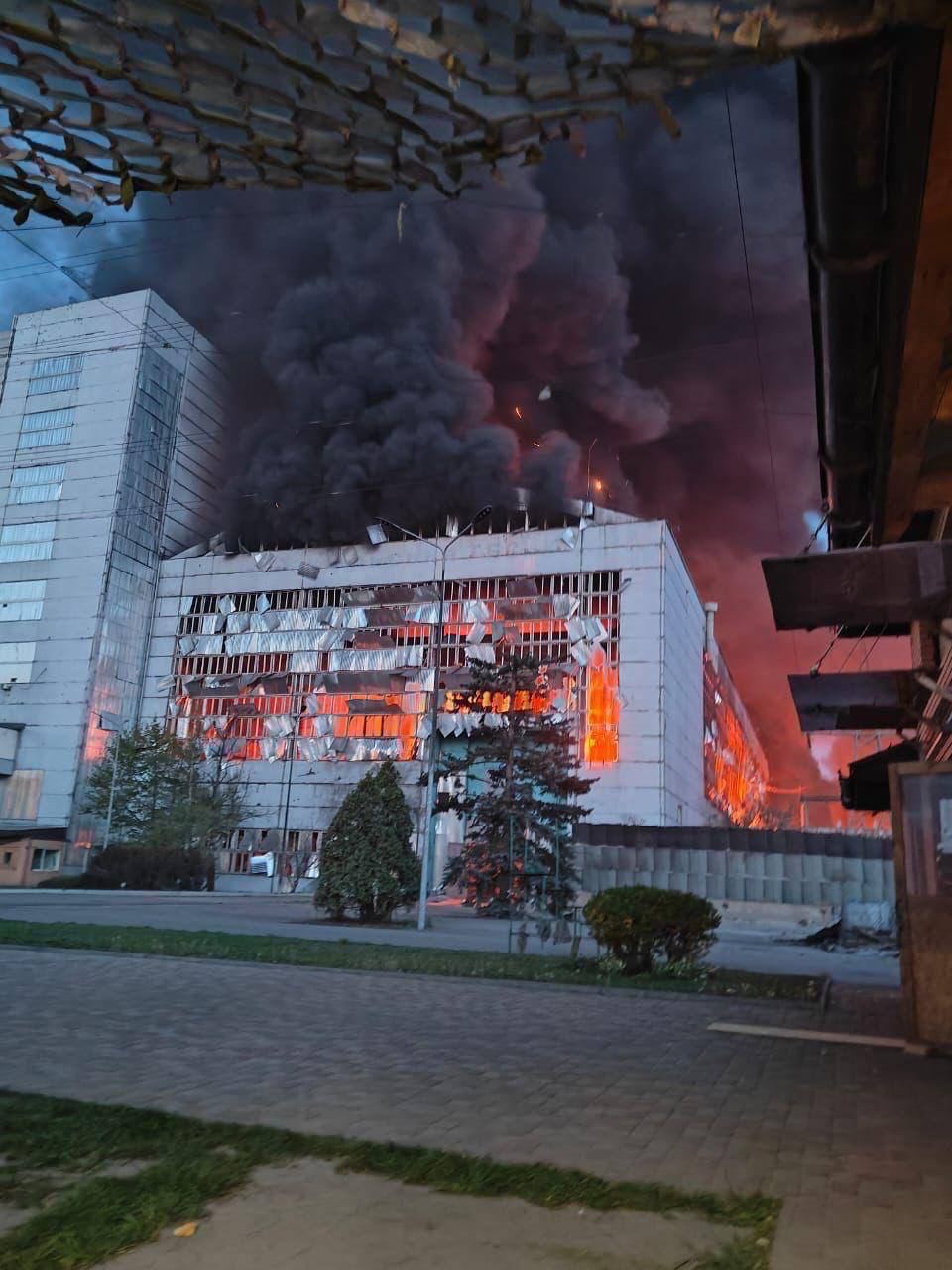
Since then, operations at the two power plants in government-controlled territory have been partially restored. But on the night of 8 November, Russian forces carried out the most massive strike on Centrenergo’s thermal power plants since the start of the war, and they were once again completely shut down, the company said.
Fortifications were also to be built for key elements of Centrenergo's power plants. In October 2024, Centrenergo signed two agreements worth 520 million hryvnia for the reconstruction and construction of level II protection for autotransformer substations at the Zmiivska and Trypilska TPPs. However, a few weeks later, these contracts were terminated without any payments, and the consortium itself was subsequently wound up.
The same works for the Trypilska TPP, worth UAH 250 million, were later commissioned from Tekhnomain Engineering. Among its co-owners is well-known Kryvyi Rih businessman Kostiantyn Karamanyts. After Volodymyr Zelenskyy’s victory in the presidential election, he was tasked by Zelenskyy with reviving the Kryvbas football club and significantly expanded his business.
According to the publication "Nashi Hroshi," Tekhnomain has also received contracts to build transformer protection under Restoration Agency tenders in 2022–2023. It is known to have signed contracts with the agency to build three Level II protection structures worth a total of UAH 1.14 billion, and it also held a contract to build Level III protection for one of the electrical substations.
The construction of protective structures for the Zmiivska Thermal Power Plant was commissioned to the company "Opytnyi Zavod M". In December last year, a contract worth 245.73 million hryvnias was signed with it, and in May 2025, another contract worth 204.4 million hryvnias was signed.
The status of these agreements is unknown. In response to a request from BusinessCensor, Centrenergo also refused to comment on the state of protection of the company's facilities, citing confidentiality of information.
It should be noted that since 2023, the supervisory board of Centrenergo has been headed by state representative Andrii Hota. Prior to his appointment, he headed the office of the former head of the President's Office, Andriy Yermak, and remained his advisor afterwards, according to UP.
Have distribution system operators ("oblenenergo") built protection?
Most electricity distribution system operators (DSOs, also known as oblenenergo) in Ukraine are privately owned. The state holds controlling stakes in six DSOs, which in 2023 the Ministry of Energy transferred to the state-owned company Ukrainian Distribution Grids.
In June, NABU detectives detained a close relative of Timur Mindich on suspicion of involvement in embezzlement in the procurement of energy equipment for one of them, Kharkivoblenergo.
Until recently, regional power distribution companies had done little to protect their facilities from Russian attacks. However, since the autumn of 2025, they have increasingly become the target of Russian strikes, especially in frontline regions.
The regional power companies' autotransformer substations are less powerful than those on Ukrenergo’s trunk transmission lines and are much easier to replace, but equipment stocks are very limited, said Oleksandr Kharchenko, director of the Energy Research Centre.
"Unfortunately, only a few of the regional power distribution companies' facilities across the country were protected, and and no serious stockpiles of materials have been created to enable rapid restoration. While Ukrenergo even has a stock of autotransformers that can be brought in and installed, most regional power distribution companies have minimal reserves," says the expert.
In addition, all regional power companies operate under a tariff set by the regulator, which does not provide for any spending on building protective structures.
"Each such company is a tariff company. All the money it can spend comes from the tariff paid by consumers. This tariff is set by the national regulator, and the national regulator has not included money for cover in this tariff. And if the director of a distribution company builds some kind of protection in this situation, he will be imprisoned. But he doesn't have the money for it anyway," explains Kharchenko.
According to him, it is the Ministry of Energy that should be addressing this problem, at least for distribution system operators in frontline regions, but this has not been done.
Only in November 2025 did the government’s Coordination Headquarters for the Protection of the Energy Sector begin to draw up a second list of facilities where protective structures will be built, which also includes regional power distribution companies` facilities. More than 350 such facilities have been submitted for consideration so far.
In October this year, the Cabinet of Ministers allocated UAH 6 billion from the state budget’s Reserve Fund to build protection for these facilities. Of this, UAH 800 million is earmarked for the construction of protective structures at 15 Ukrzaliznytsia substations, which also came under active attack this autumn. A further UAH 5.2 billion has been allocated to build protective structures at more than 100 regional power grid facilities.
"The contracting process and preparatory works have now been completed, and the main construction works are under way. The work will be completed within three months," the head of the Restoration Agency, Serhii Sukhomlyn, said in response to a request from Business Censor.
This concerns first and foremost the construction of protection for small electrical substations in Donetsk, Sumy, Chernihiv, Odesa, Dnipropetrovsk, Mykolaiv and Kharkiv regions.
The vast majority of the contracts are worth between UAH 60 million and UAH 63 million, Nashi Hroshi reported, citing the first batch of signed agreements. At the same time, cost estimates for building materials have not been disclosed in the Prozorro system. Instead, the Restoration Agency has started publishing on its website the prices of building materials that contractors have already purchased for these works, and they mostly correspond to market levels.


