ENG




12030 visitors online
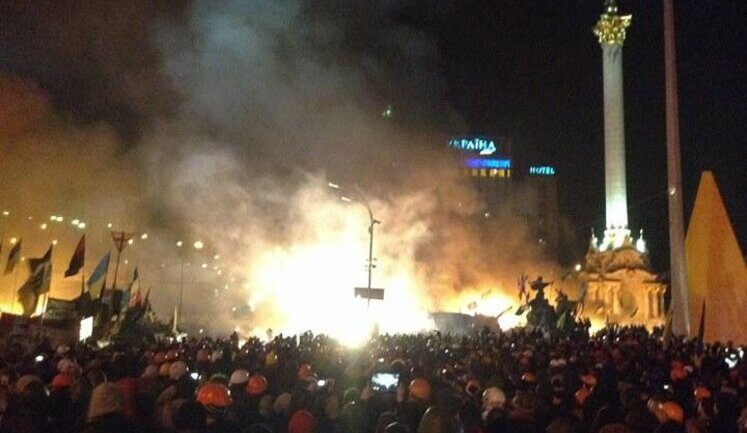
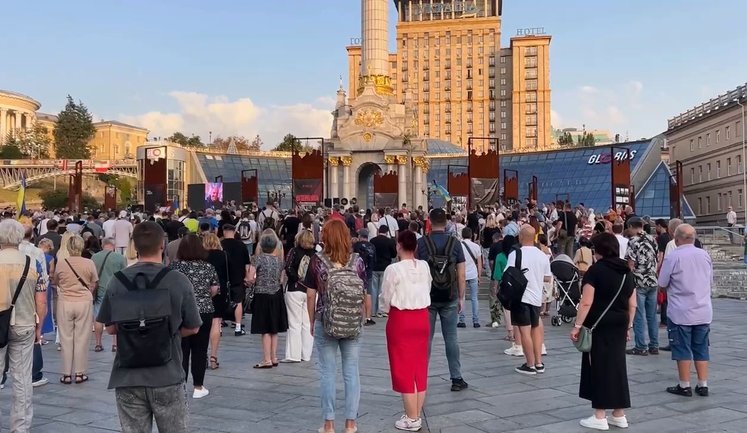
Kyiv's Independence Square, known as Maidan, continues to be a symbol of Ukraine's fight for freedom and dignity. Recently, thousands gathered to honor the memory of Andrii Parubii, a key figure in the Orange Revolution and the Revolution of Dignity. This tribute underscores Maidan's lasting influence in Ukraine's journey towards democracy. Maidan veteran Roman Oryshchenko's frontline death further illustrates the ongoing struggle for Ukraine's sovereignty. Continued legal challenges reveal the complexities of the "Maidan cases," highlighting the need for justice for those affected by past injustices. These events reflect Maidan's enduring legacy and its impact on Ukraine's socio-political landscape.
What significant roles did Andrii Parubii play in Ukraine's history?
Andrii Parubii was a key leader in both the Orange Revolution and the Revolution of Dignity in Ukraine. He served as the speaker of the Verkhovna Rada and was instrumental in organizing protest activities that demanded democratic reforms. His contributions greatly influenced Ukraine's push for a European identity and democratic governance.
What is the significance of Independence Square in Kyiv?
Independence Square, or Maidan Nezalezhnosti, is the central square in Kyiv, known worldwide as the epicenter of Ukraine's major protests, including the Orange Revolution and the Revolution of Dignity. It symbolizes the country's struggle for democratic freedoms and is a place where Ukrainians gather to honor those who fought for their rights, making it a vital part of national heritage.
Who was Roman Oryshchenko and what was his legacy?
Roman Oryshchenko was a prominent figure in Ukraine's history as a leader of Plast and a co-founder of the Maidan Self-Defence Forces. His dedication to the country's independence continued even on the frontlines, where he lost his life. His legacy lives on as a symbol of the relentless fight for Ukraine's freedom and the price of defending sovereignty.
What unresolved issues remain from the Revolution of Dignity?
Several unresolved issues from the Revolution of Dignity include delayed justice in the "Maidan cases," where individuals responsible for crimes during the protests have not yet been held accountable. Ongoing investigations and a lack of legislative changes hinder progress, leaving numerous cases unsolved and highlighting the challenges of achieving comprehensive justice.
How has Maidan influenced Ukraine’s political landscape?
The Maidan movements significantly reshaped Ukraine's political landscape by prompting systemic changes in governance and societal values. They accelerated Ukraine's pivot towards the West, fortified democratic institutions, and fostered a national identity grounded in independence and freedom. The perpetual quest for accountability and reforms, rooted in Maidan's legacy, continues to direct Ukraine's political discourse.
What challenges do prosecutors face with the "Maidan cases"?
Prosecutors dealing with the "Maidan cases" face multiple challenges, such as legal obstructions, slow judicial processes, and the need for legislative reforms. Many involved in crimes against Maidan protestors remain unpunished, and the complexity of gathering evidence over long periods only adds to the difficulties. Achieving justice remains a cumbersome process due to these multifaceted barriers.
What does Maidan symbolize for the Ukrainian people?
For Ukrainians, Maidan symbolizes the enduring spirit of resistance and the pursuit of liberty and democratic values. It is a collective memory of sacrifice, harking back to pivotal moments in Ukraine's fight against oppression and corruption. Maidan stands as an icon of courage and a call to action for continued reform and national unity.
News Maidan
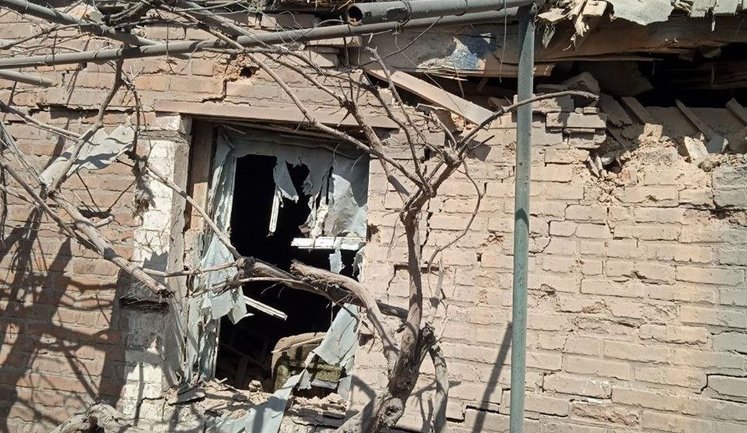
 Day in Donetsk region: one person killed, three injured. PHOTOS Over the past 24 hours, on 29 April, 1,437 attacks were recorded along the front line and in residential areas of the region. The enemy attacked the towns of Druzhkivka, Kramatorsk and Mykolaivka, the settlement of Sviatohorivka, and the villages of Kindrativka, Ocheretine and Tetyanivka. 444 0 Previously in trend: Shelling of the Donetsk region
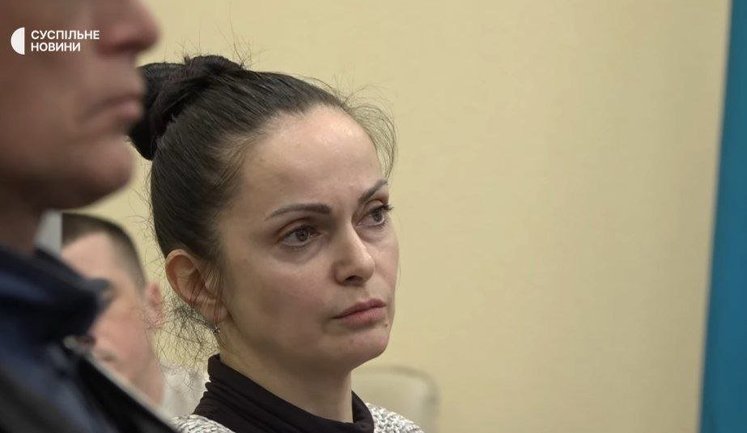
 Police officer Dudina, who is accused of fleeing during terrorist attack in Kyiv, was medic during Revolution of Dignity, - media. PHOTO Police officer Anna Dudina, who is suspected of professional negligence in connection with her actions during the terrorist attack in Kyiv on 18 April, does not work for the patrol police and took part in the Revolution of Dignity as a medic. 22 497 352 Previously in trend: Shooting in Kyiv
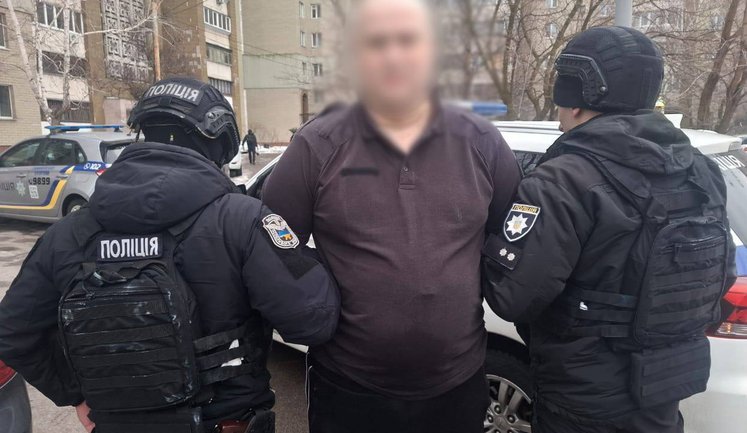
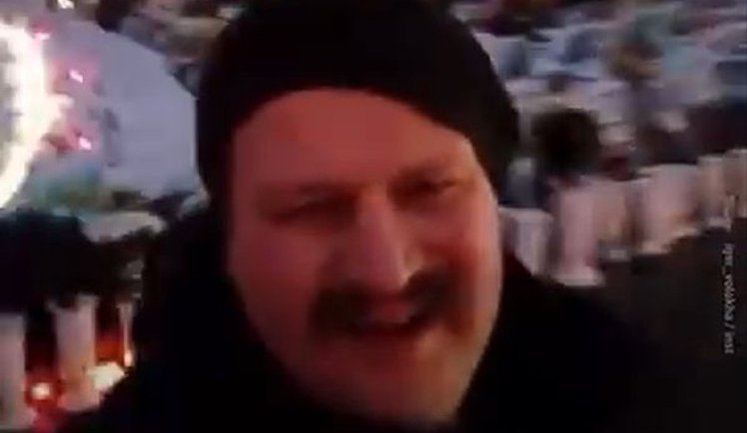
 Man who mocked memorial on Maidan in Kyiv detained: he shaved off his mustache to avoid being recognized. PHOTO Law enforcement officers detained a man who mocked the People’s Memorial to fallen Ukrainian defenders on Maidan Nezalezhnosti in Kyiv and called for the removal of the flags bearing the names of the warriors. 16 603 62 Previously in trend: Vandalism of Ukrainian flags
 In Kyiv, man demanded removal of flags from memorial to fallen soldiers on Maidan: "Get everything out of here, people are relaxing here". VIDEO On the eve of the anniversary of the full-scale Russian invasion, an ethical scandal erupted in the center of the capital. As reported by Censor.NET, a man in central Kyiv recorded a video in which he expressed outrage over the presence of thousands of small flags bearing the names of fallen... 15 169 95
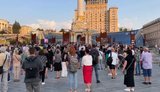 Minute of silence on Maidan: Kyiv honours memory of Andrii Parubii. VIDEO On the evening of 1 September, a farewell ceremony was held in Kyiv's Independence Square for Andrii Parubii, a member of parliament and former speaker of the Verkhovna Rada, one of the leaders of the Orange Revolution and the Revolution of Dignity. 5 258 25 Previously in trend: Murder of Andrii Parubii
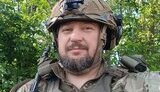 One of leaders of Plast and co-founder of Maidan Self-Defence Forces, Roman Oryshchenko, killed in battle for Ukraine. PHOTO Roman Oryshchenko, a Plast member, historian, educator, and Maidan veteran, died at the front. 6 483 19 Previously in trend: losses of Ukraine
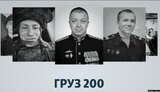 Russians involved in Maidan dispersal and occupation of Crimea eliminated at frontline - media Russians who took part in the occupation of Crimea and the dispersal of Euromaidan have been killed in the war against Ukraine. 9 532 23 Previously in trend: Maidan crackdown Elimination of Russian occupiers
 Roman Pankevych, participant of Revolution of Dignity and Orange Revolution, died at front, having come under mortar attack in Donetsk region. PHOTO On 19 April, an active participant in the Revolution of Dignity and a soldier, Roman Pankevych, was killed by Russian mortar shelling near Krasnohorivka, Donetsk region. 9 386 11 Previously in trend: War
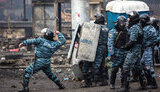 About 20 law enforcement officers accused of crimes against participants of the Revolution of Dignity still work in law enforcement agencies - prosecutors About 20 law enforcement officers are still working in law enforcement agencies, who are charged with crimes against participants in the Revolution of Dignity. Currently, there are court verdicts against 23 law enforcement officers. 1 566 17 Previously in trend: Investigation of crimes against Maidan
 President of Moldova Sandu arrived in Kyiv. PHOTOS On November 21, the President of Moldova, Maia Sandu, arrived in Kyiv. Together with President Volodymyr Zelenskyy and First Lady Olena Zelenska, she honored the memory of those who died during the Revolution of Dignity. 7 099 26
 Ukraine celebrates 10th anniversary of Revolution of Dignity. PHOTOS On November 21, Ukraine celebrates the tenth anniversary of the beginning of Euromaidan, which later grew into the Revolution of Dignity. 4 760 55
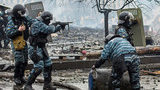 ECHR declares violations of human rights by Ukraine during Revolution of Dignity The European Court of Human Rights (ECHR) declared violations by Ukraine of human rights during the events of the Revolution of Dignity in 2013-2014. 1 275 3
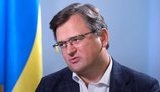 Kuleba comments on Zeman's statement about similarity of events in U.S. Capitol with Maidan: It's like comparing Zeman with Havel - nothing in common The comparison made by Czech President Milos Zeman of the riots in the American Capitol with the Maidan is as far from the truth as the comparison of Zeman with ex-Czech President Vaclav Havel, Ukrainian Foreign Minister Dmytro Kuleba said. 5 628 40
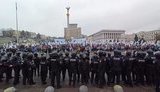 About 40 policemen injured during rally on Maidan – Kyiv police Kyiv Police said that about 40 policemen were injured during the rally on Independence Square (Maidan Nezalezhnosti) in Kyiv on Tuesday. 26 965 97
 Police detain suspect in case on abduction of Euromaidan activists Verbytskyi, Lutsenko The police have detained a suspect in the case on the murder of Yurii Verbytskyi and abduction of Ihor Lutsenko in January 2014, lawyer Yevhenia Zakrevska said. 6 947 10
 State Bureau of Investigation sets up unit to probe 'Maidan cases' Ukraine's State Bureau of Investigation (SBI) has set up a unit to probe "Maidan cases." 2 374 32 Previously in trend: Investigation of crimes against Maidan
 Prosecutor General's Office starts internal investigation on possible loss of Maidan Case files The Prosecutor General's Office (PGO) started the internal investigation into the possible loss of the files of the Maidan Case. 5 115 40 Previously in trend: Investigation of crimes against Maidan
 Investigation into Maidan cases suspended – Horbatiuk Former head of the department for special investigations of the Prosecutor General's Office (PGO), Serhii Horbatiuk, states that the investigation into the cases upon Maidan events has been suspended. 1 809 29 Previously in trend: Investigation of crimes against Maidan
 About 10,000 people protested against signing of ‘Steinmeier formula’ on Sunday. PHOTOS About 10,000 people took part in the Stop Capitulation "viche" (popular assembly) against the signing of the so-called "Steinmeier formula" in Kyiv on Sunday. 15 075 268
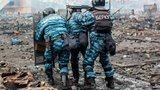 Maidan massacre case cannot be transferred to court without change in legislation, - SBI The Prosecutor General’s Office (PGO) cannot transfer criminal proceedings against organizers of mass murders of Euromaidan protesters to the court until the Verkhovna Rada makes amendments to the legislation on in absentia legal proceedings, said head of the special investigations department of the State Bureau of Investigation (SBI) Serhii Horbatiuk. 7 119 145 Previously in trend: Investigation of crimes against Maidan
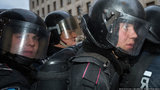 Lutsenko: 18 policemen killed on Maidan also victims and part of Heavenly Hundred 18 policemen killed on Maidan in 2014 are also victims and part of Heavenly Hundred. 21 930 433 Previously in trend: Investigation of crimes against Maidan
 Revolution of Dignity banner removed from refurbished House of Trade Unions in downtown Kyiv. PHOTO The well-recognized banner was removed from the House of Trade Unions on Kyiv’s Maidan Nezalezhnosti which was damaged by the fire during the Revolution of Dignity in 2014. 23 284 45
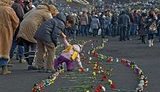 Censor.NET releases list of Heavenly Hundred heroes killed Feb. 20, 2014 Censor.NET Chief Editor Yurii Butusov made public the list of Heavenly Hundreds heroes murdered on Feb. 20, 2014 by the assault company of the Kyiv-based Berkut riot police regiment headed by Major Sadovnyk. 5 519 5 Previously in trend: Maidan crackdown Investigation of crimes against Maidan
 US honors memory of Heavenly Hundred, reiterates support to Ukraine under ongoing Russian aggression The U.S. Department of State paid tribute to the fallen heroes of the Heavenly Hundred, reiterated support for Ukraine facing ongoing Russian aggression, and urged the Ukrainian government to redouble efforts to implement comprehensive reforms in the country. 23 236 86 Previously in trend: Russian aggression against Ukraine
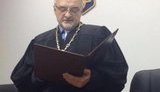 Judge who released suspect in Veremii’s assassination from custody transfers more thugs charged with attempted murder from prison to house arrest, - prosecutor Donskoi The Shevchenkivskyi district court of Kyiv released from the pre-trial detention facility Oleh Heban and Serhii Kostenko charged with consummated attempt to murder six people near Kyiv’s Maidan Nezalezhnosti on Feb. 18, 2014. They were placed under a house arrest. 20 346 239
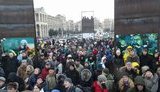 Rally on Maidan: protesters demand real prison term for journalist Veremii’s murderer Krysin. PHOTOS+VIDEO The people who gathered on the Maidan Nezalezhnosti in downtown Kyiv on Dec. 25 demanded just punishment of Yurii Krysin who received the suspended term for involvement in the murder of journalist Viacheslav Veremii. 32 227 215
 Probes into major Maidan-related crimes 80 percent complete, prosecutor general says Ukraine’s Prosecutor General Yurii Lutsenko says the investigation of the major cases into crimes against the Maidan activists is 80 percent complete. 4 068 169 Previously in trend: Investigation of crimes against Maidan
 PGO on Maidan case investigation: 380 persons indicted, 49 criminals sentenced The prosecutor's office charged 380 individuals with assaults on Euromaidan participants including lethal ones. The sentences have already been passed against 49 perpetrators. 8 199 67 Previously in trend: Investigation of crimes against Maidan
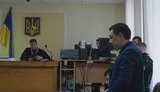 Court starts hearing case of person charged with abduction of Euromaidan activists. PHOTOS The Pechersk district court of Kyiv started hearing on pretrial restriction on Oleksandr Volkov, the person indicted with charges of abduction of Ihor Lutsenko (the now Batkivshchyna Party faction MP) and activist Yurii Verbytskyi. 7 721 15 Previously in trend: Investigation of crimes against Maidan
 Court puts former Interior Ministry official Seredynskyi, charged with coordinating Berkut activities during Maidan events, under night home arrest. PHOTOS+VIDEO The Pecherskyi district court of Kyiv has put former top official of the Interior Ministry Anatolii Seredynskyi under night home arrest. 9 475 53 Previously in trend: Investigation of crimes against Maidan
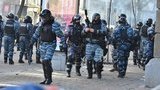 Current heads of departments in National Guard and National Police coordinated Berkut fighters during Euromaidan attack, - Prosecutor Horbatiuk. INFOGRAPHICS The Prosecutor General's Office of Ukraine says some current heads of departments in the National Guard and the National Police coordinated Berkut fighters during deadly Euromaidan attack on Feb. 18-19, 2014, when about a hundred protesters were killed. 90 157 268 Previously in trend: Investigation of crimes against Maidan
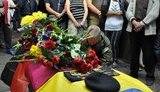 Kyiv residents, friends, comrades bid their farewells to killed Donbas veteran Valentyn Hontar at Maidan Nezalezhnosti. PHOTOS+VIDEO On Aug. 8, Kyiv residents, comrades, and friends were saying their last goodbyes to Donbas Battalion fighter Valentyn Hontar. The veteran of the anti-terrorist operation (ATO) was actively involved in volunteering. He was killed in a grenade explosion on Aug. 4 in Kyiv. 20 758 12
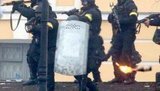 15 Berkut fighters involved in Maidan execution were granted Russian citizenship. DOCUMENT (in Ukrainian) 15 former servicemen of the Berkut Special Forces unit, who were members of the so-called "Black Company" involved in the shooting of protesters at Instytutska Street on Feb. 20, 2014, have been granted Russian citizenship since 2014. 35 330 78
PGO charges Kyiv police chief ex-deputy with organizing crackdown on Automaidan activists The Prosecutor General's Office brings in an indictment against ex-deputy chief of Kyiv’s Main Police Directorate. 6 488 37 Previously in trend: Investigation of crimes against Maidan
Court extends pre-trial detention for five ex-Berkut soldiers charged with murder of Maidan activists Sviatoshynskyi district court of Kyiv extended pre-trial detention for five former members of Berkut riot police who were charged with mass murder of Euromaidan activists. 3 094 6 Previously in trend: Investigation of crimes against Maidan
 Four ex-Berkut fighters, suspected in Maidan massacre, fled to Russia Former fighters of the Kharkiv Berkut riot police Oleksandr Kostiuk, Vladyslav Masteha, Artem Voilokov and Vitalii Honcharenko crossed the Ukrainian-Russian border on April 13. 176 699 528 Previously in trend: Investigation of crimes against Maidan
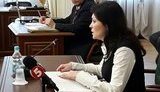 SCJ recommends dismissal of "Maidan Judge" Nelli Lastivka, - lawyer. PHOTO The Supreme Council of Justice (SCJ) has recommended the dismissal of another judge charged with delivering unlawful decisions against Maidan activists in 2014. 27 314 30
 Yanukovych sent no letter with request to deploy troops in Ukraine, Russia's Peskov says. DOCUMENT Kremlin press secretary Dmitry Peskov says former Ukrainian President Viktor Yanukovych did not address Russian President Vladimir Putin with a request to send troops in Ukraine. 70 868 202
Censor.NET chief editor included in group of forensic experts to investigate Maidan crackdown case The group is composed of various experts, former and current law enforcement officers, lawyers. 8 645 47 Previously in trend: Investigation of crimes against Maidan
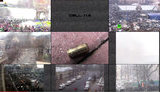 Zhovtnevyi Commanding Hill: another part of Maidan massacre reconstruction made public. VIDEO Censor.NET publishes the third part of the second edition of Zhovtnevyi Commanding Hill visual showing Maidan activists slain or wounded in downtown Kyiv on Feb. 20, 2014. 53 677 22
 Aidar fighter Oleksandr Tsarenko died in emergency room. PHOTO Aidar Battalion volunteer fighter Oleksandr Tsarenko died in Kyiv Feb. 26. 67 081 1 Previously in trend: Russian aggression against Ukraine
Zakharchenko, Yakymenko were masterminds behind Maidan crackdown on Feb. 18, - Turchynov Ukraine's former Security Service chief Oleksandr Yakymenko and ex-Interior Minister Oleksandr Zakharchenko were the key plotters behind the deadly Maidan dispersal on Feb. 18, 2014. 15 011 27
 Maidan crackdown ordered by then heads of NSDC and Presidential Administration, fugitive President Yanukovych says, - Spiegel Fugitive Ukrainian President Viktor Yanukovych says he did not order to forcibly clear the Maidan from protesters in November 2013. 106 218 142
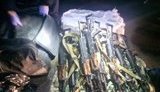 SBU seizes 12 AK rifles, foils attack on Maidan tomorrow, - Matios. PHOTOS Ukraine's Chief Military Prosecutor Anatolii Matios has reported the seizure of weapons that he says were meant to be used at Maidan Nezalezhnosti Square tomorrow. 138 097 603
 Zhovtnevyi Commanding Hill: reconstruction of Maidan massacre of Feb. 20, 2014. VIDEO The project participants compiled footage of four surveillance cameras and a great number of videos and images captured on camera by about 100 authors. The timing error in each camera and camcorder was also identified. 138 601 96
 330 judges involved in illegal sentencing of activists in 2014 stonewall cases into Maidan crackdown, – Heavenly Hundred’s Family NGO Head Bondarchuk More than 300 judges who convicted the Euromaidan activists during the Revolution of Dignity continue holding their jobs and stonewalling the investigation of cases into the murder of the heroes of Heavenly Hundred. 12 303 90
 Ukraine’s MP Savchenko waives her parliamentary immunity. PHOTO Nonaffiliated Member of the Verkhovna Rada of Ukraine Nadiia Savchenko has made a decision to give up her parliamentary immunity. 83 079 365
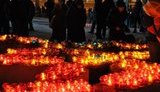 Tribute to Heavenly Hundred Heroes: people continue bringing flowers and candles to Maidan. PHOTOS A memorial event to honor the Heavenly Hundred Heroes, who died defending the freedom of Ukraine on Nezalezhnosti Square three years ago, as well as other patriots fallen in the ongoing struggle for Ukrainian independence took place in downtown Kyiv on Friday night, Feb. 20. 26 014 53
Page 1 of 4
more news