ENG




8286 visitors online
Bloomberg has highlighted significant developments in global geopolitics and economics, with a focus on the ongoing conflict between Russia and Ukraine. The publication delves into the EU's decision to implement its 18th package of sanctions against Russia, targeting banks and energy sectors, in an effort to pressure Moscow to cease hostilities. The Ukrainian Security Service's operation "Pavutyna" has intensified tensions within Russia, exposing vulnerabilities within its nuclear aircraft fleet. Meanwhile, the EU is considering the legal implications of using frozen Russian assets to bolster Ukraine's support. In the socioeconomic sphere, countries refraining from condemning Russia face substantial investment losses, while Bloomberg reports ongoing challenges for Putin, from declining arms sales to a pressured economy due to oil sanctions. The unfolding dynamics underscore Bloomberg’s role in providing comprehensive insights into complex global issues.
What are the latest EU sanctions against Russia?
The European Union's latest sanctions target over 20 Russian banks, potential disconnection from the SWIFT system, and further restrictions on energy sectors, aiming to increase economic pressure on Russia to stop its military actions in Ukraine.
How has Operation Pavutyna impacted Russia?
Operation Pavutyna by the Ukrainian Security Service has exposed the vulnerability of Russia’s nuclear aircraft, causing significant unease among Kremlin officials and highlighting strategic weaknesses within Russia's military infrastructure.
What does Bloomberg report about Russia's economic state?
Bloomberg highlights several challenges faced by Russia, including a drop in oil and gas revenues due to ongoing sanctions, stalled arms sales, and economic management issues under President Putin, which are straining the nation's financial stability.
What is the impact of frozen Russian assets on Ukraine?
The European Union is evaluating the potential use of frozen Russian assets to support Ukraine financially. However, legal and financial implications must be considered to ensure these assets are utilized effectively in bolstering Ukraine's economy and defense capabilities.
How has international aid shifted throughout the Russia-Ukraine conflict?
International aid has been pivotal in supporting Ukraine, with countries providing military and economic assistance. However, challenges remain in the timely and adequate delivery of aid, as emphasized by discrepancies between pledged and actual support by Ukraine's allies.
What are the legal challenges of confiscating Russian assets?
Confiscating Russian assets involves complex legal challenges, including international law considerations and the need for processes ensuring lawful appropriation and redistribution. The EU is analyzing these aspects to prevent future legal disputes while maximizing support for Ukraine.
Why are countries facing investment losses by not condemning Russia?
Countries not openly condemning Russia’s actions face perception challenges in the global economy. As reported by Bloomberg, this stance leads to diminished foreign investment confidence, resulting in substantial financial losses due to perceived political and ethical misalignment with international norms.
News Bloomberg
 Russia’s oil output shrinks as U.S. raises pressure – Bloomberg In January, oil production in Russia fell for the second month in a row as U.S. sanctions created difficulties in selling its output. 1 623 2 Previously in trend: U.S. sanctions against Russia
 Operation Pavutyna: Destruction of aircraft caused unease among Putin’s inner circle - Bloomberg The Ukrainian Security Service's "Pavutyna" operation in Russia's deep rear caused outrage and alarm among Kremlin officials, as it revealed the sudden vulnerability of a nuclear aircraft fleet far from the front. 12 110 28 Previously in trend: Massive destruction of Russian aircraft SSU Operation Pavutyna
 EU prepares 18th package of sanctions against Russia: considers disconnecting banks from SWIFT system, lowering oil price cap, and banning Nord Stream gas pipelines - Bloomberg The European Union is considering excluding more than 20 banks from SWIFT and banning the Nord Stream gas pipeline as part of a new package of sanctions aimed at increasing pressure on Moscow to end its war against Ukraine. 2 257 23 Previously in trend: Sanctions against Russia EU sanctions
 Russia wants to change power in Ukraine through elections to resume war with triple force – Bloomberg Russia wants to split up Ukrainian politicians in the event of presidential elections in order to resume attacks with triple force afterwards. 7 148 76
 EU assesses consequences of using frozen Russian assets to support Ukraine - Bloomberg The European Union is assessing the possible legal and financial consequences of the confiscation of frozen Russian assets to provide additional support to Ukraine, 771 4 Previously in trend: War Support for Ukraine
 Europe’s promises and actual aid to Ukraine differ - Bloomberg Ukraine's allies continue to pursue a strategy of "as long as it takes" rather than a strategy of "what and when it takes". 3 363 5
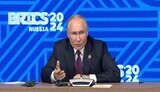 US intelligence declassifies data: how Putin’s opponents were killed - Bloomberg The Russian government uses intelligence services abroad to eliminate those it considers a threat to the Kremlin regime. The assassinations of Vladimir Putin's political opponents are likely to continue. 25 349 75
 Talks about concessions from Ukraine will only encourage Putin - Bloomberg Ukraine made great efforts and suffered huge losses to resist the Russian army for almost 1000 days. So it's not surprising that some of Kyiv's allies are showing a greater willingness to take a more flexible approach to ending the war. 2 410 13
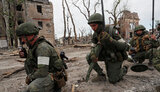 Russia has not taken advantage of weapons shortage in Ukraine and has been able to make only limited progress on battlefield - Bloomberg Russia appears to have failed to take advantage of the delay in arms supplies to Ukraine by its allies to make significant gains on the frontline. The window for a Russian breakthrough is narrowing, even as Moscow continues to fire missiles and drones at Ukrainian cities, including energy... 8 589 51 Previously in trend: War
 US plans to send Ukraine another Patriot battery along with radars - Bloomberg The United States is considering sending another Patriot battery to Ukraine. 5 451 46
 US has no "plan B" for military aid to Ukraine - Bloomberg US President Joe Biden’s administration is growing increasingly frustrated with both Republicans in Congress and allies in Europe over delays in funding Ukraine’s fight against Russia 12 223 73
 Ukraine aid and US border security deal is "on the verge of collapse" in Senate - Bloomberg A difficult bipartisan deal to impose new US border restrictions and unblock military aid to Ukraine is "on the verge of collapse" in the Senate. Republican support has collapsed in the face of opposition from presidential candidate Donald Trump. 20 525 123 Previously in trend: Aid to Ukraine
 Umierov warns allies of critical shortage of shells in letter to EU - Bloomberg Ukraine’s Defence Minister Rustem Umierov has written to his EU counterparts to warn of a critical shortage of artillery shells. 8 336 66 Previously in trend: Russian aggression against Ukraine War
 Russia is not ready to change its position regarding Ukraine’s accession to NATO - Peskov The spokesman of the Russian dictator Dmytro Peskov commented on the information of the Western media that the Russian Federation is allegedly ready to discuss the end of the war in Ukraine. 10 935 53
 Hungary will not block new EU military aid fund for Ukraine – Bloomberg Hungary will drop its objections to the creation of a €5 billion military aid fund for Ukraine, paving the way for an agreement to modernize the mechanism aimed at steady arms supplies to Ukraine. 7 582 43 Previously in trend: Aid to Ukraine
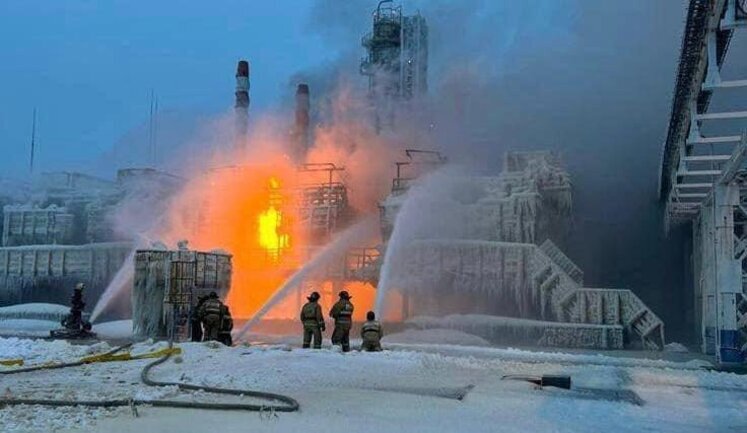
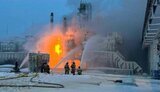 Russian oil terminal attacked by SSU drones stops work. PHOTO As a result of a night attack by SSU drones, the "Ust-Luga Oil" oil terminal in Leningrad Region of the Russian Federation stopped its work 29 147 118
 Businessman Mazepa detained for complaints about corruption and law enforcement pressure on business – Bloomberg Foreign media link the detention of businessman and founder of the investment company Concorde Capital, Ihor Mazepa, to his criticism of law enforcement and the courts. 8 595 87
 EU starts discussing new package of sanctions against Russia – Bloomberg The European Union has begun discussions on a new package of sanctions against Russia, which is expected to be introduced until February 24, the second anniversary of Russia’s full-scale invasion of Ukraine. 893 1 Previously in trend: Sanctions against Russia
 Davos talks on Ukraine’s peace formula end without clear outcome - Bloomberg The fourth round of discussions on sustainable and just peace in Ukraine, which took place on January 14 in Davos, ended without a clear plan. 21 556 86
 White House supported confiscation of Russian assets for transfer to Ukraine - Bloomberg The administration of US President Joe Biden has supported a draft law that will allow confiscating about $300 billion from frozen Russian assets and directing these funds to the reconstruction of Ukraine. 3 632 17
 Russia’s oil export revenues exceed pre-war levels - Bloomberg Russia’s net oil revenues reached $11.3bn in October, which is 31% of the country’s total budget for the month. 14 849 152
 Countries that did not condemn war against Ukraine lost $180 billion in investments, - Bloomberg About $180 billion of foreign direct investment in 2022 moved from countries that refused to condemn the Russian invasion to those that supported Ukraine. 7 409 9
 EU is preparing 50 billion euro financial aid package for Ukraine, - Bloomberg The European Union is ready to offer a package of financial assistance in the amount of about 50 billion euros to support Ukraine before a counteroffensive. Details of the package are due to be announced today, June 20, in London. 2 801 17 Previously in trend: Russian aggression against Ukraine
 White House is dissatisfied with Macron’s initiatives for peace talks without consulting allies, - Bloomberg The White House disapproved of the initiatives announced by French President Emmanuel Macron regarding peace talks between Ukraine and the Russian Federation, which were made without consulting the allies. 3 416 14
 Because of war, Russia classified third of its expenditures. This is unprecedented indicator, - Bloomberg For the first time in history, Russia is hiding a third of its budget expenditures. It shows how a year of war changed her finances and economic priorities. 4 038 3 Previously in trend: War
 Russia is unlikely to be able to recruit another 400,000 soldiers for war against Ukraine, - mass media The Kremlin aims to recruit up to 400,000 contract workers this year to replenish its ranks. But more and more experts agree that this goal of the Russian Federation is not realistic. 7 420 49 Previously in trend: Russian aggression against Ukraine War
 US is sending oil supertankers to Europe, - Bloomberg Europe is going to import a record amount of American oil in March. For this, the US sends supertankers to it. 7 481 17
 India decides not to violate Western sanctions against Russia - Bloomberg India will not violate Western sanctions against Russia, including the $60 price ceiling on Russian oil. 12 303 43 Previously in trend: Sanctions against Russia
 Pentagon wants to receive $170 billion for missiles and replacement of ammunition supplied to Ukraine - Bloomberg The Pentagon’s $170 billion procurement request for the new fiscal year is aimed at replacing ammunition supplied to Ukraine, as well as weapons such as long-range missiles that will be needed in the conflict with China. 3 870 10
 Tensions arose between Germany and Poland due to aid to Ukraine, - Bloomberg NATO allies show unity in support of Ukraine, but tensions between Germany and Poland risk undermining joint efforts to deliver aid to Defense Forces. 14 251 16 Previously in trend: Russian aggression against Ukraine War
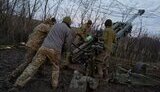 AFU almost ran out of ammunition. They spend 5,000 shells per day, - deputy head of PO, Zhovkva Due to the high intensity of hostilities, the defenders of Ukraine have almost run out of ammunition. Every day, the Armed Forces spend about 5,000 shells. 65 494 360 Previously in trend: War
 Russians at Bakhmut have suffered heavy losses and are getting exhausted. Armed Forces have chance for counteroffensive, - Bloomberg Russian troops in their efforts to capture Bakhmut in the Donetsk region are greatly exhausted. Thanks to this, the Armed Forces have a chance for a new counteroffensive. 18 216 24 Previously in trend: War
 Oil sanctions are hurting Russia’s economy - Bloomberg The almost complete ban on Russian oil imports to the European Union has painfully hit Russia’s oil revenues. 11 848 42 Previously in trend: Sanctions against Russia
 12 EU countries demand to reduce maximum price for gas, - Bloomberg 12 countries of the European Union, during the negotiations on the introduction of the maximum price for gas, declared the need to set it much lower than what is currently proposed 6 335 10
 US is ready to allocate $1.5 billion to Ukraine every month until end of war, - Bloomberg The USA is ready to financially support Ukraine and is pushing its European allies to allocate similar amounts. 7 485 36 Previously in trend: Russian aggression against Ukraine
 Industry in Europe is winding down due to high gas prices, - Bloomberg Europe’s industrial giants are starting to cut production on the continent, even as gas shortages ease, because its price is too high. 7 986 24
 Russia’s oil and gas revenues fell to minimum in August, despite significant increase in prices, - Bloomberg Russia’s revenues from oil and gas exports fell to their lowest level in nearly a year, despite a significant rise in prices. 3 037 9 Previously in trend: Sanctions against Russia War
 Seventh package of EU sanctions against Russia will be ready in coming weeks, - Bloomberg The European Union plans to introduce a new, seventh package of sanctions against Russia in connection with its full-scale invasion of Ukraine "in the coming weeks." 3 120 5 Previously in trend: Sanctions against Russia
 G7 countries will commit to support Ukraine indefinitely, - Bloomberg. The leaders of the G7 want to commit to providing indefinite support to Ukraine to defend against Russian invasion. Earlier, some countries hinted that they would rather a ceasefire through negotiations. 7 077 24
 All EU countries will approve granting Ukraine candidate status - Bloomberg All 27 member states of the European Union intend to officially approve the granting of Ukraine the status of a candidate for EU membership. 2 465 15
Putin sounds more desperate as Russia loses arms sales volumes, - BloombergView Sales of Russian arms have stalled over the past several years due to several reasons. This is really untimely for Russia. 54 957 79
Putin’s spokesperson slams reports on plan to join occupied Donbas to Russia, calls them naive Spokesperson for the Russian president Dmitry Peskov claims that Moscow is not trying to integrate the breakaway “Donetsk and Luhansk Peoples Republics” into Russia. 40 823 115 Previously in trend: Occupied territories - Crimea and Donbas
EU to extend sanctions against Russia in March, - Bloomberg The European Union plans to renew asset freezes and travel bans against key allies of Russian President Vladimir Putin who are accused of destabilizing Ukraine. 22 095 108 Previously in trend: Sanctions against Russia
US offers Europe to use Israeli gas instead of Russia's, - Bloomberg Europe could dramatically reduce its dependence on Russian gas and replace it with gas from Israel. 38 510 144
Putin's plans for new gas pipes to Europe politcally motivated, - Bloomberg Russian plans to build new gas pipelines to Europe are politically motivated with little economic logic. 13 833 91
Plug-in cars may cause new slump in oil prices, - Bloomberg In the next two years, electric car industry may cause a new collapse of oil prices. 67 105 729
Gazprom intends to continue gas supplies to Ukraine, despite Kyiv's halt in purchases, - Bloomberg Even after Ukraine halted natural gas purchases from Russia in November, Gazprom plans to resume and maintain exports to its eastern neighbor for at least three more years. 20 166 98
Germany asks Ukraine for compromise on Russian loan, - Bloomberg Germany is asking Ukraine to propose a new offer to resolve a dispute with Russia over a $3 billion bond default after President Vladimir Putin’s government rejected a proposal put forward last month. 10 921 99 Previously in trend: Ukraine’s agreement with creditors
Page 1 of 2
more news