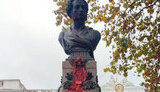
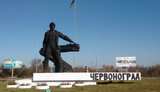
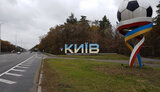
The renaming of streets and institutions in Ukraine is a significant part of the country's decommunization and de-Russification efforts. Recently, Ukraine has seen numerous renaming projects as a means to honor national figures, like the naming of a street in Kyiv after Andrii Parubii. Controversially, a park in Chernihiv was renamed after Donald Trump, sparking comments from the Ukrainian Institute of National Remembrance regarding national memory law violations. In Odesa, certain Russian-associated street names remain unchanged despite protests, highlighting the complexities of these initiatives. As Ukraine continues these renaming efforts, debates and discussions reflect the diverse opinions on preserving history while forming a national identity.
Why was a street in Kyiv named after Andrii Parubii?
Andrii Parubii was a prominent Ukrainian political figure, previously serving as the Speaker of Verkhovna Rada. To honor his legacy following his untimely death in Lviv, a decision supported by public polls led to naming a street in Kyiv after him as a tribute to his contributions to Ukraine's political landscape.
What controversy surrounds the park named after Donald Trump in Chernihiv?
The decision to rename a park in Chernihiv after Donald Trump generated significant backlash. The Ukrainian Institute of National Remembrance criticized this action as a gross violation of Ukrainian law, as it diverges from the state policy on national memory and historical preservation, which typically honors local or historical figures.
How has the Ministry of Culture in Ukraine contributed to the renaming process?
The Ministry of Culture played a pivotal role by renaming the P. I. Tchaikovsky National Music Academy of Ukraine, removing Tchaikovsky's name to better reflect Ukrainian identity. This move is part of a broader effort to decolonize and redefine cultural symbols within Ukraine, aligning them with the country’s heritage.
What were the outcomes of the Odesa City Council's decision on street names?
The Odesa City Council decided not to rename 15 streets and 7 lanes connected to Russian historical figures, a decision that sparked debate. While some argued for the preservation of history, others viewed it as a missed opportunity to break from past influences and assert a distinct Ukrainian national identity.
Has the de-Russification process faced any obstacles in Ukraine's parliament?
Yes, the de-Russification process has encountered obstacles, including a failure to pass a resolution to rename 333 settlements due to MPs blocking the rostrum in the Verkhovna Rada. This highlights the political challenges and varied perspectives within Ukraine regarding the renaming efforts tied to decolonization and historical reassessment.