ENG




11247 visitors online
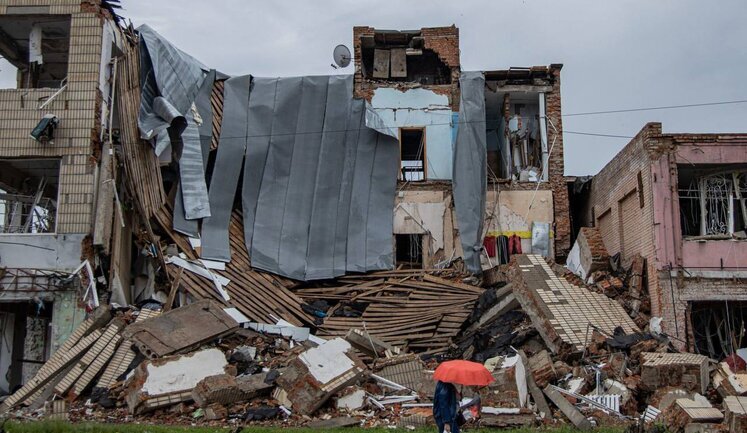
International efforts to address Russian aggression against Ukraine are gaining momentum, with 25 states agreeing to form a special tribunal to prosecute Russian crimes. This move marks a significant step in holding Russia accountable for its actions. Amidst these developments, the United States has decided to withdraw from the International Centre for Investigation of Russian Crimes against Ukraine, causing a stir in international circles. This withdrawal raises questions about the global unity required to address such aggression. Concurrently, millions of damage claims are expected, highlighting the extensive impact of Russia's actions. The international community, including prominent leaders from the UK and Kazakhstan, have raised concerns about the broader threats posed by Russian aggression. Polish and British leaders have voiced the necessity of drawing conclusions and preparing for possible threats, emphasizing the global stakes involved. As these tensions escalate, global cooperation becomes vital.
What are the international efforts against Russian aggression?
The international community is actively addressing Russian aggression by establishing a special tribunal to prosecute crimes committed by Russia in Ukraine. This move involves 25 states working together to ensure accountability. Efforts also include managing the extensive damages caused by Russia's actions, with at least 6-8 million claims expected. Leaders worldwide are urging global unity and cooperation to address and mitigate the threats posed by Russia.
Why did the United States withdraw from investigating Russian crimes?
The United States withdrew from the International Centre for Investigation of Russian Crimes against Ukraine, reflecting a significant shift in its approach to handling Russia's aggression. This decision, reportedly influenced by President Trump's stance, has prompted discussions on the potential impact on international efforts and the importance of global unity in addressing aggressive actions against sovereign nations.
How is Russian aggression affecting global security?
Russian aggression significantly threatens global security, with implications far beyond Ukraine. International leaders, including those from the UK and Kazakhstan, warn of potential broader threats, emphasizing the need for strategic global responses. The Polish Prime Minister highlighted risks even to Europe, urging for lessons to be drawn from the current situation to prevent further escalations.
What are the expected outcomes of forming a tribunal for Russian war crimes?
The establishment of a special tribunal aims to hold Russia accountable for its crimes of aggression against Ukraine. This legal framework is expected to provide justice for the extensive damages and violations committed, ensure accountability for the perpetrators, and send a strong message against impunity in international conflicts. Such efforts underline the importance of international law in maintaining global peace and security.
How are international leaders responding to Russian territorial threats?
International leaders are voicing serious concerns about Russian territorial threats, emphasizing the need for diplomatic and strategic measures to counter such aggression. Leaders from the UK and Kazakhstan have raised alarms about potential threats to their nations, highlighting the global repercussions of Russia's expansive actions. These discussions underscore the importance of collaborative international defense strategies.
What is the significance of the damage claims resulting from Russian aggression?
The anticipated 6-8 million damage claims resulting from Russian aggression illustrate the extensive human and economic costs of the conflict. These claims highlight the urgent need for effective international response mechanisms to address and compensate affected populations. The scale of these claims underscores the long-term impact on Ukraine's recovery and the importance of global support in rebuilding efforts.
News agression
 Estonia better prepared for possible Russian aggression than NATO as whole – Defence Minister Pevkur Estonian Defence Minister Hanno Pevkur expressed confidence that his country is "better prepared than NATO as a whole" for possible Russian aggression. 1 382 14 Previously in trend: Threat of Russian agression to EU Estonia protects border with Russia Drone crash in Estonia
 Zelenskyy has called for increased pressure on Russia over war crimes Ukrainian President Volodymyr Zelenskyy stated that the world has no right to forget the crimes Russia committed against Ukrainians during the full-scale war. 833 8 Previously in trend: War crimes of Russia
 Aggression against Ukraine: 25 states agree to establish tribunal for Russian crimes Work is continuing in Europe on the creation of a Special Tribunal to consider the crime of aggression committed by the Russian Federation against Ukraine. 1 423 7 Previously in trend: special tribunal for the crimes of the Russian Federation
 United States withdraws from International Centre for Investigation of Russian Crimes against Ukraine. Trump refuses to hold Putin accountable - New York Times The US will withdraw from the international group investigating Russia's actions in the war against Ukraine. 24 174 219 Previously in trend: US leaves team investigating Russian crimes in Ukraine
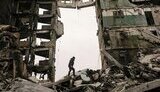 Register of damages from Russian aggression expects at least 6-8 million applications - Lubinets The register of damages caused by Russia's full-scale war against Ukraine expects at least 6-8 million applications. 402 0
 Russia’s aggression against Ukraine threatens Great Britain - Starmer Residents of the United Kingdom may also be threatened by Russian aggression. 1 936 12
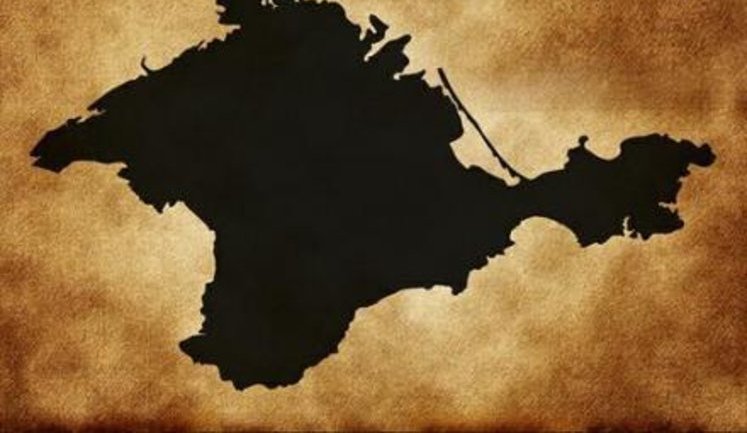
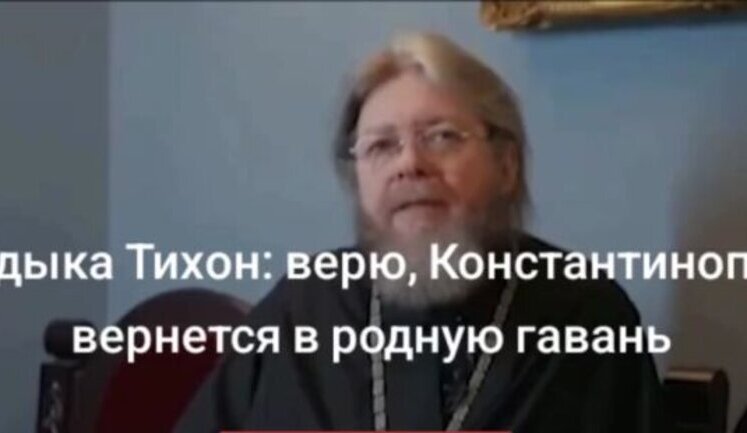
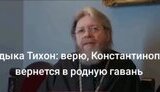 Metropolitan Tikhon of Russian Orthodox Church made territorial claims against Turkey: "I believe that Constantinople will return to its native harbor, just like Crimea". VIDEO Metropolitan Tikhon of Simferopol and Crimea, who is considered the main candidate for the Russian Orthodox Church patriarch after the death of the current head of the Russian church, Kirill, has declared territorial claims to Turkey. 12 248 84
 Russia will not stop as long as it exists within its current borders - Kazakh historian Albani. VIDEO The threats of Russian troops capturing northern Kazakhstan, which are being voiced by Russian propagandists, should be taken very seriously, says historian and publicist Bakhtiyar Albani, nephew of Dinmukhamed Kunayev (the first secretary of the Central Committee of the Communist Party of the... 9 670 40
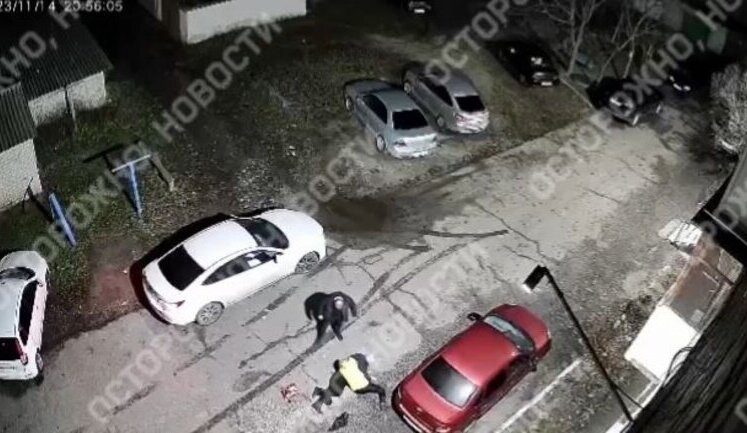
 "I’m your f#cking master" - Russian occupier on vacation first conducts "lessons of courage" at school and then brutally beats his neighbors. VIDEO The Russian occupier, who came on leave from the war, first gave a "lesson in courage" at the school and then severely beat the neighbours. 30 096 93 Previously in trend: Russian aggression against Ukraine War
 Skabeeva’s propagandists discuss ’rescue’ plan for Europe: "Italy and France should be attacked. There is something to be saved there". VIDEO Guests of the Kremlin’s propaganda show on RosTV recommend that Russian troops should first of all "save" France and Italy in the event of a war against NATO member states. 17 394 55 Previously in trend: War
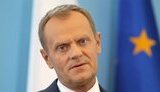 Russia may attack Europe if it does not draw conclusions from present - Polish Prime Minister Tusk The Russian Federation may attack Europe in a few years if European countries do not draw conclusions from the Russian economy’s reorganization to military dimensions and do not significantly strengthen the capabilities of their defense industry. 5 010 44
 During December 20, Defense Forces repelled Russian attacks in 6 directions, 31 assault were repelled near Avdiivka,- General Staff The General Staff of the AFU published operational information on the Russian invasion as of 18.00 on December 20, 2023. 776 1 Previously in trend: Russian aggression against Ukraine War
 During December 7, Russians conducted unsuccessful attacks in six directions, 19 enemy attacks were repelled near Bakhmut, - General Staff The General Staff of the Armed Forces of Ukraine released operational information on the Russian invasion as of 18:00 on December 7, 2023. 1 004 4 Previously in trend: Russian aggression against Ukraine War
 Kremlin propagandists in Solovyov’s studio plan further aggression: "To be honest, I prefer California to Lisbon". VIDEO Kremlin propagandists in Vladimir Solovyov’s studio spoke about their vision of Russia’s further military expansion. 12 787 69 Previously in trend: War
 Russian youth are lining up to buy T-shirts with inscriptions "Odesa is, of course, Russian city" and "Crimea, which people have decided to annex". VIDEO Young Russians lined up to buy T-shirts with anti-Ukrainian quotes from Vladimir Putin. 27 655 111 Previously in trend: War
 During November 17, Russians unsuccessfully attacked in six directions, - General Staff The General Staff of the Armed Forces of Ukraine released operational information on the Russian invasion as of 18:00 on November 17, 2023. 768 0 Previously in trend: Russian aggression against Ukraine War
 Enemy tried to restore lost position in area of Klishchiivka, Avdiivka, Novodarivka, unsuccessfully, - General Staff The Defense Forces of Ukraine continue to conduct defense in the east and south of Ukraine, offensive operations in the Melitopol direction and offensive actions in the Bakhmut direction, destroy the enemy, step by step vacate the temporarily occupied territories, and consolidate on the reached borders. 1 361 1 Previously in trend: War
 Ukraine has already returned about 50% of territory that was originally seized by Russia, - Blinken US Secretary of State Anthony Blinken said that Ukraine has already recaptured about half of its territories, which were occupied by Russia since the beginning of the full-scale invasion. 4 654 57 Previously in trend: Russian aggression against Ukraine War
 For first time, China voted for UN resolution in which Russian Federation is called aggressor For the first time, China voted in favor of the UN resolution, in which the Russian Federation is called an aggressor, although previously it either abstained or voted against it. 32 337 77 Previously in trend: Russian aggression against Ukraine War
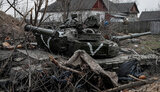 Enemy is conducting offensive operations in Lyman, Bakhmut, Avdiivka, Mariinka, and Shakhtarsk directions, - General Staff The General Staff of the Armed Forces of Ukraine published operational information regarding the Russian invasion as of 6:00 p.m. on March 11, 2023. 1 945 1 Previously in trend: Russian aggression against Ukraine War
 Putin and all those involved in crimes of aggression in Ukraine must be brought to justice. Without this, peace will not come - Metsola Peace is impossible in Ukraine without prosecution of those guilty of war crimes. 2 364 11 Previously in trend: War
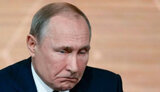 Russians may disappear as ethnic group - Putin recognized threat of collapse of Russian Federation Vladimir Putin does not rule out the scenario of the collapse of Russia. He stated that "if the West succeeds in destroying the Russian Federation," the Russian people may not survive. 39 308 340 Previously in trend: Russian aggression against Ukraine War
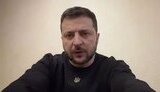 Significant news for state security is expected next week, - Zelenskyy Ukraine’s diplomatic work next week will be devoted to accelerating our progress, and we expect significant news for our country’s security. Russia’s aggression against Ukraine will have only one outcome - defeat of a terrorist state. 6 470 43 Previously in trend: Russian aggression against Ukraine War
 Zelenskyy announces decisions and negotiations that will provide Ukraine with more support and weapons President of Ukraine Volodymyr Zelenskyy announced decisions and negotiations that will give Ukraine more international support and weapons. 6 137 23
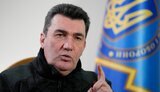 Russia seeks at least some victory by February 24 - Danilov The Russian leadership wants to enlist as many people as possible, so it wants to mark the anniversary of the full-scale invasion with at least some kind of victory. 3 870 21 Previously in trend: Russian aggression against Ukraine War
 Aggression of Russian Federation did not begin in 2022, but in 2014, - PACE resolution The Parliamentary Assembly of the Council of Europe approved a report and a resolution entitled "Sexual violence in times of conflict", devoted, among other things, to the issue of Russian aggression against Ukraine. 4 296 60 Previously in trend: Russian aggression against Ukraine War
 Canadian volunteer Tsekhmistrenko was killed in war - CBC News Canadian volunteer Hryhoriy Tsekhmistrenko, who fought against Russian invaders since the beginning of the invasion, was killed in Ukraine. 16 511 33 Previously in trend: Russian aggression against Ukraine War
 There will be no Third World War. Ukraine will stop Russian aggression on our land, - Zelenskyi There will be no Third World War; this is not a trilogy, Ukraine will stop Russian aggression on our land. 4 147 13 Previously in trend: War
 Russian occupiers are conducting offensive actions in Bakhmut and Lyman directions, - General Staff The General Staff of the Armed Forces of Ukraine released operational information regarding the Russian invasion as of 6:00 p.m. on December 5, 2023. 4 374 15 Previously in trend: Russian aggression against Ukraine War
 Ukraine will have all necessary weapons to liberate its land from enemy, - Kuleba Ukraine will have all the necessary weapons to liberate its land from the invaders, it is only a matter of time. 5 693 35 Previously in trend: Russian aggression against Ukraine War
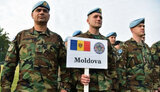 Russia may invade Moldova in 2023, - head of Information and Security Service of country Mustiace The Russian Federation plans to invade the territory of Moldova in 2023. 10 509 145 Previously in trend: War
 China blocked the communiqué of G20 summit condemning Russia’s war against Ukraine, - mass media In closed-door meetings to draft the G20 communique, China strongly backed Russia, blocking attempts by Western officials to include language condemning the war. 51 989 89 Previously in trend: War
 Kuleba called on countries of Association of Southeast Asian Nations to condemn Russia’s aggression against Ukraine Dmytro Kuleba called on the countries of the Association of Southeast Asian Nations to condemn Russian aggression against Ukraine. 435 1
 PACE recognized Russia as country with terrorist regime The Parliamentary Assembly of the Council of Europe adopted a resolution calling the Russian Federation a terrorist regime. 25 407 121 Previously in trend: Russian aggression against Ukraine War
 NATO is preparing new projects to help Ukraine resist Russian aggression during winter, - Stoltenberg NATO Secretary General Jens Stoltenberg states that the alliance is preparing a number of new projects to help Ukraine survive the winter, which will be difficult due to Russian aggression. The alliance will continue to help Kyiv defend its independence, otherwise Russia may risk continued aggression against other neighbors and even attack NATO allies. 2 863 7 Previously in trend: War
 Russia is not interested in negotiations, it is interested in full domination in Ukraine, - Zelensky Ukrainian President Volodymyr Zelensky believes that Russia speaks the language of ultimatums. 7 184 50 Previously in trend: Russian aggression against Ukraine War
 We need to defeat occupiers, - Zelensky Ukrainian President Volodymyr Zelensky stated the need to "defeat the occupiers". 9 519 71 Previously in trend: Russian aggression against Ukraine War
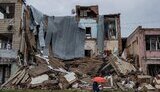 Our response to Russian aggression must be united, - Zelenskyi. PHOTOS Russian aggression against Ukraine is also aggression against the entire united Europe. 3 023 13 Previously in trend: War
 On June 12, 18 occupants, 1 mortar, 1 ammunition depot were destroyed in eastern direction - OTU "East" Ukrainian defenders continue to deter the aggressor in the area of responsibility of the operational and tactical unit "East". 1 893 6 Previously in trend: Russian aggression against Ukraine War
 Russia is sowing chaos to force Ukraine to capitulate, - Reznikov Ukraine will never make territorial concessions to Russia. The Kremlin is deliberately wreaking havoc to force the country to capitulate, but such tactics are not working. 10 008 20 Previously in trend: Russian aggression against Ukraine War
 Operational information of General Staff regarding Russian invasion at 6:00 pm on June 11 The General Staff of the Armed Forces of Ukraine has released operational information on the Russian invasion as of 6 pm on June 11. 10 241 30 Previously in trend: Russian aggression against Ukraine War
 "Destruction, death, explosions": Lukashenko's dictator associate Volfovich threatened Poland, Lithuania and Latvia with war The so-called " State Secretary of the Security Council of Belarus" Alexander Volfovich threatened three EU countries - Poland, Lithuania and Latvia - with "destruction, death and explosions". 53 852 120
 Enemy is preparing additional units to participate in hostilities on territory of Ukraine - operational information of General Staff at 24:00 on April 2 The General Staff of the Armed Forces of Ukraine has released operational information on the Russian invasion as of 24:00 on April 2. 10 781 9 Previously in trend: Russian aggression against Ukraine War
 Border Guard Service denies violations of Russian border by Ukrainian subversive reconnaissance unit Statements by the Russian force structures about the alleged violation of the Russian state border by the Ukrainian subversive reconnaissance unit are fake, the State Border Guard Service of Ukraine said. 1 829 8 Previously in trend: War
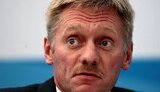 Threat of Ukraine's armed attack on Donbas is high, - Peskov The Kremlin has said that Kyiv is allegedly preparing for offensive operations in the occupied territories of Donbas. 39 060 137 Previously in trend: Russian aggression against Ukraine War
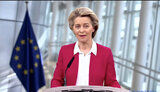 President of European Commission announces new MFA package to support Ukraine President of the European Commission Ursula von der Leyen announced that the European Union will provide a new package of financial assistance to support Ukraine. 5 188 50 Previously in trend: War
 Some 94,300 Russian troops deployed on Russia's territory, Ukraine's temporary occupied territories may be involved in escalation – Reznikov. VIDEO The total number of troops on the territory of the Russian Federation, as well as in the temporarily occupied territories that can be used for escalation, is now estimated at 94,300 people, Defense Minister of Ukraine Oleksiy Reznikov said. 7 471 58 Previously in trend: Russian aggression against Ukraine War
 We see continued aggressive actions against Ukraine in Black, Azov Seas – U.S. Secretary of State Blinken United States Secretary of State Antony Blinken said the United States is observing the ongoing aggressive actions by Russia against Ukraine in the Black and Azov Seas, as well as in the Kerch Strait. 2 205 17 Previously in trend: Russian aggression against Ukraine
Page 1 of 9
more news