ENG




19165 visitors online
Weather in Ukraine can significantly impact daily life and defense operations. Recent reports highlight that adverse weather has led to a reduction in the use of guided aerial bombs by Russian forces in southern Ukraine. This emphasizes the evolving nature of military strategies due to weather. Furthermore, the Ministry of Defense has noted that while shooting down "Shaheds" might seem positive, poor weather can complicate air defense efforts. In urban centers, severe weather causes disruptions, like the floods reported in Mariupol and Lviv, affecting daily commutes and city operations. Forecasts from the Ukrhydrometeorological Center suggest mild winters, reducing the likelihood of prolonged freezing periods, yet caution should remain. Regular updates from the State Emergency Service underline the importance of staying informed during adverse weather conditions.
How does weather affect military operations in Ukraine?
Weather can significantly alter military strategies. For instance, adverse weather conditions in southern Ukraine have prompted Russian forces to reduce the use of guided aerial bombs. Additionally, varying weather can impact logistics, visibility, and equipment functionality, necessitating adaptive strategies from military planners to maintain operational effectiveness and safety.
What are the common weather challenges faced by Ukrainian cities?
Ukrainian cities often encounter severe weather challenges such as heavy rainfall, snowstorms, and strong winds. These can lead to significant disruptions, such as flooding in streets, power outages, and increased risks of road accidents. For example, recent heavy rains in cities like Mariupol and Lviv have resulted in major flooding, impacting daily life and infrastructure.
What does the forecast say about winter conditions in Ukraine?
The Ukrhydrometeorological Center forecasts a winter that is not expected to be harsh, with long-lasting frost considered unlikely. This prediction provides some relief to residents and the energy sector, although precautions are always recommended due to potential deviations and unexpected weather patterns.
How does adverse weather impact Ukraine's power infrastructure?
Adverse weather, including strong winds, heavy snow, or rain, can severely affect Ukraine's power infrastructure. It often leads to widespread power outages as protective systems disengage to prevent damage. This has been observed frequently, with numerous towns and villages across various regions experiencing disruptions due to severe weather.
How do severe weather events impact transportation in Ukraine?
Severe weather events, such as snowstorms and heavy rain, can cause significant disruption to transportation networks in Ukraine. These conditions often lead to road closures, increased risk of accidents, and delayed local services. In regions like Dnipro, severe weather has resulted in gridlock and temporary closures of transport facilities, impacting everyday travel plans.
What measures does Ukraine take to address adverse weather effects?
Ukraine employs various measures to address adverse weather, including issuing timely warnings, mobilizing State Emergency Services for quick response, and implementing infrastructure improvements. Efforts are geared towards minimizing impacts on society and ensuring public safety through proactive planning and rapid response to emergencies.
News weather
 Concrete slabs have buckled on Kyiv–Kovel–Yahodyn motorway due to heatwave. PHOTOS In the Zhytomyr region, concrete slabs on the M-07 Kyiv–Kovel–Yahodyn international motorway are warping due to the intense heat, posing a potential hazard to drivers. 22 654 42
 Severe heat wave from Africa is set to hit Ukraine: temperatures will rise to +37° as early as this weekend The Ukrainian Hydrometeorological Center has issued a warning about a severe heat wave that will soon hit Ukraine. 4 391 23
 Bad weather shows no sign of abating: dangerous conditions are set to persist in Ukraine for another two days A warning regarding hazardous weather conditions has been issued for most regions of Ukraine on 27 and 28 April. 5 437 3
 One person died, another one is being searched for: car with people went under ice while drifting on Kyiv Reservoir. VIDEO Disregard for safety rules and driving on thin ice led to a fatal accident in the Kyiv region. According to Censor.NET, a video has been published online showing the moment a passenger car sank. 16 183 80
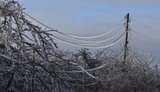 Bad weather damages power grids in Mykolaiv region: emergency outages reported across region In the Mykolaiv region, emergency power outages have been introduced in a number of communities due to severe weather conditions. 926 1 Previously in trend: Power outages
 Schools and universities may switch to distance learning until January 19, Svyrydenko says On Thursday, January 8, the Cabinet of Ministers adopted a decision on organizing the educational process in Ukraine for the period of a sharp cold snap. 4 316 9 Previously in trend: Education in Ukraine
 Over 75,000 customers in Kyiv region left without electricity due to deteriorating weather Due to severe weather conditions, 75,000 households in the Kyiv region have been left without electricity. 1 450 4 Previously in trend: Power outages
 Kyivavtodor warned of difficult weather conditions: drivers advised to switch to public transport Kyiv is preparing for worsening weather conditions. On Thursday morning, 8 January, forecasters predict heavy snowfall. 2 361 5
 Prime Minister Svyrydenko warns of unscheduled power outages due to weather Ukraine’s Prime Minister Yuliia Svyrydenko said that unscheduled power outages are possible in Ukraine due to worsening weather. 2 606 15 Previously in trend: Power outages
 Weather conditions forced Russians to reduce use of guided aerial bombs in south, - Operational Command "South" Due to weather conditions, the enemy used only 12 KABs over the past day, which is extremely small compared to what was before. 1 401 2 Previously in trend: Russian aggression against Ukraine War
 Autumn and winter weather will complicate combat operations, but different scenarios are possible - Defense Forces The Ukrainian Armed Forces are preparing for the onset of autumn and winter cold weather. They will make combat operations more difficult, but much depends on whether it rains first or frosts hit immediately. 1 683 5
 Cheap "mopeds" are exhausting our air defense - Ministry of Defense explained how weather affects enemy attacks and why you should not be happy about shooting down of "Shaheds". INFOGRAPHICS Calm weather and clear skies help to conduct reconnaissance of the objects of impact. But neither the fog nor the haze significantly affect the Russians’ plans for attacks. 28 247 138 Previously in trend: War
 Winter in Ukraine will not be harsh. Probability of long frosts is negligible, - Ukrhydrometeorological center The next winter in Ukraine will not be severe, and the probability of prolonged frosts is "slight". 14 296 53 Previously in trend: War
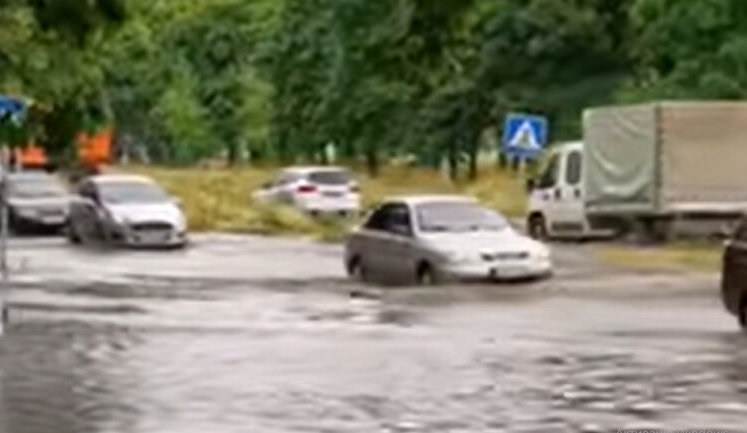
 After downpour, streets of Mariupol are drowning in filth, - Andryushchenko. VIDEO In Mariupol, due to heavy rainfall, the streets were flooded with water and sewage from clogged drains and sewers. 10 776 32
 National Security and Defense Council called "non-flying weather" manipulation at parades in Russia The Center for Combating Disinformation at the National Security and Defense Council of Ukraine called the cancellation of the aviation part of the May 9 parade in Russia due to "bad weather" a manipulation. 11 638 13
 Kyiv records hottest night since 1922 The night of Sunday into Monday has turned out to be the hottest in Kyiv city since 1922, according to the Central Geophysical Observatory named after Borys Sreznevskyi. 7 733 4
 Kyiv breaks another heat record New temperature record was set in the city of Kyiv on June 24, 2021, Ukrinform reports with reference to the website of the Central Geophysical Observatory named after Borys Sreznevskyi. 5 009 3
 Bad weather leaves 120 towns and villages in five Ukrainian regions without electricity Bad weather conditions have left 120 towns and villages in five regions of Ukraine without electricity, the State Emergency Service of Ukraine reports. 3 232 10
 Bad weather leaves 234 towns and villages in Ukraine without electricity Adverse weather conditions have left 234 towns and villages in 3 regions of Ukraine without electricity, the State Emergency Service of Ukraine reports. 1 581 0
 Bad weather leaves 80 towns and villages in five regions without electricity Adverse weather conditions have left 80 populated areas in five regions of Ukraine without electricity, the State Emergency Service of Ukraine reports. 1 745 3
 Some 178 towns and villages in Ukraine left without electricity due to bad weather As of Monday morning, June 15, some 178 populated areas in nine regions of Ukraine were left without electricity due to bad weather conditions, the State Emergency Service of Ukraine has reported. 5 734 4
 251 settlements in seven regions of Ukraine cut off grid due to harsh weather Massive blackouts are observed in seven regions of Ukraine, mostly in the western and the northwestern regions. 3 238 13
 Weather forecasters warn of ground frost in Ukraine Weather forecasters warn of ground frost in most regions of Ukraine in the coming days. 8 163 30
 Sixty-eight towns and villages in Ukraine remain without electricity due to bad weather As of Friday morning, 68 populated areas in five regions of Ukraine remained without electricity due to bad weather. 1 372 4
 Bad weather leaves 146 settlements in Ukraine without electricity On the night of May 20 to 21, bad weather left 146 populated areas in five regions of Ukraine without electricity. 6 239 7
 Large tornado captured on camera near Kirovohrad region. VIDEO Big tornado was captured near Zlynka village in Kirovohrad region. 15 433 41
 Bad weather de-energizes 170 towns and villages countrywide, - State Emergency Service Heavy snawfalls, violent wind gusts have left 170 populated areas in six regions of Ukraine without power. 5 254 11
 About 100 trucks remain snowbound between Cherkasy and Kyiv regions since yesterday, Interior Minister Avakov says. PHOTOS The Interior Ministry personnel were sent to the border between Cherkasy and Kyiv regions to rescue more than 100 trucks that still remain stuck in snow piles. 10 643 44
 State Emergency Service issues severe weather warning for Ukraine The State Emergency Service of Ukraine says there is high risk of mud flows in the Carpathian Mountains. 90 360 63
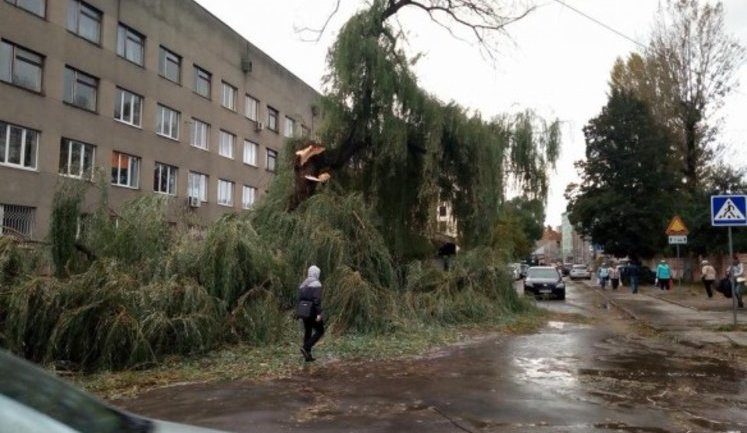
 Toppled trees and damaged cars: State Emergency Service liquidating storm aftermath in Lviv and region. PHOTOS The storm raged in Lviv and the region at night of Oct. 5 and early hours of Oct. 6. 30 064 10
 Strong winds and rains coming to Ukraine Strong wind will sweep across the entire country. 234 317 34
 About 500 villages and towns cut off electricity supply in Ukraine due to bad weather, - State Emergency Service On Sept. 17-18, 478 villages and towns in six regions of Ukraine were cut off electricity supply due to emergency protection system going off over bad weather conditions (rain, thunderstorms, and strong wind). 31 111 4
Road accidents caused by severe weather claimed seven lives in half a day, - Infrastructure Minister Omelian Seven people died in road traffic accidents that took place due to severe weather conditions in half a day. 24 340 7
 "It’s 7 a.m., two degrees below zero, and 8 centimeters of snow in the yard. I feel sorry for trees that just started to blossom," - abnormal snowfall covered Dnipro City. VIDEO Heavy snowfall caused gridlock in Dnipro City, the flights at the local airport were canceled, and schools were temporarily closed. 56 404 91
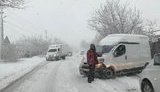 Heavy snow shower in Dnipro City: gridlock on roads, airport closed. PHOTOS Severe weather conditions caused travel mayhem in Dnipro City. 119 741 127
 Ice block fell off roof, killed woman in Lviv. PHOTOS+VIDEO A block of ice fell from the roof of Preobrazhenska church upon an elderly woman. She died on the spot. 53 939 81
 Heavy snowfall paralyzes traffic in Kyiv. PHOTO The traffic in Kyiv has been almost completely blocked by jams as of 9 a.m. 59 292 81
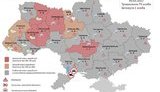 Road accident risk: situation extreme in five regions of Ukraine. MAP Over the past 24-hour period, 75 people suffered on Ukrainian roads due to bad weather conditions, one of them died. 47 744 10
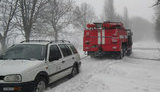 Hundred vehicles trapped by snow rescued in Khmelnytskyi region. PHOTOS+VIDEO The rescuers freed 104 vehicles trapped by heavy snow in the Khmelnytskyi region. 14 606 11
Soldiers in Donbas provided with fuel, wood, coal and heating means, - MoD Ukrainian troops performing tasks in the anti-terrorist operation (ATO) area have enough fuel and are ready for worsening weather conditions. 5 630 28
 Snow, glazed frost, wind: weather to deteriorate in Ukraine during Jan. 6-8 Forecasters warn of worsening weather conditions between Jan. 6-8. 56 441 115
Ukraine postpones further missile tests over bad weather, - MoD The Ukrainian Armed Forces Air Force Command postponed further missile tests over the Black Sea in the country’s south due to rapidly worsening weather conditions. 23 608 141
 Rough weather rages in Odesa region: three people killed, including child, - State Emergency Service Rough weather in the Odesa region on Oct. 12-13 caused 151 villages and towns go de-energized due to automated systems of power lines protection turning on. 93 652 0
 Hurricane Matthew death toll in Haiti rises to 842, - Reuters. VIDEO The death toll caused by the disastrous Hurricane Matthew that swept across the island of Haiti has risen to 842 people. 34 330 32
 "Weather is rough. Everyone is in water. Feels like I'm swimming," - heavy rains flood Odesa second day in a row. VIDEO Heavy showers in Odesa have caused traffic problems in the city. Videos of the flood made by local residents have appeared online. 141 201 100
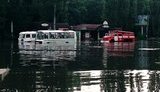 Flooding in Cherkasy: city received 87 percent of monthly precipitation in a day. PHOTOS+VIDEO Cherkasy received 87 percent of normal precipitation for the month in just one day. As a result, numerous streets were flooded. 31 171 20
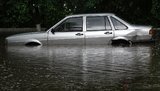 Rain floods Izmail, water level reaching two meters. PHOTOS Heavy rainfall in Izmail, the Odesa region, flooded several districts of the city on June 14. 62 865 36
February 2016 was the most abnormally warm month ever, - NASA February 2016 became the warmest month ever recorded. 15 434 152
Page 1 of 2
more news