ENG




11564 visitors online
The Organization for Security and Co-operation in Europe (OSCE) is in the spotlight as its Parliamentary Assembly addresses critical issues related to Ukraine. Recently, there has been a strong call from the OSCE leaders, including new President Pere Joan Pons Sampietro, urging the Russian Federation to cease its aggression against Ukraine. The alarming strike on Kyiv has been labeled as one of the most horrific since the invasion started. In addition to advocating for peace, the OSCE is pushing for the release of 26 Ukrainian journalists currently held captive by Russia, reflecting the heightened tensions and ongoing violations. The body also promotes wide-ranging reforms in key international institutions like the UN Security Council, aiming for enhanced global crisis resolution. Engaging with such pressing matters has positioned the OSCE as a central figure in international diplomatic efforts concerning the war in Ukraine.
What recent actions has the OSCE taken regarding Ukraine?
The OSCE has been actively involved in addressing the ongoing war in Ukraine. Its Parliamentary Assembly President, Pere Joan Pons Sampietro, has called for an immediate end to the conflict. They are urging Russia to release 26 Ukrainian journalists from captivity. The OSCE is also highlighting the need for reform in major international institutions to ensure more effective handling of global crises.
How is the OSCE involved in the release of Ukrainian journalists?
The OSCE has condemned the imprisonment of Ukrainian journalists by Russian forces. It is exerting diplomatic pressure on Russia to ensure the release of these journalists, reflecting its commitment to protecting human rights and promoting freedom of the press even in conflict zones.
What stance does the OSCE take on the attacks on Kyiv?
The OSCE, through its Parliamentary Assembly President, has described the strikes on Kyiv as some of the most horrific attacks since the conflict began. This statement underscores the OSCE's condemnation of such violence and supports calls for an immediate cessation of hostilities in Ukraine by Russian forces.
What reforms are being recommended by the OSCE for international institutions?
The OSCE advocates for significant reforms in key global institutions, including the United Nations Security Council. These reforms aim to make the institutions more representative and effective in managing and resolving international conflicts and crises, stressing the need for updated mechanisms in response to the complexities of modern geopolitical tensions.
How does the OSCE view the relationship between Russia and Ukraine?
The OSCE views the relationship as critically strained due to the ongoing conflict initiated by the Russian Federation. It calls for peaceful solutions and negotiations while firmly opposing acts of aggression. The organization's efforts are focused on fostering dialogue and ensuring compliance with international laws to resolve the ongoing issues.
What is the OSCE's position on international humanitarian law concerning Ukraine?
The OSCE emphasizes the importance of adhering to international humanitarian law amidst the conflict in Ukraine. It calls on involved parties, particularly Russia, to comply strictly with these laws, ensuring protection for civilians and humanitarian workers and facilitating the release of prisoners, reflecting its deep commitment to human rights and law.
Why is the OSCE highlighting the UN Security Council reform now?
The OSCE calls for UN Security Council reform to address imbalances and enhance the body's efficiency in dealing with crises such as the Ukraine conflict. The current geopolitical landscape necessitates a more inclusive and responsive framework, ensuring that the international community can effectively manage and resolve disputes.
News OSCE
 PACE proposes that Russian Federation’s frozen assets be used to compensate Ukraine The PACE Committee on Legal Affairs and Human Rights has called for the establishment of a mechanism to use Russia’s frozen state assets to pay compensation to Ukraine in accordance with the rulings of the European Court of Human Rights. 589 1 Previously in trend: Use of frozen assets of Russian Federation
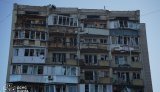 PACE calls for increased support for Ukraine after massive Russian attack: Let’s convert our words into meaningful action PACE President Petra Bayr has called on Europe to step up efforts to provide Ukraine with the necessary support following another massive Russian attack. 605 7 Previously in trend: Massive combined attack
 PACE confirms that elections cannot be held during martial law, - resolution The Parliamentary Assembly of the Council of Europe confirmed that holding elections under martial law is contrary to international democratic standards and called on member states to continue supporting Ukraine in order to organize safe and inclusive elections after the end of the war. 1 972 43 Previously in trend: Elections during war Elections in Ukraine
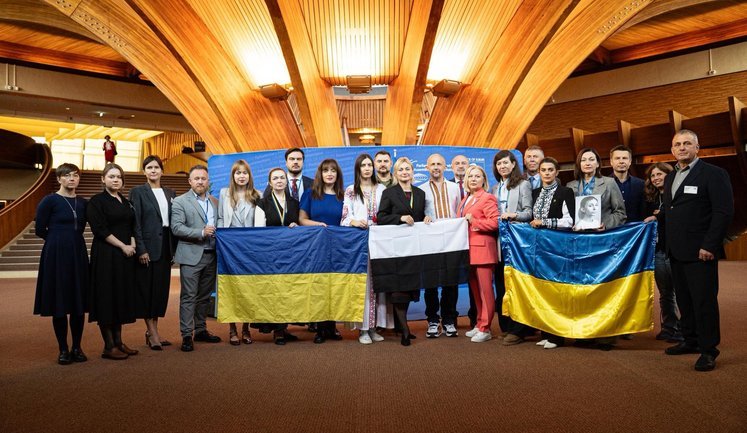
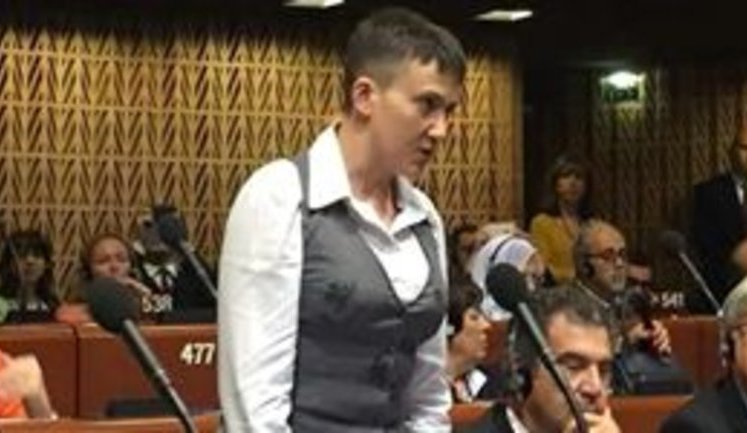
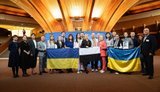 PACE called on Russia to release 26 Ukrainian journalists from captivity. PHOTOS The Parliamentary Assembly of the Council of Europe has called on Russia to release 26 Ukrainian journalists from captivity. 517 0 Previously in trend: Ukrainian journalists in Russian captivity
 Strike on Kyiv is one of most horrific attacks since start of full-scale invasion - new OSCE PA President Sampietro The newly elected President of the OSCE Parliamentary Assembly, Pere Joan Pons Sampietro, called on Putin to end the war against Ukraine. 2 028 15 Previously in trend: Shelling of Kyiv
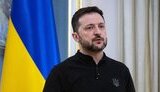 Zelenskyy arrives in Strasbourg: to address PACE session On the evening of 25 June, Ukrainian President Volodymyr Zelenskyy arrived in Strasbourg (France) for the first time. 926 5 Previously in trend: Zelenskyy’s visit to Strasbourg
 PACE called on Russian Federation to continue prisoner exchanges in "all for all" format. PHOTO The Parliamentary Assembly of the Council of Europe calls on the international community to support negotiations between Ukraine and Russia on the speedy exchange and release of all prisoners of war. 863 3 Previously in trend: Prisoner swap
Zelenskyy to address PACE on the evening of June 25 The Parliamentary Assembly of the Council of Europe (PACE) announced a change in the date of President Volodymyr Zelenskyy’s visit: he will address the Assembly on Wednesday, June 25, instead of Thursday as previously expected. 468 6 Previously in trend: Zelenskyy’s foreign visits
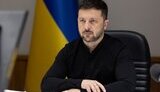 Zelenskyy is going to PACE meeting next week On June 26, President Volodymyr Zelenskyy is traveling to France to attend a meeting of the Parliamentary Assembly of the Council of Europe. 1 603 32
 Peace through strength: PACE adopts resolution on peace talks on Ukraine The Parliamentary Assembly of the Council of Europe (PACE) has adopted a resolution defining its position on peace talks between Ukraine and Russia. 3 772 7
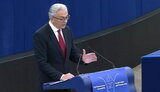 In negotiations on Russia’s war against Ukraine, red lines must be drawn: purpose of peace – PACE President Rousopoulos In possible peace talks to end Russia's war against Ukraine, the question is what "peace" means, while red lines need to be set - what exactly is it for. 1 713 8
 Ukraine shares PACE’s call for reform of key international institutions, including UN Security Council - MFA Ukraine shares PACE's call for reforming key international institutions, including the UN Security Council, to make them more representative and effective in resolving global crises. 824 2
War in Ukraine remains a priority issue for PACE, - Assembly President Rousopoulos Russia's war against Ukraine will remain a priority issue for the Parliamentary Assembly of the Council of Europe (PACE). 425 3
 PACE commemorated 90th anniversary of Holodomor and called to oppose the war as new stage of Russia’s genocidal policy towards Ukraine The Parliamentary Assembly of the Council of Europe unanimously supported the resolution "Commemoration of the 90th anniversary of the Holodomor - Ukraine is again facing the threat of genocide", in which it noted that the current aggressive war of the Russian Federation should be considered in... 680 2
 PACE adopts first resolution on missing persons, prisoners of war and civilians held captive by RF On Wednesday, October 2, at the autumn session of the PACE in Strasbourg, a resolution was adopted in which the Council of Europe for the first time raises the issue of the release and further rehabilitation of Ukrainian prisoners, and also demands that Russia comply with the provisions of... 1 362 5
 PACE adopts resolution on long-term support for IDPs and Ukrainian asylum seekers Today, on 27 June, the Parliamentary Assembly of the Council of Europe adopted a resolution on long-term support for asylum seekers and internally displaced persons (IDPs). 1 781 3
PACE recognises Russia’s genocidal intent to destroy Ukrainian cultural heritage and identity The Parliamentary Assembly of the Council of Europe has recognised Russia's genocidal intent to destroy Ukrainian cultural heritage and identity. 1 746 6
PACE recognizes Putin’s illegitimacy as Russian president and ROC as propaganda tool - resolution The Parliamentary Assembly of the Council of Europe stated in its resolution that it considers Russian President Vladimir Putin illegitimate, and recognized the Russian Orthodox Church as an instrument of Russian influence and propaganda. 10 094 52
 PACE adopts resolution to support Ukraine’s recovery The Parliamentary Assembly of the Council of Europe voted in favour of a resolution to support Ukraine’s recovery. 617 3
 Russian and Belarusian athletes should not participate in Olympics even in neutral status, - PACE President Rouxopoulos The President of the Parliamentary Assembly of the Council of Europe, Theodoros Rouxopoulos, opposed the participation of Russian and Belarusian athletes in the Olympic Games in Paris in the summer of 2024, even in a neutral status. 1 621 7
 Austria fully supports Ukraine - President of National Council Sobotka Austria fully supports the Ukrainian people as they repel Russia’s unjustified war of aggression. 791 11
PACE adopts resolution calling to recognize deportation of Ukrainian children as war crime and genocide against people of Ukraine On January 25, the Parliamentary Assembly of the Council of Europe unanimously adopted a resolution on the situation of children in Ukraine, calling on European parliaments to recognize the deportation of Ukrainian children as a war crime. 1 511 3
 "Servant of People" Mezentseva: Ukraine and provision of weapons to it remains on agenda in PACE Ukraine remains on the agenda of the Parliamentary Assembly of the Council of Europe. 554 5 Previously in trend: Aid to Ukraine
PACE started hearings on Ukrainian children. At meeting, they will talk about war and kidnapping to Russian Federation PACE President Tini Cox opened the hearing of the Parliamentary Assembly of the Council of Europe on the situation with Ukrainian children. 523 2 Previously in trend: War
 PACE adopted resolution recognizing Putin as dictator, and Russian Federation as dictatorship On October 13, the Parliamentary Assembly of the Council of Europe (PACE) unanimously adopted a resolution that recognizes Russian President Vladimir Putin as a dictator, his power as illegitimate, and Russia as a dictatorship. 7 843 64
PACE recognized Holodomor as genocide of Ukrainian people The Parliamentary Assembly of the Council of Europe (PACE) voted to recognize the Holodomor as an act of genocide against the Ukrainian people. 6 658 29
PACE adopted resolution in which it fully supports Ukrainian peace formula The Parliamentary Assembly of the Council of Europe adopted the resolution "Political Consequences of Russian Aggression Against Ukraine", in which it fully supported the Ukrainian peace formula. 936 2 Previously in trend: Russian aggression against Ukraine War
 PACE will consider resolution on non-admission of Russians and Belarusians to 2024 Olympics The Parliamentary Assembly of the Council of Europe will consider the resolution on the non-admission of Russian and Belarusian athletes to the 2024 Olympics in Paris. 2 244 10
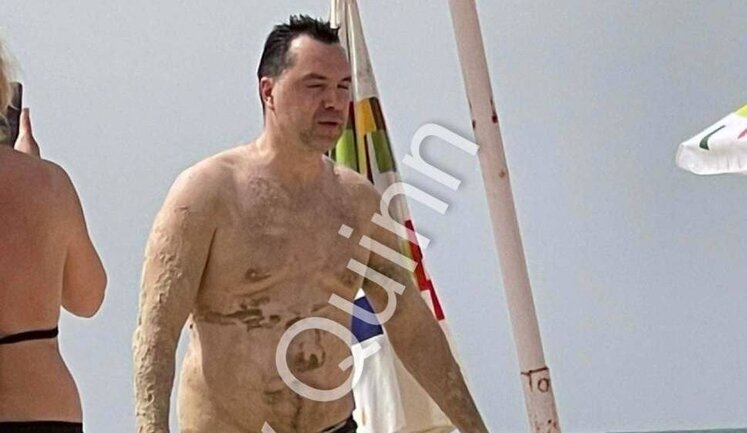
 MP Goncharenko: Arestovych was allowed to go on vacation to Israel, while I was not allowed to attend PACE events. PHOTOS A photo of a former advisor to Presidential Office, Oleksiy Arestovych, on holiday in Israel is circulating on social media. 37 971 196
 Ukraine should organize free and fair elections, - PACE president Kox The President of the Parliamentary Assembly of the Council of Europe, Tinie Cox, considers it necessary to hold parliamentary and presidential elections in Ukraine even under martial law. 14 639 141
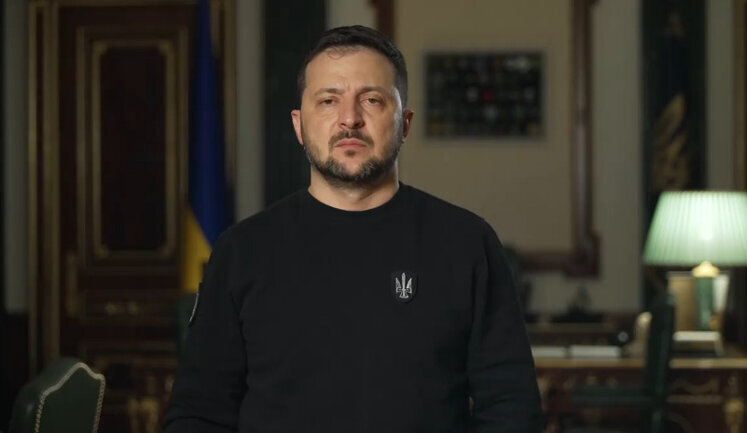
 Zelensky: PACE resolution on deportation of Ukrainian children will help bring Russia to justice for genocide. VIDEO President Volodymyr Zelensky’s address to the citizens of Ukraine at the end of the 428th day of the war with Russia. 1 336 17 Previously in trend: War
 PACE recognizes deportation of Ukrainian children to Russia as genocide The Parliamentary Assembly of the Council of Europe recognized the deportation and forced transfer of Ukrainian children to the territory of the Russian Federation as genocide and called on the ICC to consider criminal prosecution for this crime. 3 193 11 Previously in trend: War
 Athletes from Russia and Belarus cannot be allowed to participate in Olympics under any circumstances, - PACE President Kox The participation of Russians and Belarusians in the Olympic Games contradicts the Olympic goal of promoting peace and supports the propaganda of the aggressor. 898 6
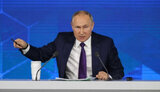 PACE President on Russia’s withdrawal from the Council of Europe: Russia has made itself very vulnerable - let’s see what will happen if Putin comes with a request to China, what price he will set The President of the Parliamentary Assembly of the Council of Europe, Tinie Cox, believes that the return of the Russian Federation to the Council of Europe will be possible only after paying significant compensation to Ukraine and citizens who suffered due to human rights violations. 6 721 5 Previously in trend: Sanctions against Russia
 Aggression of Russian Federation did not begin in 2022, but in 2014, - PACE resolution The Parliamentary Assembly of the Council of Europe approved a report and a resolution entitled "Sexual violence in times of conflict", devoted, among other things, to the issue of Russian aggression against Ukraine. 4 331 60 Previously in trend: Russian aggression against Ukraine War
 Having crossed borders of Ukraine, Russia also crossed our "red lines", - PACE President Cox Tinie Cox, who was elected today for the second time in a row as the president of the Parliamentary Assembly of the Council of Europe, said that Russia had crossed "red lines" when it invaded Ukrainian territory, and called on it to end the war as soon as possible. 3 436 18 Previously in trend: War
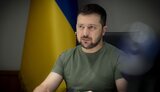 Ukraine has only 10% of its need for air defense systems, - Zelensky Ukraine has only 10% of its need for air defense systems. 2 523 31 Previously in trend: War
PACE recognized Russia as country with terrorist regime The Parliamentary Assembly of the Council of Europe adopted a resolution calling the Russian Federation a terrorist regime. 25 471 121 Previously in trend: Russian aggression against Ukraine War
PACE condemned attempts of show trial for Ukrainian prisoners of war The Parliamentary Assembly of the Council of Europe (PACE) strongly condemned any attempts at a fake show trial of Ukrainian prisoners. 1 919 6
PACE has adopted three resolutions on Ukraine, - said head of delegation Mezentsev The Parliamentary Assembly of the Council of Europe has adopted three resolutions on Ukraine, said Maria Mezentseva, head of the Verkhovna Rada's permanent delegation to the PACE (Sluha narodu faction). 5 558 4
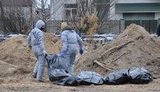 PACE voted for urgent establishment of tribunal to investigate Russian crimes in Ukraine The Parliamentary Assembly of the Council of Europe (PACE) has adopted a resolution proposing the urgent establishment of a special international tribunal to investigate the crimes of Russia's military aggression in Ukraine. 4 448 15 Previously in trend: War
Council of Europe suspends Russia's membership The Joint Committee of the Council of Europe, which brings together the PACE leadership, the representatives of the member states and the Secretary-General of the organization, recommends that an exclusive procedure be applied to Russia, leading to the country's exclusion from the CoE. 26 559 97
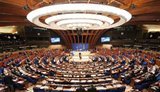 PACE urges Russian Federation to stop reprisals against Crimean Tatars The Parliamentary Assembly of the Council of Europe adopted a strict comprehensive resolution calling on the occupying power, the Russian Federation, to ensure that the rights of the Crimean Tatar people are respected, international law is observed, and Ukraine's territorial integrity is restored. 4 164 13 Previously in trend: Occupied territories - Crimea and Donbas
 PACE calls on Russia to stop military provocations near Ukraine's borders The Parliamentary Assembly of the Council of Europe (PACE) points to Russia's disruption of peaceful efforts to resolve the situation in eastern Ukraine and calls for an end to military provocations and escalation. 1 158 7 Previously in trend: Russian aggression against Ukraine
 Ukraine hopes head of PACE will raise such issues in Moscow as Crimea return, withdrawal of Russian troops from Donbas Oleksandr Merezhko, Vice-President of the Parliamentary Assembly of the Council of Europe, member of the Servant of the People faction, hopes that PACE Chairman Hendrik Dams, during his visit to Moscow on March 14-16, will be able to raise the issues of the occupied Crimea, the Russian military presence in Donbas and the case of aircraft of Malaysian Airlines flight MH-17 shot down by the Russian military. 1 809 14
 PACE Confirms Russia's Delegation’s Authorities The Parliamentary Assembly of the Council of Europe (PACE) has confirmed authorities of the Russia’s delegation. 8 491 81
 PACE draft decision proposes to waive sanctions against Russia – media The Monitoring Committee of the Parliamentary Assembly of the Council of Europe (PACE) has approved a preliminary draft decision on confirming the powers of the Russian delegation without any restrictions. 6 885 68
Ukrainian delegation to PACE challenges Russian delegation's credentials The Ukrainian delegation to the Parliamentary Assembly of the Council of Europe (PACE) has challenged the Russian delegation's credentials, Ukrainian delegation member and deputy from the European Solidarity faction Oleksiy Honcharenko said. 2 894 13
Page 1 of 4
more news