ENG




13498 visitors online
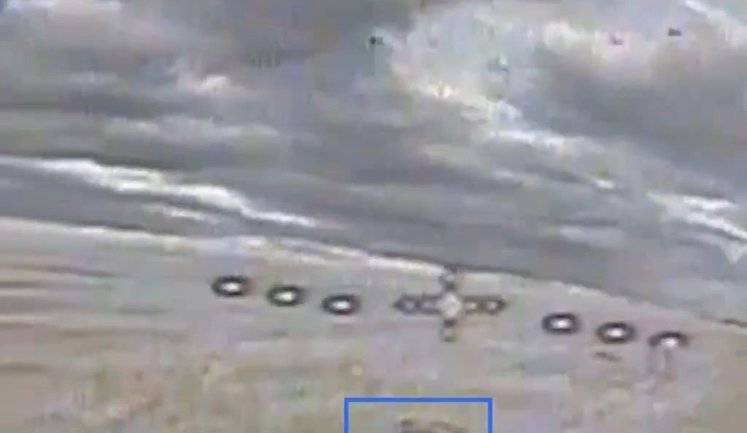
Numerous successful operations by Ukrainian drones against Russian BM-21 Grad MLRS have been reported. The 79th Brigade, renowned for its precision, recently obliterated a Grad system in Donetsk. Concurrently, "Madyar's Birds" Brigade released footage showcasing their strikes against enemy units. The 426th Unmanned Systems Battalion didn't lag behind, delivering a precision strike in the Kherson region. These operations highlight the effectiveness and strategic advantage drones provide on the modern battlefield. Such capabilities have become a pivotal part of the Ukrainian defense strategy, especially against formidable systems like the Grad MLRS.
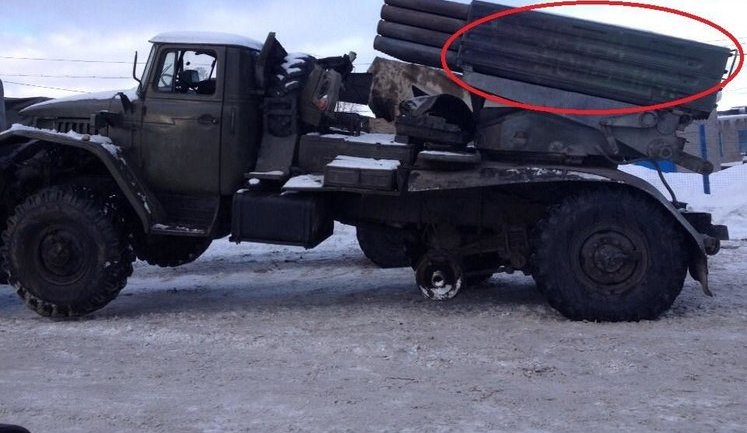
What is a BM-21 Grad multiple launch rocket system?
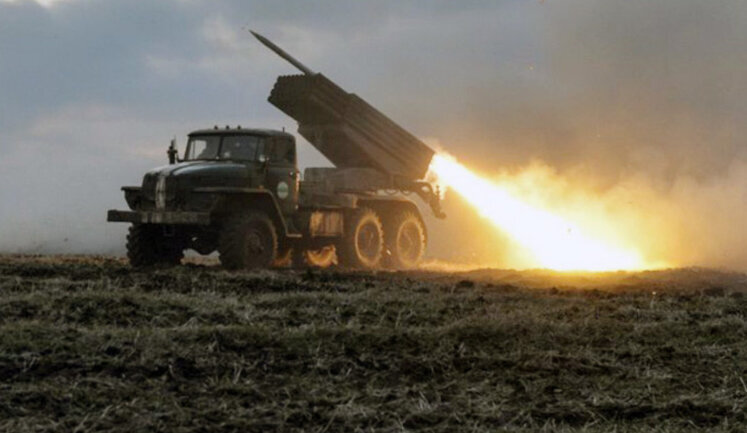
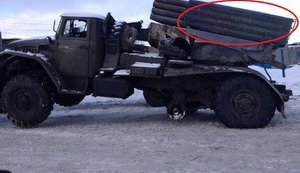
The BM-21 Grad is a Soviet-developed multiple launch rocket system notable for its 122mm rockets. Known for its destructive power, it can launch diverse rockets at high speed, making it a frequent choice in military operations. Used widely by Russian forces, it poses significant threats to opposing troops and infrastructure.
How effective are drones against Grad MLRS?
Drones have proven highly effective against Grad MLRS, offering precision strikes with minimal risk to personnel. They provide real-time intelligence and can neutralize weapons systems by targeting crucial components, significantly mitigating the threats posed by such formidable systems.
Which Ukrainian brigades are using drones against Russian forces?
Notable brigades employing drones effectively against Russian forces include the 79th Air Assault Brigade, 414th "Madyar's Birds" Brigade, and the 426th Separate Unmanned Systems Battalion. These units have executed several successful missions against BM-21 Grad MLRS using advanced drone technologies.
Why is the Grad MLRS frequently targeted by Ukrainian forces?
The Grad MLRS, with its powerful barrage capabilities, threatens both military targets and civilian infrastructure. Its widespread use by Russian forces necessitates targeted efforts by Ukrainian forces to neutralize its impact, aiming for the disruption of enemy artillery capabilities and reduction of civilian casualties.
What are the strategic advantages of using drones in warfare?
Drones offer strategic advantages including real-time surveillance, precision strikes, and reduced risk to human life. They allow forces to engage targets with high accuracy while providing crucial intelligence for strategic planning. This technology significantly enhances operational effectiveness.
What role do drones play in modern military strategy?
In modern military strategy, drones serve as vital assets, enhancing reconnaissance capabilities and precision strike potential. They support intelligence gathering, surveillance, and reconnaissance (ISR) missions while enabling targeted operations against critical enemy infrastructure with minimal logistical footprints.
How are drone technologies evolving in military applications?
Drone technologies in military applications are rapidly evolving, featuring advancements in stealth, payload capacity, and autonomous operations. Innovations in sensors and AI algorithms are enhancing their ability to conduct complex missions, making them indispensable for modern military forces globally.
What impact do drones have on the battlefield dynamics?
Drones significantly alter battlefield dynamics by enhancing operational flexibility and rapid response. They provide a tactical advantage through persistent surveillance and precise targeting, thus challenging traditional warfare paradigms and necessitating adaptive military strategies to counter them.
News Grad
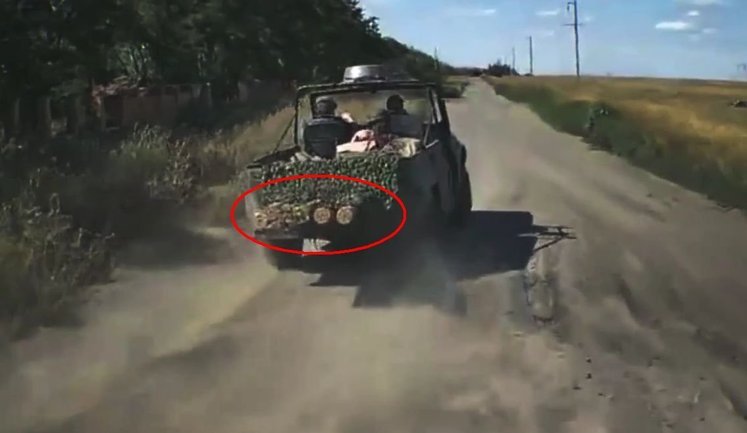
 FPV drone from "Roniny" unit destroyed passenger car carrying ammunition for "Grad" MLRS in Zaporizhzhia region. VIDEO Footage has been published online showing the effective work of Ukrainian drone operators on the Zaporizhzhia front. 3 481 3 Previously in trend: Fightings in the Zaporizhzhia direction
 Pilots of "Phoenix" USF unit hit tank, "Grad" MLRS, and occupiers’ logistics in Donetsk region. VIDEO Pilots from the "Phoenix" Unmanned Systems Forces (USF) grouping of the State Border Guard Service of Ukraine carried out a series of strikes on Russian military equipment in the Donetsk direction, hitting a number of enemy combat and logistical targets. 1 967 1 Previously in trend: Destruction of Russian equipment Situation in the Donetsk region Drone operators Unmanned Ground Vehicles UGVs
 Drones of Phoenix unit destroyed ruscists’ BM-21 Grad in Lyman direction. VIDEO Border guards of the Phoenix unit destroyed an enemy BM-21 Grad in the Lyman direction. 2 220 1 Previously in trend: Destruction of Russian equipment Elimination of Russian occupying forces Hostilities in Lyman sector
 In Donetsk region, NGU fighters destroyed BM-21 "Grad" MLRS with strike drones. VIDEO Operators of the Lasar's Group strike drone unit of the National Guard of Ukraine destroyed a Russian BM-21 "Grad" multiple launch rocket system in Donetsk Oblast. 1 847 0 Previously in trend: Destruction of Russian equipment
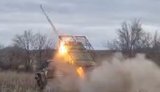 Sicheslav paratroopers of 25th Brigade strike occupiers with Grad MLRS in Pokrovsk’s Shakhtarskyi microdistrict. VIDEO Reconnaissance detected an enemy rotation and preparations for assault operations in the Shakhtarskyi microdistrict of Pokrovsk. 4 410 1 Previously in trend: Drones against occupiers Elimination of Russian occupying forces Russian assault on Pokrovsk direction Combat operations in the Pokrovsk direction Elimination of Russian occupiers
 Border guards from Phoenix unit destroyed enemy Grad in Kostiantynivka direction. VIDEO Border guards from the Phoenix unit struck a Russian Grad rocket launcher in the Kostiantynivka direction. 3 110 1 Previously in trend: Destruction of Russian equipment Elimination of Russian occupying forces Hostilities in Toretsk sector Fighting in the Toretsk direction Kostiantynivka direction
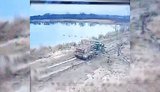 79th Brigade drones destroy occupiers’ Grad MLRS with full ammunition load in Donetsk region. VIDEO Strike drone operators of the combat unmanned system of the 79th Separate Air Assault Tavriia Brigade of the 7th Rapid Response Corps hit a BM-21 Grad multiple launch rocket system with a full load of missiles. 4 727 5 Previously in trend: Destruction of Russian equipment Combat operations in the Pokrovsk direction
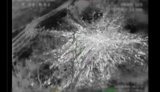 Russians’ BM-21 "Grad" was blown to smithereens after "Madyar’ Birds" brigade dropped explosives on it with drone. VIDEO Drone operators from the 414th Brigade "Madyar's Birds" have published a video of their combat operations against the occupiers' equipment. 4 941 7 Previously in trend: Destruction of Russian equipment
 SIGNUM strike drones destroyed occupiers’ Grad MLRS. VIDEO A video published on social media shows Ukrainian strike drones destroying a Russian BM-21 Grad multiple launch rocket system (MLRS). 1 952 0 Previously in trend: Destruction of Russian equipment
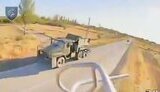 426th Unmanned Systems Battalion strikes Russian Grad rocket launcher in temporarily occupied Kherson region. VIDEO Operators of strike drones from the 426th Separate Unmanned Systems Battalion (SUSB) carried out a precise strike on a 122 mm Grad multiple rocket launcher. According to Censor.NET, the enemy system was positioned in the middle of a road in the temporarily occupied part of Kherson region. 3 144 2 Previously in trend: Destruction of Russian equipment
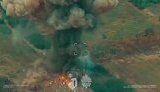 Russian Grad blown to pieces by Ukrainian FPV drones. VIDEO Defenders of the 14th Operational Brigade of the National Guard of Ukraine "Chervona Kalyna," together with neighboring units, hunted down a Russian BM-21 Grad multiple rocket launcher on the Pokrovsk front. 4 990 13
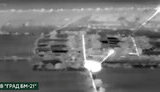 Border guards burned down occupiers’ "Grad" with drones. VIDEO In the South, SBGS aerial reconnaissance detected an enemy Grad BM-21 MLRS, which was used by Russians to shell military personnel and civilians at night. The occupiers tried to flee, but it was too late — FPV drone pilots destroyed the launcher. 2 423 3 Previously in trend: Destruction of Russian equipment
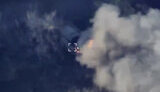 Soldiers of 414th Brigade burned down occupiers’ "Grad" MLRS with drone. VIDEO The FPV crew of WORMBUSTERS unit of the 414th Brigade of the Armed Forces of Ukraine destroyed an enemy "Grad" MLRS at a firing position. 3 376 1 Previously in trend: Destruction of Russian equipment
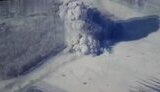 Ammunition detonation of Russian 122mm Grad MLRS after Ukrainian drone strike. VIDEO Footage shared online shows the detonation of ammunition belonging to a Russian 122mm BM-21 Grad multiple launch rocket system, following a strike by a Ukrainian FPV drone in Donetsk region. 4 158 9 Previously in trend: Drones against occupiers Destruction of Russian equipment
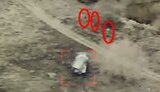 Occupiers from the BM-21 "Grad" MLRS scatter in all directions when they see Ukrainian drone. VIDEO The operators of the Flying Skull battalion of the Unmanned Systems Forces detected and destroyed an enemy BM-21 "Grad" MLRS. 11 711 9
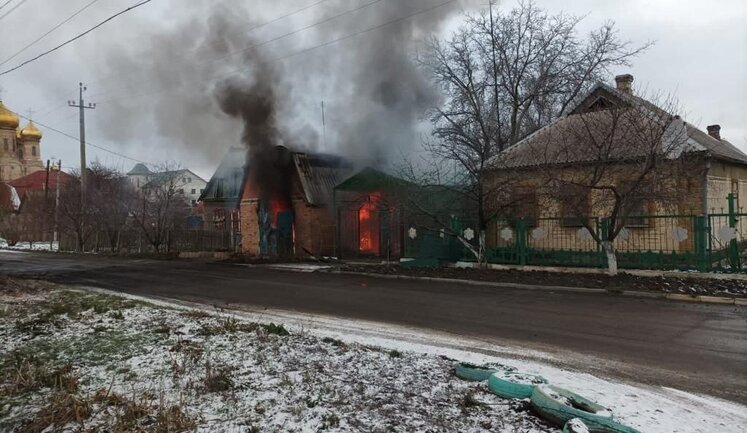
 Occupiers shelled residential area in Kurakhove with Grad rockets, one person killed, one wounded. PHOTOS Russian troops continue shelling the territory of Donetsk region. Today, on 21 January, the occupiers attacked Kurakhove with Grad multiple rocket launchers. 1 501 4 Previously in trend: War
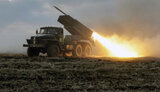 Video of Russian Defence Ministry shows Iranian ammunition for Grad MLRS - Bild. PHOTOS Iran may be supplying Russia with more than just drones. A video by the Russian Ministry of Defence shows Iranian ammunition for Grad multiple launch rocket systems. 11 148 31 Previously in trend: Russian aggression against Ukraine War
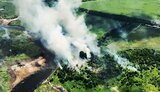 Defense forces destroy field depot of rocket launchers for GRAD. VIDEO Footage of Ukrainian soldiers destroying a field depot with missiles for GRAD missile system was posted online. 10 087 8 Previously in trend: Russian aggression against Ukraine War
 Armed Forces of Ukraine destroyed "Hrad" with two drones on outskirts of Bakhmut. VIDEO We spotted an enemy Grad system that came to shell our territories. After the shelling, the enemy tried to run for cover. An army of kamikaze drones flew out to hunt for "prey". One drone destroyed the wheels and chassis of enemy vehicles with a direct hit. Another destroyed a Hrad. 11 589 9 Previously in trend: War
 Ukrainian kamikaze drone destroys enemy "Grad" in Kherson region. VIDEO Ukrainian soldiers destroyed with the help of a kamikaze drone the enemy BM-21 "Grad" anti-aircraft missile defense system, which the occupiers hid under the bridge on the M17 road in the Kherson region. 14 190 13 Previously in trend: War
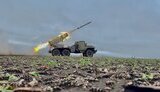 Pakistan sent 10,000 missiles to Ukraine for Grad anti-aircraft missile defense system, - Economic Times Pakistan sent rockets for Grad anti-aircraft missiles to Ukraine via Germany. 14 922 89 Previously in trend: Aid to Ukraine
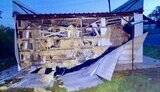 Russian troops launched over 170 shells from "Grads" and barrel artillery at three communities in Dnipropetrovsk region, - Reznychenko. PHOTOS The enemy shelled the Chervonogrihorivska, Nikopolska, and Marganetska communities of the Nikopol district of the Dnipropetrovsk region. 3 470 4 Previously in trend: Russian aggression against Ukraine War
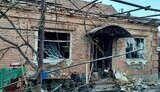 All night long, Russian troops fired from "Hrad", "Uragan", and heavy artillery in Dnipropetrovsk region, - Reznychenko. PHOTOS Russian occupation forces targeted two districts of the Dnipropetrovsk region. 4 554 9 Previously in trend: Russian aggression against Ukraine War
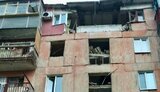 Russians shelled two districts of Dnipropetrovsk region with "Hrads", "Hurricanes" and barrel artillery, there are wounded, - Reznychenko. PHOTOS The Russian army once again set fire to two districts in the Dnipropetrovsk region 2 384 0 Previously in trend: Russian aggression against Ukraine War
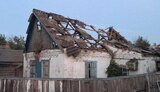 Russian army shelled Dnipropetrovsk region from Grad and barrel artillery, there were 20 "arrivals" in Nikopol, there were wounded and destruction, - Reznichenko. PHOTOS After midnight, the Russian army shelled the Nikopol and Kryvy Rih districts of the Dnipropetrovsk region. 2 950 8 Previously in trend: Russian aggression against Ukraine War
 In morning, Russian troops hit residential quarters of Kryvyi Rih from "Grad", there are victims, - Reznichenko. PHOTO The enemy does not stop shelling Dnipropetrovsk region. 14 303 45 Previously in trend: Russian aggression against Ukraine War
 12 wounds of Filimonov and 3 wounds of "Predator": how we survived under salvo of "Grad". VIDEO The editor-in-chief of Censor.NET, Yurii Butusov, showed a video showing how Ukrainian soldiers managed to survive under the volley of "Grad". 21 138 22 Previously in trend: War
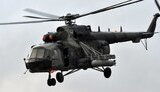 Slovakia hands over five helicopters and ammunition Slovakia has sent a new package of defence assistance to Ukraine. The Ukrainian military received five helicopters and ammunition for MLRS "Grad". 5 496 24 Previously in trend: Aid to Ukraine War
 Russian troops fired on Sumy region from "Grad". Private house was damaged. PHOTO Tonight the enemy from "Grad" fired at the village in the Sumy region. 4 568 7 Previously in trend: War
 Occupiers fired at bus with evacuees from Severodonetsk and Lysychansk from Grad. ФОТО Today, on May 17, 36 people, including 6 children, were deported from Severodonetsk and Lysychansk, Luhansk region. On the way, the occupiers fired at a bus with evacuees from Grad. 6 761 6
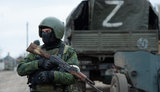 Occupiers are digging trenches and placing "Grad" at recreation centers in Kyrylivka In the resort of Kyryllovka (Zaporizhzhia region), the Russian military is actively digging trenches. In addition, they place multiple launch rocket systems "Grad" at recreation centers. 11 555 15 Previously in trend: Russian aggression against Ukraine War
 Occupiers are preparing provocation in Kherson - they are preparing to shell city with Grad missiles, - representative of Odessa RMA Staff Bratchuk The Russian occupants are preparing to commit a provocation - to bombard the city of Kherson and blame the AFU for it. 5 332 14 Previously in trend: Russian aggression against Ukraine War
 Some 11 people killed, dozens wounded due to shelling in Kharkiv by Russian troops – local authorities. VIDEO As a result of shelling by Russian troops in Kharkiv on Monday afternoon, some 11 people were killed, dozens more were wounded, Head of the regional military-civilian administration Oleh Syniehubov said. 59 694 117 Previously in trend: War
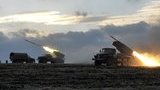 Russian proxies employed multiple rocket launchers against Ukrainian troops for first time in several months, - JFO center Combined Russian-separatist forces committed three attacks on the Ukrainian military on the outskirts of Svitlodarsk, Pavlopil and Vodiane today, Aug. 16. 20 236 115 Previously in trend: Russian aggression against Ukraine
 Eight civilians injured in massive missile strike on Novoluhanske village, extensive damage caused to residential neighborhood. PHOTOS The missiles launched by the Russian-occupation troops against Novoluhanske village with multiple rocket launchers damaged 37 single- and two-storey houses and 10 five-storey residential blocks. 14 551 43
 Massive artillery strike leaves war-torn Avdiivka without power, - Governor Zhebrivskyi. PHOTOS The pro-Russian militants launched massive artillery strike against front-line village of Avdiivka in the Donetsk region on Monday afternoon which damaged the power transmission line. 2 521 6 Previously in trend: Avdiivka fighting
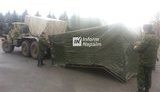 Russian occupants in Donbas masking Grads with signs reading "Children on the roads," - InformNapalm. PHOTOS The Russian occupants in the Donbas mask BM-21 vehicles with Grad rocket launcher systems for regular trucks. 86 175 48 Previously in trend: Evidence of Russian aggression in Ukraine
 OSCE SMM observed Russian tanks and Grads in Donbas In violation of the respective withdrawal lines an SMM mini unmanned aerial vehicle (UAV) spotted on 16 May in non-government-controlled areas 13 BM-21 Grad rocket systems near Khrustalnyi in the Donetsk region. 4 696 21
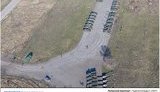 Militants tried to bring down OSCE drone recording Russian hardware amassed in Luhansk area. PHOTO OSCE Special Monitoring Mission (SMM) observed heavy weapons including multiple rocket launchers, SP-guns, tanks, and cannons moving in the vicinity of an aerodrome in Luhansk in violation of the respective withdrawal line. 22 117 20
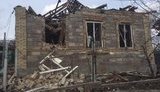 18 houses damaged as militants shelled Avdiivka residential area with Grads. PHOTOS The militants shelled Avdiivka residential area with Grad rocket systems at noon today. 18 private houses have been damaged. 16 367 53 Previously in trend: Avdiivka fighting
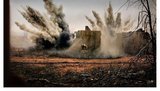 120 mm mortars, tanks, IFVs, Grads: militants attacked Ukrainian positions 82 times yesterday, - Staff The situation in the anti-terrorist operation (ATO) area in the east of Ukraine remains tense. Over the past 24-hour period, 82 attacks by the Russia-supported troops upon Ukraine Armed Forces were recorded. 5 749 25 Previously in trend: Russian aggression against Ukraine
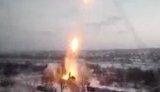 Militants shelled Ukrainian positions at Vodiane with Grads yesterday, - ATO Staff Pro-Russian forces once again violated the Minsk agreements. 16 144 30 Previously in trend: Russian aggression against Ukraine
Militants shelled Sartana and Shyrokyne with Grads yesterday, – Zhebrivskyi The pro-Russian terrorists used Grads, artillery and tanks in the vicinity of Mariupol. About 20 houses, gas pipeline and transformer were damaged in Sartana. 17 796 62 Previously in trend: Russian aggression against Ukraine
 Terrorists use Grad-P launchers against Krasnohorivka, - ATO Staff. PHOTO Today's attack on Krasnohorivka by Russian occupation troops involved Grad-P portable rocket systems. 18 631 24
 Monument to bus passengers killed in Grad attack unveiled in Volnovakha. PHOTOS A monument to 12 bus passengers killed in a Grad attack on Jan. 13, 2015 has been inaugurated in Volnovakha. 30 666 57
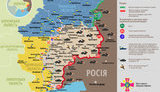 Russian terrorists redeploy MLRSes to Svitlodarsk salient, - ATO speaker. MAP The Russian terrorists redeployed Grad multiple rocket launchers closer to the Svitlodarsk salient but have not used them yet. 68 236 114 Previously in trend: Svitlodarsk fighting
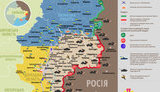 Pro-Russian militants opened fire upon Ukrainian positions 25 times yesterday, - Staff Over the past day, Nov. 22, Russian occupation troops continued shelling Ukrainian positions in all directions. 4 748 7 Previously in trend: Russian aggression against Ukraine
Russian proxies mortared Shyrokyne, used Grads against Krasnohorivka, - ATO Staff 19 cease-fire violations by Russian hybrid forces were recorded from midnight to 6 p.m. Nov. 22. 5 794 14
Page 1 of 3
more news