ENG




13377 visitors online
Ukraine's potential membership in NATO remains a pivotal discussion point in 2025. President Zelenskyy has been invited to critical summits including NATO and G7, highlighting ongoing diplomatic efforts to strengthen ties. Significant meetings between Ukraine's foreign ministry and NATO are ongoing, focusing on bilateral and multilateral cooperation. The NATO-Ukraine Council is addressing threats such as the recent ballistic missile strike by Russia, emphasizing the alliance's strategic posture in the region. The conversation between President Zelenskyy and US President Biden underscores the importance of support for Ukraine's NATO ambitions. As Ukraine anticipates joining NATO post-victory, the nation's path involves not only military integration but also strengthening democratic institutions and safeguarding national sovereignty against external threats.
What were the topics discussed between Zelenskyy and Biden?
President Zelenskyy plans to call President Biden to discuss Ukraine's invitation to NATO. The discussion aims to strengthen Ukraine's position within the alliance, emphasizing security and strategic cooperation. This conversation is crucial as it aligns with broader diplomatic efforts to enhance Ukraine's NATO trajectory, especially amid escalating regional tensions.
Why is the NATO-Ukraine Council important for Ukraine?
The NATO-Ukraine Council plays a significant role in fostering active dialogue between Ukraine and NATO. It addresses security concerns, such as the Russian missile strike on Dnipro, and helps coordinate defense strategies and military cooperation. This council is vital for Ukraine's integration into NATO standards and advancing its membership aspirations.
How is the Ukrainian Foreign Ministry involved in NATO integration?
The Ukrainian Foreign Ministry is actively working on organizing bilateral meetings and engagements at upcoming NATO, EU, and G7 summits. Their role is crucial in negotiating security arrangements, military support, and establishing frameworks that facilitate Ukraine's eventual membership in NATO, aligning with strategic policies set by the Ukrainian government.
What are the key conditions for Ukraine's NATO membership?
Key conditions for Ukraine's NATO membership include the cessation of active conflict, democratic stabilization, and alignment with NATO military standards and protocols. Ukraine must also address internal issues such as corruption and improve governance standards to meet NATO's entry requirements, ensuring long-term security and partnership commitments with the alliance.
What implications does Russia's posture pose for NATO-Ukraine relations?
Russia's aggressive maneuvers, including missile strikes, significantly impact NATO-Ukraine relations by necessitating a robust alliance response to deter further aggression. This situation underscores the importance of Ukraine's NATO integration as a security buffer, emphasizing the need for collaborative defense measures to stabilize the region and address geopolitical challenges efficiently.
How do security guarantees influence Ukraine's accession to NATO?
Security guarantees play a pivotal role in Ukraine’s path to NATO membership by providing interim safety measures against aggression. These guarantees involve commitments from NATO countries to support Ukraine until formal membership is secured, ensuring that Ukraine strengthens its defenses and aligns with Western strategic interests in the region.
What are the expected outcomes of Zelenskyy's participation at international summits?
President Zelenskyy's active participation in international summits aims to solidify Ukraine's foreign alliances and accelerate NATO membership talks. The summits serve as platforms for securing bilateral agreements, acquiring defense support, and aligning Ukraine’s foreign policies with international standards, thereby enhancing its geopolitical footprint.
What political steps is Ukraine taking to fulfill NATO's requirements?
Ukraine is undertaking significant political reforms aimed at democratization and reducing corruption. These steps are critical to meeting NATO's membership criteria, which emphasize not only military compatibility but also governance quality, human rights observance, and strengthening civil institutions to bolster national stability.
w117_header_alt Ukraine - NATO
 NATO appoints new commander of Ukraine assistance centre Lieutenant General Guillaume N. Beaurpere has been appointed the new commander of NATO Security Assistance and Training for Ukraine (NSATU). 1 229 3 Previously in trend: Ukraine - NATO Cooperation between Ukraine and NATO
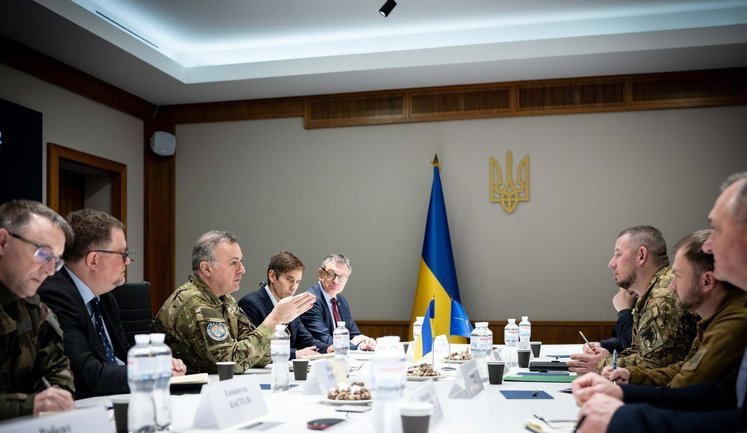
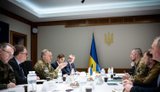 For first time since full-scale war began: NATO delegation led by Admiral Vandier has visited Ukraine, – Palisa. PHOTOS For the first time since the outbreak of full-scale war, Ukraine has been visited by a NATO military delegation of this calibre – a delegation led by Admiral Pierre Vandier, NATO’s Supreme Allied Commander Transformation. 3 600 17 Previously in trend: Ukraine - NATO Cooperation between Ukraine and NATO
 Zelenskyy is invited to NATO, EU and G7 summits: Foreign Ministry working on bilateral meetings President of Ukraine Volodymyr Zelenskyy has an invitation to the NATO, EU and Group of Seven summit, and the Foreign Ministry is working on organising bilateral meetings on the sidelines of these events. 900 11 Previously in trend: Ukraine - NATO
 Zelenskyy will call Biden soon: they will talk about invitation to NATO President Volodymyr Zelenskyy is planning to call Joe Biden to discuss the issue of inviting Ukraine to NATO. 2 624 42 Previously in trend: Ukraine - NATO
 Because of "Oreshnik" strike on Dnipro: NATO-Ukraine Council to meet on 26 November On 26 November, the NATO-Ukraine Council will meet due to the first use of an experimental ballistic missile by the Russian Federation to strike Ukraine. 4 673 32 Previously in trend: Ukraine - NATO
 Ukraine will join NATO only after victory - Zelenskyy President Volodymyr Zelenskyy said that Ukraine’s membership in NATO is possible only after the victory. 6 416 110 Previously in trend: Ukraine - NATO
 Ukraine and NATO agree on work plan for May 2024 before Washington summit - Ministry of Defence At a meeting held in Poland, representatives of Ukraine and NATO agreed on a work plan for May 2024 to intensify proposals for the Alliance’s Washington Summit in July. 821 0 Previously in trend: Ukraine - NATO
 NATO-Ukraine Council to meet on 19 April with Zelenskyy’s participation, - Stoltenberg On Friday, 19 April, at Ukraine’s request, a meeting of the NATO-Ukraine Council will be held, with President Volodymyr Zelenskyy in attendance. 1 516 24 Previously in trend: Ukraine - NATO
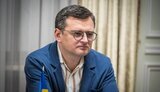 Kuleba had conversation with Stoltenberg: Called for redoubling efforts to speed up supply of weapons and ammunition Foreign Minister Dmytro Kuleba had a conversation with NATO Secretary General Jens Stoltenberg. 474 6 Previously in trend: Ukraine - NATO
 NATO-Ukraine Council meeting starts in Brussels A meeting of the NATO-Ukraine Council at the level of defense ministers of NATO member states begins in Brussels. 857 5 Previously in trend: Ukraine - NATO
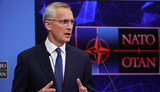 Stoltenberg convenes meeting of NATO-Ukraine Council on January 10 due to massive shelling of Ukraine by Russian Federation The meeting of the NATO-Ukraine Council will be held at the request of the Ukrainian side. 4 597 25 Previously in trend: Ukraine - NATO
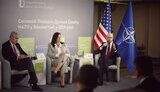 Yatseniuk: Ukraine should receive invitation to join NATO at Washington summit, which will be tantamount to starting accession talks At the Washington summit, Ukraine should receive an invitation to join NATO, which would be tantamount to starting accession talks. For the Ukrainian people and for the entire free world, there is no other option but to accept Ukraine into NATO. 3 916 73 Previously in trend: Ukraine - NATO
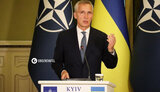 All members of Alliance agreed that Ukraine will become member of NATO, - Stoltenberg At the Ramstein meeting in Brussels, all Alliance members confirmed that the future of Ukraine lies with NATO. 4 881 47 Previously in trend: Ukraine - NATO
 NATO Secretary General Jenssen’s chief of staff calls his words regarding Ukraine’s territorial concessions in exchange for membership in Alliance mistake NATO Secretary General’s Chief of Staff Stefan Jenssen calls it a mistake to say that Ukraine might have to give up some territory to join the Alliance. 11 796 105 Previously in trend: Ukraine - NATO
 NATO Secretary General Jenssen’s chief of staff allows Ukraine to join NATO after territorial concessions The head of the NATO Secretary General’s office, Stian Jenssen, said that Ukraine can be accepted into NATO after it gives up part of its territories. But only Kyiv can make such a decision. 22 060 254 Previously in trend: Ukraine - NATO
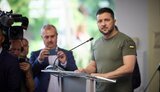 Joining NATO is matter of our security, - Zelensky President Volodymyr Zelensky stated that Ukraine’s accession to the North Atlantic Alliance is a matter of Ukraine’s security. 2 107 51 Previously in trend: Ukraine - NATO
 NATO could protect civilian ships in Black Sea in same way it protects them from pirates near Africa, - Ambassador to Germany Makeev Ukraine’s ambassador to Germany, Oleksiy Makeyev, believes that NATO could protect civilian ships from the Russian fleet in the Black Sea in the same way that the Alliance does it near the Horn of Africa, driving away pirates. 2 940 40 Previously in trend: Ukraine - NATO
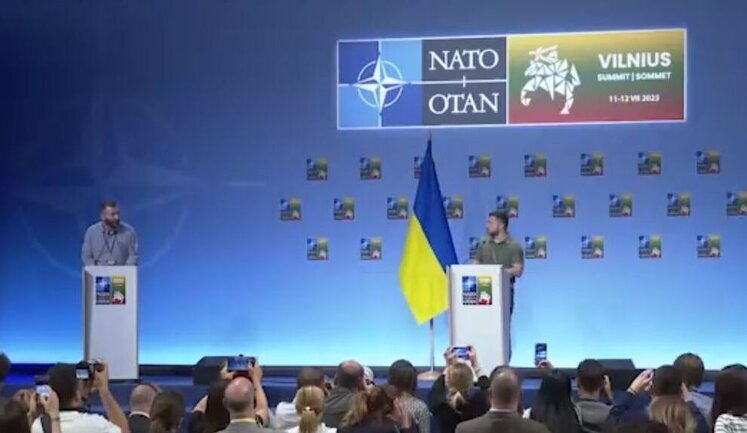
 Zelenskyy held meeting on practical steps to implement summit in Vilnius The President of Ukraine, Volodymyr Zelenskyy, held a meeting with representatives of the Verkhovna Rada and government officials to prepare practical steps for the implementation of the decisions of the Vilnius NATO Summit. 1 056 12 Previously in trend: Ukraine - NATO
 In summer of 2024, Ukraine will be able to join NATO, - Reznikov Russia’s full-scale war against Ukraine may end next summer, predicts Defense Minister Oleksii Reznikov. The official emphasizes that Ukraine will win it. 6 221 75 Previously in trend: Ukraine - NATO Russian aggression against Ukraine War
 At NATO summit, word "corruption" was never mentioned in relation to Ukraine, - Reznikov Defence Minister Oleksiy Reznikov said that during the NATO summit in Vilnius, he had never heard the word "corruption" used in reference to Ukraine. 14 525 253 Previously in trend: Ukraine - NATO
 All NATO countries support Ukraine’s membership, but accession is impossible during the war - Morawiecki Despite the fact that Ukraine did not receive an invitation, historic decisions were made at the NATO summit in Vilnius. All NATO members agree that Ukraine will become a member of the Alliance, but this is not possible in times of war. 1 759 39 Previously in trend: Ukraine - NATO
 Future of Ukraine in NATO is not negotiable, - Sullivan The partners will support Ukraine as long as it is necessary. Ukraine’s membership in NATO is already a settled issue. 4 738 41 Previously in trend: Ukraine - NATO
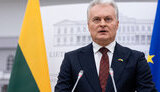 One of conditions for Ukraine’s accession to NATO is fight against fifth column, - Nauseda To join NATO, Ukraine needs to implement a number of reforms. This includes the fight against the so-called fifth column. 13 301 143 Previously in trend: Ukraine - NATO
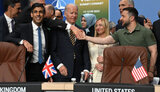 NATO summit was supposed to be historic for Ukraine, but became compromise, - BBC At the NATO summit, the views of Ukraine and the United States, as well as those of some countries that are fully aligned with the US course, diverged for the first time. 8 058 57 Previously in trend: Ukraine - NATO
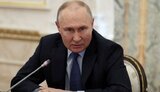 Ukraine’s possible NATO membership poses a threat to Russia, - Putin According to Russian President Vladimir Putin, Ukraine’s possible membership in NATO poses a threat to Russia. 23 587 114 Previously in trend: Ukraine - NATO
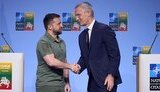 Ukraine is preparing bilateral agreements on security guarantees, - Zelensky President Volodymyr Zelensky announced the start of work on bilateral agreements with partners on security guarantees for Ukraine 3 174 42 Previously in trend: Ukraine - NATO War
 Annual Program of NATO-Ukraine Council will focus on building NATO-compatible systems, - Stefanishyna Consultations with partners on the annual program of the NATO-Ukraine Commission are currently underway. It is expected to focus on building NATO-compatible systems 761 13 Previously in trend: Ukraine - NATO
 Partners will guarantee Ukraine’s security until it joins NATO, - Biden US President Joe Biden confirmed that Ukraine’s allies will guarantee Ukraine’s security until it joins NATO. 9 074 108 Previously in trend: Ukraine - NATO
 Final document of NATO summit is photocopy of Bucharest-2008, word "guarantees" is missing - Poroshenko. VIDEO The fifth president and leader of the European Solidarity party, Petro Poroshenko, criticised the results of the Vilnius NATO summit. 11 550 125 Previously in trend: Ukraine - NATO
 There is no doubt that Ukraine will join NATO after war, - Austin US Secretary of Defence Lloyd Austin said he had "no doubt" that Ukraine would join NATO after its war with Russia ends. 2 454 34 Previously in trend: Ukraine - NATO
 We are returning home with a good result for our country. Good reinforcement with weapons - Zelensky after NATO summit in Vilnius. VIDEO On his way back from the NATO Summit in Vilnius, President of Ukraine Volodymyr Zelenskyy recorded a traditional video address to Ukrainians. 5 415 52 Previously in trend: Ukraine - NATO Russian aggression against Ukraine War
 We believe there will be our victory before next NATO summit in mid-2024, - Zelenskyy President Volodymyr Zelenskyy hopes that Ukraine will defeat Russia before next NATO summit in mid-2024. 4 205 65 Previously in trend: Ukraine - NATO
Zelenskyy: We received support from leaders and unambiguity that Ukraine will be in NATO. VIDEO President of Ukraine Volodymyr Zelenskyy spoke to journalists after NATO Summit in Vilnius. 2 149 51 Previously in trend: Ukraine - NATO Russian aggression against Ukraine War
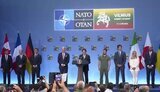 Zelenskyy: Ukrainian delegation returns home with a significant security victory. VIDEO President of Ukraine Volodymyr Zelenskyy summed up work of Ukrainian delegation at NATO Summit in Vilnius. 6 201 82 Previously in trend: Ukraine - NATO
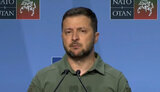 Ukraine will definitely be invited to NATO when war ends, - Zelensky according to results of summit in Vilnius Following the NATO summit in Vilnius, President Volodymyr Zelensky said that Ukraine will be in the Alliance, but only after the end of the war. 2 259 49 Previously in trend: Ukraine - NATO
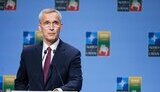 After end of war, agreements regarding Ukraine’s path to NATO will be reviewed, - Stoltenberg After the end of Russia’s war against Ukraine, it will be necessary to review the agreements reached at the NATO summit in Vilnius. 2 739 19 Previously in trend: Ukraine - NATO
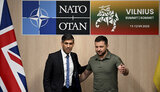 Agreements on security guarantees will not replace Ukraine’s membership in NATO, - Sunak British Prime Minister Rishi Sunak agreed that the mentioned agreements on security guarantees for Ukraine at the summit in Vilnius will not replace its membership in NATO. 1 922 7 Previously in trend: Ukraine - NATO
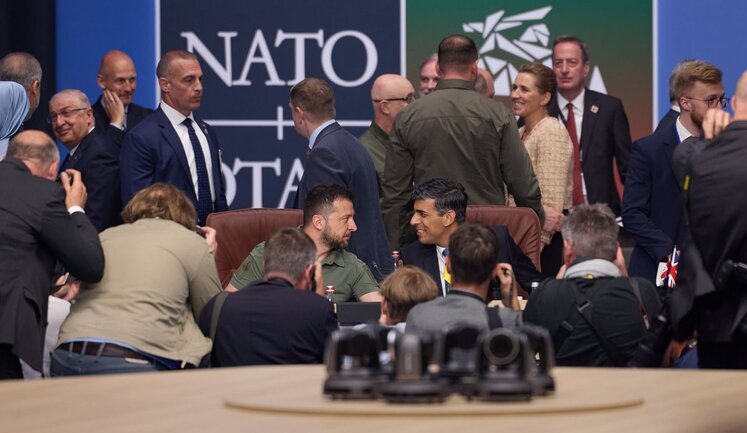
 First meeting of Ukraine-NATO Council takes place in Vilnius. PHOTOS Under the chairmanship of NATO Secretary General Jens Stoltenberg and with the participation of Ukrainian President Volodymyr Zelensky, the inaugural meeting of the NATO-Ukraine Council takes place in Vilnius at the level of heads of state and government. 3 054 17 Previously in trend: Ukraine - NATO
 Communique of NATO summit contains concrete steps aimed at Ukraine’s integration into Alliance - "Servant of People" Chernev People’s deputy from the "Servant of the People" faction in the Verkhovna Rada, head of the Ukrainian delegation to the NATO Parliamentary Assembly Yehor Chernev noted that the final communique of the NATO summit in Vilnius outlines specific steps for the future integration of Ukraine into the Alliance. 1 507 29 Previously in trend: Ukraine - NATO
 We are moving Ukraine closer to NATO membership, realizing that Russian Federation will protest - Stoltenberg NATO Secretary General Jens Stoltenberg said that the Alliance made its strongest decision regarding Ukraine on the way to its membership with the full knowledge that Moscow would protest. 1 030 16 Previously in trend: Ukraine - NATO
 Ukraine needs healthy democracy to join NATO, there is still work to be done - Kirby To join NATO, Ukraine does not need the MAP, but it does need reforms - political, legal, and democratic institutions. 11 482 165 Previously in trend: Ukraine - NATO
We appreciate recognition that Ukraine does not need MAP on way to NATO membership, - Zelensky At the NATO summit in Vilnius, President Volodymyr Zelensky said that Ukraine appreciates the recognition that it does not need an Action Plan for membership in the Alliance. 1 730 20 Previously in trend: Ukraine - NATO
 Budapest memorandum is not guarantee of security, best guarantees are membership in NATO, - Zelensky. VIDEO President Volodymyr Zelensky said that the best security guarantee for Ukraine would be NATO membership. 5 194 49 Previously in trend: Ukraine - NATO War
Results of NATO summit are good, but if there was invitation, they would be ideal, - Zelensky President Volodymyr Zelensky called the results of the NATO summit in Vilnius good. 3 296 48 Previously in trend: Ukraine - NATO
 Now Ukraine is closer to NATO than ever - Stoltenberg The Allies reaffirmed that Ukraine will become a member of the Alliance and agreed to lift the MAP requirement. 1 716 20 Previously in trend: Ukraine - NATO
 Zelensky met with Sunak at NATO summit: We are preparing security guarantees for Ukraine on way to NATO President Volodymyr Zelenskyi held a meeting with Prime Minister of Great Britain Rishi Sunak on the sidelines of the NATO summit in Vilnius. 1 169 8 Previously in trend: Ukraine - NATO
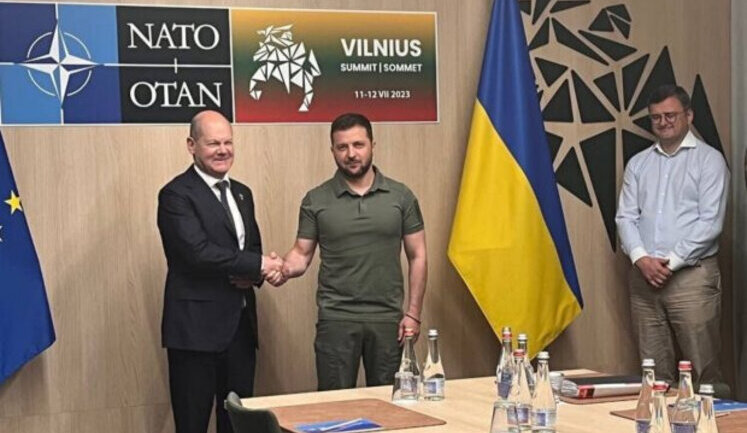
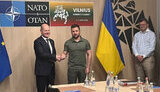 President Zelensky and German Chancellor Scholz started bilateral meeting at the NATO summit. PHOTO On 12 July, at the NATO summit in Vilnius, President of Ukraine Volodymyr Zelensky began talks with German Chancellor Olaf Scholz. 2 388 14 Previously in trend: Ukraine - NATO
 Pistorius on Zelensky’s criticism of Ukraine’s membership in NATO: I sympathize with Ukrainians, but conditions for joining are absolutely normal German Defence Minister Boris Pistorius responded to Volodymyr Zelensky’s criticism of the leaders’ hesitation to give Ukraine an accurate answer about its membership in the Alliance during the NATO summit. 13 552 120 Previously in trend: Ukraine - NATO
Page 1 of 3
more news