ENG




7742 visitors online
The tag "conflict" highlights various confrontations currently occurring across Ukraine, including escalations involving the Territorial Centers of Recruitment and Social Support (TCR and SS). Recent reports detail violent clashes in regions like Bukovyna, Rivne, and Koncha-Zaspa, where disputes over recruitment have often resulted in escalated tensions and physical altercations. These incidents underscore the complexities of enforcing laws related to recruitment amid societal resistance. Additionally, language disputes in cities such as Kyiv and Odesa further illustrate cultural tensions underlying these conflicts. Understanding these dynamics is essential as Ukraine navigates political, cultural, and military challenges while striving to maintain national security and social cohesion.
What triggered the clashes in Bukovyna involving TCR?
The conflict in Bukovyna was initiated during an attempted arrest of a man on the wanted list by TCR, which escalated into gunfire, reflecting the serious tensions between enforcement bodies and civilians over recruitment actions.
How did unknown individuals intervene in the Rivne TCR incident?
In Rivne, unknown individuals intercepted a TCR vehicle, allowing conscription-age men to escape after a medical commission, showcasing the local resistance to recruitment processes amid rising tensions.
Who were involved in the Koncha-Zaspa sanatorium incident?
The Koncha-Zaspa confrontation involved Defense Intelligence of Ukraine (DIU) agents and military servicemen over a property seizure, revealing internal disputes within Ukraine’s military and intelligence services.
What was the outcome of the Vinnytsia protest against TCR military?
The Vinnytsia protest against TCR military actions led to charges against participants, highlighting the contentious relationship between civilians and military recruitment strategies in regional Ukraine.
What led to the language dispute in Odesa?
The language dispute in Odesa arose when elderly women opposed a woman speaking Ukrainian in public, which points to underlying cultural conflicts between Ukrainian and Russian-speaking communities in the region.
What are the common causes of conflict with TCR in Ukraine?
Conflicts with TCR often stem from resistance to military recruitment efforts, enforcement disagreements, and cultural tensions, revealing the deep-seated societal complexities in Ukraine’s current milieu.
News conflict
 "Busified child" turns out to be 30: Volyn TCR says man already mobilised. VIDEO A man on a bicycle, described as a "child" in a video circulated on social media, turned out to be a 30-year-old man liable for military service. The Volyn Regional Territorial Centre of Recruitment and Social Support (TCR and SS) said that after being detained, he underwent a Military Medical... 15 877 194 Previously in trend: Conflict with TCR Unlawful actions of the TCR
 In Lviv, TCR officer threw woman into flower bed: military registration and enlistment office claimed civilian had attacked public address team. VIDEO In Lviv, a confrontation broke out between military personnel and a civilian woman whilst an alert team was carrying out its duties. A video circulating on social media shows a man in military uniform pushing and shoving the woman, causing her to fall. The Lviv Regional TCR stated that this was... 11 914 251 Previously in trend: Conflict with TCR Attack on the TCR Unlawful actions of the TCR
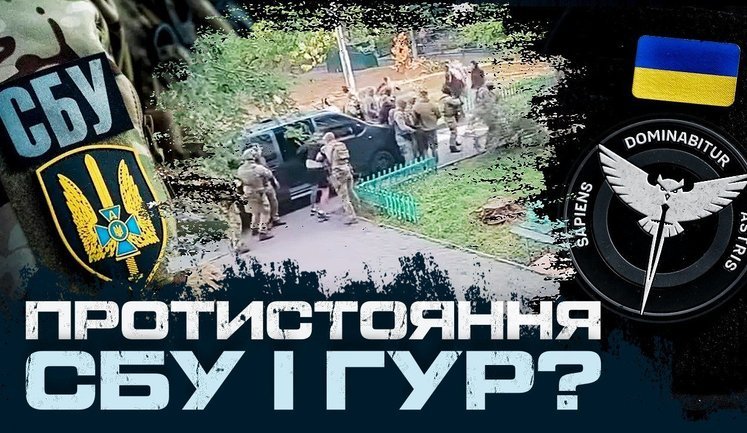
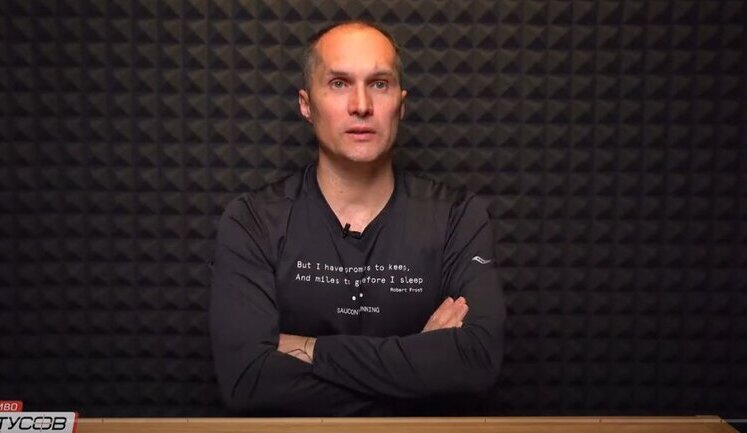
 Butusov on conflict between DIU and SSU: Consequence of manual governance and monopolisation of power Yurii Butusov, commander of a UAV company of the 23rd Assault Regiment within the National Guard’s 2nd Khartiia Corps, commented on the recent conflict between the DIU and SSU in central Kyiv, calling it a direct consequence of manual governance and the monopolisation of power. 8 058 27 Previously in trend: Conflict between the DIU and the SSU
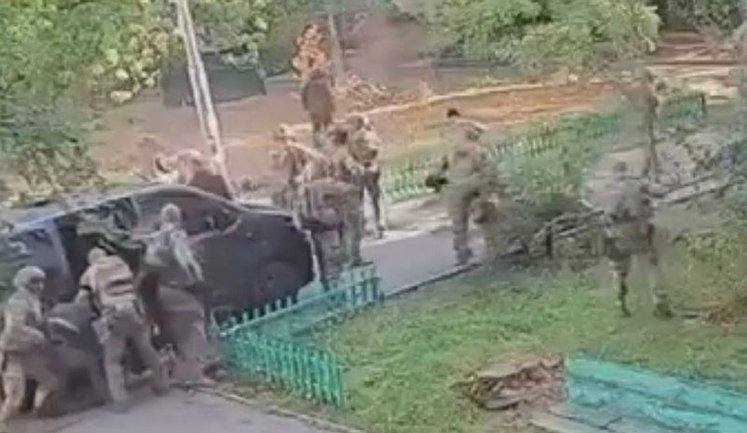
 DIU’s ’Tymur’s special unit’ claimed that SSU had ’abducted’ one of their soldiers ’in broad daylight’ and opened fire on unarmed individuals (updated) The head of the ‘Tymur’ special unit of the Main Intelligence Directorate of the Ministry of Defence of Ukraine, which includes the ‘Russian Volunteer Corps’, has claimed that a combat commander was abducted and that shots were fired by SSU officers during a clash that took place in Kyiv on 2... 16 729 132 Previously in trend: Abduction of Stepan Kaplunov Conflict between the DIU and the SSU
 Zelenskyy on SSU-DIU conflict: Shameful situation. Only Russian occupiers may be shot at in Ukraine President Volodymyr Zelenskyy commented on the shooting between individual units of the Security Service of Ukraine and Defence Intelligence of Ukraine that occurred in Kyiv on September 2. 7 260 75 Previously in trend: Conflict between the DIU and the SSU
 Police officer in Kyiv swore at man with reservation and shoved him into TCR car: internal investigation has been launched. VIDEO In the Podil district of Kyiv, a police officer recently, whilst carrying out public awareness activities, swore at a young man with a reservation and shoved him into a TCR minibus. The police have already launched an internal investigation. 12 520 150 Previously in trend: Conflict with TCR Unlawful actions of the TCR Clash with police
 Pinned him against car and struck him in face: Odesa TCR launches investigation over video of clash between man in military uniform and teenager. VIDEO The Odesa Regional Territorial Center of Recruitment and Social Support (TCR and SS) has launched an internal investigation after a video circulated on social media showing a man in military uniform clashing with a teenager. 11 444 196 Previously in trend: Conflict with TCR
 Polish man who stood up for Ukrainian boy was beaten up in Poznań, - media In the Polish city of Poznań, three men brutally beat a 60-year-old local resident after he stood up for a Ukrainian boy who was being bullied on a tram. As a result of the attack, the victim suffered partial memory loss. 10 225 80 Previously in trend: Anti-Ukrainian propaganda in Poland Beating of Ukrainians in Poland
 In Lviv, crowd overturned TCR vehicle: Sadovyi, Lviv Regional TCR and SS responded (updated). VIDEO On 8 July, an incident occurred in the Sykhiv district of Lviv during events aimed at informing the public about mobilisation. The police identified a man who was wanted for evading military service. An angry crowd overturned a service vehicle belonging to the Territorial Centre for Recruitment. 27 274 540 Previously in trend: Conflict with TCR Attack on the TCR
 Two young women from Moscow are swearing at each other over place in queue at petrol station. VIDEO A video filmed at a petrol station in the capital of the Russian Federation has been shared on social media. The footage shows a long queue of cars waiting to fill up, as well as a row between drivers. 11 907 46 Previously in trend: Fuel shortage
 TCR serviceman beaten during notification measures in Volyn region: attackers detained In Volyn region, police are investigating attacks on servicemen of the Territorial Center for Recruitment and Social Support (TCR and SS) and damage to military property. The conflict broke out during mobilization measures. 9 128 170 Previously in trend: Conflict with TCR Attack on the TCR
 Farmer stabs mayor of Piatykhatky in Dnipropetrovsk Oblast in chest: mayor in serious condition A local farmer stabbed the mayor of Piatykhatky (Dnipropetrovsk Oblast) in the chest during a conflict. 8 937 70
 Man fled from TCR and fought with serviceman on roof of private house in Volyn region: both fell. VIDEO A video has been circulated on social media showing a serviceman from a Territorial Center of Recruitment and Social Support (TCR and SS) scuffling with a man on the roof of a private house and falling off it together with him. The local TCR and SS said the man had climbed onto the roof himself... 13 171 255 Previously in trend: Unlawful actions of the TCR Violation of human rights by TCR
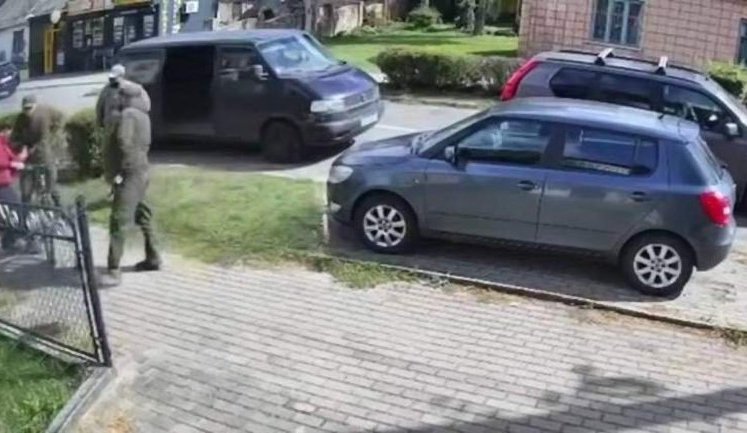
 Clashes break out in Bukovyna between TCR and civilians over man on wanted list. VIDEO In the Chernivtsi region, an attempt to arrest a man who was allegedly wanted by the police escalated into a violent confrontation involving gunfire. According to Censor.NET, a video of the conflict, which took place in the village of Mamalyha with the participation of the warning group, has... 29 488 328 Previously in trend: Unlawful actions of the TCR Mobilisation in Ukraine
 Unknown individuals block TCR vehicle in Rivne and attack service members: men inside escape On Friday, February 6, unknown citizens attacked a notification team of the Rivne Regional Territorial Center of Recruitment and Social Support (TCR and SS) and helped conscription-age men escape. The men were inside the center’s official vehicle after undergoing a military medical commission. 16 378 297 Previously in trend: Conflict with TCR Attack on the TCR
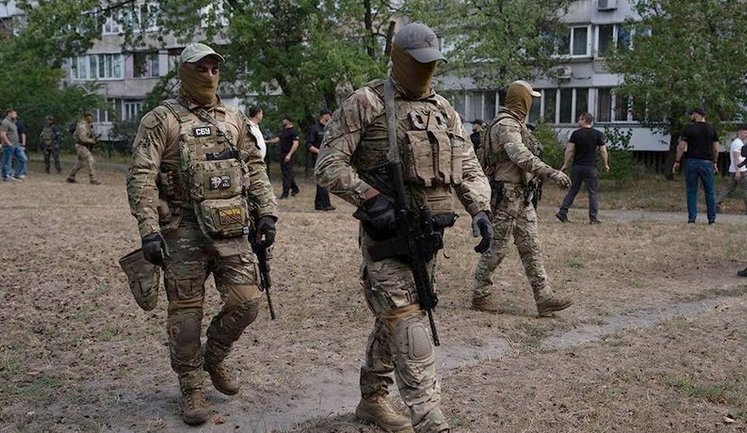
 Defense Intelligence of Ukraine fighters barricade themselves inside seized Zhovten sanatorium in Koncha-Zaspa – media An armed confrontation broke out in Koncha-Zaspa between representatives of the Defence Intelligence of Ukraine (DIU) and servicemen of military unit A4005. According to law enforcement, the intelligence officers entered the premises of the Zhovten sanatorium and briefly took ten servicemen... 61 125 223
 Threatened musician with disability and demanded that he perform Russian song: 29-year-old man detained in Kyiv. VIDEO Law enforcement officers detained a 29-year-old man who demanded that a musician with a disability perform a Russian song in Pozniaky, Kyiv. 11 023 47 Previously in trend: Language conflict
 Protest against TCR military in Vinnytsia: three more participants have been charged. PHOTO Three participants in an action to obstruct the military of the Vinnytsia Regional Military TCR and SS near the city stadium in early August 2025 were served with a notice of suspicion. 7 750 145 Previously in trend: Conflict with TCR Protest in Vinnytsia
 Men attack TRC servicemen in Volyn: shooting erupts during brawl In the village of Boratyn, Volyn region, a group of men clashed with TRC servicemen who attempted to check their military registration documents. Shots were fired during the confrontation, and the attackers were detained. 8 073 134 Previously in trend: Conflict with TCR Attack on the TCR
 Conflict with TCR and police in Vinnytsia: police launch investigation into circumstances of incident The National Police has launched an investigation into the circumstances of the incident that took place near the stadium in Vinnytsia between citizens and employees of the Territorial Centres of Recruitment and Social Support. 21 192 320 Previously in trend: Conflict with TCR Protest in Vinnytsia
 TCRC servicemen forcibly shove man into van in Kharkiv; locals try to stop them. VIDEO In Kharkiv, several individuals in military uniforms, likely servicemen of the Territorial Centre of Recruitment and Social Support (TCR and SS), dragged a man across the asphalt to shove him into a van. Civilians tried to intervene. 12 109 285 Previously in trend: Conflict with TCR Unlawful actions of the TCR
 American-style "zhabogaduking." PHOTO jokes of conflict between Trump and Musk Read more: Musk has lost his mind, I’m "not particularly" interested in talking to him right now - Trump 10 468 23 Previously in trend: Political collages
 Cherkasy TRC and SS on incident: TCR and SS servicemen acted within framework of current legislation The Cherkasy Territorial Center of Recruitment and Social Support (TCR and SS) commented on the incident that took place the previous day on Rizdvyana Street involving a group of men and servicemen from the recruitment center. 8 771 186 Previously in trend: Attack on the TCR
Conflict with TCR servicemen in Cherkasy: four suspects detained In Cherkasy, law enforcement officers detained four people who took part in a conflict with the military of the TCR and SS. 11 083 143 Previously in trend: Attack on the TCR Threats to TCR employees
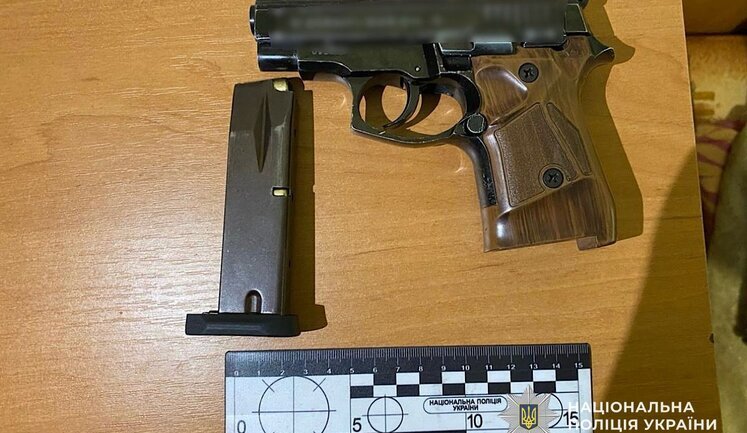
 Man opens fire at TCR serviceman in Nikopol after verbal altercation. PHOTOS In Nikopol, Dnipropetrovsk region, police detained a local resident who fired a shot at a Territorial Center of Recruitment and Social Support (TCR and SS) serviceman following a verbal altercation. 8 557 141 Previously in trend: Conflict with TCR
 Language conflict in Dnipro: "It annoys me when people speak Ukrainian here. I hate Banderites! F#ck off". VIDEO A video was posted online showing a Russian-speaking man expressing complaints against a Ukrainian-language company and swearing obscenely. 29 559 204 Previously in trend: Language conflict
 Woman verbally attacked veteran for being served out of turn at bank in Lviv: "Muscovites didn’t beat you enough there! Your arms and legs are intact!". VIDEO In Lviv, a bank customer hurled insults at a veteran who volunteered to be served out of turn, as required by law. She was first outraged that he "has arms and legs", so he allegedly cannot call himself a veteran, and then she involved her husband in the argument. 19 368 119
 Language dispute in Odesa: "You’re not from Odessa. There’s Russian-speaking population here. You’re stupid! F#ck off to Kyiv and Ivano-Frankivsk. F#ck of to Lviv!". VIDEO Elderly women in Odesa started a fight with a woman who spoke Ukrainian in a public place. 27 679 170 Previously in trend: Language Issue
 TCR officer and police officer scuffle with civilian in Kyiv: enlistment office claims he acted aggressively and provoked fight. VIDEO A video circulating online on April 18 shows a confrontation between a serviceman of the Kyiv District Territorial Recruitment and Social Support Center, a police officer, and a civilian. 12 434 192 Previously in trend: Conflict with TCR Unlawful actions of the TCR
 Conflict with shooting between occupiers in seized Velyki Kopani in Kherson region: "Who’s with MP? Get down, f#ck! I’ll kill you, f#ck!". VIDEO In the occupied part of the Kherson region, Russian military attacked the military police of the Russian army. 17 769 49 Previously in trend: Occupied territories - Crimea and Donbas
 "I’ll teach you how to speak, you scum": in Kyiv, Bolt driver forced activist out of car after she commented on his use of Russian In Kyiv, a Bolt driver forced an activist out of the car and then grabbed her by the face after she insisted he speak Ukrainian, as required by Ukrainian law. The woman has filed a report with the police. 39 006 267 Previously in trend: Language conflict
 Regional TCR on conflict in Dnipro: Man shouted that he was "not fool to fight" and used knife. He suffered facial injury due to actions of woman. VIDEO A video showing a part of the conflict situation involving representatives of the TCR in Dnipro is being actively shared on social media. 19 349 214
 In Odesa, police officer knocked woman down, put her face to ground and pin back her arms during conflict in street. VIDEO A video was posted online showing a police officer knocking a woman down, putting her face to the ground and pinning back her arms during a conflict in the street. 20 336 194
 Language conflict in bookstore in center of capital - police bring offender to justice The police drew up an administrative report under the article on disorderly conduct against a man who aggressively reacted to a remark about the Russian language in a bookstore-cafe. The materials will also be sent to the language ombudsman. 17 786 367
 General director of Steko Polozhai scolded representatives of TCRSS in Dnipro: "I have 1,760 people working, and you are soldier, f#ck, go dig". VIDEO A video is circulating on social media showing an incident involving Serhii Polozhay, CEO of Steko, a manufacturer of metal-plastic windows. He uses obscene language against TCRSS representatives during the document check. 34 560 322
 Conflict between top NBU official Poliarush and Belarusian volunteer Tratsevsky occurs in Kyiv. VIDEO Belarusian volunteer Andrei Tratsevsky (Bezsmertny) said that Pavel Poliarush, head of the National Bank's Department for Work with Troubled Assets, had threatened him. 20 818 83
 Conflict arose between TCR employee and civilians in Dnipro: Woman insults defenders and patriots. VIDEO In Dnipro, a conflict arose between a TCR employee and two civilians. 12 513 128
 Police officer involved in incident with ex-serviceman and MP Tyshchenko’s bodyguards in Dnipro was dismissed from service - media The Kyiv police dismissed its officer involved in a clash between the security of MP Mykola Tyshchenko and a volunteer of the Defence Intelligence of Ukraine's Kraken special unit, Dmytro Pavlov (Son), in Dnipro. 32 807 196
 Policeman and two soldiers forcefully "shoved man into minibus" in Lviv: "What are you doing to him? You’re going to break his leg!". VIDEO A video was posted online showing representatives of the Lviv regional TCR trying to "shoved man into minibus". 22 941 233 Previously in trend: War
 Beating of "Kraken" volunteer Dmytro Pavlov (Son) by bodyguards of People’s Deputy Tyshchenko in Dnipro: full version of conflict. VIDEO A video has been posted online showing the full version of the conflict between MP Mykola Tyshchenko and his security detail with a volunteer of the Defence Intelligence of Ukraine's Kraken special unit, Dmytro Pavlov (Son), in Dnipro. 40 971 213 Previously in trend: War
 TCR employees locked us in territory and did not allow us to leave for 4 hours - ambulance doctor about conflict with TCR in Odesa The doctors who arrived at the Odesa RTCR and SS (Regional Territorial Centre for Recruitment and Social Support) were forcibly detained on the territory of the institution for 4 hours. 16 001 121
TCR’s comment on the fight with doctors in Odesa: People in medical uniforms refused to provide documents confirming their affiliation with healthcare system The Odesa Regional TCR and SS commented on the incident near the Kyivskyi RTCR and SS involving military personnel and ambulance representatives. 24 693 350
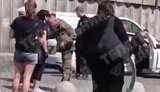 Two TCR employees lash out at women during conflict in Kyiv: "Look, he hits Natasha!". VIDEO In Kyiv, near the Demiivska metro station, two employees of the Kyiv City TCR (Territorial Center for Recruitment) lashed out at women who stood up to defend the man during the detention of a possible fugitive. 29 302 295 Previously in trend: War
 Many of videos on social media showing conflicts with representatives of TCR were filmed on TOT - Ground Forces The Ground Forces claim that a significant part of the content with conflicts depicting AFU servicemen, allegedly serving in the TCR and conflicts with them was filmed in the occupied territories. 24 102 246
 Manasyan, officer of National Police’s State Intelligence Service, caused scandal in a Kyiv restaurant: "You have no idea who we are...". PHOTO Vitaliy Manasyan, an officer of the Strategic Investigations Department of the National Police of Ukraine, was distinguished by his unbecoming behaviour in the Kyiv restaurant "Goodwine". The Interior Ministry says he was fired after the scandal. 63 401 302
 In 2023, more than 1000 conflicts between TCR and civilians were recorded - Lubinets In 2023, there were more than 1,000 cases of conflicts between the TCR (territorial centre for recruitment) and civilians. 4 598 70
 NATO should prepare for Russian missile attacks across Europe - The Times NATO will have to prepare for possible Russian strikes on targets across Europe, particularly in Germany, if Moscow launches a war against the Alliance. 7 009 38
 Fight between Russian soldiers and mercenaries from Wagner PMC took place in occupied Luhansk region, there are dead bodies on both sides - General Staff The General Staff of the Armed Forces of Ukraine released information on the relations between representatives of the Wagner PMC and the Russian army in the Luhansk region. 16 061 60 Previously in trend: Russian aggression against Ukraine War
Page 1 of 3
more news