ENG




9257 visitors online
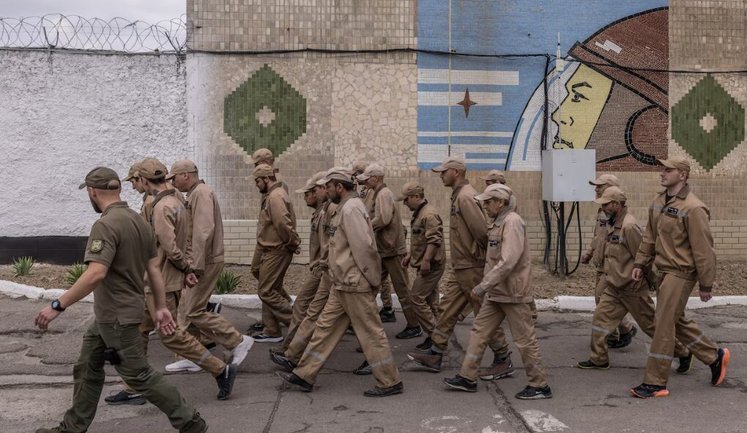
In recent actions led by the Ministry of Justice, over 10,000 convicts have been released on parole to join the Ukrainian Defense Forces. This decision aims to bolster the nation's defense capabilities amidst ongoing tensions. The Ministry of Justice emphasized that this move is part of broader mobilization efforts, responding to the critical need for active personnel. In addition, 8,500 convicted individuals have been enlisted, with 1,500 applications currently under review. These efforts illustrate the Ministry's strategic role in national security amidst external threats. Various challenges, such as ensuring proper integration and addressing societal concerns, remain a focus for the Ministry as it navigates the complexities of wartime mobilization.
What actions have been taken by the Ministry of Justice for mobilization?
The Ministry of Justice has released over 10,000 convicts on parole specifically for mobilization into the Ukrainian Defense Forces. This urgent measure strengthens military manpower during ongoing threats to national security. Moreover, the enlistment process is active, with additional applications under review, demonstrating the Ministry's commitment to supporting defense operations.
How many convicts have joined the Armed Forces of Ukraine?
According to the Ministry of Justice, 8,500 convicted individuals have already been integrated into the Armed Forces of Ukraine to strengthen military capacities. This initiative continues with an additional 1,500 applications being reviewed for possible enlistment, ensuring a robust pool of recruits to meet defense needs.
How does the Ministry of Justice handle state traitors in prison?
State traitors are held together with other prisoners under the same conditions. The Ministry of Justice monitors attitudes within prisons closely, noting that convicts generally have a negative outlook toward traitors, maintaining order and safety while upholding legal standards for all inmates.
Why do some Russian prisoners of war refuse exchange?
Some Russian prisoners of war choose not to participate in exchanges due to fears of being redeployed to combat by Russian forces. They are aware that returning may involve being sent back to the front lines, preferring to remain in Ukrainian custody under current conditions instead of facing further military action.
What recent developments have occurred in Ukraine’s penal system due to foreign threats?
Recent developments include the release of convicts for military enlistment and strategic measures in response to external threats, such as the Russian Armed Forces' strike on the Bilenkivska penal colony, causing loss of life and prompting discussions regarding international penalties and reinforcement needs for national defense.
News Ministry of Justice
 HACC upholds SAPO claim: proceeds from sale of former Justice Ministry official’s Range Rover to be recovered as state revenue The High Anti-Corruption Court granted a claim filed by the Specialised Anti-Corruption Prosecutor’s Office and ordered more than UAH 909,000 in proceeds from the sale of a car previously recognised as an unjustified asset to be recovered as state revenue. 816 1 Previously in trend: Confiscation of unjustified assets
 She hid nearly 20 million hryvnias in account in Austria: State Bureau of Investigation has notified relative of former head of Khmelnytskyi Medical and Social Expertise Commission that she is under suspicion The State Bureau of Investigation (SBI) has notified the former head of the Central-Western Interregional Directorate of the Ministry of Justice that she is under suspicion. The investigation established that she had failed to declare an account held at an Austrian bank and over 540 thousand US... 2 316 9 Previously in trend: Undeclared assets
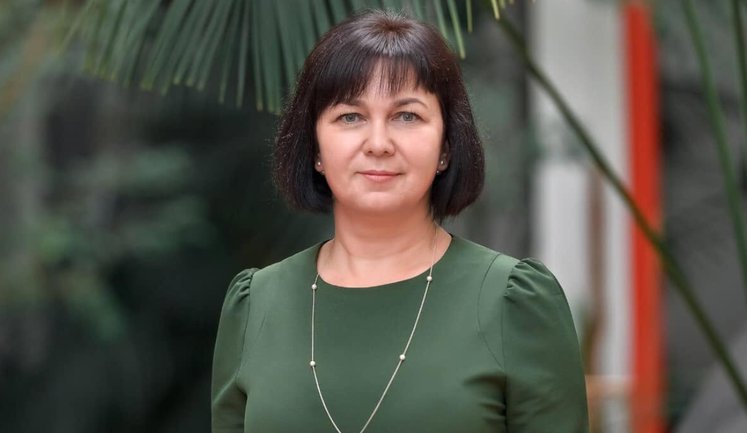
 Family of Deputy Minister of Justice Kravchenko has purchased property worth $400,000, - media. VIDEO The family of Deputy Minister of Justice Liudmyla Kravchenko has purchased three flats in business-class residential complexes in the capital. Their value could be as high as $400,000. 5 936 54
 Arakhamiia predicts decision on minister of justice in two to three months The candidacy for the position of Minister of Justice of Ukraine remains a subject of political consultations in parliament. 1 948 29 Previously in trend: Personnel changes in government
 Deputy Justice Minister on cell for Mahamedrasulov: Photo sent to Halushchenko only to show what it looks like Deputy Justice Minister Yevhen Pikalov commented on his message to Herman Halushchenko, in which he sent a photo of a detention cell from a pre-trial detention center ahead of the selection of a preventive measure for NABU detective Ruslan Mahamedrasulov. 6 143 18 Previously in trend: Ruslan Mahamedrasulov’s case
 Zhelezniak: Zelenskyy explained Halushchenko’s appointment as Minister of Justice by saying he "fully trusts him" MP from the Holos faction, Yaroslav Zhelezniak, stated that during the government reshuffle in July 2025, President Volodymyr Zelenskyy personally explained the appointment of Herman Halushchenko as Minister of Justice. 5 607 30 Previously in trend: Halushchenko case
 US Congress: "Mindich is President Zelenskyy’s partner, involved in $100 million bribery". DOCUMENT The Ministry of Justice report to the US Congress mentions "Mindichgate" in Ukraine. 16 267 45 Previously in trend: Mindichgate
 Ukraine is facing demographic crisis: for every newborn, there are three deaths. INFOGRAPHICS According to data from the Ministry of Justice of Ukraine, more than 168,700 children were born in Ukraine in 2025. At the same time, 485,200 deaths were recorded. 4 433 54 Previously in trend: Demographic issues
 Office of President has named Denys Maslov, member of parliament from Servant of People party, as candidate for post of Minister of Justice Denys Maslov, a member of parliament from the Servant of the People party, is a candidate for the position of Minister of Justice. 5 518 51 Previously in trend: Staff changes Personnel changes in government
 Almost all of Mindich’s people still remain in power, including Halushchenko’s deputy Bilous, - Zhelezniak A month after Herman Halushchenko's dismissal from the post of Minister of Justice, Timur Mindich's people remain in the system. 3 640 35
 I am not clinging to position of minister, I will defend myself in court, - Halushchenko Minister of Justice Herman Halushchenko responded to the government's decision to suspend him from his duties. 2 916 34 Previously in trend: Energy sector corruption
 Over 10,000 convicts released from prison on parole for mobilisation into the Defence Forces. PHOTO More than 10,000 convicts have been released on parole for mobilisation to the Ukrainian Defence Forces. 115 871 26 Previously in trend: Mobilization of convicts
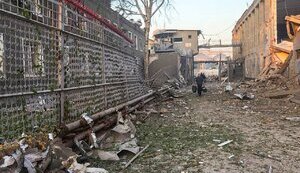
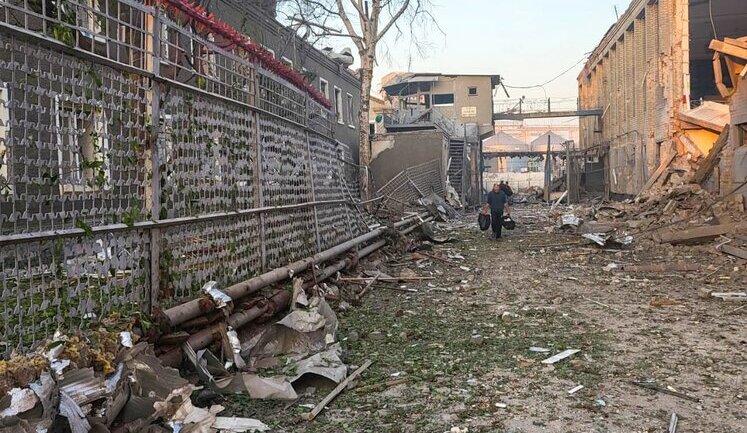
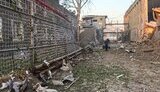 Consequences of Russian strike on Bilenkivska penal colony: 17 dead, over 40 wounded, some seriously. VIDEO+PHOTOS On 28 July 2025, at approximately 11:28 p.m., the Russian Armed Forces carried out an air strike on the territory of the Bilenkivska penal colony in Zaporizhzhia region using four guided aerial bombs (KAB). 12 759 37 Previously in trend: Shelling of the Zaporizhzhia region
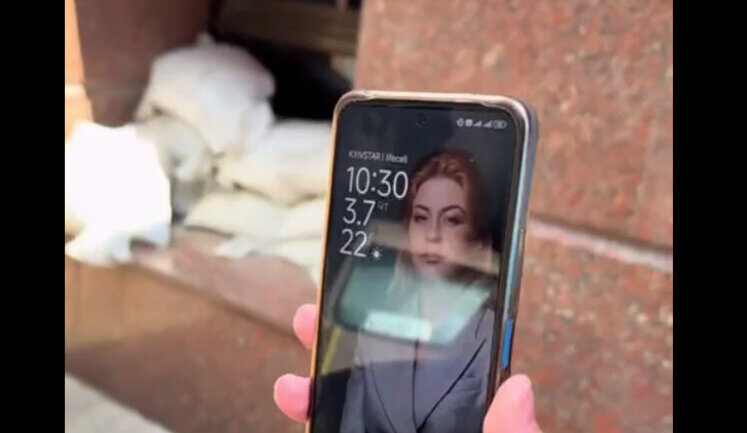
 Ministry of Justice’s TikTok account posted video showing photos of Minister Stefanishyna on screens of department’s employees’ phones. VIDEO The official TikTok of the Ministry of Justice published a video in which employees of the department have photos of the head of the ministry, Olha Stefanishyna, on their phone screensavers. 8 041 48 Previously in trend: photo of Ste
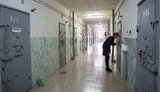 Traitors are held together with other prisoners, convicts have very negative attitude to them - Ministry of Justice State traitors and collaborators are held in prisons under normal conditions. 6 623 16 Previously in trend: High treason
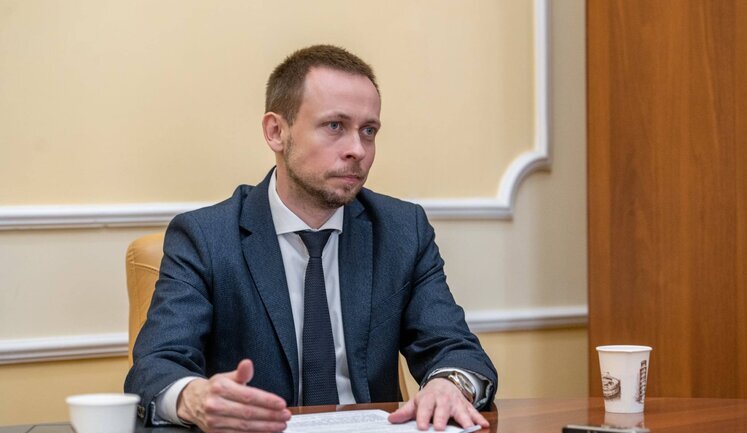
 Some Russian prisoners of war do not want to be exchanged, - Deputy Minister of Justice Pikalov Some prisoners of war of the Russian army do not want to go for an exchange, as they understand that after that the Russians will send them back to the front line. 3 993 16 Previously in trend: Prisoner swap captured occupiers
 8,500 convicted individuals have joined Armed Forces of Ukraine, another 1,500 applications under review – Ministry of Justice The process of enlisting convicted individuals into the Armed Forces of Ukraine is ongoing. As of May, 8,500 former inmates have already joined the Ukrainian army. 1 393 12 Previously in trend: former convicts in the Armed Forces
 More than 27.5 thousand applications to register of damage caused by Russian aggression received - Ministry of Justice The International Register of Damage caused by the Armed Aggression of the Russian Federation has already received more than 27,500 applications, 632 0 Previously in trend: Losses due to Russian aggression register of losses
 Hungary postponed negotiations with Ukraine on national minorities - Ministry of Justice The Hungarian side postponed the consultations on national minorities with the Ukrainian delegation scheduled for May 12. 3 321 46 Previously in trend: Ukraine’s negotiations on national minorities
 Ministry of Justice hires U.S. law firm to assist with mineral agreement – media The Ministry of Justice of Ukraine has hired the American law firm Hogan Lovells US to defend Kyiv's position during negotiations on a minerals agreement with the United States. 2 530 34 Previously in trend: mineral resources agreement
 Over 8 thousand former convicts have already joined Armed Forces of Ukraine – Ministry of Justice More than 8 thousand former convicts, including both men and women, have already joined the Armed Forces of Ukraine. 1 225 12 Previously in trend: former convicts in the Armed Forces
 Stefanishyna: Those responsible for Russian cyberattack on Ukraine’s state registers have been identified Law enforcement officers have established why the Russian hacker attack on the Unified State Registers of the Ministry of Justice took place. Among other things, they found out who was responsible for it in Ukraine and who was involved in it from the Russian Federation. 3 237 9
 Attempts to seize funds of agricultural enterprise: investigation into fraud in Ministry of Justice completed, - SBI Employees of the State Bureau of Investigation have completed a pre-trial investigation into an employee of the Ministry of Justice of Ukraine and her accomplice who tried to fraudulently seize funds from a large agricultural enterprise. 3 722 1 Previously in trend: seizure of funds
 Ministry of Justice to consider complaint of Ministry of Defence on Bezrukova’s return to post of head of DPA The Ministry of Defence has filed a complaint to the Ministry of Justice regarding the return of Maryna Bezrukova to the post of head of the State Enterprise "Defence Procurement Agency". 3 871 27
Unified State Register will resume operations on January 9 after large-scale cyberattack by Russian Federation - Ministry of Justice On Thursday, 9 January, the Unified State Register of Legal Entities, Individual Entrepreneurs, and Public Organisations (USR) resumed operation after a large-scale Russian cyberattack. 3 224 4
 Russian cyberattacks on state registers: Ministry of Justice plans to dismiss CEO of NIS Berezhnyi, - media The Ministry of Justice of Ukraine will dismiss CEO of the State Enterprise National Information Systems Oleksii Berezhnyi. The company manages the registers of the Ministry of Justice, which were attacked by Russian hackers on December 19. 6 995 40
 If evaders fail to pay fines, their property and funds may be arrested - Ministry of Justice. DOCUMENT In the event of non-payment of the fine, enforcement proceedings may be initiated against the evaders and their accounts may be seized. 22 079 181
 VR appoints Stefanishyna as Deputy Prime Minister for European and Euro-Atlantic Integration - Minister of Justice Today, on 5 September, the Verkhovna Rada appointed Olha Stefanishyna to the post of Deputy Prime Minister for European and Euro-Atlantic Integration of Ukraine - Minister of Justice of Ukraine. 3 920 27
 Employee of Ministry of Justice and her accomplice are exposed for machinations with complaints consideration by Office of Countering Raiding The chief specialist of one of the departments of the Ministry of Justice of Ukraine and her accomplice have been served a notice of suspicion on the fact of fraud committed on a particularly large scale. 2 114 1
 How to find out if there is fine from TCR: Explanation of Ministry of Justice Information about the fine from the TCR can be found in the Automated System of Enforcement Proceedings (ASEP). 39 084 82
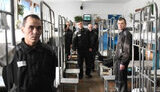 4,500 convicts agreed to leave prison for front - Ministry of Justice In April, the Ministry of Justice conducted a survey among prisoners, where they were asked questions about release by signing a contract for military service. Agreed that it is necessary to adopt a law on conditional early release by entering into a contract for military service of almost 5 thousand convicts 7 451 52
 Active discussion on ways to transfer frozen Russian assets to Ukraine continues - Ministry of Justice The countries where most of the frozen Russian assets are located are discussing effective ways and mechanisms for their transfer to Ukraine. 589 7
 Ministry of Justice on mobilization potential among those sentenced to AFU: There are two categories of people, some of them can be drafted There are about 50,000 people in Ukraine who have a criminal record and have already served their sentences. There are also 26,000 people in prison. Some of them may be mobilized into the Ukrainian army. 3 730 13
 Ministry of Justice proposes that prisoners and convicts can mobilize, but it’s up to court to decide - Deputy Minister Vysotska The Ministry of Justice wants to remove obstacles that would allow people with a criminal record or convictions to be mobilized. 3 119 49
 Ministry of Justice proposes to allow mobilization of citizens with criminal record The Ministry of Justice proposes to revise the legal provision on military registration and the possibility of mobilizing former convicts. 6 133 78 Previously in trend: War
 Ukraine expects to receive $4 billion from frozen Russian assets in 2024 - Ministry of Justice This year, Ukraine expects to transfer $4 billion of Russian assets frozen by the G7 and the EU. 1 011 15 Previously in trend: Russian aggression against Ukraine Sanctions against Russia War
 According to current legislation, former convicts are removed from military registration and are not subject to mobilization – Ministry of Justice Currently, Ukrainian law prohibits the recruitment of not only convicts in prison but also those who have served their sentences and are free. 8 830 45 Previously in trend: War
 Ministry of Justice asks High Anti-Corruption Court to confiscate two planes of Russian company The Ministry of Justice asks the High Anti-Corruption Court to impose a sanction on "Ilyushin Finance Co." JSC. 4 521 7
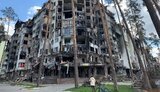 Acceptance of applications to Register of Damages caused by Russia is expected to start in spring 2024 - Ministry of Justice Organizational arrangements are currently underway for the practical launch of the Register of Damages, the start of accepting applications, which is expected in the spring of 2024, and the launch of the Kyiv office. 688 5 Previously in trend: War
 Ministry of Defense and Ministry of Justice supported the draft on registered partnerships in Ukraine. DOCUMENT The Ministry of Defence and the Ministry of Justice have supported draft law No. 9103 "On the Institute of Registered Partnerships". This draft law proposes to introduce a registered partnership as a voluntary family union of two adults of the same or different sexes. Amendments are currently being prepared for the second reading. Previously, the negative conclusions of these ministries blocked the further progress of the draft law in the Verkhovna Rada. 10 134 176
 More than 3,000 couples got married remotely since start of full-scale invasion, - Ministry of Justice. PHOTO During the full-scale invasion of the Russian Federation, 3,328 distance marriages were registered in Ukraine. 1 054 7 Previously in trend: War
 Ukraine spends about UAH 10,000 month on maintenance of one Russian prisoner, - Ministry of Justice About 10,000 hryvnias per month is spent on the maintenance of one Russian prisoner of war. 7 455 128 Previously in trend: War
 Court Launches Proceedings Under Justice Ministry’s Appeal On Ban On Party Of Shariy Activity The District Administrative Court of Kyiv has launched proceedings under an appeal of the Justice Ministry on a ban on Party of Shariy activity. 10 691 121
 Justice Ministry cannot amend Unified State Register to fulfill decision of Constitutional Court – Maliuska Minister of Justice of Ukraine Denys Maliuska said the Ministry of Justice cannot amend the Unified State Register of Legal Entities, Individual Entrepreneurs and Public Organizations of Ukraine in order to fulfill any decision of the Constitutional Court of Ukraine or a separate resolution. 10 331 18
 NABU: search operation in Justice Ministry was lawful, prevented destruction of documents Detectives of the National Anti-Corruption Bureau of Ukraine (NABU) carried out immediate investigative actions (search operation) in the office a Justice Ministry official and in his home in the light of intelligence about possible destruction of important evidence. 25 988 279
 Deputy Justice Minister Bernatska: NABU detectives break into ministry premises Ukraine’s Justice Ministry says the members of the National Anti-Corruption Bureau conducted unauthorized search in the government agency on Friday morning. 24 745 274
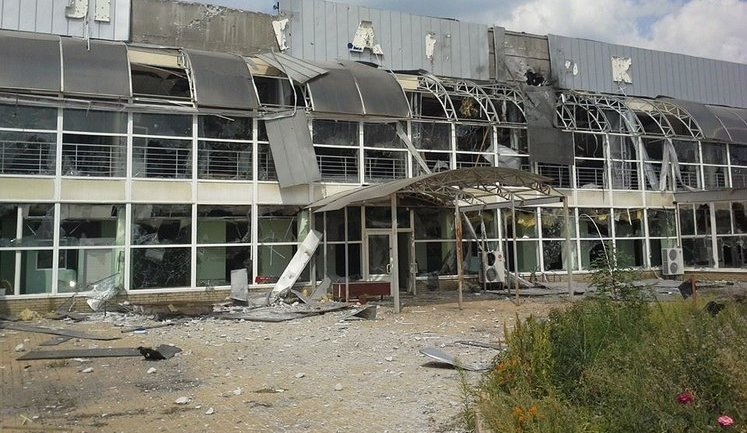
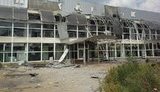 Luhansk airport destroyed by Tochka tactical missiles launched from Russia, - deputy justice minister Shortly before Russian battalion task force penetrated Ukraine in August 2014, the aggressor state’s military were shelling the Ukrainian Armed Forces’ positions at the Luhansk airport with Tochka missiles while Ukrainian border guards were attacked by the Russian combat helicopters. 145 814 311 Previously in trend: Russian aggression against Ukraine
 Economic court of Kyiv allowed fining Gazprom for 171 billion hryvnia on account of debtor's property The Kyiv City Economic Court granted the petition of the Anti-monopoly Committee of Ukraine and the Executive Service of the Ministry of Justice and changed the way of execution of the court ruling regarding the recovery of a fine in amount of 171 billion hryvnia ($6.4 billion) from Russia's Gazprom. 14 555 56
Page 1 of 3
more news