ENG




12991 visitors online
The military-industrial sector is experiencing dynamic changes. The unveiling of the Phantom MK-1 humanoid robot by the American company Foundation marks a significant leap in military robotics. This innovation sets a precedent for future technological developments. Meanwhile, Ukraine's defense industry is making notable strides, with capabilities to produce up to 10 million drones annually, as highlighted by the Ministry of Strategic Industry. Ukrainian companies are also forming international collaborations, such as Skyeton's joint venture in the UK to expand drone accessibility. However, challenges remain, such as the dependency of Russian artillery production on Austrian machinery due to sanctions. The sector's evolution is critical in ensuring global security and meeting defense needs amid ongoing geopolitical tensions.
What advancements have been made in military robotics?
The American company Foundation has recently developed the Phantom MK-1, the world’s first humanoid robot specifically designed for military applications. This innovation represents a significant advancement in the robotics field, potentially transforming military operations by integrating advanced automation and artificial intelligence, thereby enhancing strategic capabilities on the battlefield.
How many drones can Ukraine produce annually?
Ukraine is capable of producing an impressive number of drones, approximately 10 million annually. This capacity is part of Ukraine's broader strategy to enhance its defense capabilities and maintain technological superiority. The focus on drones also underscores Ukraine's commitment to advancing its military-industrial sector and sustaining its defense industry growth despite ongoing conflicts.
What is the significance of international collaborations in the military-industrial sector?
International collaborations, such as the partnership between Ukrainian drone manufacturer Skyeton and the UK firm Prevail Partners, are essential for expanding market reach and sharing technological expertise. These collaborations enable countries to leverage each other's capabilities, fostering innovation, and providing strategic advantages in developing advanced military technology, potentially leading to more robust defense systems worldwide.
Why are Austrian machines crucial for Russian artillery production?
Russian artillery production relies heavily on Austrian GFM machines, which have been in use since the 1970s. These machines are vital due to their specialized capabilities in manufacturing artillery barrels, a critical component of military hardware. The reliance on such machines highlights the challenges faced by the Russian military-industrial complex in circumventing international sanctions, which restrict access to newer technologies and impact production efficiency.
What role does the military-industrial sector play in global security?
The military-industrial sector is pivotal in global security, providing the necessary technological advancements and production capabilities to support national defense strategies. By innovating in areas such as robotics, drone technology, and artillery systems, the sector ensures that armed forces are well-equipped to handle existing and emerging threats. This, in turn, contributes to maintaining a balance of power and stability in international relations.
How is Ukraine's defense industry addressing funding challenges?
Ukraine's defense industry is actively seeking financial support from international partners to expand its capabilities. The government and industry leaders emphasize that financial backing is crucial to scaling up production, developing new technologies, and ensuring readiness to meet defense requirements. This approach aims to sustain Ukraine's defense sector growth despite financial constraints, ensuring long-term stability and operational efficiency.
News the military-industrial sector
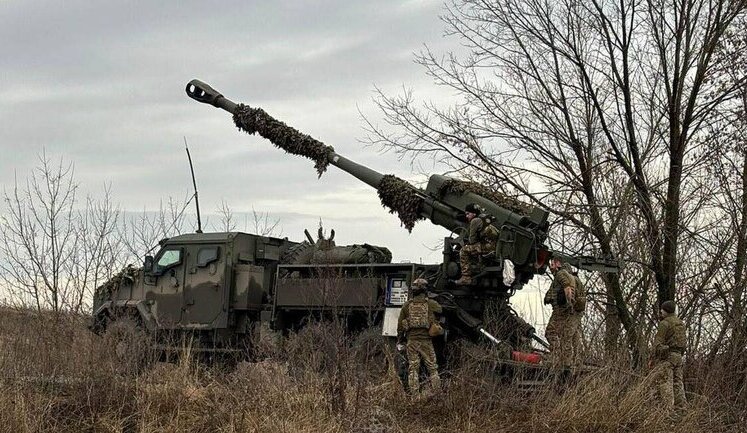
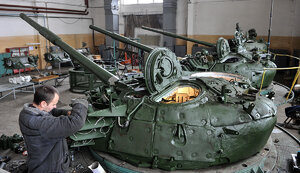
 Defense Ministry explains what makes Zetros chassis special for Bohdana SPHs Ukraine’s Defense Ministry has outlined key features of the Zetros chassis on which the Armed Forces of Ukraine will receive 200 Bohdana self-propelled howitzers (SPHs) in 2026. 11 562 73 Previously in trend: Production of Ukrainian equipment Ukrainian weapons production
 Americans develop world’s first humanoid robot for army The American company Foundation has unveiled the Phantom MK-1, a humanoid robot purpose-built for military use. 119 0 Previously in trend: Drone industry
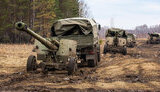 Production of artillery barrels in Russian Federation depends on Austrian GFM machines, which have been in use since 1970, - media A Russian military-industrial complex company has purchased special Austrian machines for the production of barrels for artillery systems to circumvent sanctions. 10 826 20 Previously in trend: Sanctions against Russia
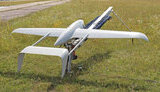 Ukrainian drone manufacturer Skyeton to open factory in UK Ukrainian company Skyeton, the manufacturer of the Raybird reconnaissance aviation system, and the British firm Prevail Partners have agreed to establish a joint venture to promote Ukrainian drones in the United Kingdom. 1 645 2 Previously in trend: Production of drones
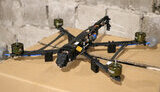 Ukraine can produce up to 10 million FPV drones year - Smetanin, head of Ministry of Strategic Industry Ukrainian enterprises can produce up to 10 million FPV drones per year. 4 259 55 Previously in trend: Production of drones
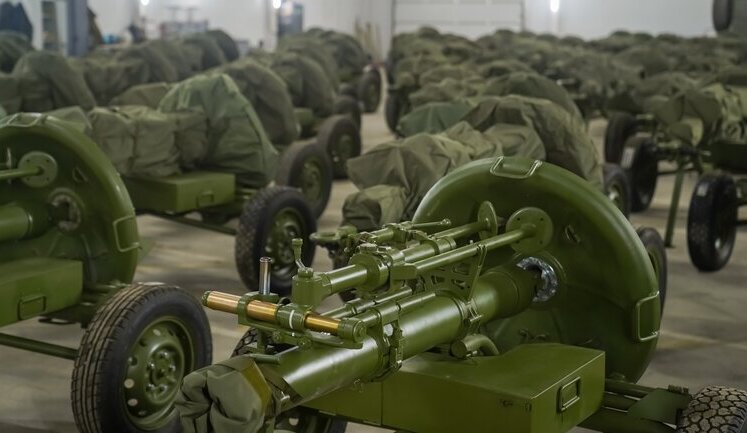
 Another large batch of 120-mm mortars delivered to Armed Forces of Ukraine - Ukrainian Armour. PHOTO Ukrainian Armor has delivered another batch of 120 mm mortars to the Ukrainian Armed Forces. 4 919 13 Previously in trend: Ukrainian weapons production Manufacture of mortars
 We need to rapidly increase defense production, - NATO Secretary General Rutte Increasing the production of military equipment is necessary to ensure the security of the Alliance. 2 184 25 Previously in trend: Plan to strengthen Europe’s defence Defense expenditures
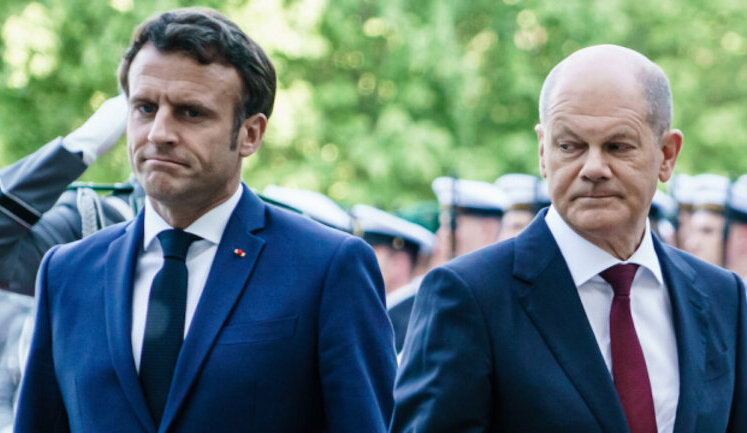
 EU rearmament slowed by dispute between France and Germany - Financial Times The allocation of 150 billion euros for the EU’s defense industry has become a new flashpoint in a long-standing dispute between France and Germany over Europe’s rearmament program. 80 626 57 Previously in trend: Defense expenditures EU rearmament program
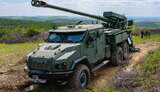 Ukraine produces about third of required amount of weapons - Shmyhal Prime Minister Denys Shmyhal said that Ukraine has increased the capabilities of the defence industry. 2 313 34 Previously in trend: Defence industry of Ukraine
 Who runs Russian military-industrial complex: Defence Intelligence of Ukraine publishes list of 201 Russian officials An array of information on the governing bodies of the Russian military-industrial complex has been published. The list includes key individuals involved in the formation and implementation of Russian state policy in the military-industrial complex. 4 654 18 Previously in trend: War
 Partners should strengthen Ukraine’s defense industry, - Pistorius German Defense Minister Boris Pistorius is convinced of the need to strengthen Ukraine's defense industry. 578 3
 "Ukrainian Armor" paid UAH 1.044 billion in taxes to budget in 2024 1 billion 44 million hryvnias - this is the amount of taxes paid to the Ukrainian budget by the Ukrainian Armor company in 2024. 915 2
 Defence enterprises can continue to book 100% of employees - clarification of Ministry of Economy Critically important defence enterprises recognised by the Ministry of Strategy and Industry will continue to be able to book 100% of their employees as before. The allegations of a reduction in the volume of bookings for such enterprises, as well as alleged threats to the defence industry due... 4 334 7
 Ukrainian factories now produce some of best UAVs in world - Austin Ukraine produces some of the best drones in the world. 3 906 38 Previously in trend: War
 By the end of year, Ukraine will receive $4-5 billion for its own drone production, - Zelenskyy President Volodymyr Zelenskyy said that by the end of the year, Ukraine will receive about $4-5 billion in aid for its own production of drones and unmanned aerial vehicles. 4 361 15 Previously in trend: War
 "Ukrainian Armor" and Czechoslovak Group sign agreement on production of 155 mm shells "Ukrainian Armor" and the Czech holding Czechoslovak Group (CSG) have signed a package of documents on cooperation. 1 844 3
 In 2025, Ukraine will increase its own production of drones, long-range weapons and ballistic missiles - Umierov The Ministry of Defense of Ukraine is actively working to attract foreign partners to establish joint ventures for the development of the defense industry. 2 875 57
 Ukraine is capable of producing 4 million drones annually, 1.5 million have already been contracted, - Zelenskyy During the war, Ukraine was able to build a virtually new defense industry. 5 147 75
 Ukraine is ready to increase weapons production, asks partners to help with financing, - Zelenskyy Ukrainian companies are ready to increase weapons production, but this requires funding from partners. 1 908 25
 We will start producing weapons underground, - Zelenskyy Ukraine is planning to organize underground production of weapons and ammunition to make it less dependent on the delay of supplies by its partners. 12 149 90 Previously in trend: War
 FEU: Ukrainian defense industry capabilities are growing, arms exports will allow to replenish budget by $2 billion Since the beginning of the full-scale invasion of Russia, Ukrainian arms exports have not actually been carried out, but the capabilities of the Ukrainian defense industry are constantly growing. 16 673 65
 Former Commander of Logistics Forces Huliak was appointed as interim head of Ukroboronprom Instead of Herman Smetanin, who headed the Ministry of Strategic Industries, Oleh Huliak was appointed acting director general of Ukrainian Defense Industry JSC. 3 281 12
 Closed arms exports force most defense companies to relocate abroad - Technological Forces of Ukraine Many defense industry enterprises are relocating or planning to relocate abroad, in particular, due to the closed arms export. 8 230 31
 Defense companies receive small profits, and this money should be used to develop production, - NAUDI Domestic defense companies receive a limited profit of 3-7% at most, which is needed to maintain and expand production. 1 549 31
 Situation with financing defense sector will have negative consequences for industry and for Ukraine’s defense capability - Belbas The situation with the financing of the defense sector, when manufacturers and suppliers are being blamed for the lack of funds, will have negative consequences for the industry and for Ukraine's defense capability. 2 440 4
 Cabinet of Ministers transfers budget problems to weapons manufacturers - General Director of "Ukrainian Armor" Belbas In conditions of shortage of funds, the government transfers budget problems to the shoulders of manufacturers and suppliers of weapons and military equipment. 2 658 6 Previously in trend: War
 Ukrainian defense companies will be represented at International Defense Industry Exhibition "MSPO 2024" in Poland The National Association of Defense Industries of Ukraine (NAUDI) will take part in the 32nd International Defense Industry Exhibition "MSPO 2024", which will be held in the Polish city of Kielce from September 3 to 6, 2024. 1 041 1
 Explosion occurs at military plant in Bashkortostan, Russia An explosion has occurred at the Russian military-industrial complex Avangard in Sterlitamak, Bashkortostan. 6 763 15
Ukraine’s defence industry continues to work actively. Today we are producing very powerful Bohdan self-propelled artillery systems, - Zelenskyy The domestic military-industrial complex is actively working to meet the needs of the Ukrainian army. In particular, the production of Bohdan self-propelled artillery systems has been launched. 14 531 70
 NATO countries restore defense production to help Ukraine - US Ambassador Smith NATO countries are actively increasing the production capacity of the defense industry to strengthen the Armed Forces of Ukraine and strengthen the eastern flanks of the North Atlantic Alliance. 1 360 7
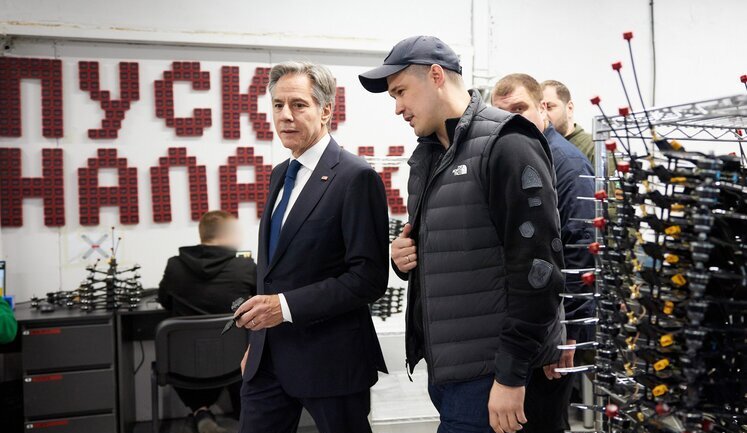
 Blinken visits production of Ukrainian FPV drones and attack copters. PHOTO US Secretary of State Anthony Blinken visits Ukrainian drone production. 11 381 14
Long-term contracts and planning will become an important incentive for active development of Ukraine’s defence industry, - Belbas Long-term contracts and planning will be an important incentive for the active development of Ukraine’s military-industrial complex. 723 11 Previously in trend: War
 There are 500 defence enterprises in Ukraine. Almost 300,000 people are involved in production of weapons for Armed Forces, - Zelenskyy Currently, there are 500 defence companies operating in Ukraine. Almost 300,000 people are involved in production. They produce domestic shells, guns, mortars, armoured vehicles, anti-tank systems, electronic warfare systems, etc. for the Ukrainian army. 3 894 64
 Ukraine needs partners’ help in financing its own defense production - Zelenskyy President Volodymyr Zelenskyy said that Ukraine needs to finance its own defense production from partners. 3 553 65 Previously in trend: Aid to Ukraine
 Ukraine needs to open arms exports abroad to strengthen defense enterprises and occupy markets - Belbas Ukraine needs to liberalize arms exports abroad. If the domestic defense industry can produce some products and people abroad are willing to buy them, then it would be logical and necessary to sell Ukrainian weapons, bringing foreign currency into the country. This will improve the economic situation in Ukraine and stimulate domestic production. 20 852 163
 Thousands of 122-mm rounds have already arrived in Ukraine, systematic serial production has been established - "Ukrainian Armour". PHOTOS Enterprise "Ukrainian Armour" has increased supplies of 122mm high explosive artillery rounds. 9 447 63 Previously in trend: War
 Partial monopolization of defense industry of Ukraine and imperfection of legislation lead to problems with production of weapons - Zaluzhnyi The Commander-in-Chief of the Armed Forces, Valerii Zaluzhnyi, in his article, emphasized the partial monopolization of the defense industry and the imperfect legal framework that led to problems with weapons production in Ukraine. 14 064 113 Previously in trend: War
 Defense Forces need to create new state system of technological re-equipment: it will take up to five months - Zaluzhnyi In Ukraine, the Defense Forces need to create a completely new state system of technological rearmament. According to partners. It can take up to five months to create such a system with the required production volume. 7 609 52 Previously in trend: War
 Since December, Russia has been actively attacking military-industrial enterprises, state should minimize information about their activities – Belbas, CEO of Ukrainian Armor. VIDEO Ukraine’s defense industry has become a target of Russian attacks, and it is necessary to strengthen the security of enterprises and minimize information about their activities in open sources. 5 011 35 Previously in trend: War
 With such state of defense industry, EU will not be able to defend itself if Putin attacks tomorrow – Kuleba Due to the state of the defense industry, the EU will not be able to defend itself if Russia attacks it. 4 029 49 Previously in trend: War
 Ukraine should develop its defense potential in order not to depend only on partners – Hudymenko Ukraine is facing the challenge of the most prolonged war possible, and this requires not only courage but also a strategic approach to being ready to resist the enemy for a long period of time. The state needs to change its approaches to supplying the army and work to improve its own defense industry. 2 520 55 Previously in trend: War
 White House is discussing production of modern weapons for Ukraine with US defense industry - Reuters According to Reuters, officials of the US presidential administration met with representatives of 12 US defence companies to discuss the prospects of arms production for Ukraine. 7 154 41 Previously in trend: Aid to Ukraine
 Ukraine’s defense industry employs 300,000 people, four out of five companies are private businesses - Zelenskyy. VIDEO President Volodymyr Zelenskyy’s address to the citizens of Ukraine at the end of the 672nd day of the war with Russia. 5 095 38 Previously in trend: War
 Ukraine will start mass production of NATO-caliber shells next year - Kamyshin Ukraine plans to massively increase the production of 155-mm shells next year. However, everything will depend on the supply of gunpowder. 14 912 49
 Ukraine should produce itself or with partners all the weapons it needs - Zelenskyy Ukraine should produce, independently or together with partners, all the weapons necessary to fight aggression. 9 429 138 Previously in trend: Russian aggression against Ukraine War
 Zelensky: There are signals of slowdown in Russian defence industry. VIDEO President Volodymyr Zelensky’s address to the citizens of Ukraine at the end of the 666th day of the war with Russia. 8 588 81 Previously in trend: War
 Zelenskyy met with Norwegian business, invited them to localize their production in Ukraine As part of his official visit to Norway, President of Ukraine Volodymyr Zelenskyy and Prime Minister of Norway Jonas Gahr Støre met with representatives of the Norwegian business community. 3 397 23
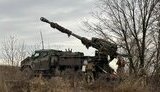 Upgraded Bohdana self-propelled artillery system with ammunition delivery system is already operating at front. PHOTO The upgraded Ukrainian self-propelled artillery system Bohdana is already operating at the frontline. 9 222 55 Previously in trend: War
Page 1 of 2
more news