ENG




8967 visitors online
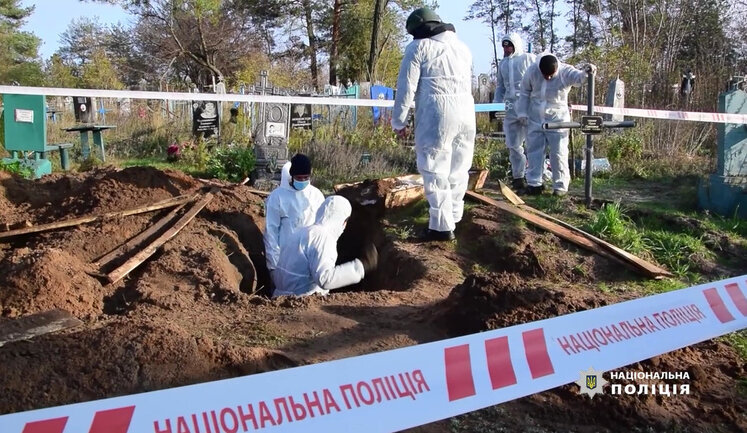
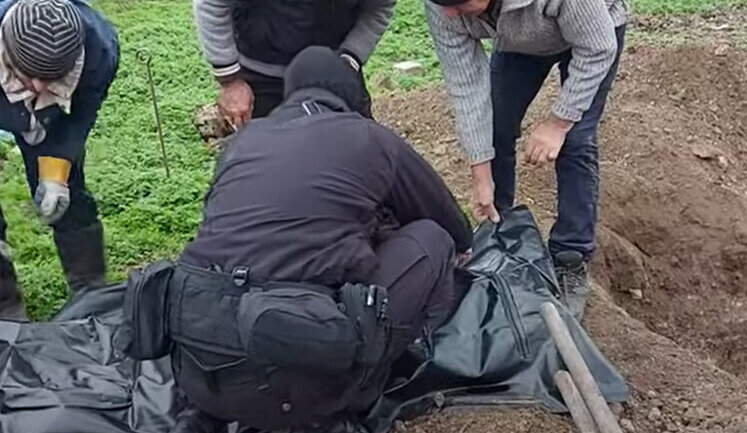
Exhumation efforts in Ukraine have been pivotal in addressing historical grievances and ongoing conflict impacts. Current operations in regions like Rivne and Lviv uncover WWII mass graves, revealing the enduring scars of past conflicts. The Ukrainian government's collaboration with Poland exemplifies a joint commitment to reconcile historical injustices, such as those related to the Volyn tragedy. Meanwhile, ongoing exhumations in areas affected by recent conflicts, including Izium and Kherson, painstakingly document and mourn the civilian toll of aggression. These meticulous efforts are crucial for documentation, accountability, and fostering reconciliation amidst complex geopolitical dynamics.
How is Ukraine addressing historical exhumation efforts?
Ukraine has been conducting exhumation operations to address historical mass graves from World War II, cooperating with Poland to uncover and identify victims, especially those from the Volyn tragedy. These efforts aim to foster reconciliation and acknowledge shared histories.
What are the recent findings in exhumation operations in Ukraine?
Recent exhumation operations in Ukraine have uncovered mass graves from both historical events like World War II and recent conflicts. Sites across Rivne, Lviv, and Kharkiv regions have revealed remains, highlighting the impact of past atrocities and present conflicts on the civilian population.
Why is exhumation work significant in the Lviv region?
Exhumation work in the Lviv region is significant for addressing the historical grievances related to WWII and victims of the Volyn tragedy. It involves collaboration between Ukrainian and Polish authorities, symbolizing efforts towards reconciliation and understanding shared pasts.
What impact do exhumation efforts have on Ukrainian-Polish relations?
Exhumation efforts have a profound impact on Ukrainian-Polish relations by facilitating reconciliation processes. Through cooperative search and exhumation operations, both nations aim to address historical grievances, acknowledging the shared, often painful past, and enhancing diplomatic ties.
How does exhumation contribute to conflict resolution in Ukraine?
Exhumation contributes significantly to conflict resolution by providing closure to families and communities affected by past and ongoing conflicts. It aids in historical documentation, promotes accountability, and supports transitional justice measures by bringing truth to light.
What steps are involved in the exhumation process in conflict areas?
The exhumation process in conflict areas involves site identification, careful excavation, forensic analysis to determine identities and causes of death, and respectful reburial. These steps ensure proper documentation for legal proceedings and provide closure for families.
How do exhumations help in documenting war crimes?
Exhumations are critical in documenting war crimes as they provide tangible evidence of atrocities, enable identification of victims, and support legal actions by collecting forensic data that can be used in prosecutions and historical records.
What role do international collaborations play in Ukraine’s exhumation efforts?
International collaborations play a crucial role in Ukraine's exhumation efforts by providing forensic expertise, facilitating diplomatic negotiations, and sharing resources. These partnerships are essential for successful identification and documentation of remains, crucial for historical justice.
What challenges are faced in exhumation operations in Ukraine?
Exhumation operations in Ukraine face challenges such as difficult terrain, political sensitivity around historical events, logistical issues, and the need for extensive forensic resources. These complexities require careful coordination and international support.
News exhumation
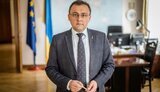 Ukraine has been unsuccessfully seeking permission to conduct exploration work in Poland for several months, - Ambassador Bodnar Vasyl Bodnar, Ukraine’s Ambassador to Poland, has stated that for several months now he has been unsuccessfully seeking to obtain at least one permit for Ukrainian specialists to carry out exploration work on Polish territory. 2 703 19 Previously in trend: exhumation of victims of Volyn tragedy Poland and Ukraine relationship
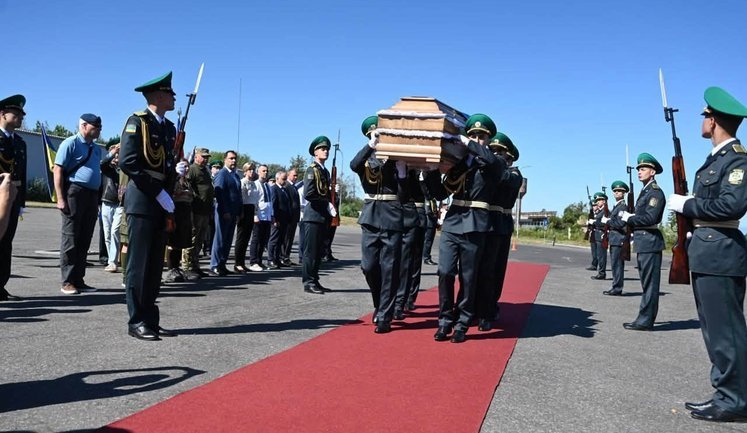
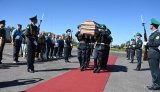 Remains of OUN’s first head Yevhen Konovalets brought to Ukraine. PHOTOS The remains of Yevhen Konovalets, a colonel of the Army of the Ukrainian People’s Republic and the first head of the Organization of Ukrainian Nationalists (OUN), have been brought to Ukraine. 3 277 11 Previously in trend: Pantheon of prominent Ukrainians
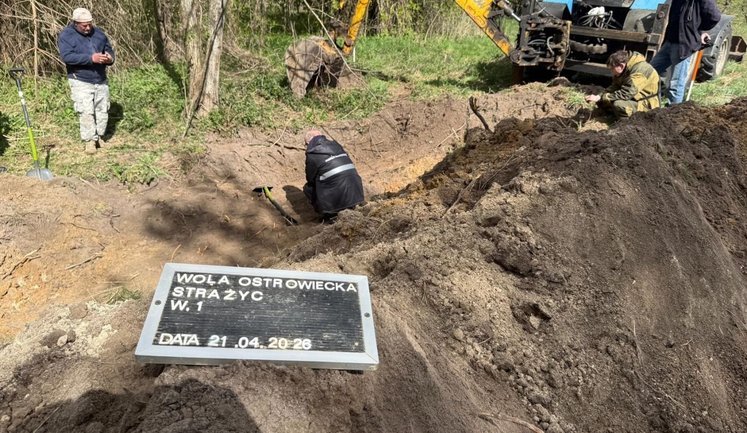
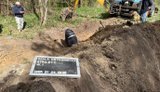 Poland has stated that it has discovered previously unknown mass grave during search operations in Volyn. PHOTO During excavation work in the former villages of Ostrivky and Volia Ostrovetska in the Volyn region, a previously unknown mass grave has been discovered. It is believed to contain the remains of victims of the Volyn tragedy. 8 033 92 Previously in trend: exhumation of victims of Volyn tragedy
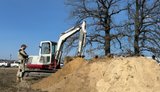 Exhumation of victims of Volyn tragedy has begun in Rivne region In the village of Uhly, Sarny District, Rivne region, search and exhumation operations for victims of World War II have begun. 1 743 5 Previously in trend: Volyn tragedy
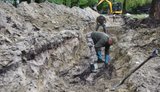 Ukraine has allowed Poland to conduct search operations in area of Huta Pieniacka in Lviv region The Ministry of Culture of Ukraine has granted permission to conduct search operations in the area of the former village of Huta Peniatska, now within the villages of Zharkiv and Holubytsia in the Lviv region. 1 110 7 Previously in trend: exhumation of victims of Volyn tragedy exhumation of Polish soldiers in Lviv region
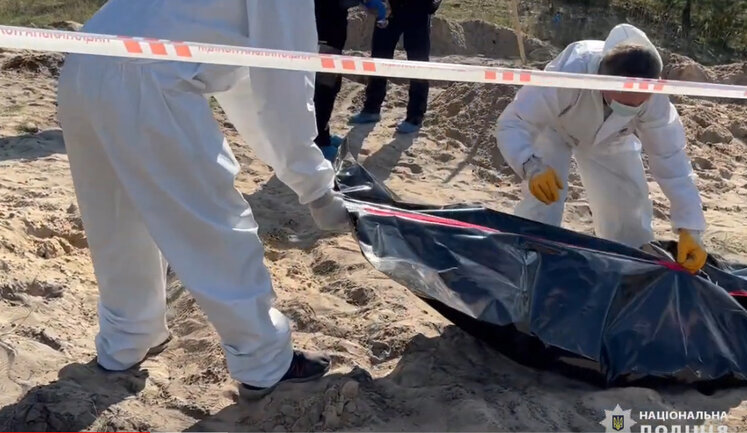
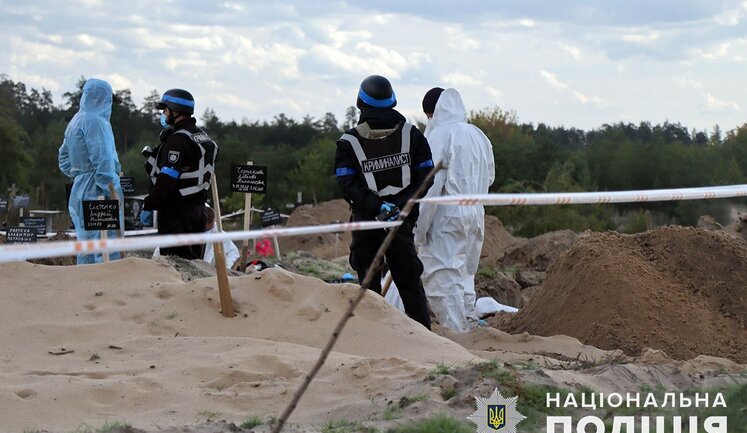
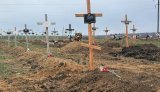 Mass graves in Izium: 449 bodies identified and reburied, including 23 Ukrainian Armed Forces servicemen. PHOTOS In Izium, Kharkiv region, a memorial service was held for innocent people killed during the occupation. The identification process has been completed, and 449 bodies have been reburied. 3 194 5 Previously in trend: Mass grave in Izium
 Ukrainian-Polish expedition discovers about 40 bodies in mass graves during exhumations in Lviv. PHOTOS In Lviv, a joint Ukrainian-Polish expedition is completing search and exhumation work, during which a mass grave of World War II victims was discovered. Preliminarily, these are the remains of about 40 people. 4 046 17 Previously in trend: exhumation of Polish soldiers in Lviv region
 Ukraine allows Poland to exhume fallen soldiers at Zboiiska in Lviv - Ministry of Culture Ukraine has granted Poland permission to carry out exhumation work on Polish soldiers killed in 1939 and buried in the former village of Zboiiska, which is now part of Lviv. 2 216 15 Previously in trend: exhumation of Polish soldiers in Lviv region
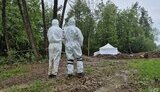 Exhumation of victims of Volyn tragedy in Ternopil region: remains of more than 42 people found. PHOTOS In the former village of Puzhnyky in the Ternopil region, the remains of 42 people were found at the site of exhumation work. 2 801 9 Previously in trend: exhumation of victims of Volyn tragedy
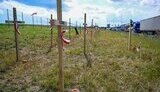 Exhumation of victims of Volyn tragedy: first human remains found in Ternopil region The exhumation of the remains of Poles who died during the Volyn tragedy has recently begun on the territory of the former village of Puzhnyky in the Ternopil region. Experts have already found the first human remains. 3 660 20 Previously in trend: Volyn tragedy exhumation of victims of Volyn tragedy
Ambassador Bodnar: Exhumation of victims of Volyn tragedy will begin this spring In the spring of 2025, the exhumation of Polish victims of the Volyn tragedy may begin. 1 911 32
Ukraine grants permission to exhume victims of Volyn tragedy in Ternopil region In April, the exhumation of the remains of Polish victims of the Volyn tragedy buried in the former village of Puzhnyky, located near Ternopil in Ukraine, will begin. 2 663 8
 Head of Institute of National Remembrance of Poland Nawrocki on exhumations of victims of Volyn tragedy: Today we cannot talk about breakthrough The head of the Polish National Remembrance Institute and presidential candidate Karol Nawrocki said that it is impossible to talk about a breakthrough in the case of exhumations of victims of the Volyn tragedy. 3 141 30
Ukraine and Poland exchange lists of places of search and exhumation of victims of Volyn tragedy - Ministry of Culture Ukraine and Poland have exchanged lists of places to search for and exhume the remains of mutual historical conflicts. Kyiv is committed to "positive decisions" on this issue. 2 353 26
 Finally breakthrough - Tusk announces first decisions on exhumation of Polish victims of Volyn tragedy On Friday, January 10, Polish Prime Minister Donald Tusk announced the first decisions on the exhumation of Polish victims of the Volyn tragedy. 4 029 38
 Polish experts are ready to travel to Ukraine within 24 hours to exhume victims of Volyn tragedy, - Head of the Institute of National Remembrance Nawrocki Specialists from the Institute of National Remembrance of Poland are ready to travel to Ukraine within 24 hours to conduct search and exhumation work for Polish victims of the Volyn tragedy. 3 728 131
 Exhumation of victims of Volyn tragedy will be key to full reconciliation of our peoples - Tusk Polish Prime Minister Donald Tusk said that the declaration on the absence of obstacles to the search and exhumation of the victims of the Volyn tragedy is the key to full reconciliation between the two nations. 4 266 60
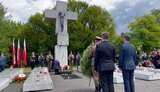 Ukraine must resolve issue of exhumation of victims of Volyn tragedy - Polish Foreign Ministry Ukraine must resolve the issue of exhumation of the victims of the Volyn tragedy. Without resolving this issue, Ukraine cannot dream of joining the EU. 11 785 75
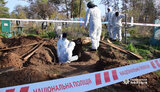 Police exhumed bodies of Donetsk region residents killed by Russian aggression. VIDEO In the Donetsk region, law enforcement officers found 385 bodies in the areas liberated from Russian troops. Among the victims of Russian aggression are 174 men, 117 women, 6 children, and the gender of 12 other people has not yet been established. Work is currently underway to identify the victims. 2 152 2 Previously in trend: War
 Police exhumed bodies of two more local residents who died during shelling of village of Blahodatne, Mykolaiv region. PHOTOS In the de-occupied territories of the Mykolaiv region, it continues to carry out stabilization measures and collect evidence of the commission of war crimes by the occupiers. 1 075 0 Previously in trend: Russian aggression against Ukraine
 Body of man killed by occupants’ air strike found in Izyum region In village Kamyanka, Kharkiv region, law enforcement officers found a body of a man who was killed by a Russian air strike last year. 1 018 0
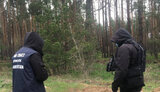 Another victim of Russian military was exhumed in Kharkiv region. PHOTOS In the Kupiansk district, law enforcement officers exhumed the body of a man who died as a result of artillery shelling last September 2 706 4 Previously in trend: Russian aggression against Ukraine
 In Kharkiv region, body of local resident who died from shelling in her own yard was exhumed. PHOTOS Prosecutors, together with police investigators, exhumed the corpse of a 91-year-old local woman who died last year in the village of Borschova, Kharkiv district. 1 812 0 Previously in trend: Russian aggression against Ukraine War
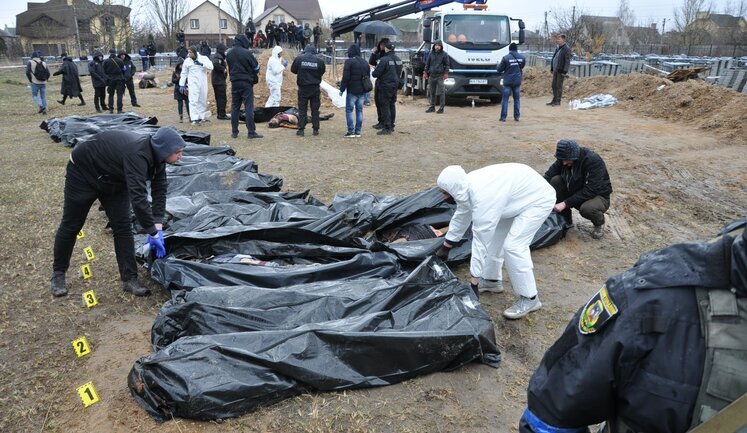
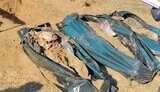 New burial of three civilians killed by Russians was discovered in Borodianka, Kyiv region. PHOTOS A new burial ground for victims of the Russian occupation was found in the city of Borodianka, Kyiv region. The bodies of three murdered men were found in one grave. 5 481 4
 In Kharkiv region, body of civilian who was shot by ruscists during occupation was exhumed. PHOTOS On February 17, 2023, law enforcement officers in the village of Circuses of the Kharkiv region exhumed the corpse of a 56-year-old local resident at the cemetery. 1 922 0 Previously in trend: Russian aggression against Ukraine
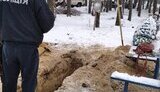 Body of man who died during enemy shelling was exhumed in Izium In May, a 39-year-old man received life-threatening injuries during the shelling. 783 1 Previously in trend: Russian aggression against Ukraine War
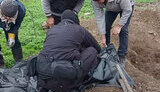 Bodies of seven more civilians were exhumed in liberated Mykolaiv region, - National Police. VIDEO Stabilization measures continue in the territory of the Mykolaiv region liberated from the Russian occupiers, in particular, the work of investigators on the exhumation of the bodies of the dead. 1 226 0 Previously in trend: War
 Bodies of father and daughter who died in their own yard during Russian shelling were exhumed in Kharkiv region. PHOTOS Investigators exhumed the bodies of a 17-year-old girl and her 48-year-old father in Kozacha Lopan on December 8. According to preliminary findings, they died during Russian shelling. 3 575 1
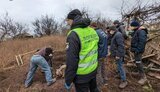 Bodies of seven civilians who were shot by Russian military exhumed in Kherson region. PHOTO Seven residents of the village of Pravdyne were shot by the Russian military in April 2022. Among them is a minor girl. Prosecutors of the prosecutor’s office of the Kherson region, together with police investigators and experts, conducted an exhumation and examination of the bodies of civilians as part of the criminal proceedings. 8 081 16 Previously in trend: Russian aggression against Ukraine
 Over 1,300 bodies of those who died during Russian occupation exhumed in the Kyiv region, - police 1,368 bodies of civilians who died during the Russian occupation were exhumed on the territory of Kyiv region. 566 4 Previously in trend: Russian aggression against Ukraine
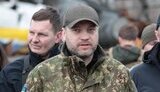 Currently 63 bodies of people tortured by occupants have been found in de-occupied Kherson region Denys Monastyrskyi noted that 436 proceedings have already been initiated as a result of the detection of the first signs of war crimes of the occupiers, 11 places of detention where civilians were illegally detained have been found in the region. 2 892 4
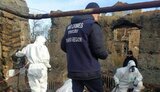 In Kharkiv region, dead man was exhumed with participation of Dutch experts. PHOTOS Ukrainian specialists, together with Dutch experts of the International Criminal Court, exhumed the corpse of a man who died from shelling by the Russian Armed Forces in Kutuzivka, Kharkiv region. 3 699 0 Previously in trend: Russian aggression against Ukraine
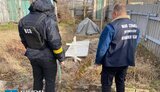 Bodies of four civilians killed during Russian occupation exhumed in Kharkiv region. PHOTOS Bodies of four more civilians were exhumed in Kharkiv region - one of them was tortured by Russian soldiers. 2 170 3 Previously in trend: War
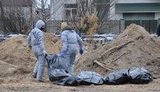 There are more than 2,000 unidentified dead in Ukraine Ukraine actively cooperates with international partners in conducting DNA examinations of the deceased. 2 686 4 Previously in trend: Russian aggression against Ukraine
 Bodies of couple shot by Russian military in Vysokopillia, Kherson region, were exhumed. PHOTOS Prosecutors continue to record the crimes of the Russian military in the Kherson region - the bodies of the shot couple were exhumed in the village of Vysokopillia, Beryslav district. 5 987 4 Previously in trend: Russian aggression against Ukraine War
1,367 bodies of civilians were found in de-occupied territory of Kyiv region Exhumation works are still ongoing on the territory of Kyiv region. To date, 1,367 bodies of civilians have been discovered. 1 119 3 Previously in trend: Russian aggression against Ukraine
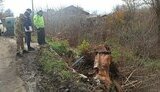 Bodies of 3 local residents killed by occupants in their own car exhumed in Izyum - National Police. PHOTOS Law enforcers exhumed remains of three men killed in Izyum, Kharkiv region, by Russian occupants in March this year. 2 924 2 Previously in trend: War
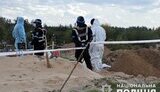 Causes of death of children exhumed in Lyman have been established, - police The exhumation of the found bodies continues in the de-occupied territories of the Donetsk region. 83 burials were recorded on the territory of the region. In total, the bodies of 268 dead citizens were found in the de-occupied territories. 26 887 11 Previously in trend: Russian aggression against Ukraine
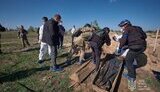 In liberated Donetsk region, 146 bodies have already been exhumed, - police At this time, 268 bodies of the dead were found in the de-occupied territory of Donetsk region, of which 146 bodies have already been exhumed. 657 0 Previously in trend: War
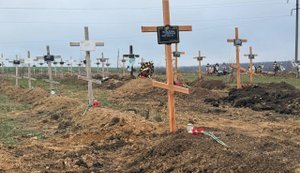
 In Kharkiv region, exhumation has begun at site of mass burial of Ukrainian military personnel. PHOTOS In Kharkiv Oblast, the police, together with the regional prosecutor’s office, began working at the mass burial site of Ukrainian soldiers who died in April during the retreat. 12 916 14 Previously in trend: War
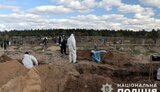 131 bodies have already been exhumed in liberated territory of Donetsk region The bodies of 131 victims have been exhumed in de-occupied territory of Donetsk region, but this figure is not final. 1 081 3
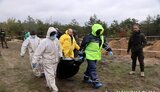 More than 120 bodies were exhumed in de-occupied territories of Donetsk region, - National Police. PHOTOS In the liberated settlements of the region, the police found 35 burial sites. Three of them are massive. One is in Sviatohirsk, where 7 people were buried. Others are at the Lyman cemetery. 2 663 4 Previously in trend: Russian aggression against Ukraine War
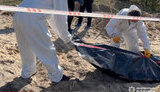 First 20 bodies were exhumed at mass burial site in Lyman. Children are among victims, - National Police. VIDEO Excavations are ongoing at two locations: according to preliminary information, about 200 civilians are buried in one, the other is a mass grave of servicemen of the Armed Forces of Ukraine. Children are among the victims. 3 341 3 Previously in trend: War
 Local residents report new places of mass burials in Izium and Kozacha Lopan, - Ministry of Internal Affairs However, the received information requires verification. 2 919 10 Previously in trend: Russian aggression against Ukraine
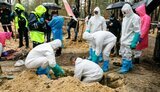 Total of 436 bodies were exhumed from mass burial site in Izium, Kharkiv region, - RMA. PHOTOS Most of the bodies have signs of violent death, and 30 have traces of torture. 2 872 6 Previously in trend: War
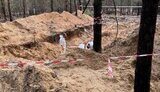 In Izyum, bodies of 320 civilians and 18 military have been exhumed - Prosecutor’s Office As of evening September 21, bodies of 320 civilians and 18 servicemen of AFU had already been exhumed in Izyum cemetery, which was formed during Russian army occupation of the city. 1 353 3 Previously in trend: War
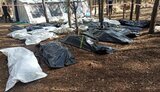 263 bodies have already been exhumed in Izium As of the evening of September 20, the bodies of 263 victims, including two children, were removed from the mass burial near Izium. 1 143 4 Previously in trend: War
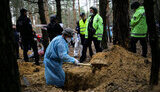 146 bodies were exhumed in Izium, most of them civilians, including 2 children, - RMA Some of the bodies exhumed in Izium show signs of violent death. 2 399 15 Previously in trend: War
Page 1 of 2
more news