ENG




11658 visitors online
The television landscape is witnessing pivotal changes as recent events reflect its role in modern conflict and media consumption. Notably, Russian strikes hit a Chernihiv TV tower and the Kyiv office of ATR TV suffered significant damage in missile attacks. The impact of these assaults is profound as they disrupt not only infrastructure but also information flow. Meanwhile, television personalities and media workers have been tragically affected in the conflict, with several prominent figures killed on the front lines. This highlights the intertwining of media roles and national defense. Additionally, hacker attacks have broadcast pro-Russian propaganda on Ukrainian TV, exemplifying the digital challenges faced by media outlets. The situation underscores the evolving importance of television in contemporary warfare and media landscapes.
What was the impact of the strike on the Chernihiv television tower?
The strike on the Chernihiv television tower was a significant event as it disrupted broadcasting capabilities in the region. Such attacks are part of a wider effort to control information flow and impact public morale during conflicts. The damage not only affects local broadcasting but also serves as a tactic in psychological warfare, aiming to suppress communication channels and cripple the dissemination of information to the public.
What happened to the office of Crimean Tatar TV channel ATR in Kyiv?
The office of Crimean Tatar TV channel ATR in Kyiv was hit by a missile attack which caused substantial damage. Fortunately, none of the journalists were injured. This attack highlights the ongoing threats to media entities in conflict zones and the targeted nature of strikes that aim to silence and weaken informational outputs of such channels, especially those representing minority voices and perspectives.
How have hacking incidents influenced television broadcasts in Ukraine?
Hacking incidents have significantly influenced television broadcasts in Ukraine by injecting pro-Russian content into Ukrainian airwaves. Such cyber-attacks are designed to undermine the confidence in domestic media and sway public opinion. By broadcasting propaganda videos, these cyber-attacks challenge the integrity of Ukrainian media and illustrate the ongoing struggle for narrative control amidst the conflict.
Who are some of the media personalities affected during the Ukraine conflict?
Several media personalities have been affected or lost their lives during the Ukraine conflict. Notably, journalist Olena Hubanova, cameraman Yevhen Karmazin, and actor Maksym Nelipa were among those killed. Their deaths underscore the perilous environment for media professionals working in conflict zones and the often-overlooked risks they undertake in delivering news from frontline areas.
How has television's role evolved in the context of modern conflict and society?
Television's role in modern conflict has evolved significantly, serving as both a tool for information dissemination and a target for psychological operations. It is a medium through which narratives are shaped and public opinion is influenced. The intersection of media and military objectives is particularly evident in regions experiencing conflict, where controlling the media equates to controlling influential narratives and maintaining or eroding public morale.
News television
 National Council registers Newsmax Ukraine TV channel Newsmax Ukraine will officially launch as a broadcaster in Ukraine. At its meeting on Thursday, 28 May, the National Council on Television and Radio Broadcasting registered Television and Radio Company Newsmax Ukraine LLC. 2 715 18 Previously in trend: Launch of a US TV channel in Ukraine
 Telethon "United News": 96% pro-government versus 4% opposition in February, – "Detector Media" In February, government representatives accounted for 96% of the airtime during the telethon, whilst the opposition received only 4% of the airtime. 6 156 40 Previously in trend: Telethon Monitoring
 "Ukrainians will cover us": Fox News releases new report on Ukrainian drones after scandal. VIDEO The American television channel Fox News has released a new report on combat drones after, in a previous broadcast, the Ukrainian STING drone was presented as part of the "high-tech arsenal of the United States." 15 715 47 Previously in trend: Drone industry
 Ukrainian STING drone shown on Fox News without mention of Ukraine: "Wild Hornets" react The Ukrainian drone developer team "Wild Hornets" said that the American TV channel Fox News used footage of their interceptor drone in a report, but did not mention its Ukrainian origin. 10 806 35 Previously in trend: Interceptor drones
 Yurii Mihashko, director of Novyi Channel, died defending Ukraine Yurii Mihashko, director and set designer for Novyi Channel, was killed in battle for Ukraine in the Sumy region. 4 477 14 Previously in trend: losses of Ukraine
 "Do you want minced meat?": Russian TV propagandist wants to see Russians dying on air. VIDEO Yevgeniya Obolashvili, unfortunate editor of the news department of the propaganda TV channel "Moscow 24", waited for the deaths of Russians on air as a result of an engine fire on a plane flying from Moscow to Phuket in Thailand. 17 475 43
 Former director of "Orel and Reshka" Vasyl Khomko died on front line. PHOTO During combat operations on 2 October, Ukrainian soldier and director of the travel show "Orel and Reshka" Vasyl Khomko, known by the call sign Beirut, was killed. 6 206 10 Previously in trend: losses of Ukraine
 Ruscists hit TV tower in central Chernihiv: residents are advised not to approach area Russian forces struck a television tower in central Chernihiv, causing damage to the structure. The attack took place on October 29. 3 316 13 Previously in trend: Drone attack on Chernihiv
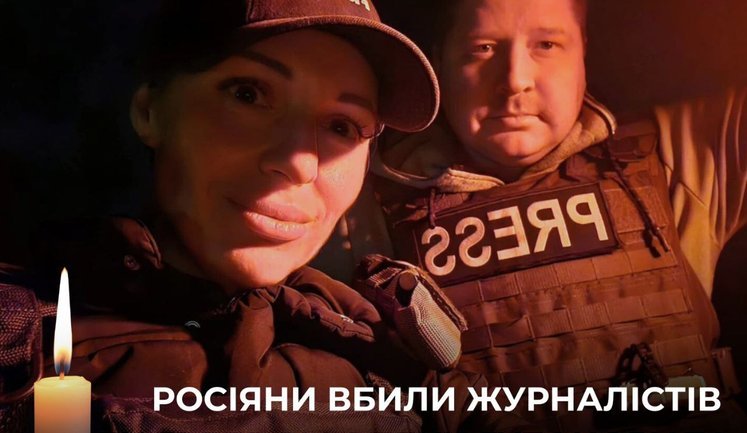
 Journalist Olena Hubanova and cameraman Yevhen Karmazin killed in Kramatorsk as result of "Lancet" strike. VIDEO&PHOTOS. VIDEO&PHOTOS A journalist of the "Freedom" TV channel Olena Hubanova and cameraman Yevhen Karmazin were killed in Kramatorsk as a result of a strike by an enemy "Lancet" UAV. 13 380 14 Previously in trend: Death of journalists
 Actor and TV presenter Maksym Nelipa killed in battle for Ukraine. PHOTO A well-known Ukrainian actor, TV presenter, and serviceman of the Armed Forces of Ukraine, Maksym Nelipa, died at the front in the battles against the Russian invaders. 33 634 56 Previously in trend: losses of Ukraine
 Vasyl Dovbush, former video designer of "Lux" television and radio company, was killed in action for Ukraine. PHOTO On 6 May, a soldier, former media personality of the "Lux" television and radio company and Channel 24, Vasyl Dovbush, was killed while performing a combat mission. 3 531 4 Previously in trend: losses of Ukraine
 Soldier and producer of Starlight Media projects, Yurii Kirpik, died in battle for Ukraine. PHOTO Yurii Kirpik, a producer of Starlight Media projects, including the "Zvazheni i Shchastlyvi" project and the "House of Happiness" series, died at the front. 5 994 6 Previously in trend: losses of Ukraine
 Russian missile destroys office of Crimean Tatar TV channel ATR in Kyiv. VIDEO&PHOTOS. VIDEO&PHOTOS On the night of February 12, during a rocket attack on Kyiv, Russian troops hit the building of the Crimean Tatar TV channel ATR. The journalists were not injured, but the editorial office suffered significant damage. 6 293 17
 Oleh Sarelo, film editor of "Real Story" project, died at front. PHOTO Oleh Sarelo, a defender of Ukraine and film editor of the "Real Story" project, died at the front. 3 910 6
 Pro-Russian videos about "bad life in Ukraine" aired on Ukrainian TV channels due to hacker attack – media On Thursday, December 5, a number of telecommunications providers broadcasting Ukrainian channels were subjected to a hacker attack. As a result, pro-Russian videos appeared on the air. 5 653 24
 Kovalenko, military and political observer of "Information Resistance", got angry with host on air: "Shaaa! I am guest expert here!". VIDEO Oleksandr Kovalenko, a military and political observer of the "Information Resistance" group, reacted sharply on the air of the Kyiv TV channel when the host Iryna Korol interrupted him. 26 957 100 Previously in trend: War
 Man who organised broadcast of Russian channels during occupation of Kupiansk district and became hero of propaganda video is convicted. VIDEO A resident of the village of Velykyi Burluk organised the broadcasting of Russian TV channels in Kupiansk district, where anti-Ukrainian content was subsequently broadcast. He was imprisoned for 11 years. 3 161 5
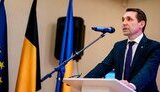 European Commission’s recommendations on United News have been taken into account, state will stop supporting marathon after end of martial law - Tochytskyi The Minister of Culture and Strategic Communications Mykola Tochytskyi commented on the European Commission's assessment of Ukrainian media reforms, as well as the EC's remarks regarding the state budget funding of the telethon. 7 425 70
European Union criticized "United News" telethon and called on Ukraine to restore work of broadcasters The European Commission has criticized the United News telethon and said that Ukraine should work to restore a pluralistic media landscape. 7 179 54
 As long as there is war, we need "United Marathon" - Minister of Culture Tochytskyi The Minister of Culture and Strategic Communications of Ukraine Mykola Tochytskyi said that while the war is going on in Ukraine, the "United News" marathon will continue its work. 9 449 128
 51% of Ukrainians oppose telethon, only 8% support it More than half of Ukrainians believe that the only telethon is currently irrelevant. At the same time, only 7.7% believe that the telethon has not lost its relevance. 11 749 124
Telethon does not justify funds allocated for it, - "Servant of people" Poturaev All politicians who take pro-Ukrainian positions should be represented at the telethon "Yedini Novyni". 5 637 76
Since beginning of year, UAH 790 million has been spent on creating content for "United News" telethon - People’s Deputy Zhelezniak Since the beginning of 2024, the state budget has spent more than UAH 790 million on creating content for the United News telethon. 4 398 30
 Social networks are replacing television as source of information - Institute of Sociology of National Academy of Sciences Television is gradually losing its position as a source of socio-political information, being replaced by social media and messengers. 2 953 52
 Media: Russians tried to block some Ukrainian satellite channels during attack on Chernihiv. LIST Simultaneously with the attack on Chernihiv, the enemy attempted to jam the satellite broadcasts of 39 channels. Broadcasting was suspended until the problem was resolved. 6 756 15
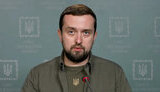 Kyrylo Tymoshenko’s TV studio asks for "financial support" to continue working on "information front" The private company "Kinokit", which produces content for the state-owned "Rada" TV channel and was granted the status of a "critical enterprise" the day before, is asking for "financial support". 17 384 165
 Kyrylo Tymoshenko’s TV studio has been granted status of "critical enterprise" and has reserved employees from draft The private company "Kinokit", which produces content for the state-owned "Rada" TV channel, has been included in the list of critical enterprises. 25 419 127
 Telethon channels have critical status, and employees are subject to booking - Ministry of Culture The Ministry of Culture has confirmed the status of TV channels participating in the "United News" telethon as critically important for the functioning of the economy and the livelihoods of the population during the special period. 11 880 131
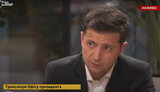 Drozdova, owner of company, which has already received contracts from Rada channel worth UAH 350 million, worked with Zelenskyy’s business partner Mindich. VIDEO The owner of the Kinokit company, which has been receiving millions of dollars in contracts from the state TV channel Rada for three years in a row, was a legal advisor to the firm of Timur Mindich, a former business partner of Volodymyr Zelenskyy. Yuliia Drozdova posted information about the year and a half of cooperation with this business on her LinkedIn profile, a social network for business communication, employee search, and open vacancies. 10 333 65
Trust in "United News" telethon continues to decline. It has dropped from 43% to 36% - KIIS poll. INFOGRAPHICS The number of people who trust the United News telethon continues to fall. At the same time, the share of those who do not trust is growing. 10 314 147
 Yurchyshyn asks to check effectiveness of using funds for information policy Chairman of the Verkhovna Rada Committee on Freedom of Speech Yaroslav Yurchyshyn (Holos) appealed to the Accounting Chamber and the State Audit Service regarding the effectiveness of using state funds for information policy in 2022-2023. 1 337 10
 Cabinet of Ministers is asked to redirect budget funds from telethon to UAVs and pickups for Armed Forces – petition A petition has been registered on the website of the Cabinet of Ministers with a proposal to redirect funds intended for the "United News" and "Freedom" telethons to finance UAVs and pickups for the Armed Forces of Ukraine. 10 444 55 Previously in trend: Budget-2024
 Movement "Chesno" published results of survey on attitude of Ukrainians regarding relevance of telethon. INFOGRAPHICS The Ilko Kucheriv "Democratic Initiatives" Foundation, together with the "Razumkov Center" sociological service, commissioned by the CHESNO Movement, conducted a sociological survey on the feasibility of the "United News" telethon from December 8 to 15, 2023. 21 637 67
Ukrainians are tired of United News telethon – The New York Times The New York Times has published an article about Ukrainians’ fatigue with the United News telethon, which was supposed to be a counter to Russian propaganda, but ended up being a disappointment for Ukrainians. 27 414 242
 Ukrainians’ confidence in TV-marathone is falling: in December, figure dropped to 43% - KIIS poll. INFOGRAPHICS Ukrainians’ trust in the "United News" telethon continues to decline. While between May 2022 and October 2023, the share of those who trusted the company dropped from 69% to 48%, by December 2023, the trust in the United Telethon had fallen to 43%. 5 041 60
 After Zelenskyy’s statement that TV series are not timely, 248.4 million UAH were allocated from state budget for their production, - MP Zheleznyak. The state budget of Ukraine allocated UAH 248.4 million for the production of various TV series. 43 424 114
 Zelensky’s friend Olena Kravets received 27 million from budget for her own programme President Zelensky’s former partner in Kvartal 95 Olena Kravets received more than UAH 27 million from the state budget to create her own evening show, Tykhiy Vechir(ed. Quiet Evening), which is broadcast on the Dim TV channel. 19 540 136
 In Crimea, hackers hacked air of IPTV, launching appeal by Volodymyr Zelenskyy. VIDEO In the occupied Crimea, the address of the President of Ukraine Volodymyr Zelenskyy was shown on all IPTV channels. The so-called "governor" Mikhail Razvozhaev said that they are trying to eliminate the consequences of the hackers’ actions as soon as possible. 8 648 49
 In its recommendations, European Commission reminded Ukrainian authorities about disconnected TV channels and called for restoration of an independent media landscape The European Commission’s report on Ukraine’s fulfillment of the conditions for the start of accession negotiations to the European Union emphasizes the need to restore an independent pluralistic media landscape. The European Commission also notes that in the spring of 2022, the authorities launched the United News telethon and disconnected three opposition TV channels from digital broadcasting. 4 983 51
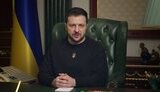 Zelensky’s address was televised in Belgorod and occupied Crimea Today, on January 25, residents of Belgorod region of Russian Federation and occupied Crimea had opportunity to watch an address by President of Ukraine Volodymyr Zelensky. 14 684 38
 Russians stopped broadcasting of Ukrainian TV channels in occupied part of Zaporizhzhia region - General Staff Ukrainian Armed Forces General Staff released information on Russian policy towards media in temporarily occupied territories. 2 313 18 Previously in trend: Russian aggression against Ukraine War
 Ministry of Foreign Affairs of Latvia on revocation of license of "Dozhd" TV channel: We have freedom of speech, but laws must be followed The Minister of Foreign Affairs of Latvia, Edgar Rinkevich, said that the country will provide diplomats of foreign countries with detailed explanations as to why the Russian TV channel "Dozhd" was deprived of its broadcasting license. 2 509 40
 Russian TV channel "Rain" was stripped of its broadcasting license in Latvia The National Council of Electronic Media of Latvia (NEPLP) decided to cancel the broadcast license of the Russian opposition TV channel "Rain". 5 852 54
Russian TV channel "Rain" was fined 10,000 euros in Lithuania: it marked Crimea as "part of Russian Federation", called army "ours" The National Council for Electronic Mass Media of Latvia (NEPLP) fined the Russian TV channel "Rain" for 10,000 euros. 5 565 49
 Occupiers destroyed television tower in Komyshuvaha, - Haidai The tower, located near the demarcation line, provided Ukrainian content to about 200,000 residents of the Luhansk region and Donetsk region. 7 141 8 Previously in trend: War
EU privately calls on Kyiv to move away from "single news" format on television, - German Ambassador Feldhusen German Ambassador Anka Feldhusen said that the EU is privately calling on Kyiv to move away from the "single marathon" format on television and give viewers a choice. 48 395 212
 Hackers hacked Russian channels on day of Crimean Platform: they showed Zelensky’s address. VIDEO Hackers hacked Russian propaganda TV channels on the day of the Crimean Platform. As a result, residents of the occupied Crimea were shown the address of the President of Ukraine, Volodymyr Zelensky. 10 781 6
 Cyber "bavovna" in Crimea: Ukrainian hackers hacked Crimean television and reminded that occupied peninsula is Ukraine. VIDEO Ukrainian hackers hacked Crimean television. Instead of Russian propaganda, they broadcast a Ukrainian patriotic video. 19 201 24
Page 1 of 2
more news