ENG




10421 visitors online
The prospect of deploying foreign peacekeepers to Ukraine has been gaining traction as European nations, under the "Coalition of the Willing," consider sending up to 15,000 troops. Swiss and Indonesian readiness for peacekeeping under UN or OSCE mandates highlights global interest. However, leaders like Zelenskyy emphasize deployment only post-ceasefire or peace treaties. While NATO Secretary General Mark Rutte states Ukrainian consent is paramount, nations like Germany and Finland express hesitancy. Challenges such as securing public support in Europe and opposition from Russia add complexity. Despite these hurdles, contingent plans remain active, pending cessation of hostilities.
What are the conditions for deploying peacekeepers in Ukraine?
The deployment of peacekeepers in Ukraine is contingent upon a definitive ceasefire or peace treaty. Collaborative efforts are under discussion within the "Coalition of the Willing," which includes European nations and others willing to commit troops under international mandates. The deployment aims to maintain stability post-conflict.
Which countries are involved in the "Coalition of the Willing" for Ukraine?
The "Coalition of the Willing" includes several European and non-European nations prepared to send troops as peacekeepers to Ukraine. Key participants include countries like France, Britain, Germany, Switzerland, and Indonesia, each expressing varying degrees of readiness dependent on security developments and mandates by bodies like the UN or OSCE.
How does public opinion in Europe affect the deployment of troops to Ukraine?
Public opinion in Europe presents a significant challenge to deploying troops in Ukraine. While political leaders explore the potential of peacekeeping missions, a lack of public support in key EU countries acts as a major deterrent. Efforts to align public sentiment with political objectives are ongoing to solidify European involvement in Ukraine.
What role does the UN play in the peacekeeping efforts in Ukraine?
The UN plays a crucial role by potentially authorizing mandates for peacekeeping missions, providing legitimacy and international backing for troop deployment in Ukraine. Countries like Switzerland have indicated readiness to participate under such mandates, which underscores the importance of UN's role in facilitating peace and ensuring international cooperation.
Why is there hesitancy about sending peacekeepers to Ukraine?
Hesitancy stems from the political complexities and security risks associated with deploying foreign troops to Ukraine. Countries are wary of escalation, particularly regarding NATO and EU military involvement, which could potentially draw in larger military conflicts. Furthermore, decisions hinge on securing lasting peace agreements and mitigating opposition from nations like Russia.
Can peacekeepers be deployed in Ukraine without Russia's consent?
While Russia opposes foreign troop deployment, countries within the Coalition emphasize that Ukraine's consent is paramount. Diplomatic discussions are focused on ensuring Ukraine's sovereignty and decision-making independence, with NATO Secretary General Rutte highlighting that such decisions rest with Kiev, not Moscow, reinforcing Ukraine's autonomy.
Will NATO's involvement in Ukraine's peacekeeping mission create tension with Russia?
NATO's potential involvement could create tensions with Russia, which categorically opposes foreign troop presence in Ukraine. Given Russia's stance, diplomatic efforts are crucial in navigating these tensions, as NATO allies seek to balance security guarantees to Ukraine with maintaining broader regional stability to prevent further escalation.
Related TOP news foreign peacekeepers
 China has announced its readiness to send peacekeepers to Ukraine - Welt China has signaled that, under certain conditions, it may join the mission to deploy a peacekeeping contingent in Ukraine. 6 288 90 Previously in trend: foreign peacekeepers
 Europe is struggling to put even 25,000 troops on ground for mission in Ukraine – The Times It will be difficult for Europe to raise 25,000 troops to participate in a "deterrence" force in Ukraine. This is due to the understaffing of the army and lack of funding. 8 421 86 Previously in trend: foreign peacekeepers
 Arrival of foreign military contingent in Ukraine is possible only after end of war - Zelenskyy The coalition of partner countries is considering the possibility of sending a military contingent to Ukraine. However, this can only happen after the end of hostilities. 2 055 83 Previously in trend: foreign peacekeepers
 Britain may refuse to send troops to Ukraine - Times The UK may abandon plans to send ground troops to defend Ukraine, as the risks are considered "too high". 18 628 83 Previously in trend: foreign peacekeepers Foreign troops in Ukraine
 US was not invited to Paris to discuss format of security forces for Ukraine - Associated Press The United States was not invited to the summit of military representatives who will gather in Paris on 11 March to discuss the creation of an international security force for Ukraine. 14 667 75 Previously in trend: foreign peacekeepers Meeting of Defence Ministers in Paris
 Russia will never agree to deployment of EU peacekeepers in Ukraine – Lukashenko Self-proclaimed President of Belarus Alexander Lukashenko has said that Russia will allegedly never agree to the deployment of peacekeepers from the European Union in Ukraine. 5 028 74 Previously in trend: foreign peacekeepers Statements by Alexander Lukashenko
Europe may deploy up to 15,000 troops in Ukraine after end of war, - Welt European countries that are ready to join the military component of the so-called "Coalition of the Willing" may deploy up to 15,000 of their troops to Ukraine within the first six months after the end of the war. 3 594 73 Previously in trend: foreign peacekeepers
 Declaration of intent on deploying multinational forces in Ukraine after war signed, Zelenskyy says Ukraine, France and the United Kingdom signed a declaration of intent on January 6 regarding the future deployment of multinational forces in Ukraine following a meeting of the "Coalition of the Willing." 4 574 71 Previously in trend: foreign peacekeepers Coalition of the willing
 Britain may send 10 thousand troops to Ukraine - Times The number of peacekeeping contingent for Ukraine, which the UK is ready to provide, "will definitely exceed 10 thousand people". 3 910 70 Previously in trend: foreign peacekeepers
 Deployment of peacekeepers to Ukraine could lead to World War III, - Shoigu Russia opposes the possibility of sending foreign peacekeeping troops to Ukraine. 5 415 68 Previously in trend: foreign peacekeepers
China may take part in peacekeeping mission in Ukraine - Welt Chinese diplomats have asked the EU to consider the possibility of their military participation in a potential peacekeeping mission in Ukraine. 7 196 67 Previously in trend: foreign peacekeepers
 UN peacekeepers may be deployed in Ukraine after peace agreement - Baerbok The new President of the UN General Assembly, Annalena Baerbok, does not rule out the deployment of UN peacekeeping forces in Ukraine. However, this can only happen after the signing of a peace treaty. 2 296 65 Previously in trend: foreign peacekeepers
 Europeans oppose sending troops to Ukraine - WSJ The plan to send European troops to Ukraine if a peace agreement is reached between Kyiv and Moscow faces an obstacle: public opinion in key EU countries does not support it. 3 630 64 Previously in trend: foreign peacekeepers
 We will not send Polish soldiers to Ukraine - Kosiniak-Kamysz The Polish government does not plan to send its troops to Ukraine after the end of hostilities. 3 465 59 Previously in trend: foreign peacekeepers
 Russia threatens Australia over possible sending of peacekeepers to Ukraine - Guardian The Russian Federation has warned the Australian government of "serious consequences" if it joins the coalition of peacekeepers in Ukraine. 8 718 59 Previously in trend: foreign peacekeepers
 Presence of EU peacekeepers in Ukrainian territory would mean NATO presence, - Lavrov Russian Foreign Minister Sergey Lavrov has commented on the possibility of deploying EU peacekeepers in Ukrainian territory. 7 120 57 Previously in trend: foreign peacekeepers
 Trump’s ’peace plan’ will not include guarantees of future aid in war - WSJ The peace agreement to end the war in Ukraine, promoted by Donald Trump, does not provide for military guarantees. 7 651 56 Previously in trend: foreign peacekeepers
 If Ukraine joins EU and NATO tomorrow, I will no longer be needed, - Zelenskyy President Volodymyr Zelenskyy said he would defend his country until Ukraine is accepted into the EU and NATO. 5 652 53 Previously in trend: foreign peacekeepers
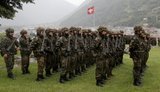 Switzerland is ready to send military personnel to Ukraine under UN or OSCE mandate, - Ambassador Baumann Switzerland may participate in a peacekeeping mission in Ukraine after receiving a mandate from the UN Security Council or the OSCE. 2 076 51 Previously in trend: foreign peacekeepers
 Britain is ready to support Ukraine with troops on ground if conditions are right - Starmer On February 24, British Prime Minister Keir Starmer confirmed that he was ready to promote peace in Ukraine by deploying British troops on its territory. 6 835 49 Previously in trend: foreign peacekeepers
 Europe’s plans to deploy troops in Ukraine cause concern for Kremlin - Peskov The Kremlin has called the deployment of NATO troops on the territory of Ukraine "unacceptable to Russia." 4 488 47 Previously in trend: foreign peacekeepers
 Kosiniak-Kamysz responds to Kellogg’s remarks on Polish troop deployment in Ukraine: Poland will not send its soldiers The Polish Ministry of Defense has denied any plans to deploy its troops to Ukraine as part of a peacekeeping mission. 3 274 46 Previously in trend: foreign peacekeepers
 Italy will not send its troops to Ukraine - Meloni Italian Prime Minister Giorgia Meloni has expressed doubts about the implementation of the idea of sending peacekeepers to Ukraine, proposed by France and the United Kingdom, and confirmed that Italy will not send its military. 3 886 45 Previously in trend: foreign peacekeepers
 Real security guarantee for Ukraine is U.S. support – Rubio U.S. Secretary of State Marco Rubio believes that support from Washington is the only real security guarantee for Ukraine. There is already a shared understanding between the countries on this. 3 348 45 Previously in trend: foreign peacekeepers Security guarantees for Ukraine
Britain and France discuss possible strikes on Russian targets if Moscow breaks ceasefire - Associated Press European peacekeepers, who are planned to be deployed in Ukraine in the event of an end to the war, may be allowed to attack Russian troops if they violate the ceasefire agreement. 9 544 44 Previously in trend: foreign peacekeepers
 Kellogg: US considers deployment of British, French and Polish forces "west of Dnipro river" US President Donald Trump's special envoy Keith Kellogg said that the possibility of deploying allied forces west of the Dnipro River is being discussed as part of a potential settlement to Russia's full-scale war against Ukraine. 4 163 43 Previously in trend: foreign peacekeepers
 Lammy: Putin cannot veto deployment of peacekeeping forces to Ukraine British Foreign Secretary David Lammy has said that Russian dictator Vladimir Putin cannot veto the potential deployment of European peacekeepers to Ukraine if an agreement to end the war is reached. 3 287 43 Previously in trend: foreign peacekeepers
 UK has no plans to send troops to Ukraine without security guarantees from US, - Starmer A key condition for the deployment of British troops to Ukraine is air cover from the United States. 2 684 42 Previously in trend: foreign peacekeepers
 Russia will consider Western troops in Ukraine as "legitimate targets," - Russian Foreign Ministry Russia says it will consider Western military personnel stationed in Ukraine as "legitimate targets." 6 736 42 Previously in trend: foreign peacekeepers
 Why should we care what Russia thinks about someone else’s troops in Ukraine? It’s not up to Moscow to decide, - Rutte NATO Secretary General Mark Rutte said that in discussing the potential presence of a deterrent contingent of partners in Ukraine, only Kyiv, not Moscow, should have a say. 3 896 42 Previously in trend: foreign peacekeepers
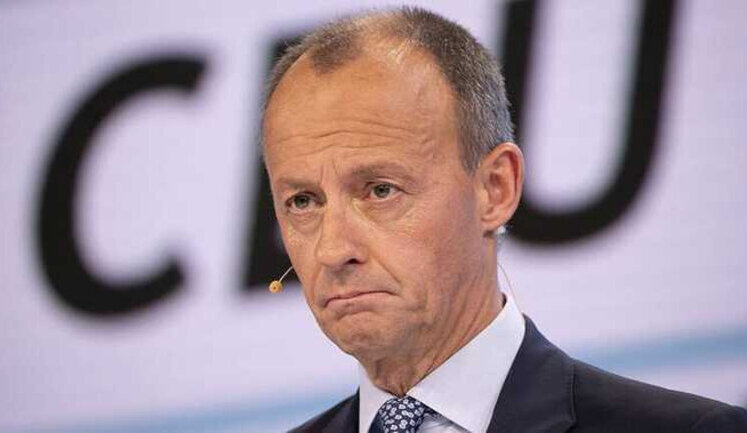
 Peace settlement remains unattainable without Russia’s consent, Merz says German Chancellor Friedrich Merz stressed that without Russia’s consent, a peaceful settlement remains unattainable. 2 647 41 Previously in trend: foreign peacekeepers
 Russia’s neighboring countries should not participate in peacekeeping mission in Ukraine - Polish Defense Minister Kosiniak-Kamysz Polish Defense Minister Władysław Kosiniak-Kamysz said that no state bordering Russia should be involved in a potential peacekeeping mission in Ukraine because of the risk of provocations. 3 387 41 Previously in trend: foreign peacekeepers
 Trump does not rule out deployment of US troops in Ukraine as part of security guarantees - Axios One of Donald Trump's advisers has not ruled out that the US could deploy troops on Ukrainian territory as part of potential security guarantees after the end of hostilities. 2 768 40 Previously in trend: foreign peacekeepers Security guarantees for Ukraine
Macron offers alternative to European troops in Ukraine - Telegraph French President Emmanuel Macron is considering the possibility of setting up a UN-led mission to prevent a new Russian attack on Ukraine in the event of a possible peace agreement. This is seen as an alternative to the deployment of European troops. 13 153 39 Previously in trend: foreign peacekeepers
 Poland will not send its soldiers to Ukraine, but will support countries that do - Tusk Polish Prime Minister Donald Tusk said that the country will not send soldiers to Ukraine, but will support the decisions of other European countries that want to do so. Warsaw will continue to support Kyiv with military aid. 3 277 39 Previously in trend: foreign peacekeepers
 Germany is discussing sending troops to Ukraine, - NYT German political leaders are discussing whether to send troops to Ukraine after a peace agreement has been reached. 2 300 37 Previously in trend: foreign peacekeepers
Foreign peacekeepers may appear in Ukraine only after signing peace agreement - Stubb Troops of the "Coalition of the Willing" can be sent to Ukraine only after a peace agreement is concluded. 2 021 37 Previously in trend: foreign peacekeepers Europe is looking for an alternative to peacekeepers in Ukraine
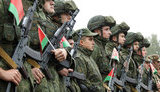 Belarus has announced its readiness to send "peacekeepers" to Ukraine The head of the Department of International Military Cooperation and Peacekeeping Activities of the Special Operations Forces Command of the Armed Forces of Belarus, Alexei Skabey, said that Belarusian peacekeepers are ready to be deployed in Ukraine if necessary. 3 824 37 Previously in trend: foreign peacekeepers
 Greece has three conditions for participation in peacekeeping mission in Ukraine - media Greece will take part in the international forces in Ukraine only under three conditions: a ceasefire agreement, no deployment in Russia and a clear exit strategy if hostilities resume. 3 602 35 Previously in trend: foreign peacekeepers
 Kremlin denied that Russia had agreed to deploy peacekeepers in Ukraine: Position has not changed Kremlin spokesman Dmitry Peskov has rejected US President Donald Trump's statement that Russian dictator Vladimir Putin might agree to the deployment of European peacekeeping troops in Ukraine. 4 332 34 Previously in trend: foreign peacekeepers
About six countries are ready to send troops to Ukraine - AFP There are six countries in the "coalition of the willing" that are ready to send a military contingent to Ukraine. 9 316 33 Previously in trend: foreign peacekeepers Coalition of the willing
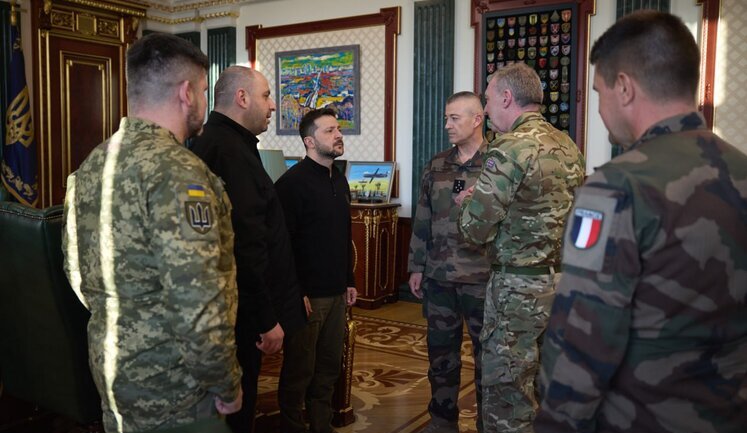
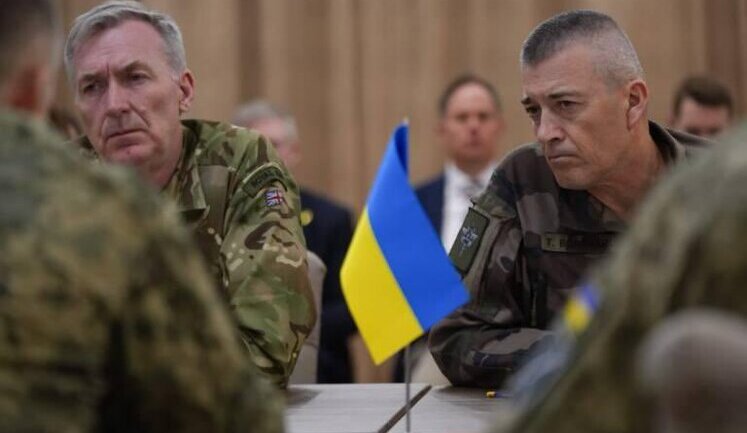
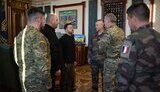 There is tangible progress and first details on deployment of security contingent of partners, - Zelenskyy. PHOTOS President Volodymyr Zelenskyy spoke about his meeting with the Chiefs of Defence of Great Britain Anthony Radakin and France Thierry Bourcart. 6 832 33
 Zhovkva on peacekeepers: We need soldiers ready for different scenarios, including missile attacks Ukraine expects European peacekeepers to be ready to guarantee peace. 2 267 31 Previously in trend: foreign peacekeepers
 Europe considers defending Ukraine without US involvement due to Trump’s position - Telegraph British and French officials working on plans for a "peacekeeping force" for Ukraine have recognized the need to realistically assess the role of US President Donald Trump in resolving the conflict. 5 252 29 Previously in trend: foreign peacekeepers Protection of Ukraine by Europe
 Hungary is against EU military missions in Ukraine. This is red line for us, - Szijjarto Hungary opposes EU military missions involving military instructors on the territory of Ukraine, as this is a "red line." Budapest also does not support sanctions on energy imports from Russia. 1 514 28 Previously in trend: foreign peacekeepers Hungary opposes support for Ukraine
 Zelenskyy on foreign contingent: Taking into account opinion of Russian Federation is bad signal President of Ukraine Volodymyr Zelenskyy considers it a bad signal to listen to the opinion of the Russian side on the deployment of a potential peacekeeping contingent. 2 438 26 Previously in trend: foreign peacekeepers
 Too early to discuss details of military presence in Ukraine, as peace terms remain unclear – UK General Burkard Britain said that it is too early to discuss the details of the deployment of European peacekeepers in Ukraine, as it is necessary to understand what the conditions for peace will be. 1 344 26 Previously in trend: foreign peacekeepers Coalition of the willing
 Stubb: We will not send soldiers to Ukraine, but we will provide support Finnish President Alexander Stubb said that Finnish troops will not participate in combat operations in Ukraine, but the country is considering other forms of support. 2 040 24 Previously in trend: foreign peacekeepers Security guarantees for Ukraine
Page 1 of 3
pager_more_top_news