ENG




11959 visitors online
Nord Stream II has been a focal point of international tension, particularly due to allegations of its sabotage. Both Ukrainian authorities and individuals are under scrutiny. Despite President Zelenskyy's firm denial of Ukraine’s involvement, individuals such as Volodymyr Zhuravlev and Serhii Kuznetsov face legal battles amidst accusations of participating in sabotage activities. The complexities of these cases highlight tensions among international actors, with Germany actively pursuing legal actions while countries like Croatia and Poland navigate extradition intricacies. The geopolitical implications remain significant, with global reactions reflecting varied stances on the future of energy supplies and political alliances.
What is the Nord Stream II gas pipeline?
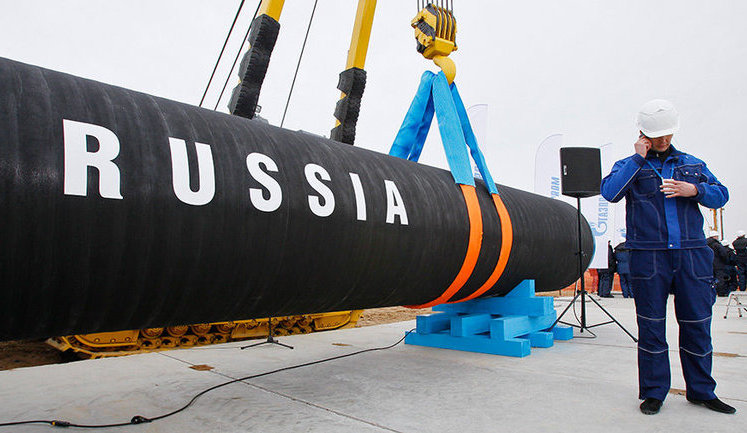
The Nord Stream II is a controversial natural gas pipeline that transports gas from Russia to Germany under the Baltic Sea. It has geopolitical implications and has been embroiled in legal and political disputes, especially concerning energy dependence on Russia.
Why has the Nord Stream II pipeline faced sabotage claims?
The Nord Stream II pipeline has faced sabotage claims primarily due to geopolitical tensions involving Russia and Ukraine. Allegations suggest efforts to disrupt its operations, implicating individuals and raising international legal and political debates.
How has Ukraine responded to sabotage allegations related to Nord Stream II?
President Zelenskyy and Ukrainian officials have denied involvement in any sabotage activities related to Nord Stream II. However, ongoing investigations in various countries continue to question this narrative amid geopolitical tensions.
What are the international reactions to the Nord Stream II sabotage case?
International reactions include Germany's pursuit of legal actions against alleged perpetrators, contrasting diplomatic responses from Croatia and Poland regarding extraditions, and geopolitical implications affecting energy politics and sanctions against Russia.
Who are the key figures involved in the Nord Stream II sabotage investigations?
Key figures include Ukrainians like Volodymyr Zhuravlev and Serhii Kuznetsov, who face accusations of involvement in sabotage. Their cases highlight the complex interplay of legal proceedings, extradition challenges, and international diplomatic considerations.
News Nord Stream II
 "Nord Stream" explosions: Croatia did not inform Ukraine of Zhuravlov’s arrest, - Office of Prosecutor General. DOCUMENT The Office of the Prosecutor General has not received any official notification regarding the arrest in Croatia of Ukrainian citizen Volodymyr Zhuravlov, whom German investigators suspect of involvement in the blowing up of the "Nord Stream" pipelines. 1 854 6 Previously in trend: Blasts on Nord Stream pipelines
 Croatian court postpones hearing on Zhuravlov’s extradition: Germany adds "war crime" charge to warrant A court hearing on the possible extradition of Ukrainian national Volodymyr Zhuravlov from Croatia to Germany in the case concerning the sabotage of the "Nord Stream" pipelines, scheduled for September 4, has been postponed. According to the defence, the reason was that Germany had updated the... 3 656 9 Previously in trend: Blasts on Nord Stream pipelines
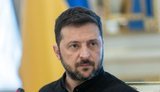 "Ukraine did not take part in any operation to sabotage ’Nord Stream’ pipelines," - Zelenskyy President Volodymyr Zelenskyy stated that Ukraine has never officially taken part in any operation involving the sabotage of "Nord Stream 2". 2 891 22 Previously in trend: Blasts on Nord Stream pipelines
 Ukrainian Zhuravlev, suspected of blowing up "Nord Stream" pipelines, was detained while filming movie about sabotage, - media Volodymyr Zhuravlev, a Ukrainian national whom German investigators suspect of involvement in the sabotage of "Nord Stream", was arrested in Croatia on 19 August — whilst filming a Hollywood film about this act of sabotage. 3 488 19 Previously in trend: Blasts on Nord Stream pipelines
 "Nord Stream" Sabotage: Another Ukrainian Detained in Croatia Another suspect has been arrested in Croatia in connection with the case involving the sabotage of the "Nord Stream" and "Nord Stream 2" gas pipelines. 2 879 20 Previously in trend: Blasts on Nord Stream pipelines
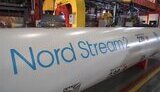 Ukraine’s involvement in Nord Stream sabotage has not been established, - Prosecutor General’s Office As part of the investigation into the criminal proceedings concerning the Russian Federation’s waging of an aggressive war against Ukraine and the enemy’s commission of other unlawful acts against our state, the Office of the Prosecutor General has reviewed information regarding the sabotage of... 1 492 7 Previously in trend: Blasts on Nord Stream pipelines
 It is good that president has paid attention to case of Kuznetsov, suspected of blowing up Nord Stream pipelines, lawyer says Mykola Katerynchuk, lawyer for Ukrainian serviceman Serhii Kuznetsov, who is suspected of blowing up the Nord Stream pipelines, is pleased that the Office of the President has finally paid attention to his client’s case. 3 109 10 Previously in trend: Blasts on Nord Stream pipelines
 Germany has brought charges against Ukrainian Kuznetsov in connection with Nord Stream pipeline sabotage case The German Attorney General has for the first time brought formal charges against Ukrainian national Serhii Kuznetsov, whom investigators believe to be the organiser and leader of the sabotage group that blew up the Nord Stream 1 and Nord Stream 2 gas pipelines on 26 September 2022. 2 794 24 Previously in trend: Blasts on Nord Stream pipelines
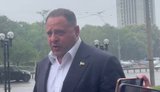 Yermak tried to persuade me to stop working with lobbyists in US who were fighting against "Nord Stream 2" because "it’s not feng shui", - Kobolev Andrii Kobolev, the former chairman of the board of "Naftogaz of Ukraine", has claimed that in 2021, Andrii Yermak, the head of the President’s Office, allegedly urged him to cease cooperation with the US administration and Congress, which were working to prevent the launch of the Russian "Nord... 8 592 15
 "Alternative for Germany" wants to restart "Nord Stream" to receive gas from Russia, — Welt The German far-right party "Alternative for Germany" wants to resume operations of the Russian "Nord Stream" gas pipeline. 4 392 77 Previously in trend: Restoration of the operation of Nord Stream
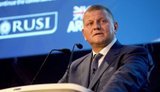 Zaluzhnyi on Nord Stream pipeline explosion: I have nothing to do with it, this issue has become political The Ambassador Extraordinary and Plenipotentiary of Ukraine to the United Kingdom, former Commander-in-Chief of the Armed Forces of Ukraine Valerii Zaluzhnyi, assures that he has no connection to the situation surrounding the explosion of the Nord Stream gas pipelines in the Baltic Sea. 2 328 21 Previously in trend: Blasts on Nord Stream pipelines
 EU continues to fund Russian war machine by buying Russian oil, - Bessent The European Union continues to buy Russian oil, thereby fuelling dictator Putin's military machine. 2 722 23 Previously in trend: launch of Nord Stream 2 Relations between USA and EU
 Conditions of detention of Kuznetsov, suspected of blowing up "Nord Stream" pipelines, may constitute inhuman treatment, - his wife Former Special Forces soldier Serhii Kuznetsov, who is being held in custody in Hamburg, Germany, as part of an investigation into the bombing of the "Nord Stream 2" gas pipeline, is being held in conditions that raise serious concerns about human rights. 3 055 10 Previously in trend: Blasts on Nord Stream pipelines
Kuznetsov, suspected of blowing up Nord Stream pipelines, served in Special Operations Forces, - media Serhii Kuznetsov, a Ukrainian national suspected of involvement in the explosions on the Nord Stream pipelines, served in the Special Operations Forces of the Armed Forces of Ukraine. 6 556 12 Previously in trend: Blasts on Nord Stream pipelines
 German court remands Kuznetsov, suspect in "Nord Stream" bombing, in custody Serhii Kuznetsov, a Ukrainian suspected of sabotage on the "Nord Stream" gas pipeline, has been taken into custody in Germany. 2 291 39 Previously in trend: Blasts on Nord Stream pipelines
 Italy to extradite Ukrainian suspected of undermining Nord Stream to Germany on Thursday On November 27, Italy will extradite Ukrainian citizen Serhiy Kuznetsov to Germany, whom German prosecutors suspect of involvement in the sabotage of the Russian Nord Stream gas pipelines in 2022. 1 064 6 Previously in trend: Blasts on Nord Stream pipelines
Italian court confirms extradition of Ukrainian to Germany in Nord Stream explosions case The Bologna Court of Appeals upheld the decision to extradite Ukrainian citizen Serhii Kuznetsov to Germany, who is suspected of involvement in the bombing of the Nord Stream gas pipelines in 2022. 2 773 15 Previously in trend: Blasts on Nord Stream pipelines
 Nawrocki on refusal of Polish court to extradite Ukrainian Zhuravlev to Germany: This is good Polish President Karol Nawrocki commented on the case of Ukrainian Volodymyr Zhuravlev, who is suspected of blowing up the Nord Stream 2 gas pipeline. 2 926 4 Previously in trend: Blasts on Nord Stream pipelines
Polish authorities search home of Ukrainian suspected in Nord Stream explosions Poland’s Internal Security Agency has searched the home of Volodymyr Zh., who is suspected of involvement in the explosions on the Nord Stream 1 and Nord Stream 2 gas pipelines. 1 573 2 Previously in trend: Blasts on Nord Stream pipelines
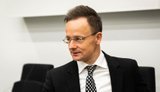 Szijjártó accused Tusk of "defending terrorists" over his statement on "Nord Stream" Hungarian Foreign Minister Péter Szijjártó criticised Polish Prime Minister Donald Tusk for his comments about sabotage on the "Nord Stream" gas pipelines. 3 339 27 Previously in trend: Blasts on Nord Stream pipelines
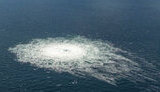 Head of Poland’s National Security Bureau opposes extradition of Ukrainian suspected in Nord Stream blasts Head of Poland’s National Security Bureau, Sławomir Cenckiewicz, believes the country should not extradite Ukrainian citizen Volodymyr Zhuravlov, who is suspected of involvement in the sabotage of the Nord Stream gas pipeline. 2 111 7 Previously in trend: Blasts on Nord Stream pipelines
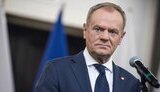 Tusk: Extradition of Ukrainian to Germany in Nord Stream case is not in Poland’s interest Polish Prime Minister Donald Tusk said that the extradition of Ukrainian citizen Volodymyr Zh., detained at Germany's request in connection with the sabotage of the Nord Stream and Nord Stream 2 gas pipelines, is not in his country's interests. 2 079 7 Previously in trend: Blasts on Nord Stream pipelines
 Ukrainian taken into custody in Poland over Nord Stream blasts case – media The Warsaw District Court has ruled to place Ukrainian citizen Volodymyr Z. in custody for seven days, as German authorities suspect him of involvement in the 2022 Nord Stream pipeline explosions. 2 640 8 Previously in trend: Blasts on Nord Stream pipelines
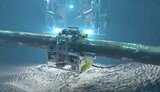 Ukrainian detained in Poland on suspicion of involvement in "Nord Stream" explosion, - media In Poland, in the city of Pruszków, police detained Ukrainian citizen Volodymyr Z., whom Germany suspects of involvement in the explosion on the "Nord Stream" gas pipeline. 4 069 26 Previously in trend: Blasts on Nord Stream pipelines
Germany issues arrest warrants for six Ukrainians suspected of Nord Stream blasts – media German authorities have issued arrest warrants for all suspects in the 2022 sabotage of the Nord Stream gas pipelines. All of them are Ukrainian citizens. 12 743 72 Previously in trend: Blasts on Nord Stream pipelines
 Ukrainian detained on suspicion of Nord Stream sabotage was previously SSU officer – WSJ On August 21, Italian authorities arrested a Ukrainian citizen on suspicion of coordinating the sabotage of the Nord Stream pipelines in 2022. He turned out to be a retired Armed Forces of Ukraine captain and a former officer of the Security Service of Ukraine. 10 631 54 Previously in trend: Blasts on Nord Stream pipelines
We will increase pressure on Russia and do everything possible to prevent Nordstream 2 from starting up - Merz Germany will make every effort to ensure that the Nordstream 2 gas pipeline does not start working. 1 057 4
 Merz supports ban on Nord Stream as part of EU sanctions against Russia - FT German Chancellor Friedrich Merz supports the ban on the Nord Stream 1 and Nord Stream 2 gas pipelines as part of a new package of EU sanctions against Russia. 1 184 10 Previously in trend: Sanctions against Russia launch of Nord Stream 2
 EU may impose sanctions against Nord Stream 2 if Russia does not agree to truce - European Commission The European Union is considering the possibility of imposing sanctions against Nord Stream 2 if Russia refuses to break the ceasefire. 1 876 9 Previously in trend: EU sanctions launch of Nord Stream 2 ceasefire violation by Russia
 Lavrov on talks with US on Nord Stream: Sick or suicidal people will not be allowed to restore Russian gas Russian Foreign Minister Sergei Lavrov said that Moscow and Washington are talking about the Nord Stream gas pipeline and suggested that the United States could "put pressure" on Europe not to refuse Russian gas. 6 296 50 Previously in trend: refusal from Russian gas
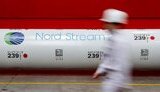 Construction of Nord Stream 2 is not of common interest to EU - European Commission The Nord Stream 2 project is not an object of common interest of the European Union countries. 2 296 4 Previously in trend: reconstruction of Nord Stream-2
"Nord Stream must be dismantled to "resist temptation" of resuming gas supplies from Russia - Duda Both Nord Stream gas pipelines must be dismantled to prevent the resumption of gas supplies from Russia to Europe. 99 372 22
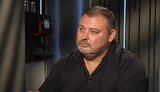 Former DIU Head Kondratiuk on undermining of Nord Stream: For obvious reasons, Ukraine will never take responsibility for this operation. VIDEO The former head of the Defence Intelligence of Ukraine Valerii Kondratiuk commented on the investigation by the German prosecutor's office into the undermining of Nord Stream. 6 110 32
 "Nord Stream is legitimate target in war, - Czech President Pavel Czech President Petr Pavel believes that the Nord Stream pipeline is a legitimate target for attack in a war. 3 181 13 Previously in trend: War
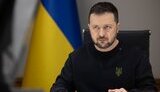 Zelenskyy initially approved Nord Stream blast, but then tried to cancel it after CIA intervention - WSJ President Volodymyr Zelenskyy approved the operation to blow up "Nord Stream", but later tried to cancel it. 16 047 72
Germany issues arrest warrant for Ukrainian suspected of blowing up Nordstream, - mass media German Prosecutor General Jens Rommel issued the first arrest warrant in the case of bombing the Nord Stream gas pipelines - Ukrainian Volodymyr Z is suspected, who is currently wanted. 11 746 62
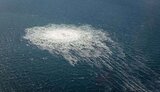 Poland obstructed investigation into Nord Stream bombing in 2022 - media The European investigators investigating the case said that Polish officials allegedly slowed down the investigation of acts of sabotage on the Nord Stream gas pipelines in the fall of 2022. The Poles were in no hurry to provide information and concealed key evidence about the movement of alleged saboteurs through Poland. 8 328 24
 Ukraine is not involved in undermining Nord Stream - Zelensky Ukraine had nothing to do with the explosion of the Russian Nord Stream 1 and Nord Stream 2 gas pipelines in 2022. 5 105 92
 Putin accuses US of explosions at Nord Stream pipeline Russian President Vladimir Putin believes that US intelligence services are responsible for explosions at Nord Stream. 13 296 63 Previously in trend: Gas War
 Stoltenberg: It is still unclear who blew up Nord Stream NATO Secretary General Jens Stoltenberg said that it is still unknown who carried out the explosions on the Nord Stream gas pipelines last September. 3 555 41
 Western intelligence has known name of Ukrainian sponsor of Nord Stream bombing for several months - Times The name of a Ukrainian - a private sponsor who allegedly financed the sabotage of Russian gas pipelines in the Baltic Sea - was known to Western intelligence circles for months. But they deliberately decided not to disclose it to protect Ukraine. 48 858 268
 Germany has no evidence that Russia is behind explosions on "Nord Streams", - Prosecutor General Frank German investigators currently have no evidence that Russia is behind the explosions at the Nord Stream 1 and Nord Stream 2 gas pipelines. 3 891 47 Previously in trend: Gas War
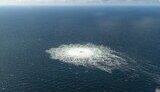 Repair of damage to Nord Stream will cost at least $500 million - The New York Times According to The New York Times, Nord Stream AG, which is the operator of the Nord Stream and Nord Stream 2 gas pipelines damaged in September, has begun a preliminary assessment of the cost of repairing the pipes and resuming gas supplies. 4 128 13 Previously in trend: Gas War
 Scholz responded to Putin’s proposal to supply gas through entire Nord Stream 2 pipeline: "I find it hard to imagine" German Chancellor Olaf Scholz opposes the launch of the remaining line of the Nord Stream 2 gas pipeline. 26 828 44 Previously in trend: Gas War
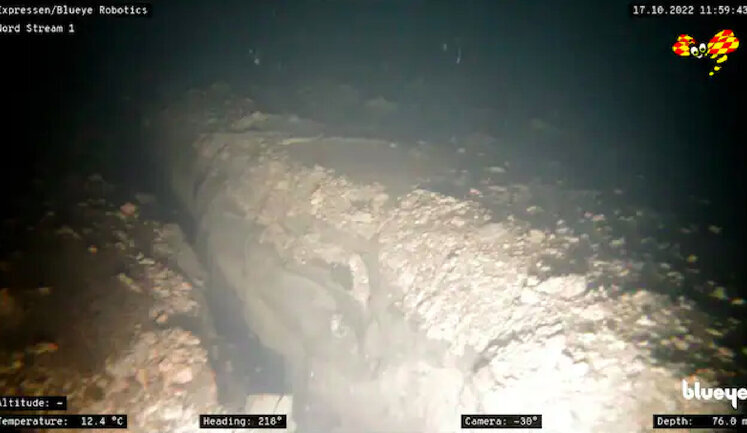
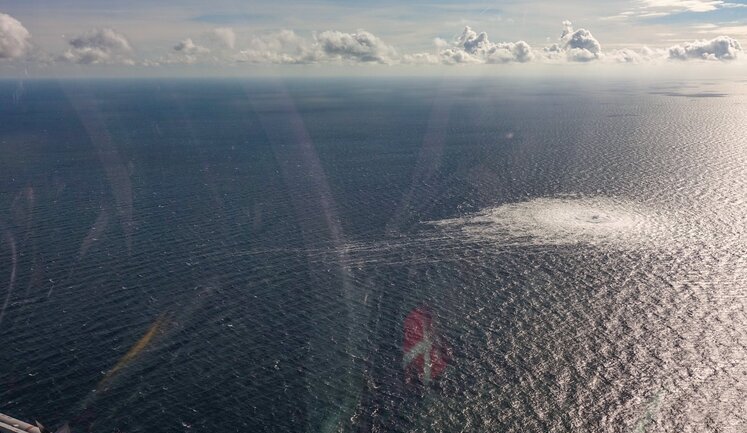
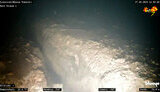 First photos and videos of ruptured "Nord Stream" pipeline at bottom of sea have appeared. VIDEO&PHOTOS. VIDEO&PHOTOS Operators of a deep-sea drone of the Norwegian company Blueye Robotics took pictures of one of the rupture points of the "Nord Stream-1" gas pipeline at the bottom of the Baltic Sea. 22 857 31
 Russia may damage Ukrainian GTS and prepare sabotage against Turkish Stream, - Foreign Ministry Ukraine systematically warns its partners about Russia’s terrorist plans regarding the energy infrastructure. 3 951 27 Previously in trend: Gas War War
 Russia can strike Ukrainian GTS and demand launch of Nord Stream 2, - Zelensky Russia may strike at the Ukrainian gas transportation system and demand that Europe launch Nord Stream 2. 3 395 17 Previously in trend: War
 Putin called USA, Poland and Ukraine beneficiaries of incidents on "Nord Streams" The President of the Russian Federation, Vladimir Putin, stated that the USA, Ukraine and Poland are the main beneficiaries of diversions on the "Nord Streams". 5 923 43
Page 1 of 3
more news