ENG




12987 visitors online
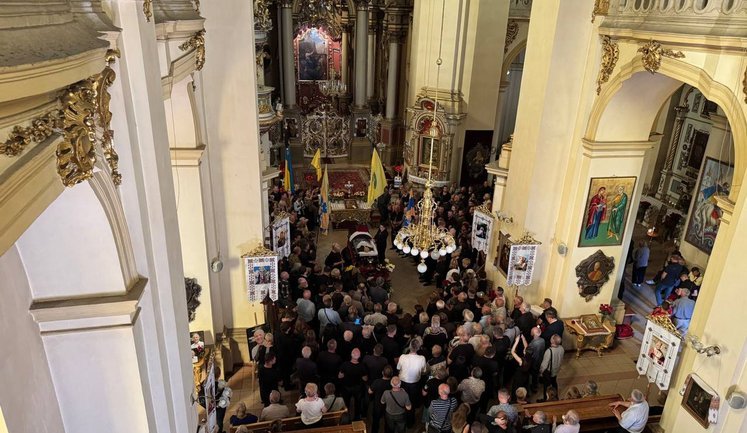
The topic of burials remains significant as ongoing efforts to locate graves from past tragedies, military burials at memorial cemeteries, and emerging mass graves in occupied regions continue. Notably, search operations in Volyn aim to find graves from the 1943 tragedy. Meanwhile, unidentified defenders are laid to rest with honors, reflecting the human cost of conflict. Tragic reports from areas like Mariupol emphasize the persistent discovery of mass graves. As burials take place, such as in Kyiv and Lviv, the ceremonies serve not only to honor fallen heroes but also to document the brutal realities of war. Despite the cruelty of war, these rituals affirm respect for life and the memory of those lost.
What is the significance of burial searches in Volyn?
The burial searches in Volyn aim to locate graves from past conflicts, specifically the 1943 tragedy in the destroyed villages of Ostrivka and Volia Ostrovetska. This search involves Ukrainian and Polish experts and is part of an effort to preserve history and honor the victims. These efforts also highlight the cooperation between nations to acknowledge and remember historical events that had a significant impact on local communities and beyond.
Why are military burials important in Ukraine?
Military burials in Ukraine are crucial for honoring the service and sacrifices of soldiers and law enforcement who lost their lives due to war and conflict. These ceremonies not only pay respects to valor and bravery but also provide closure for families, reinforcing national unity and remembrance. Holding services with full honors reflects societal gratitude and ensures that fallen defenders are remembered and acknowledged for their contributions to maintaining peace and freedom in Ukraine.
How are mass graves in occupied areas identified?
Mass graves in occupied areas are identified through combined efforts of local authorities, international organizations, and technologies such as satellite imagery. Investigations like those in Mariupol involve the collection of testimonies, local reports, and ground surveys to document these sites. The discovery and documentation of mass graves are vital for humanitarian purposes and serve as evidence for potential war crime investigations, ensuring accountability and justice for the victims.
What challenges do burial operations face in conflict zones?
Burial operations in conflict zones face challenges such as ongoing hostilities, restricted access to sites, and the need for protective measures to ensure safety during operations. Additionally, identifying remains in mass graves requires forensic expertise, technological support, and international cooperation to navigate logistical and legal complexities. These efforts are vital to honor victims and provide closure to families while maintaining historical records and accountability for conflicts.
How can international cooperation aid burial searches in Ukraine?
International cooperation can aid burial searches in Ukraine by providing forensic expertise, technological resources, and logistical support. Collaborative efforts, such as those between Ukrainian and Polish experts, enhance the thoroughness and accuracy of identifying and documenting graves. Partnerships with organizations ensure adherence to international standards, facilitating humanitarian and legal responses, and helping preserve historical records while fostering reconciliation and healing in affected communities.
News burials
 Santa volunteer unit serviceman Valerii Shcheholskyi (Shchehol) killed on front line Valerii Shcheholskyi from Konotop, a defender of Ukraine who fought under the call sign "Shchehol" as part of the Santa Separate Special Volunteer Unit, has been killed on the front line. 3 751 3 Previously in trend: losses of Ukraine
 Ukrainian Ambassador expects search operation in Laskiv to begin as early as August Vasyl Bodnar, Ukraine’s Ambassador to Poland, has stated that the search for the remains of Ukrainians who died in 1944 in the village of Lasków could begin as early as August. 1 786 7
 National Guard’s Lasar’s Group fighter Kostiantyn Ostapenko (Varta) killed during combat mission in Zaporizhzhia sector Junior Sergeant of the National Guard of Ukraine and Lasar’s Group fighter Kostiantyn Ostapenko, call sign Varta, was killed while defending Ukraine. 2 583 10 Previously in trend: losses of Ukraine
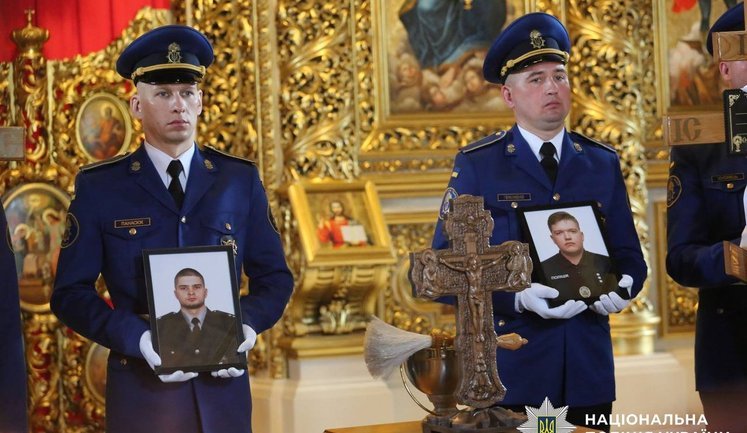
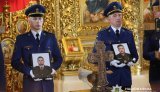 Farewell to police officers Budchenko and Bondarchuk, who died after being hit by killer driver Pleshyvtsev, held in Kyiv. PHOTOS On June 9, a farewell ceremony was held at St. Michael’s Golden-Domed Monastery for police officers Denys Budchenko and Dmytro Bondarchuk, who died in the line of duty after Pleshyvtsev drove into people near Karavaievi Dachi in Kyiv on June 5. 3 571 30 Previously in trend: Fatal traffic accidents car accident in Kyiv
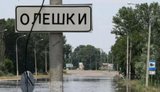 In occupied Oleshky, bodies of those killed are taken to Kalanchak and not returned In occupied Oleshky, Kherson Oblast, the Russian administration has changed the burial procedure for the dead. The bodies of people killed by shelling or mine explosions are now being taken to Kalanchak, allegedly for examination. 2 807 7 Previously in trend: Occupied territories - Crimea and Donbas
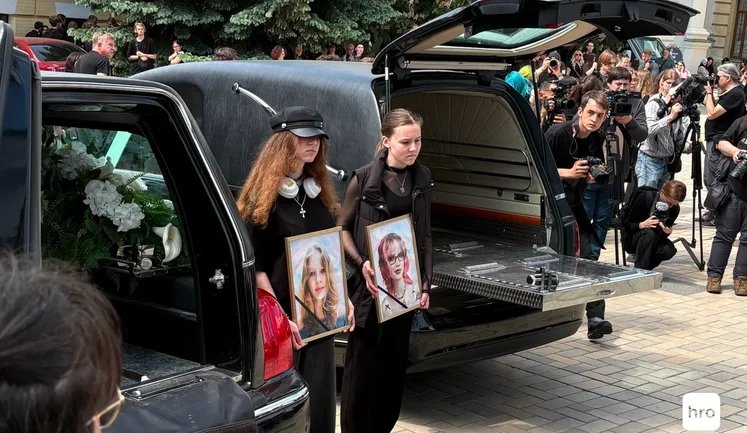
 Farewell held in Kyiv for daughters of fallen defender Yakovliev who were killed in Russian strike. PHOTOS Kyiv bids farewell to 12-year-old Liubava and 17-year-old Vira Yakovlieva, who were killed in Russia’s massive strike on the capital on 14 May. 4 977 15 Previously in trend: Shelling of Kyiv
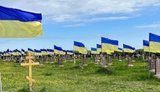 Zelenskyy has signed law on military cemeteries Ukrainian President Volodymyr Zelenskyy has signed a law establishing the procedures for the creation and operation of military cemeteries and the rules for the honorable burial of defenders. 2 875 21 Previously in trend: National Military Memorial Cemetery
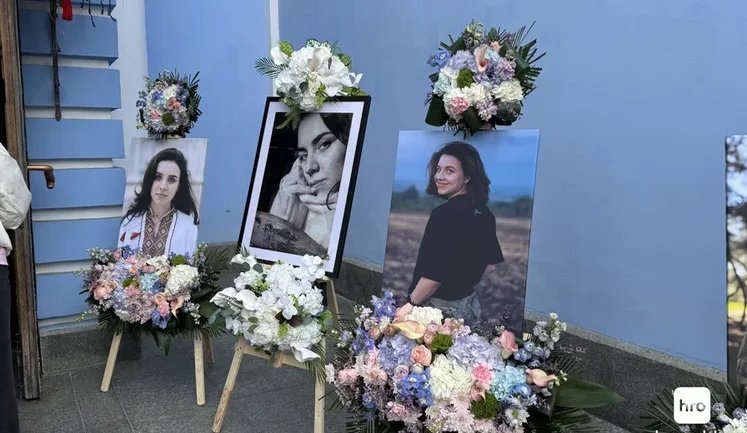
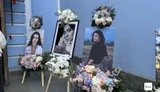 Farewell held in Kyiv for Viktoriia Bobrova (Kvitka), fallen servicewoman of 10th Separate Mountain Assault Brigade Edelweiss. PHOTOS On April 30, Ukrainian defender, producer and casting director Viktoriia Bobrova (call sign Kvitka) was laid to rest in Kyiv. She was killed on April 23 while carrying out a combat mission at the front. 5 344 17 Previously in trend: losses of Ukraine
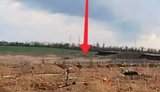 Hidden mass grave has been discovered in Mariupol: new details about victims from 2022 A hidden mass grave, which was created during the active phase of fighting in 2022, has been discovered in the temporarily occupied Mariupol. 3 868 7 Previously in trend: Occupation of Mariupol
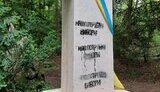 Work begins on creating Pantheon of prominent Ukrainians, Zelenskyy says President Volodymyr Zelenskyy said on 22 April that work has begun on creating a Pantheon of prominent Ukrainians — a space of national remembrance intended to bring together the memorialisation of key figures in Ukraine’s state-building and contribute to the values-based consolidation of society. 3 295 63 Previously in trend: Pantheon of prominent Ukrainians
 Search for graves of victims of 1943 tragedy has begun at sites of destroyed villages in Volyn Search operations will be conducted in the former villages of Ostrivka and Volia Ostrovetska in the Volyn region to locate the graves of victims of the events of August 1943. Ukrainian and Polish experts will join the expedition. 1 967 6 Previously in trend: exhumation of victims of Volyn tragedy
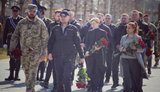 Five unknown defenders who gave their lives for their homeland were buried at memorial cemetery. PHOTOS On Saturday, 28 March, a ceremony was held at the National Military Memorial Cemetery (NMM) to lay to rest, with full honours, the unidentified remains of military personnel and police officers who lost their lives as a result of the armed aggression against Ukraine. 5 035 28 Previously in trend: losses of Ukraine
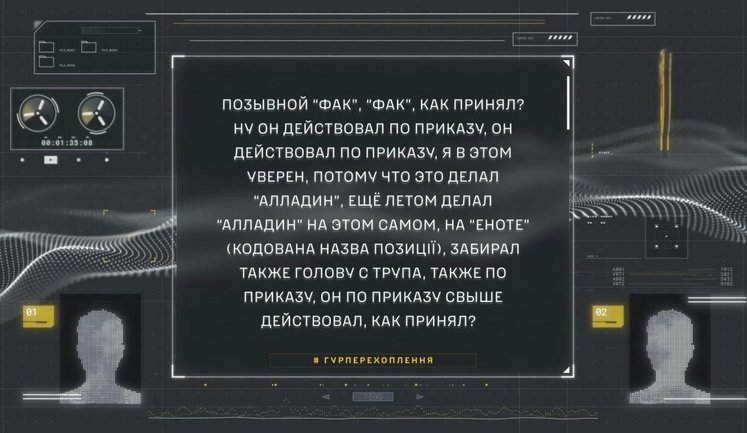
 Occupiers leave bodies of their soldiers on battlefield and take only the heads – DIU interception. AUDIO Russian commanders are ordering their subordinates not to remove the bodies of killed soldiers from the battlefield, but to take only their heads and documents so that there is enough to identify them. 5 192 29 Previously in trend: Russian army
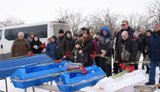 Kharkiv region bids farewell to veteran Hryhorii Shykula and his three children killed in Russian strike on Bohodukhiv. PHOTOS On Friday, February 13, in Skovorodynivka in the north of Kharkiv region, people said goodbye to Hryhorii Shykula and his three children, who were killed as a result of a Russian strike on Bohodukhiv on the evening of February 10. 7 984 10 Previously in trend: Shelling of Kharkiv region
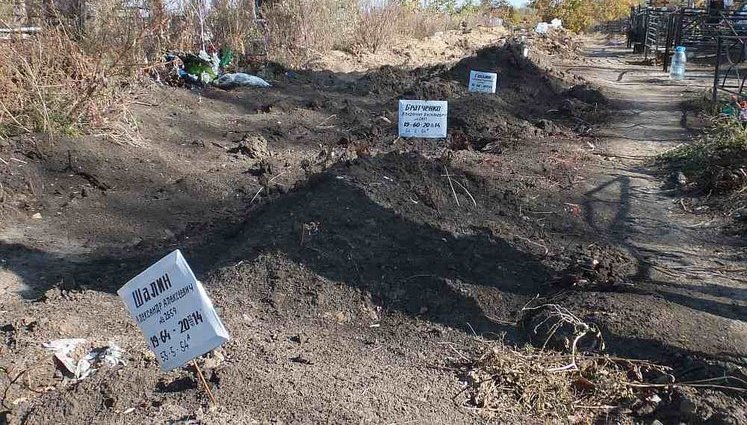
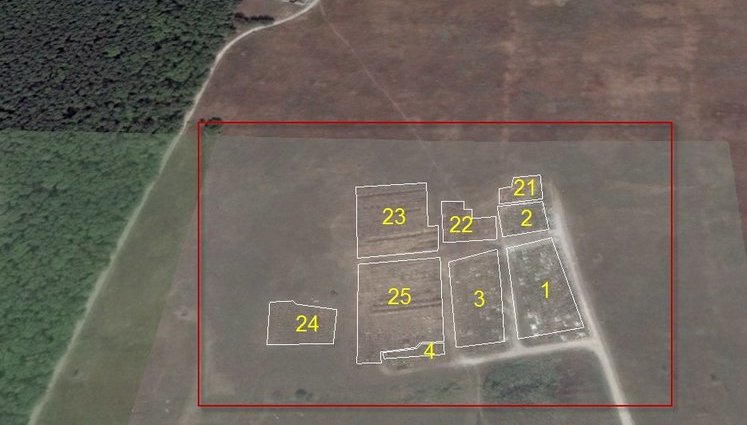
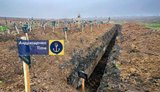 New mass graves are being recorded in Mariupol, - Andriushchenko. PHOTOS Dozens of new trenches for mass burials have appeared in Russian-occupied Mariupol. 8 028 17 Previously in trend: Occupation of Mariupol
 Farewell to journalist Oleksa Shalaiskyi held in Kyiv. PHOTOS A funeral ceremony was held at St Michael's Golden-Domed Monastery in Kyiv for journalist and editor-in-chief of "Nashi Hroshi" Oleksa Shalaiskyi, who died on 4 October. 2 496 4 Previously in trend: Oleksa Shalaiskyi died
 "I cannot leave, I have not yet buried my husband": Yarova residents stay behind to say farewell to loved ones after Russian strike. VIDEO The village of Yarova in Donetsk region has been almost completely emptied - residents are fleeing en masse after a Russian airstrike that claimed dozens of lives. 4 332 28
 Farewell ceremony for Andrii Parubii taking place in Lviv. VIDEO A farewell ceremony for the former Speaker of the Verkhovna Rada and MP Andrii Parubii, killed on 30 August, is taking place in Lviv. 6 645 26 Previously in trend: Murder of Andrii Parubii
 Parubii will be buried on 2 September at Lychakiv Cemetery in Lviv Former Speaker of the Verkhovna Rada Andrii Parubii, who was shot dead in Lviv on 30 August, will be buried at Lychakiv Cemetery. 5 142 38 Previously in trend: Murder of Andrii Parubii
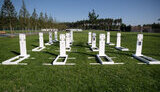 National Military Memorial Cemetery officially opened in Ukraine. PHOTO Today, the National Military Memorial Cemetery was officially opened in Markhalivka, Kyiv region. 7 239 16 Previously in trend: National Military Memorial Cemetery
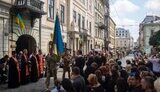 Lviv bids farewell to 12 POWs killed in Il-76 plane crash in Russia. PHOTOS On Friday, July 25, a farewell ceremony was held in Lviv for 12 defenders of the 24th Separate Mechanized Brigade who had been captured by Russian forces and died in the crash of an Il-76 aircraft over Belgorod on January 24, 2024. 10 576 78 Previously in trend: Il-76 plane crash near Belgorod
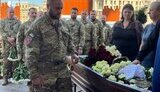 Farewell ceremony for deceased commander of "Liut" brigade, Maksym Kazban, held in Kyiv. PHOTOS A funeral service for the commander of the "Liut" assault brigade, Maksym Kazban, who died in a road accident in Donetsk region, took place on Maidan Nezalezhnosti in Kyiv. 6 118 7 Previously in trend: Commander of the Liut Brigade Kazban has died
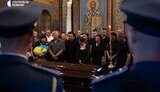 Farewell ceremony held in Kyiv for F-16 pilot Maksym Ustymenko, who died while repelling Russian attack. PHOTOS A farewell was bid in Kyiv to F-16 pilot Maksym Ustymenko, who was killed while repelling a Russian air attack on 29 June 2025 4 478 12 Previously in trend: Death of pilot Maksym Ustymenko
 Almost 50% of budget funds allocated for burial of Ukrainian soldiers were embezzled: SSU exposed officials of Odesa City Council. PHOTO The SSU and National Police investigators exposed a scheme to embezzle budget funds intended for the burial of fallen Ukrainian defenders in Odesa. 15 191 61 Previously in trend: Embezzlement of funds
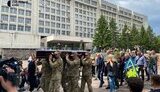 Kyiv bids farewell to soldier and actor Maksym Nelipa, killed in battle against occupiers. PHOTOS A farewell ceremony was held in Kyiv for renowned actor, television host, and serviceman Maksym Nelipa. 7 903 0 Previously in trend: losses of Ukraine Maksym Nelipa killed
 Graves of civilians start appearing between houses in Pokrovsk - media. PHOTO Civilian graves began to appear in the yards of residential buildings in Pokrovsk. 7 330 12 Previously in trend: Shelling of Pokrovsk
 Farewell to 17-year-old Nikita Solonichenko, who died as result of Russian strike, was held in Kryvyi Rih. PHOTOS Farewell to 17-year-old Nikita Solonichenko, who died as a result of a Russian attack on a playground on 4 April 2025, was held in Kryvyi Rih. 2 899 0 Previously in trend: Missile attack on Kryvyi Rih
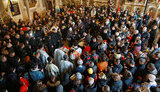 Odesa bids farewell to activist Demian Hanul. PHOTOS A farewell ceremony for activist Demian Hanul, who was killed on 14 March 2025, was held in Shevchenko Park in Odesa. 6 492 0 Previously in trend: Demian Hanul’s Murder
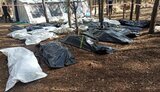 Mass grave in Izium: 402 people identified, 22 remain unknown As of early March 2025, 402 people from the mass grave in Izium, Kharkiv region, have been identified, 46 remain unidentified, of whom 22 are still unknown. 8 937 9 Previously in trend: Mass grave in Izium
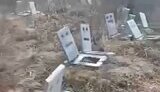 Graves of SMO convicts in Russia: "They were just dumped. 2-3 in a pit. Thank you, Vladimir Vladimirovich, for our happy f#cking future!". VIDEO A video has been published online showing a Russian resident of Krolevtsy village, Primorsky Krai, filming a cemetery of "Special Military Operation" (SMO) convicts who were killed in Ukraine. 14 290 35 Previously in trend: War
 Kyiv bids farewell to American volunteer medic Ethan Hertweck. VIDEO&PHOTOS. VIDEO&PHOTOS On February 28, Independence Square in Kyiv bids farewell to American Ethan Hertweck, who was killed in battle for Ukraine on December 14, 2023. 9 320 24 Previously in trend: Farewell on the Maidan
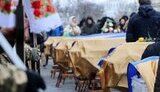 Poltava bids farewell to Zapishnyi and Yavorskyi families who were killed in Russian strike on February 1. PHOTOS On 5 February 2025, Poltava bids farewell to two families of Yavorskyi and Zapishnyi, who died as a result of a Russian missile attack on a residential building with an X-22 missile on 1 February. 5 070 8
 Murder of TCR military at petrol station: Oleksandr Sykalchuk was bidden farewell in Dykanka. PHOTOS On 4 February, in the village of Dykanka, a funeral service was held for Oleksandr Sykalchuk, a soldier of the district TCR and SS, who was killed at a petrol station in Pyriatyn on 31 January. 12 376 81
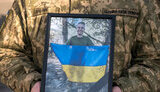 Kyiv bids farewell to 19-year-old Polish volunteer fighter Filip Antosiak. PHOTOS On Thursday, January 30, Kyiv bids farewell to 19-year-old Polish volunteer soldier Filip Antosiak, who was killed near Pokrovsk, Donetsk region. 11 691 36
 Odesa bids farewell to military volunteer Yevheniia Dukhopelnikova On December 22, Odesa bade farewell to military volunteer and writer Yevheniia Dukhopelnikova, who had been helping the frontline since 2014. 4 420 1 Previously in trend: War
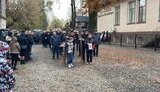 Kryvyi Rih bids farewell to Olena Kulyk and her three children killed by Russian shelling. VIDEO+PHOTOS Kryvyi Rih bids farewell to the victims of the November 11 Russian strike - Olena Kulyk and her three children: Kyrylo, Demyd and Uliana. 11 739 37 Previously in trend: War
 More than 1200 Russian occupiers were buried in Crimea during war Since the beginning of the full-scale war in the temporarily occupied Crimea, 1230 Russian soldiers who were killed in Ukraine have been buried. 2 786 19
 In Poltava, they said goodbye to six people who died as result of Russian missile attack on September 3. PHOTOS In Poltava, near the Holy Dormition Cathedral of the OCU, the six people who died as a result of a missile attack on the communications institute on 3 September said goodbye. 5 022 5
 Lviv bids farewell to members of Bazylevych family killed in Russian strike. VIDEO&PHOTOS Lviv bids farewell to the members of the Bazylevych family, who died as a result of a Russian missile strike on 4 September. 12 091 24 Previously in trend: War
 Khmelnytskyi region bids farewell to soldier Mykhailo Bratasiuk, who died as result of Russian attack on Poltava Khmelnytskyi region will bid farewell to soldier Mykhailo Bratasyuk, who died on September 3 while on training in Poltava. 5 760 0
 Funeral ceremony for former mayor of Uman Oleksandr Tsebrii, who died in battle against occupiers in Donetsk region, will be held on July 27 A Funeral ceremony for the former mayor of Uman, Oleksandr Tsebrii, who was killed in action against the occupiers in the Donetsk region, will be held on July 27. 6 737 12 Previously in trend: War
 Kyiv bids farewell to military photographer Arsen Fedosenko, who died defending Ukraine. VIDEO+PHOTOS Kyiv bids farewell to to the military photographer Arsen Fedosenko, who died after being seriously injured. 3 947 1 Previously in trend: War
 In Kyiv, funeral of 21-year-old combat medic Oleksandr Kucheriavenko (Kuzma) was held. VIDEO+PHOTOS The funeral of combat medic Oleksandr Kucheriavenko, who died while helping the wounded, was held in Kyiv. 8 683 8 Previously in trend: War
 Occupiers are packing their "two hundredth" "heroes of smo" to be sent home. VIDEO A video has been posted online showing a fragment of the daily work of the Russian sorting and transshipment base, where the occupiers are preparing to send their "two hundredths" home. 16 099 53 Previously in trend: War
 Kyiv bids farewell to soldier Eduard Khatmullin, who died in battle against occupiers. VIDEO+PHOTOS Kyiv bids farewell to 57th SIB soldier and volunteer Eduard Khatmullin, who died in late April in a battle against ruscists in the Kharkiv region. 5 474 8 Previously in trend: War
 Kyiv bids farewell to Nazarii Lavrovskyi, Paramedic of 244th Battalion, who died saving lives of his comrades in Kharkiv direction. VIDEO+PHOTOS From the first days of the full-scale invasion, Nazarii Lavrovskyi defended Ukraine against the Russian invaders 5 298 11 Previously in trend: War
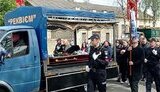 Vinnytsia region bids farewell to police officer Maksym Zaretskyi, who was killed in attack on night of 20 April. PHOTOS In the town of Bershad in Vinnytsia region, a funeral service was held for police officer Maksym Zaretskyi, who was killed in an attack by two soldiers on the night of 20 April. 8 437 26
 Kyiv bids farewell to fallen soldiers of 67th Separate Mechanized Brigade Anastasiia Marianchuk (Troia) and Denys Daineko (Brazen). VIDEO&PHOTOS Kyiv bids farewell to the soldiers of the 67th Separate Mechanized Brigade of the Right Sector Ukrainian Volunteer Corps Anastasiia Marianchuk and Denys Daineko. 10 314 8 Previously in trend: War
Page 1 of 2
more news