ENG




3527 visitors online
The rise of explosive-related incidents in Ukraine continues to be a significant concern for authorities. From high-profile grenade attacks in Kyiv to the shocking discovery of explosives disguised as McDonald's burgers, safety threats pose ongoing challenges to law enforcement. Notably, the SSU and National Police have dismantled networks trafficking explosives, reinforcing a crackdown against illegal arms distribution. Meanwhile, drone-led operations against Russian forces and thwarted sabotage attempts underscore the persistent dangers facing civilians and military personnel alike. Vigilance remains essential as authorities uncover insidious plots threatening lives and infrastructure.
What measures are being taken to combat illegal explosives distribution in Ukraine?
Efforts to curb illegal explosives distribution involve a coordinated approach by the Security Service of Ukraine and National Police. Recent operations have led to the dismantling of five distribution channels for weapons and explosives, with organizers arrested to prevent further unlawful transactions.
How are drones impacting the current military operations involving explosives?
Drones play a crucial role in modern military operations, offering precise capabilities in delivering explosives against adversaries. Ukrainian military units increasingly utilize drones for strategic strikes and intelligence missions targeted at enemy positions, showcasing technological advancements in warfare.
What were the consequences of the grenade attack reported in Kyiv?
The grenade attack in Kyiv, motivated by a debt dispute, resulted in injuries to five individuals. The perpetrator faces severe legal repercussions, including life imprisonment, exemplifying the serious consequences of such violent acts within civilian areas.
How have recent explosives-related incidents affected civilian life in Ukraine?
Civilian life in Ukraine has been notably impacted by explosive-related incidents, with cases involving hidden explosives on repatriated soldiers and sabotage attempts near airports and populated areas. These instances underscore the urgent need for increased safety measures and public awareness.
What legal actions are taken against those involved in terrorist activities involving explosives?
Legal actions against individuals involved in terrorism with explosives are pursued rigorously. Sentences can include lengthy imprisonment terms, property confiscation, and, for some, life sentences, as seen in recent convictions pertaining to terrorist plots and actual attacks.
News explosives
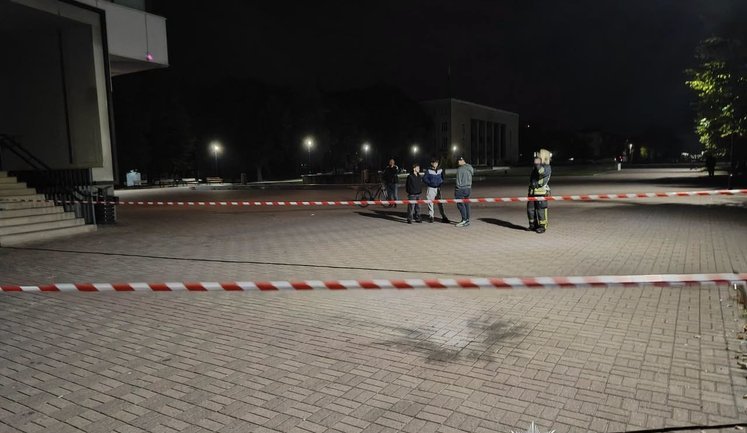
 Soldier on leave detonated grenade during confrontation in Sheptytskyi: there are casualties, and he has been detained. PHOTOS Police have arrested the suspect who detonated a grenade in Sheptytskyi, Lviv region. 4 537 55 Previously in trend: Explosion of grenade
 Kyiv resident threw grenade at debtor’s feet: five people were injured, and attacker faces life imprisonment. VIDEO&PHOTOS Police in Kyiv have arrested a man who threw a live grenade at his friend’s feet over an unpaid debt. 4 629 15 Previously in trend: Explosion of grenade
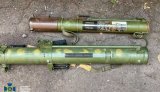 SSU and National Police have uncovered five distribution channels for weapons and explosives in Ukraine. PHOTOS The Security Service of Ukraine, in conjunction with the National Police, has dismantled a further five networks involved in the illegal sale of weapons, ammunition and explosives in various regions of the country. Law enforcement officers have arrested the organisers of these operations and... 1 064 6 Previously in trend: Arms and explosives trafficking
 Two fighters from "Carpathian Sich" are throwing explosives into basement occupied by invaders. VIDEO Ukrainian assault troops continue to effectively clear out the positions of Russian invaders in built-up areas. 6 205 13 Previously in trend: Elimination of Russian occupying forces
 FSB has arrested man in Krasnodar who was allegedly preparing to blow up the car of military enlistment office employee on orders of "Ukrainian special services" In Krasnodar, Russia, a man was detained whom the Russian Federal Security Service (FSB) accuses of plotting to blow up the car of a military registration and enlistment office employee. The Russian security service claims that the detainee was allegedly acting on orders from representatives of... 900 1 Previously in trend: Foreign agents in Russia
 Planted explosives under serviceman’s car in Kyiv for $1,500: Woman sentenced to 9 years for terrorist attack ordered by Russia. VIDEO+PHOTOS A 24-year-old Kyiv woman has been found guilty of committing a terrorist attack in Kyiv’s Obolon district. The court sentenced her to nine years in prison with confiscation of property. 4 339 19 Previously in trend: Terrorist attacks in Ukraine burning military cars
 Drone containing explosives was found near Ukrainian An-124 at Leipzig Airport: police suspect sabotage, - Bild. PHOTO On the night of 5 August, operations at Leipzig Airport were temporarily suspended. The cause of the flight delays was an unidentified object discovered near the runway. 4 959 9 Previously in trend: Russian sabotage
 SBI exposes serviceman selling explosives: he planned to sell 6 tonnes worth over UAH 7.5 million Employees of the State Bureau of Investigation notified a serviceman of suspicion over organising the illegal sale of explosives and planning to sell a total of six tonnes of explosive material. The court remanded him in custody with the option of bail, which the suspect has already posted. 1 413 13 Previously in trend: Arms and explosives trafficking
 In Chernihiv, woman attempted to hand over explosives to military personnel, disguised as McDonald’s burger, - SSU. PHOTO In Chernihiv, law enforcement officers detained a woman who, according to preliminary reports, attempted to pass camouflaged explosives to military personnel at one of the checkpoints. The explosive device was concealed inside a McDonald’s burger. 6 792 20 Previously in trend: Illegal possession of weapons
 Explosive devices have been found on several occasions in the bodies of soldiers repatriated to Ukraine, according to the police During the initial examination of the bodies of Ukrainian servicemen returned as part of repatriation efforts, law enforcement officers repeatedly discovered explosive devices. 3 078 10 Previously in trend: losses of Ukraine
 Cvilian car hit landmine in Kharkiv region: woman has been hospitalised In the Kharkiv region, on a road near the village of Martynivka, a car ran over an unidentified explosive device, resulting in a woman being injured. 680 0 Previously in trend: Explosion on mine
 New footage of powerful explosion in Belgorod region appears online. VIDEO Additional footage of a powerful explosion in Russia’s Belgorod region, filmed by a local resident, has been published online. 9 774 22 Previously in trend: Detonation of explosive devices
 11 occupiers blow up on remotely emplaced mines laid by soldiers of 141st Separate Mechanized Brigade during attempted assault. VIDEO On one sector of the front, Russian assault groups hit a series of mines that had been laid in advance and remotely by servicemen of the 141st Separate Mechanized Brigade. 6 279 10 Previously in trend: Elimination of Russian occupying forces Elimination of Russian occupiers
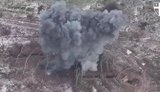 Operators of ground robots from NC13 unit blew up an underground shelter with Russian troops inside. VIDEO Operators of ground-based robotic systems from Unit NC13 of the Third Army Corps carried out a successful attack on a Russian occupiers’ hideout. 4 055 3 Previously in trend: Elimination of Russian occupying forces Destruction of the occupiers’ firing positions Unmanned Ground Vehicles UGVs
 Ukrainian kamikaze ground drone blows up building with occupiers in Kostiantynivka. VIDEO A video has been posted online showing a Ukrainian kamikaze ground drone packed with explosives blowing up a building in Kostiantynivka. 6 411 10 Previously in trend: Elimination of Russian occupying forces Unmanned Ground Vehicles UGVs Kostiantynivka direction
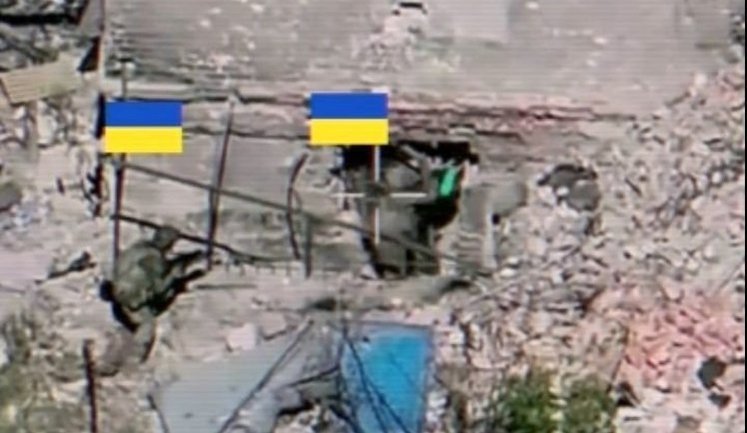
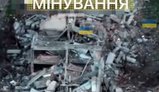 Fighters from 214th "OPFOR" battalion blew up occupiers’ cover after they refused to surrender. VIDEO An infantry unit from the 214th Separate Assault Battalion "OPFOR" carried out an operation to destroy a Russian military stronghold in the ruins of a building. 4 428 4 Previously in trend: Elimination of Russian occupying forces
 One of Ukrainian Armed Forces’ special operations: destruction of bridge over Konka River using drone and 1.5 tonnes of explosives. VIDEO Ukrainian forces destroyed a bridge over the Konka River in the Oleshky area of the temporarily occupied Kherson region, using a British T-150 Malloy drone. 16 934 17 Previously in trend: fightings in Kherson region Drone operators Strikes on Russian logistics
 Minor acting as agent for Russian Federation has been sentenced to five years in prison for plotting terrorist attack in Rivne A court in Rivne has sentenced a Russian agent who was planning a terrorist attack against Ukrainian military personnel. 2 467 16 Previously in trend: Recruitment of Ukrainian teenagers by Russia
 Orbán’s opponent Magyar believes incident involving explosives on ’Turkish Stream’ pipeline is ’false flag operation’ aimed at disrupting elections in Hungary An opponent of Hungarian Prime Minister Viktor Orbán, the leader of the opposition party "Tisza," Péter Magyar, sees the incident involving explosives found near the "Turkish Stream" pipeline in Serbia as a staged operation aimed at disrupting the elections in Hungary. 5 696 18 Previously in trend: Elections in Hungary Sabotage of a gas pipeline in Serbia
 Foreign Ministry denies Ukraine’s involvement in explosives found near ’Turkish Stream’ pipeline in Serbia: ’Russian operation under false flag’ Heorhii Tykhyi, a spokesperson for the Ukrainian Ministry of Foreign Affairs, stated that Kyiv had nothing to do with the incident involving explosives found near the "Turkish Stream" pipeline in Serbia. 3 759 17 Previously in trend: Sabotage of a gas pipeline in Serbia
 Terrorist attack in Bucha: Two explosions rock city, law enforcement officers injured. VIDEO This morning, March 23, an unknown object exploded near an apartment building in Bucha. 8 805 33 Previously in trend: Explosion in Kyiv region
 Moment of placing explosives in rubbish bin in Lviv and arrest of suspect. VIDEO Footage has been published online showing a 33-year-old woman suspected of terrorism placing a bomb in a rubbish bin in Lviv. 22 434 201 Previously in trend: Terrorist attacks in Ukraine
 Explosives technicians neutralize two PTM-3 mines dropped by Shahed drones near railway in Rivne region – National Police of Ukraine. VIDEO+PHOTOS In the Rivne region, Shahed drones likely dropped anti-tank mines near the railway. 2 986 4 Previously in trend: Shahed attack on Rivne region
 Car explodes in Moscow: three dead, including two police officers. VIDEO On the night of 24 December 2025, an unidentified car exploded in Moscow. The incident was recorded on the same street where Russian Army General Fanil Sarvarov was killed in an explosion a few days earlier. 14 506 56
 Russian General Staff General Sarvarov killed in Moscow: explosive device detonated under his car. VIDEO On the morning of 22 December, an explosive device installed under the bottom of a car was detonated on Yasenevaya Street in Moscow, killing Lieutenant General Fanil Sarvarov, head of the Operational Training Department of the General Staff of the Russian Armed Forces. 22 944 106 Previously in trend: liquidation of Russian military command
 Unknown explosive device detonated in Darnytskyi district of Kyiv: one person killed. VIDEO One person died and another was injured in Kyiv as a result of the detonation of an unknown explosive device. 5 828 11 Previously in trend: Explosion in Kyiv Detonation of explosive devices
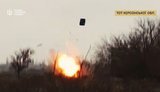 DIU and Resistance Movement blew up car with occupiers in Kherson region. VIDEO On 6 December 2025, as a result of an operation by the Active Operations Department of the Defence Intelligence of the Ministry of Defence of Ukraine and the Resistance Movement in the Kherson region, two occupiers and their vehicle were eliminated. 6 360 12 Previously in trend: Elimination of Russian occupying forces Elimination of Russian occupiers
 Russian agent who was preparing to blow up gas pipeline in eastern Ukraine detained, - SSU. PHOTO The Security Service's counterintelligence prevented attempts by Russian forces to cut off heat supply to some households in the Kharkiv and Poltava regions. 3 051 6
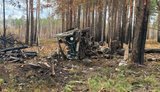 Two vehicles hit mines in Zhytomyr border area: dead and wounded reported. PHOTOS Two vehicles hit explosive devices in the border area of Zhytomyr region, killing five people and injuring three others. 7 530 11 Previously in trend: Explosion on mine Detonation of explosive devices
 Explosion at "Ukrposhta": dangerous parcel was heading abroad, - State Customs Service The parcel that exploded at the "Ukrposhta" sorting centre in Kyiv was heading abroad. This was reported by the State Customs Service of Ukraine, according to Censor.NET. 5 284 49 Previously in trend: Explosion in Kyiv
 Soldiers of 63rd Mechanised Brigade "splashed" nine enemy Molniya explosive-carrying drones. VIDEO Drone operators of the 63rd Separate Mechanised Brigade of the Third Army Corps "splashed" a swarm of enemy attack UAVs. 2 719 3 Previously in trend: Destruction of Russian equipment
 Drunk occupier blows himself up in dugout: ’meat assault’ on own positions. VIDEO 18+ A signalman from the 3rd Battalion of Russia’s 385th Motor Rifle Regiment, while intoxicated, blew himself up with explosives in a dugout, staging a real "meat assault" right on his own position. 14 621 31 Previously in trend: Suicidal occupiers
 Russians drop explosive on yard of home in Bilozerka, Kherson region, injuring woman On September 19, Russian forces carried out an attack on a civilian woman in Bilozerka, Kherson district. 437 0 Previously in trend: Shelling of the Kherson region
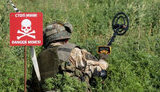 Explosive device detonated: two people killed and two injured in Kozacha Lopan An unknown device detonated in the village of Kozacha Lopan in the Kharkiv region, killing several people and injuring others. 1 202 0 Previously in trend: Detonation of explosive devices
 Drones of "Magyar’s Birds" unit tear invader to pieces. VIDEO Fighters of the 414th UAV Brigade "Magyar's Birds" eliminated a Russian soldier hiding in the bushes. Moments before being hit by a Ukrainian strike drone, the occupier crossed himself. The drone then dropped an explosive, killing the Russian serviceman. After an encounter with the UAV, the... 3 689 18 Previously in trend: Elimination of Russian occupying forces
 In Kherson, occupiers organising safaris targeting people and animals. VIDEO Russian troops continue to attack civilians in the Kherson region, using drones to drop explosives. According to Censor.NET, the occupiers are not just killing - they are documenting their crimes, turning terror into a show. 5 835 9 Previously in trend: Drone attack in Kherson region
 Russian agent who blew up prosecutor’s car in Dnipro sentenced to 15 years, - SSU An agent of the Russian special services who committed a terrorist attack against a prosecutor in Dnipro was sentenced to 15 years in prison with confiscation of property. 1 145 3 Previously in trend: Terrorist attacks in Ukraine Sentences for high treason
 Russian special services were preparing to blow up SSU building in Kyiv - Maliuk Russian special services were preparing an operation to blow up the SSU building in Kyiv on the orders of Russian dictator Vladimir Putin. 3 283 24 Previously in trend: Terrorist attacks in Ukraine
 Armed Forces officer was planned to be blown up in Odesa, and enemy agent was detained, - SSU. PHOTOS The Security Service of Ukraine foiled another terrorist attack that was to take place in Odesa on the orders of Russian special services. 10 430 38 Previously in trend: Terrorist attacks in Ukraine
Two Russian agents who blew up prosecutor’s car in Dnipro have been detained, according to Office of Prosecutor General. PHOTO Two residents of Dnipro were served with a notice of suspicion of committing a terrorist act. 5 927 46 Previously in trend: Terrorist attacks in Ukraine
 Enemy starts using drones to scatter explosive objects – SES. PHOTO (updated) Russian troops have started using UAVs to scatter explosive objects. 6 386 13
 SSU detains enemy agents preparing terrorist attack in Lviv police station. PHOTO The SSU jointly with National Police prevented another terrorist attack by Russian military intelligence in Lviv. The special operation resulted in the detention of two enemy agents who were planning to blow up the administrative building of the local police department. 3 077 19 Previously in trend: Terrorist attacks in Ukraine countering terrorist attacks
 Explosion occurs in Rivne, 2 people are injured: SSU classifies incident as terrorist attack Around 13:40 on 20 March, an explosion occurred in the centre of Rivne, injuring 2 people. 4 439 10 Previously in trend: Explosion in Rivne on March 20
 Russia was preparing terrorist attack near National Police building in Mykolaiv: 19-year-old traitor who was to plant explosives detained - SSU. PHOTO The Security Service and the National Police detained a 19-year-old Russian accomplice from Mykolaiv who, on the instructions of the enemy, was to commit a terrorist attack near the regional police department on 7 March 2025. 8 594 63 Previously in trend: Terrorist attacks by Russian special services in Ukraine
 He was preparing terrorist attack near ’Alley of Heroes’ Glory’: 16-year-old RF agent who was planning to detonate explosive device in centre of Zhytomyr detained – SSU. PHOTOS The Security Service of Ukraine jointly with the National Police detained a 16-year-old agent of Russian special services who was planning a terrorist attack in the centre of Zhytomyr. 4 922 98 Previously in trend: Attempted terrorist attack
 They wanted to blow up police patrol on order of Russia: two drug traffickers who planned terrorist attack detained in Bukovyna (updated). PHOTOS The Security Service of Ukraine jointly with the National Police prevented a terrorist act against Ukrainian law enforcement officers, planned by agents of Russian special services in Bukovyna. 5 707 42
 Russian agent tried to blow up track in front of freight train in Rivne region. Traitor was detained - SSU. PHOTOS SSU counterintelligence neutralised another attempt by Russia to sabotage the Ukrainian railway. 5 635 30
 Russian agent was preparing terrorist attack near building of SSU structural unit in center of Kyiv. She was detained. PHOTOS The SSU and investigators prevented a large-scale terrorist attack on one of the central crowded streets of Kyiv. 7 601 37
Page 1 of 4
more news