ENG




15883 visitors online
The current conflict in Ukraine has witnessed countless tragic losses as brave individuals defend their homeland. This includes Oleksandr Olivko, a pastor turned sniper, and Ruslan Rudukan, a media designer and serviceman. Young and courageous, Artom Sinevych and Eva Reuter are also among many who fell in the line of duty. The collective sacrifices of servicemen and women, such as Roman Buzile, Anatolii Tkach, and Alina Pashchenko, underscore the ongoing struggle. As Ukraine continues to defend its sovereignty, these losses are not just numbers, but the heartbreaking stories of lives dedicated to the cause of freedom and peace.
What are the recent military losses in Ukraine?
Recent reports highlight several individuals who were killed while defending Ukraine. These include servicemen from different backgrounds, encompassing pastors, journalists, and musicians, all sacrificing their lives on the front lines.
How are losses affecting the Ukrainian armed forces?
The losses are a significant blow, impacting both morale and operational capacity. Each soldier represents a unique skill set, leading to challenging gaps within the military as they try to fill these roles with new recruits.
What is the impact of these losses on Ukrainian society?
The impact is profound, as each loss reverberates through communities. Families and friends mourn their loved ones, while the wider Ukrainian society grapples with the ongoing human cost of defending their national integrity.
Who are some notable individuals recently killed in Ukraine?
Notable individuals include Oleksandr Olivko, a pastor turned sniper; Ruslan Rudukan, a journalist; and Danylo Smyrnov, an assault trooper. Each played unique roles within the armed forces and their deaths signify a tremendous loss.
How does Ukraine honor its fallen soldiers?
Ukraine honors its fallen soldiers through memorials and funeral ceremonies, recognizing their bravery and sacrifice. The nation mourns collectively, illustrating respect for those who have given their lives in defense of freedom and sovereignty.
Are civilians affected by military losses in Ukraine?
Yes, civilians are deeply affected as military losses often include individuals from civilian professions who volunteered for military service. Each loss is felt across social segments, impacting families, and communities tragically and across broader social dynamics.
How do losses at the front influence international perception of the conflict?
The persistent reports and human stories about Ukraine's losses continue to draw international sympathy and support, highlighting the crisis's enduring human cost and the country's relentless defense efforts against aggression.
How do recurring losses affect Ukraine's military strategy?
Losses force the Ukrainian military to reassess strategies continually, prioritizing not only defensive measures but also the protection of personnel. This includes adjustments in tactical approaches and the implementation of new strategies to minimize casualties.
News losses
 Working body will be established under NSDC to handle identification of bodies of fallen defenders, - Klymenko A working group will be established under the National Security and Defense Council to address the identification of the bodies of fallen defenders. 624 3 Previously in trend: bodies identification DNA identification of the deceased
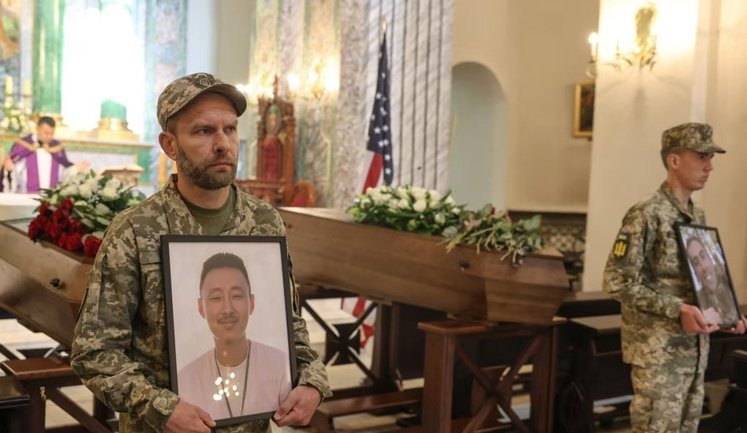
 Farewell ceremony was held in Kyiv for two American volunteers who died fighting for Ukraine. PHOTOS On 1 October, a farewell ceremony was held in Kyiv for Benjamin Yu and Spencer Burns Mike — American volunteers who had joined the Ukrainian Armed Forces and were killed in action in eastern Ukraine. 3 737 11 Previously in trend: foreign volunteers in the armed forces
 Marine, combat medic and activist Ivanka Kutsenko (Haika) killed at front. PHOTO Combat medic, marine with the 39th Separate Brigade, and activist Ivanka Kutsenko ("Haika") was killed at the front during an artillery attack. She will forever be 33. 8 449 20 Previously in trend: losses of Ukraine Women in AFU
 3rd Separate Assault Brigade combat medic Maryna Hrytsenko posthumously awarded title of Hero of Ukraine. PHOTO Maryna Hrytsenko, a combat medic of the 3rd Separate Assault Brigade who was killed on the front line on August 7, 2025, has been posthumously awarded the title of Hero of Ukraine with the Order of the Gold Star. 4 098 12 Previously in trend: losses of Ukraine Awarding the title Hero of Ukraine
 MiG-29 pilot Captain Marat Mambetov of "Ghost of Kyiv" brigade killed in combat on front line Ukrainian pilot Marat Redvanovych Mambetov, a flight commander in the 40th "Ghost of Kyiv" Tactical Aviation Brigade, was killed while flying a combat mission in a MiG-29 fighter jet in one sector of the front on October 1. 12 535 56 Previously in trend: losses of Ukraine Ukraine lost aircraft
 Serhiit Stretovich, lawyer at Hillmont Partners, was killed on front line whilst defending Ukraine. PHOTO Serhii Stretovych, a soldier who had worked as a lawyer at Hillmont Partners prior to his mobilisation, was killed on the front line whilst defending Ukraine. 5 458 9 Previously in trend: losses of Ukraine
 "If Ukraine were really losing 27,000 soldiers month, it simply wouldn’t have anyone left to fight with," - Butusov, commenting on Tusk’s statement The figures cited by Polish Prime Minister Donald Tusk – claiming that 27,000 Ukrainian soldiers are killed or wounded every month – do not correspond to reality 4 861 36 Previously in trend: losses of Ukraine
 Ukraine’s recent losses amount to around 27,000 killed and wounded each month, - Tusk Recently, the monthly casualties among Ukrainian military personnel have stood at around 27,000 killed and wounded. 28 854 197 Previously in trend: losses of Ukraine
 Process of identifying bodies of repatriated military personnel and civilians needs to be accelerated, - Koretskyi Prime Minister Serhii Koretskyi instructed the Ministry of Health, the Ministry of Internal Affairs, and the Ministry of Defense to prepare a plan within a week to expedite the identification of the bodies of repatriated military personnel and civilians 818 5 Previously in trend: bodies identification
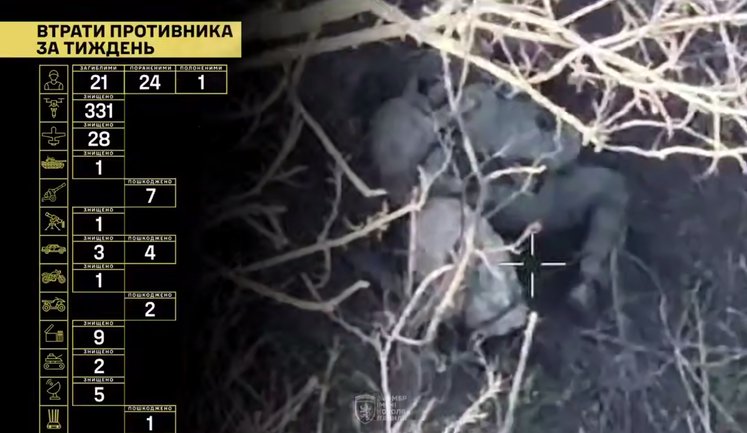
 Russian Federation losses in September rose by 25% compared to August, - USF Commander Madyar During the first 15 days of September, the Unmanned Systems Forces confirmed the loss of 6,280 Russian soldiers—25.6% more than during the same period in August. 1 411 11 Previously in trend: Enemy losses
 Oleksandr Olivko, Baptist pastor from Vinnytsia who became sniper in Ukrainian Armed Forces, was killed on front line whilst defending Ukraine. PHOTO Baptist pastor Oleksandr Olivko, who had volunteered to join the Defence Forces, was killed on the front line whilst defending Ukraine. 5 303 33 Previously in trend: losses of Ukraine
 In Zaporizhzhia direction, journalist and media designer Ruslan Rudukan was killed Forty-seven-year-old Ruslan Rudukan, a journalist, media designer, and serviceman with the 153rd Separate Mechanized Brigade, was killed at the front. He fell in battle in the Zaporizhzhia direction. 2 099 4 Previously in trend: losses of Ukraine
 Kyiv bids farewell to fallen assault trooper Danylo Smyrnov (Surfer). VIDEO+PHOTOS On 3 September, Kyiv bid farewell to assault trooper Danylo Smyrnov (Surfer). The soldier served in the International Legion of Defence Intelligence of Ukraine and was killed on 28 August. 3 641 9 Previously in trend: losses of Ukraine
 Farewell ceremony for 25-year-old Hospitallers paramedic Eva Reuter held in Kyiv. PHOTOS A farewell ceremony for Eva Reuter, a 25-year-old paramedic with the Hospitallers Medical Battalion (call signs Planochka and Alice), was held in Kyiv on September 2. She was killed on the night of August 1 during a second Russian strike after arriving at the scene of the attack to help the wounded. 9 457 9 Previously in trend: losses of Ukraine
 19-year-old soldier Artom Sinevych (Art) killed in Sumy region: He was returning from his first combat mission. PHOTO On August 28, 19-year-old serviceman and student Artom Sinevych was killed in the Sumy direction while returning from his first deployment to combat positions. 14 757 26 Previously in trend: losses of Ukraine
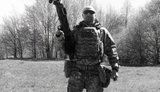 Roman Buzile, soldier of 80th Air Assault Brigade and Ukrainian cycling champion, was killed whilst defending Ukraine. PHOTO Roman Buzile, a 33-year-old Ukrainian soldier, athlete and graduate of the Kharkiv State Academy of Physical Culture, was killed in action whilst fighting the Russian invaders. 6 097 12 Previously in trend: losses of Ukraine
 79 servicemen from 414th ’Madyar Birds’ Brigade have been killed since start of full-scale war, - Brovdi Since the start of the full-scale war, 79 servicemen from the 414th Separate Unmanned Systems Brigade, ‘Madyar Birds’, have been killed. 88 342 12 Previously in trend: losses of Ukraine
 Russia is losing 6,000 more troops every month than it manages to recruit, – Guardian Russia is losing 6,000 more troops a month on the battlefield in Ukraine than it manages to mobilise. Despite actively recruiting new troops, the Kremlin is unable to fully make up for its losses. 3 797 25 Previously in trend: Mobilization in Russian Federation Enemy losses
 Tetiana Kucheriava, the first female tank driver in independent Ukraine, has died. PHOTO After a long battle with a serious illness, Tetiana Kucheriava has passed away — a lieutenant-colonel, candidate of psychological sciences and senior lecturer at the National Academy of Land Forces, who in 2015 became the first woman in independent Ukraine to complete training as a T-64B tank... 39 876 19 Previously in trend: losses of Ukraine
 SES sapper Yurii Onatskyi dies in line of duty in Kharkiv region. PHOTO Driver-sapper and Chief Master Sergeant Yurii Onatskyi of the State Emergency Service (SES) of Ukraine’s Interregional Centre for Humanitarian Demining and Rapid Response died in the line of duty in the Kharkiv region. 1 886 6 Previously in trend: losses of Ukraine
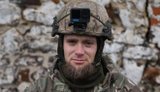 Head of Platsdarm search group Oleksii Yukov awarded title of Hero of Ukraine (posthumously) Oleksii Yukov, head of the Platsdarm search group, was posthumously awarded the title of Hero of Ukraine. He was killed on 5 August 2026 while carrying out a combat mission to search for and recover the bodies of fallen Ukrainian service members. 2 350 3 Previously in trend: Awarding the title Hero of Ukraine
 Musician and Ruky’v Briuky member Anatolii Tkach killed defending Ukraine. PHOTO Ukrainian musician, member of the band Ruky’v Briuky and serviceman with the 79th Separate Air Assault Brigade Anatolii Tkach has been killed in the war. 4 823 12 Previously in trend: losses of Ukraine
 He returned to front with prosthetic leg: 21-year-old Marine Yevhen Minzhener killed defending Ukraine. PHOTO Today, 18 August, it was reported that Ukrainian Marine Yevhen Minzhener, call sign "Andatra," had been killed. 7 639 27 Previously in trend: losses of Ukraine
Vitalii Shtefan, historian and soldier with 47th Separate Mechanised Brigade ’Magura’, was killed in action. PHOTO Vitalii Stefan, a historian and soldier with the 47th Separate Mechanised Brigade ‘Magura’, was killed on the front line whilst defending Ukraine. 10 912 24 Previously in trend: losses of Ukraine
Rescuer Oleksii Stoliarenko died when structures collapsed whilst clearing up aftermath of Russian strike on Sumy. PHOTO During the fire-fighting operation in Sumy, which broke out following a strike by a Russian UAV, part of the structure collapsed. 2 263 9 Previously in trend: losses of Ukraine
 For over 25 years, he brought bodies of fallen home: farewell was held in Kyiv for search and recovery specialist Oleksii Yukov. PHOTOS A funeral service was held at St Vladimir’s Cathedral in the capital for Oleksii Yukov – the head and founder of the ‘Platsdarm’ search team, who devoted a quarter of a century to the exhumation, identification and repatriation of fallen soldiers. 4 011 4 Previously in trend: losses of Ukraine
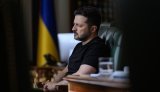 Ukraine has lost around 50,000 soldiers, with further 400,000 wounded and many missing in action, - Zelenskyy The total losses suffered by the Russian occupiers since the start of the full-scale invasion have reached 1.6 million people, of whom an estimated 700,000 have been killed. 17 856 161 Previously in trend: losses of Ukraine
 Santa volunteer unit serviceman Valerii Shcheholskyi (Shchehol) killed on front line Valerii Shcheholskyi from Konotop, a defender of Ukraine who fought under the call sign "Shchehol" as part of the Santa Separate Special Volunteer Unit, has been killed on the front line. 3 745 3 Previously in trend: losses of Ukraine
 Actor Yevhen Bushmakin killed while defending Ukraine. PHOTO On July 21, it was reported that 45-year-old Ukrainian serviceman and actor Yevhen Bushmakin, star of the film Hero of My Time, had been killed in the war. 11 843 17 Previously in trend: losses of Ukraine
 National Guard’s Lasar’s Group fighter Kostiantyn Ostapenko (Varta) killed during combat mission in Zaporizhzhia sector Junior Sergeant of the National Guard of Ukraine and Lasar’s Group fighter Kostiantyn Ostapenko, call sign Varta, was killed while defending Ukraine. 2 573 10 Previously in trend: losses of Ukraine
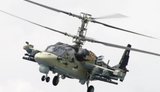 Russian air defense shot down its own $16 million Ka-52 while hunting Ukrainian drones, - Forbes A Russian Ka-52 "Alligator" attack helicopter was shot down by its own mobile air defense unit while on an anti-drone mission. According to preliminary reports, the crew was hunting Ukrainian drones when Russian forces, who were also searching for aerial targets, opened fire on it. 4 292 24 Previously in trend: Enemy losses
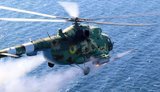 Crew of Mi-8 helicopter were killed whilst shooting down Russian drones in Poltava region. PHOTOS On 30 June 2026, whilst carrying out a combat mission in the Poltava region to intercept Russian drones, four crew members of a Mi-8 helicopter from the helicopter squadron of the 16th Separate Army Aviation Brigade "Brody" were killed. 13 571 26 Previously in trend: losses of Ukraine
 While defending Ukraine, 22-year-old volunteer and UAV operator Alina (Freya) Pashchenko was killed. PHOTO While defending Ukraine from Russian aggression, 22-year-old volunteer and UAV operator Alina Pashchenko, call sign Freya, was killed at the front. She also headed the Cherkasy branch of the all-Ukrainian public organization Sokil. 11 136 42 Previously in trend: losses of Ukraine
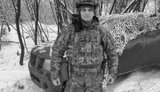 TV camera operator Oleksandr Vernihorov killed while defending Ukraine. PHOTO Serviceman and camera operator for Dnipro TV channels Oleksandr Vernihorov was killed on the Kharkiv front while defending Ukraine. 3 170 3 Previously in trend: losses of Ukraine
 Military officer, sailor and musician Ihor Khodzhaniiazov killed while defending Ukraine. PHOTO On June 28, 36-year-old Ihor Khodzhaniiazov, a senior sailor who was known in civilian life as a poet, musician and researcher, was killed at the front while carrying out a combat mission. He is survived by three children. 3 151 12 Previously in trend: losses of Ukraine
 AFU unmanned system forces struck 68 launch sites for Russian drones over the past 24 hours. PHOTO Over the past 24 hours, units of the Ukrainian Armed Forces’ Unmanned Systems Forces have struck or destroyed 1,677 enemy targets. 1 052 1 Previously in trend: Enemy losses
 Russia lost 1,210 troops and nearly 400 vehicles and pieces of specialized equipment in past 24 hours, - General Staff Over the past 24 hours, the Ukrainian Armed Forces have eliminated 1,210 Russian soldiers. 3 090 42 Previously in trend: Enemy losses
Explosive devices have been found on several occasions in the bodies of soldiers repatriated to Ukraine, according to the police During the initial examination of the bodies of Ukrainian servicemen returned as part of repatriation efforts, law enforcement officers repeatedly discovered explosive devices. 3 078 10 Previously in trend: losses of Ukraine
 NSDC debunks Russian fake about millions of Ukrainian army losses Information claiming that 2.4 million Ukrainian Armed Forces servicemen have allegedly been killed or gone missing is fake. 2 703 59 Previously in trend: Russian fake news
 Plane crash in Khmelnytskyi region: pilot Bohdan Zahorulko and 23-year-old navigator Bohdan Babenko were killed. PHOTO The victims of the Su-24M plane crash in the Khmelnytskyi region were the pilot Bohdan Zahorulko and 23-year-old soldier Bohdan Babenko from the Bohodukhiv community. 9 354 16 Previously in trend: losses of Ukraine Ukraine lost aircraft Su-24M crashed in Khmelnytskyi region
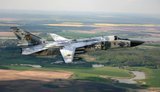 Su-24M bomber crashed in Khmelnytskyi region: pilot and navigator killed In the Khmelnytskyi region, at around 7 pm on 16 June 2026, a Su-24M frontline bomber belonging to the 7th Tactical Aviation Brigade named after Petro Franko of the Ukrainian Air Force crashed. The crew were killed. 14 043 33 Previously in trend: losses of Ukraine Ukraine lost aircraft
 Hasan, soldier from Ichkeria who was rescued by Ukraine as child, has been killed in action. PHOTO Hasan, a soldier who had miraculously escaped the war in Ichkeria as a child, was killed in the fighting for Ukraine; he had joined the front lines as a volunteer after the Russian army killed his pregnant wife and destroyed their home on Ukrainian soil. 6 168 6 Previously in trend: losses of Ukraine
 Battalion’s best pilot: Artur (Snickers) Kariakin, commander of UAV crew, was killed A 2009 graduate of the Kremenchuk Military Lyceum, Junior Sergeant Artur Kariakin—call sign "Snickers"—a commander of an unmanned aerial vehicle crew, was killed while carrying out a combat mission in the Sumy region. 8 444 6 Previously in trend: losses of Ukraine
Vitalii Pletin, police officer with rifle battalion, was killed whilst carrying out combat mission in Donetsk region. PHOTO Vitaliy Pletin, a police officer with the Poltava Rifle Battalion, was killed in Donetsk Oblast whilst carrying out a combat mission. 2 840 13 Previously in trend: losses of Ukraine
He shielded his unit with his own body: Captain Dmytro Ivashchyshyn was killed whilst carrying out combat mission in Kramatorsk area. PHOTO Captain Dmytro Ivashchyshyn was killed while carrying out a combat mission in the Kramatorsk area. 7 017 15 Previously in trend: losses of Ukraine
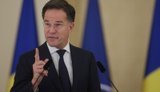 Rutte addresses young Russians recruited by Russia for war: You will be left to suffer in mud and die NATO Secretary General Mark Rutte has warned young Russians against taking part in the war against Ukraine. 1 809 23 Previously in trend: Enemy losses
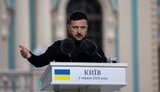 Russian army’s losses reach up to 35,000 month – Zelenskyy President Volodymyr Zelenskyy has said that Russian forces achieved almost no significant results on the battlefield in May, while the Russian army is losing between 30,000 and 35,000 troops every month. 1 641 11 Previously in trend: Enemy losses
 Yaroslav Ivanov (Varnak), fighter of EW company of 3rd Army Corps, killed defending Ukraine Twenty-three-year-old serviceman Yaroslav Ivanov, call sign Varnak, a fighter of a separate electronic warfare (EW) company within the Third Army Corps, has been killed in action defending Ukraine. 4 105 3 Previously in trend: losses of Ukraine
Page 1 of 49
more news