ENG




6413 visitors online
Illegal enrichment cases in Ukraine have been under intense scrutiny by agencies like NABU and SAPO. From MPs to military officials, numerous high-profile individuals have been investigated for acquiring wealth unlawfully. Notable cases include the investigation into MP Kachnyi for UAH 13 million in enrichment, and a judge involved in undeclared assets and enrichment of 16.7 million hryvnias. Law enforcement agencies continue to pursue these cases, reflecting Ukraine's fight against corruption. Stay informed on the latest developments as authorities aim to uphold transparency and accountability.
What are the recent illegal enrichment cases in Ukraine?
Recent cases in Ukraine highlight an alarming trend of illegal enrichment among public officials. Notable investigations include MP Kachnyi for UAH 13 million, and a Lviv region military official involved in an illicit UAH 14 million scheme. Anti-corruption bodies like NABU and SAPO are actively pursuing these cases to combat corruption and enforce transparency in public service.
Who investigates illegal enrichment in Ukraine?
Illegal enrichment in Ukraine is primarily investigated by the National Anti-Corruption Bureau (NABU) and the Specialized Anti-Corruption Prosecutor's Office (SAPO). These agencies work alongside other bodies such as the State Bureau of Investigation (SBI) and the National Agency for the Prevention of Corruption (NAPC) to hold corrupt officials accountable and enforce anti-corruption laws.
What actions are taken against officials found guilty of illegal enrichment?
Officials found guilty of illegal enrichment in Ukraine may face various legal repercussions, including criminal charges, loss of office, financial restitution, and imprisonment. The judicial process involves thorough investigations by anti-corruption bodies, court proceedings, and potential sentencing, reflecting Ukraine’s commitment to battling corruption.
How does the Ukrainian legal system address illicit enrichment allegations?
The Ukrainian legal system addresses illicit enrichment allegations through comprehensive investigations by specialized agencies like NABU and SAPO. These bodies gather evidence and present cases in court to secure convictions. The process underscores the significance of legal mechanisms in deterring corruption and ensuring public office accountability.
Why is illegal enrichment a significant issue in Ukraine?
Illegal enrichment is a critical issue in Ukraine due to its detrimental effects on public trust, governance, and economic development. It undermines confidence in government institutions and highlights the need for stringent anti-corruption measures. Addressing this issue is essential for fostering transparency, integrity, and effective public administration in Ukraine.
News illegal enrichment
 UAH 13 million illegal enrichment: NABU completes probe into MP Kachnyi Anti-corruption bodies have completed the investigation into the illegal enrichment of an MP by UAH 13 million. 1 349 7 Previously in trend: cases of illicit enrichment
 Illicit enrichment of 16.7 million hryvnias and failure to declare assets: judge notified of suspicion, - NABU The NABU and SAPO have notified a judge of one of the commercial courts of appeal that he is suspected of illicit enrichment and making false declarations. 1 486 13 Previously in trend: cases of illicit enrichment
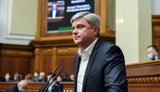 NABU and SAPO expose MP over UAH 13 million in illicit enrichment: according to media reports, it is OPZZh representative Kachnyi The NABU and the SAPO have exposed a sitting Member of the Ukrainian Parliament for illicit enrichment. 6 037 38 Previously in trend: Fighting corruption in Ukraine cases of illicit enrichment
 Spent over 10 million on clothes and Bali: logistics major of one of Airborne Forces brigades was informed of new suspicions. VIDEO The rear major of one of the Airborne Forces brigades, who was caught taking bribes, has been notified of new charges. 9 804 42 Previously in trend: Bribe-takers in military units
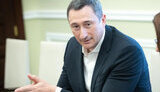 Chernyshov has been notified of suspicion of illegal enrichment within framework of Operation Midas, - NABU The National Anti-Corruption Bureau of Ukraine (NABU) and the Specialized Anti-Corruption Prosecutor's Office (SAPO) have notified the former Deputy Prime Minister of Ukraine that he is suspected of illegal enrichment. The case concerns Oleksii Chernyshov, who is involved in a corruption scheme... 4 880 52 Previously in trend: Chernyshov’s case Energy sector corruption
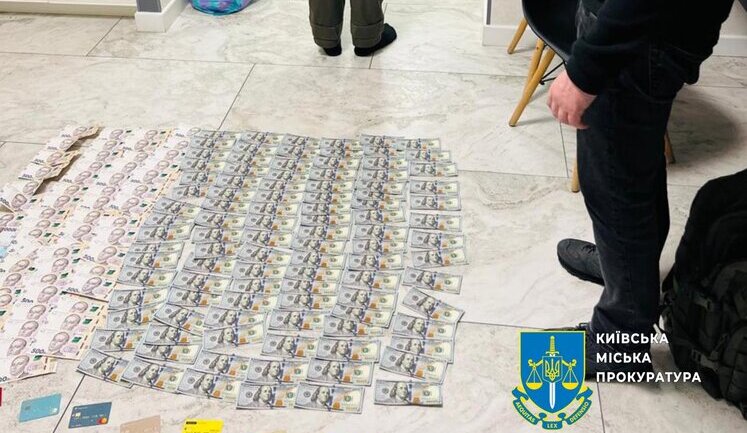
 State Environmental Inspection official exposed for illegal enrichment: $880,000 and €200,000 found at her home, - SBI. PHOTOS Employees of the State Bureau of Investigation, in cooperation with the National Police's Special Investigation Department, have exposed the head of one of the departments of the State Environmental Inspection of the Dnipropetrovsk Region (Dnipropetrovsk and Kirovohrad regions) for illegal... 10 983 76 Previously in trend: cases of illicit enrichment
 NABU official exposed for false declarations and concealment of real estate. His parents have Russian passports - SSU. PHOTOS The Security Service of Ukraine, the Office of the Prosecutor General, and the State Bureau of Investigation have exposed the deputy head of one of the NABU detective units on a criminal offence. 5 558 32 Previously in trend: Search in NABU Declaration of false information
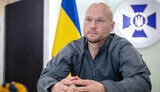 Apartment purchased for UAH 21.6 million registered to his wife: SSU General Vitiuk suspected of illicit enrichment – NABU. SCHEME The National Anti-Corruption Bureau of Ukraine (NABU) and the Specialized Anti-Corruption Prosecutor’s Office (SAPO) have exposed a senior Security Service of Ukraine (SSU) officer on charges of illicit enrichment and filing false asset declarations. 8 308 38 Previously in trend: cases of illicit enrichment
 "I’m living my best life, I don’t care about anyone": wife of National Police Colonel Yelkhina, who rents expensive property from dubious companies, has responded to Hromadske investigation - Shulhat Maria, the wife of Oleksiy Yelkhin, the chief operative of the Strategic Investigations Department of the National Police, who rents a luxury house and a Mercedes-Benz G-class car with dubious income, responded to the facts revealed by Hromadske regarding the luxury property used by the family... 71 767 463 Previously in trend: Property of National Police Colonel Oleksii Yelkhyn
 Relatives of new Vinnytsia prosecutor Tkalenko, whom Tatarov invited to his birthday party, bought real estate in Kyiv worth over $1 million - Bihus.info. VIDEO Relatives of the new prosecutor of Vinnytsia region, Oleh Tkalenko, have acquired several properties in Kyiv worth more than a million dollars during his time at the Kyiv region prosecutor's office. 8 031 57 Previously in trend: Prosecutors’ wealth
 Apartments in elite residential complex registered to his grandmother, Rolex and Cartier watches for his wife, and almost empty declaration: Bihus.Info found out how new prosecutor of Zakarpattia, Patskan, lives. VIDEO The newly appointed head of the Zakarpattia Regional Prosecutor's Office, Myroslav Patskan, has an almost empty declaration, but lives in luxury real estate registered to the grandmother of the prosecutor's wife. 15 850 87 Previously in trend: Prosecutors’ wealth
 Prosecutor General’s Office opens case against Energy Customs head Komar over possible illegal enrichment – Kravchenko The Office of the Prosecutor General has opened a criminal case regarding possible illegal enrichment of Anatolii Komar, head of the Energy Customs Department of the State Customs Service. 4 065 23 Previously in trend: Property of a State Customs Service official
 Family of former head of Kharkiv regional TCR found to possess unjustified assets worth UAH 4.8 million: SAPO seeks confiscation Employees of the State Bureau of Investigation, in cooperation with the National Agency on Corruption Prevention (NACP), have uncovered evidence of unjustified enrichment by the former head of the Kharkiv Regional Territorial Center of Recruitment and Social Support (TCR and SS). 3 298 19 Previously in trend: cases of illicit enrichment
 Suspended sentence, UAH 20 million to state budget, UAH 2 million to Armed Forces: SAPO on court verdict in case of "servant of people" Kormyshkina A verdict has been delivered in the case of illicit enrichment of former "Servant of the People" MP Iryna Kormyshkina and her husband Yurii Kormyshkin. 4 569 37 Previously in trend: Servant of the People scandals Kormyshkina’s case cases of illicit enrichment
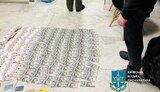 They demanded kickbacks from supplier of armored vehicles for AFU - 2 directors of state-owned enterprises were notified of suspicion. PHOTOS Two directors of state-owned enterprises who demanded kickbacks from an entrepreneur for the supply of armoured vehicles for the Armed Forces of Ukraine were served with a notice of suspicion. 2 804 9
 "Selling" holidays to servicemen: division commander who "earned" almost UAH 1 million from his subordinates is detained - Prosecutor General’s Office. PHOTOS Prosecutors of the Kherson Specialised Defence Prosecutor's Office of the Southern Region served a notice of suspicion to a former division commander on charges of abuse of office, extortion and receipt of unlawful benefit. 33 657 20
 Case of "servant of people" Kormyshkina on illegal enrichment: MP’s husband is suspected In the case of illegal enrichment of Ukrainian MP Iryna Kormyshkina, another person has been served with a notice of suspicion - her husband. This was reported by the Specialised Anti-Corruption Prosecutor's Office, Censor.NET informs. 14 189 22
 Concluded procurement contracts at inflated prices: official of Dnipro municipal enterprise was served suspicion notice of embezzlement of over UAH 9 million - National Police. PHOTOS Cyberpolice officers of Dnipro city jointly with detectives of the Bureau of Economic Security of Ukraine exposed a deputy director of a utility company who entered into contracts for the purchase of radio equipment at prices significantly higher than market prices. 911 0
 Businessman who forged documents was detained in Kyiv: National Police exposes him for embezzling UAH 10 million of state funds. PHOTO In Kyiv, the National Police exposed a private entrepreneur who, by entering false information into official documents, embezzled about UAH 10 million intended for the purchase of rock salt for industrial use. 1 563 7
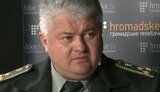 Chief Psychiatrist of AFU Druz, who is suspected of taking large bribe, was sent to custody. Bail is UAH 49 million Kyiv's Shevchenkivskyi District Court has imposed a pre-trial restriction on the chief psychiatrist of the Armed Forces of Ukraine, Oleh Druz. He is suspected of illicit enrichment of $1 million during a full-scale war. 14 106 42
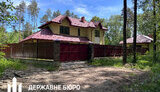 Illicit enrichment of UAH 14 million: in Lviv region, Armed Forces official who registered property for relatives will be tried - SBI The SBI has completed a pre-trial investigation into the case of the head of the housing and maintenance department of the Armed Forces of Ukraine in Lviv region. 13 989 14
 Chief psychiatrist of Armed Forces of Ukraine, Druz, who became rich by more than $1 million and bought real estate and luxury cars during invasion, is detained - SSU. PHOTOS The Security Service of Ukraine, with the assistance of the Minister of Defence and the Commander-in-Chief of the Armed Forces, detained the chief psychiatrist of the Armed Forces, who is the Deputy Head of the Central MMC and decides on the fitness of military personnel for service. This is... 21 730 114
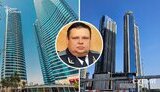 NABU opens criminal proceedings against Odesa ex-prosecutor Kornilov over undeclared real estate in Dubai - media The National Anti-Corruption Bureau has opened a criminal investigation into the alleged false declaration of former Deputy Prosecutor of Odesa Region Oleh Kornilov, who previously had property in Dubai worth more than $400,000. 2 961 16
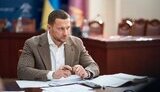 Illegal enrichment of AMCU Head Kyrylenko for over UAH 72 million: investigation completed The NABU and the SAPO have completed an investigation into the suspicion of Pavlo Kyrylenko, the head of the Antimonopoly Committee of Ukraine, of illegal enrichment of UAH 72.1 million and declaring false information. 3 897 16
 SBI’s Hovorushchak sues "Slidstvo.Info" after investigation into his family’s property Oleksandr Hovorushchak, head of the first department of the Department for Pre-trial Investigation of Criminal Offences Committed by Law Enforcement Officers and Judges of the SBI's Main Investigation Department, has filed a lawsuit against "Slidstvo.Info" journalists who reported on the... 26 113 52
 NABU investigates Tyshchenko’s illicit enrichment of over UAH 30 million. His property was seized The National Anti-Corruption Bureau (NABU) is currently investigating the alleged illicit enrichment of MP Mykola Tyshchenko by more than UAH 30 million, as well as the facts of his false declaration. According to the investigation, the property was registered to the former owner of the Velour... 8 475 31
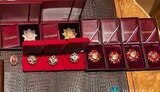 Assets worth more than $60 million were found in possession of former State Treasury official in Poltava region. Relative, lieutenant general of RF Armed Forces, helped to "siphon off" them. PHOTO (updated) The former official of the Main Department of the State Treasury Service of Ukraine in Poltava region was found to have unjustified monetary assets and valuables worth millions of dollars, including cash, gold commemorative coins, expensive watches, weapons and Russian awards. 26 001 130
 Vinnytsia MSEC doctor Vlasiuk bought 13 apartments and three Teslas. He issued luxury property in center of Kyiv for his retired wife, media reports In Vinnytsia, Viktor Vlasiuk, a therapist at the city's Medical Service of Ukraine, owns 13 apartments, including a 260-square-metre luxury property in the centre of Kyiv, together with his retired wife. His boss, Yulia Danylenko, head of the MSEC, has purchased several apartments, 25 land plots... 45 764 144
 SAPO serves Servant of People Allakhverdiieva notice of suspicion of illicit enrichment of over UAH 20 million SAPO prosecutors have served a notice of suspicion of illicit enrichment of more than UAH 20 million to the current People's Deputy from the Servant of the People party, Iryna Kormyshkina (formerly Allakhverdiieva). 12 521 91
 NACP Head Pavlushchyk on declaration of Khmelnytskyi MSEC Head Krupa: We could not see what was in nightstand The cash found during a search of the head of the Khmelnytskyi MSEC and data on her assets abroad gave grounds for a second full check of her declaration. 45 555 62
 Internal investigation ordered against Police General Shaikhet after journalists’ material - National Police Following an investigation by journalists, the National Police has ordered an internal investigation against the head of the Migration Police Department of the National Police, General Serhii Shaikhet. 8 805 39
 SBI officer Hovorushchak and his family purchased real estate and cars worth UAH 35 million over several years - "Slidstvo.Info". VIDEO&PHOTOS. VIDEO&PHOTOS Oleksandr Hovorushchak, who heads the department that investigates crimes committed by law enforcement officers and judges at the State Bureau of Investigation, and his family have purchased houses, apartments and cars worth UAH 35 million. The official and his relatives started acquiring... 16 011 93
 Khmelnytskyi City Council deputy Baranska, who was seized of over $1.5 million, is arrested: bail is set at UAH 50 million The Pecherskyi District Court has imposed a pre-trial restraint on Svitlana Baranska, a deputy of the Khmelnytskyi City Council, who was found to have more than one and a half million undeclared dollars and real estate. 4 490 18
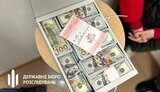 Khmelnytskyi City Council deputy is exposed on illegal enrichment of $1.5 million - SBI. VIDEO&PHOTOS. VIDEO&PHOTOS A deputy of the Khmelnytskyi City Council was found to have more than a million and a half dollars in undeclared assets and real estate. 9 347 66
 Kostin signs application for dismissal of his ex-deputy Verbytskyi, who is suspected of illegal enrichment Prosecutor General Andrii Kostin has signed a letter of resignation for his former deputy, Dmytro Verbytskyi. The Prosecutor General's Office has already completed an internal investigation into the former official, who is involved in a case of possible illegal enrichment. 5 152 13
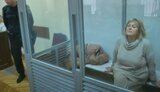 NACP to re-examine declaration of Khmelnytskyi MSEC head Krupa, who is suspected of illegal enrichment The National Agency for the Prevention of Corruption (NAPC) will conduct a second full inspection of the declaration of the head of the Khmelnytskyi Regional Center for Medical and Social Expertise, Tetiana Krupa. 5 726 22
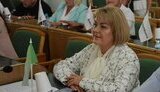 Head of Khmelnytskyi regional MSEC Krupa will be expelled from regional council - Servant of People The Servant of the People party has launched an imperative mandate procedure against Tetiana Krupa, the head of the Khmelnytskyi Regional Center for Medical and Social Expertise, who is suspected of illegal enrichment. She will be expelled from the regional council. 3 674 41
 Head of Khmelnytskyi MSEC Krupa is remanded in custody: bail set at UAH 500 million The Pechersk District Court imposed a pre-trial restraint in the form of detention on the head of the Khmelnytskyi Regional MSEC, Tetiana Krupa. 14 361 90
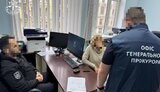 Head of Khmelnytskyi MSEC Krupa detained, served with notice of suspicion of illicit enrichment - Prosecutor General’s Office. PHOTO The head of the Khmelnytskyi Regional Centre of the State Expertise Bureau of Forensic Expertise was detained and served a notice of suspicion of illicit enrichment, and nearly USD 6 million in various currencies was seized during searches. 20 341 129
 SBI: $6 million in cash is found during searches of Krupa, head of Khmelnytskyi MSEC. VIDEO&PHOTOS The head of a medico-social expert commission (MSEC) and her son, an official of the Pension Fund in Khmelnytskyi, were caught on illegal enrichment. 43 919 237
 He earned UAH 3.7 million on fictitious supply of components for drones for military: police expose entrepreneur in Zakarpattia region In the Zakarpattia region, a businessman forged official documents on the supply of parts, on the basis of which he received funds from the local budget. The businessman was served a notice of suspicion under several articles of the Criminal Code of Ukraine. He could face up to 12 years in prison. 1 930 17
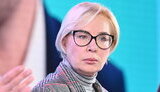 NACP reveals signs of illicit enrichment of former Ombudsman Denisova for more than UAH 42 million The National Agency for the Prevention of Corruption has found signs of illicit enrichment and false declarations worth more than UAH 42 million in former Ombudsman Liudmyla Denisova. The National Police launched criminal proceedings. 18 361 43
 NACP investigates SSU officer Loif, whose mother’s real estate worth over UAH 16 million has been found. VIDEO The National Agency for the Prevention of Corruption has started monitoring the lifestyle of SSU official Anatolii Loif following an investigation by Slidstvo.info into his mother's property. 13 042 25
 AMCU leader Kyrylenko was notified of suspicion of illegal enrichment of UAH 56 million, - SAPO The NABU and SAPO served a notice of suspicion of illicit enrichment and false declaration to Pavlo Kyrylenko, the head of the Antimonopoly Committee and former head of the Donetsk Regional State Administration. 10 382 39
 Official, who illegally accrued combat payments to financiers of military unit, is served suspicion notice - SBI SBI officers served a notice of suspicion to the head of the financial and economic service of a military unit stationed in Dnipropetrovsk region at the time of the crime. Through the official, her subordinates illegally received combat payments intended for soldiers on the front line. 4 467 16
 Illegally re-registered property worth UAH 12 million to relatives: Head of economic unit of the Armed Forces of Ukraine in Lviv region is served notice of suspicion. PHOTO SBI officers, with the assistance of the leadership of the Ministry of Defence and the Armed Forces, served a notice of suspicion to the head of one of the Armed Forces' economic units in Lviv region. The head of the unit's housing and maintenance department illegally re-registered property... 9 134 11
 Wife of SSU cybersecurity chief Vitiuk bought apartment for $1.4 million, and his mother bought two more - media. VIDEO In December 2023, the wife of Illia Vitiuk, head of the SSU’s cybersecurity department, bought an apartment in Kyiv’s Pechersk district. The market price of such housing is more than UAH 20 million. The official salary of the official would not be enough for such housing. Instead, his wife earns millions as an individual entrepreneur but does not want to talk about her activities. 30 596 135
 SBI convicted the deputy of the Rivne Regional Council and the head of the forest industry Sukhovich of illegal enrichment for millions of dollars. PHOTOS SBI officers found undeclared assets worth millions of dollars from Vitaliy Sukhovich, a member of the Rivne Regional Council who is also the deputy head of the Polissya Forestry Office of the State Enterprise "Forests of Ukraine". 14 746 72
Page 1 of 2
more news