ENG




12559 visitors online
Russia's naval parade in St Petersburg, a significant display of military might, was canceled again this year due to security reasons. The Kremlin, traditionally using Navy Day for propaganda, faces continued challenges as events on the Neva river are halted. Simultaneously, Ukraine is diplomatically maneuvering around May 9, Victory Day, balancing international requests against security threats. Ukrainian President Volodymyr Zelenskyy asserted that the nation won't launch attacks on Russia during this period, reflecting an effort to avoid provocations despite heightened tensions. The geopolitical implications of these parade cancellations and modifications indicate the complex interplay between military strategy and political symbolism in the region.
Why was the Russian naval parade canceled in St Petersburg?
The cancellation of the Russian naval parade in St Petersburg is attributed to security concerns. For two consecutive years, the event, typically a staple of Russia's military propaganda efforts, has been called off. This ongoing suspension suggests potential vulnerabilities and strategic recalibrations by the Kremlin amidst increasing global tensions and domestic security assessments.
How is Ukraine managing its military strategy during May celebrations?
Ukraine has opted for a diplomatic approach during May celebrations, with President Volodymyr Zelenskyy stating that Ukraine will honor requests not to attack Russia on May 9. This decision reflects Ukraine's cautious stance in avoiding unnecessary provocations while managing international and domestic expectations amid ongoing tensions with Russia.
What are the geopolitical implications of modifying military parades in Russia?
The modifications and cancellations of military parades in Russia highlight geopolitical stratagems, emphasizing a potential shift in power dynamics and internal challenges. These changes indicate Russia's reassessment of traditional public displays of power, possibly due to international isolation and strategic vulnerabilities, affecting regional security equilibriums.
How does the Kremlin use military parades for propaganda?
The Kremlin utilizes military parades as powerful propaganda tools to demonstrate strength and foster national pride. These events serve to bolster internal support for military policies and project an image of unyielding power to both domestic and international audiences, reinforcing Russia's narrative of resilience and dominance despite underlying challenges.
Have international leaders responded to Russia's military parades?
International leaders have expressed varied responses to Russia's military parades. Some have publicly criticized the participation of countries in Moscow's parades, viewing it as support for Russian aggression. Others have refrained from participating, highlighting the complex diplomatic landscape and differing stances on Russia's military displays amid ongoing conflicts.
News military parade
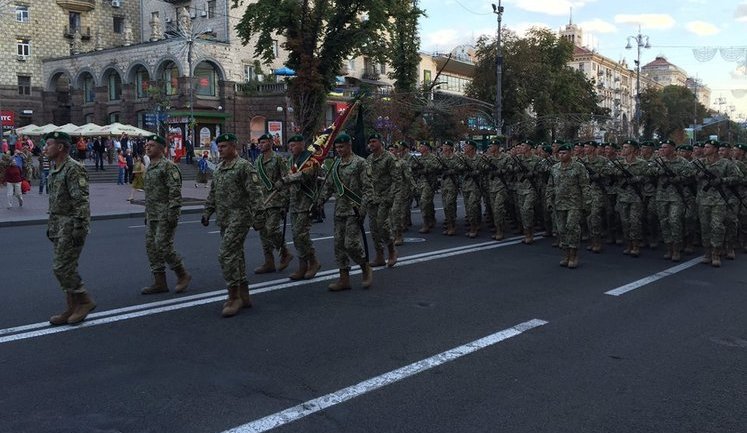
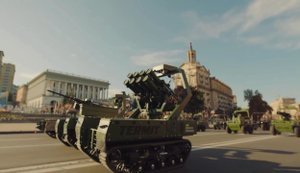
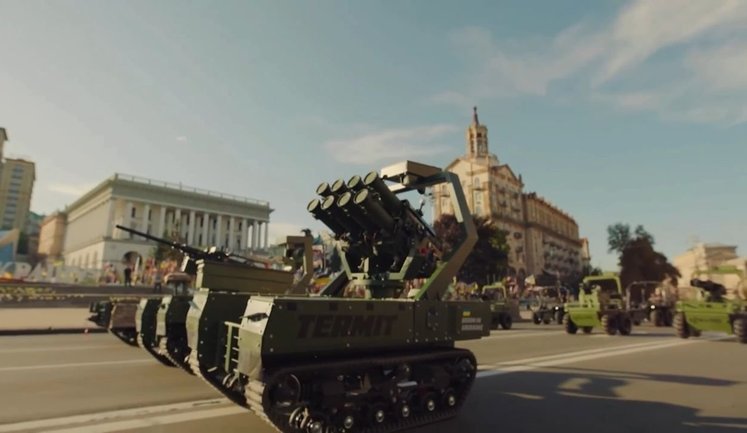
 World’s first parade of military unmanned systems and UGVs took place in Kyiv. VIDEO An unprecedented display of the latest defence technologies took place in the Ukrainian capital on Independence Day. 17 352 90 Previously in trend: Independence Day Unmanned technologies
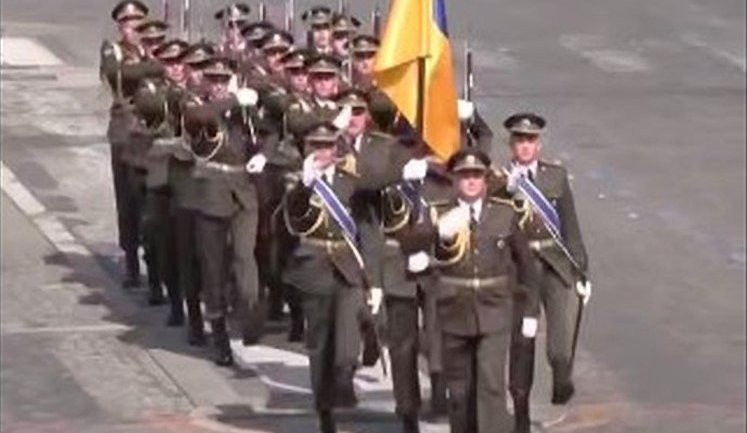
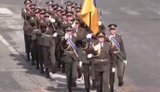 Ukrainian troops take part in military parades in France and Belgium. VIDEO This July, Ukrainian troops took part in major military parades in France and Belgium. 2 084 32 Previously in trend: France’s aid to Ukraine Aid from Belgium
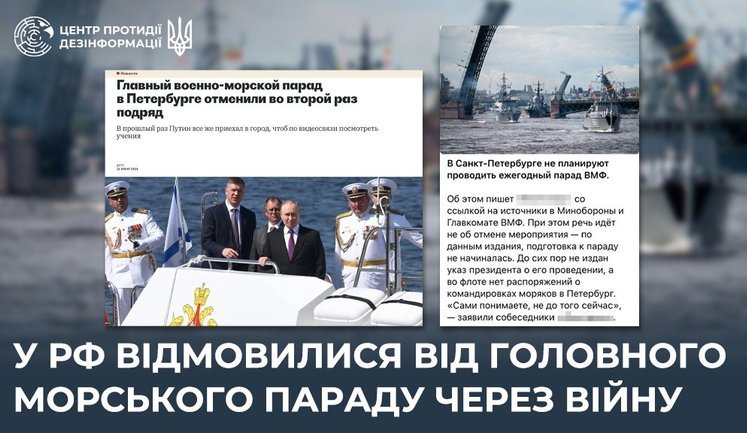
 Russian Federation’s main naval parade in St Petersburg is unlikely to take place this year, - CCD. PHOTO Russia’s main naval parade in St Petersburg, which the Kremlin has used for years to demonstrate its "military might", is unlikely to take place this year. The event on the Neva River has been cancelled for the second year running. 1 291 11
 Putin’s main naval parade has been cancelled: ships will not be risking journey to St Petersburg, - Russian media For the second year running, Russia has been forced to cancel its main naval parade in St Petersburg – one of the Kremlin’s most high-profile propaganda events. This year, preparations for the Navy Day celebrations have not even begun. 1 999 17 Previously in trend: Russia canceled Parade on the Navy day
 Sybiha spoke about request not to attack Russia on 9 May Foreign Minister Andrii Sybiha stated that foreign countries had asked Ukraine not to launch strikes on Russian territory during the May 9 parade. 2 436 27 Previously in trend: 9th May in Russia Putin announces truce for 9 May
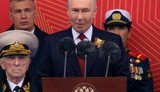 "Russia has one goal – victory in war against Ukraine," — Putin at parade in Moscow On May 9, Russia held a parade to celebrate "Victory Day," for which the Kremlin had requested a ceasefire. Dictator Putin expressed his conviction that victory in wars "has always belonged to Russia and always will." 18 227 100 Previously in trend: Putin’s statements about Ukraine 9th May in Russia Putin’s aims in Ukraine
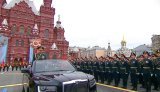 This year’s parade in Moscow could be most modest in history, — CNN This year’s Russian parade on 9 May, traditionally used as a display of the Kremlin’s military might, is taking place on a significantly reduced scale. 6 232 31 Previously in trend: 9th May in Russia
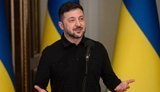 Ukraine officially allows Russia to hold May 9 parade – Zelenskyy’s decree President of Ukraine Volodymyr Zelenskyy has issued an official decree allowing Russians to hold a parade in Moscow on May 9. 23 709 286 Previously in trend: 9th May in Russia
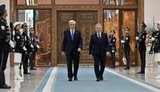 Presidents of Kazakhstan and Uzbekistan to attend military parade in Moscow President of Kazakhstan Kassym-Jomart Tokayev and President of Uzbekistan Shavkat Mirziyoyev will travel to the Russian capital for the military parade on May 9. 2 711 26 Previously in trend: 9th May in Russia
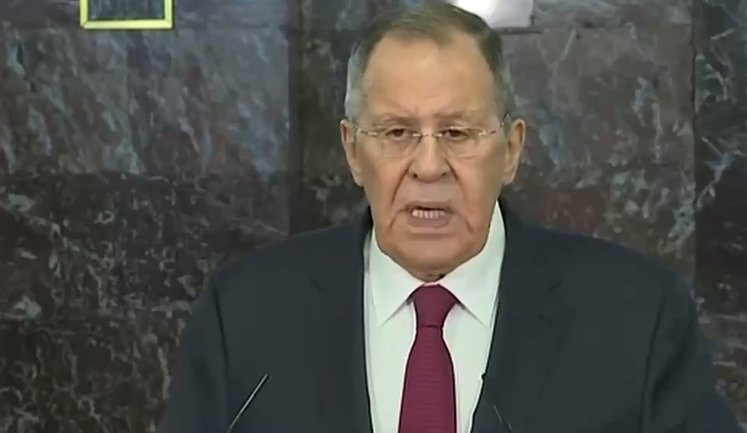
 Lavrov threatens retaliation for strikes on 9 May: "There will be no mercy". VIDEO Russian Foreign Minister Sergey Lavrov has stated that the West wants to disrupt the 9 May celebrations in Russia with the help of Ukraine. 10 598 114 Previously in trend: 9th May in Russia
 In Russia’s Perm, 9 May parade canceled amid Defense Forces’ attack on local refinery A 9 May parade has been canceled in Russia’s Perm this year. 1 102 10 Previously in trend: 9th May in Russia
 Dodik, Fico and Lukashenko: Kremlin names foreign guests coming to Moscow on May 9 A list of the heads of foreign delegations arriving in Moscow for the "Victory Day" celebrations has been published. 6 949 41 Previously in trend: 9th May in Russia Fico is going to Moscow on 9th May
 Kremlin is deploying air defence forces to Moscow for parade. This paves way for Ukraine to impose far-reaching sanctions, — Zelenskyy According to Ukrainian intelligence, the Kremlin is transferring air defense systems from other regions of Russia to Moscow, where a military parade is scheduled for May 9. Ukraine may impose new "long-range sanctions." 4 037 38 Previously in trend: 9th May in Russia
 Fico says he is going to Moscow to meet Putin but will skip 9 May parade Slovak Prime Minister Robert Fico said he would visit Moscow on 9 May and meet with Russian dictator Putin. At the same time, Fico says he will not take part in the military parade. 1 731 17 Previously in trend: Fico is going to Moscow on 9th May
 Russia has threatened Ukraine with "retaliation" if there are "provocations" by Ukrainian Armed Forces during parade in Moscow on 9 May Ukrainian President Volodymyr Zelenskyy stated yesterday that Ukrainian drones could fly over Moscow during the military parade on May 9. In response, Andrey Kolesnik, a member of the Russian State Duma’s Defense Committee, warned that if the Ukrainian Armed Forces attempt to attack the parade,... 7 473 59 Previously in trend: 9th May in Russia Putin’s threats
 Russia is afraid that Ukrainian drones might fly over Red Square on May 9, - Zelenskyy President Volodymyr Zelenskyy stated that Russia is not as strong as it once was, so it is important to keep up the pressure on it. 3 613 35 Previously in trend: 9th May in Russia
 Czech Republic allowed Fico’s plane to fly to Moscow for parade - Czech Foreign Ministry The Ministry of Foreign Affairs of the Czech Republic has confirmed that it granted permission for the flight of Slovak Prime Minister Robert Fico’s plane during his trip to Moscow on the eve of May 9. 2 610 35 Previously in trend: 9th May in Russia Fico is going to Moscow on 9th May
 Kallas on parade in Russia without heavy equipment: This says lot about course of war EU High Representative Kaja Kallas commented on Russia's decision to hold a parade on May 9 without heavy military equipment. 14 265 6 Previously in trend: 9th May in Russia
Fico is indeed flying to Moscow: Kremlin has confirmed his participation in 9 May parade Slovak Prime Minister Robert Fico will visit Moscow and attend the military parade on May 9. 2 230 31 Previously in trend: Fico is going to Moscow on 9th May
 Fico will not participate in parade in Moscow, but plans trip to Russia Slovak Prime Minister Robert Fico will not attend the military parade in Moscow marking the anniversary of World War II, but he is not canceling his visit to Russia. 3 132 32 Previously in trend: Fico is going to Moscow on 9th May Meeting between Putin and Fico
 For first time, Russia cancele Navy Day parade for security reasons, - British intelligence For the first time, the Russian Navy Day parade has been completely canceled in Russia, most likely due to security measures. 3 106 17 Previously in trend: Russian Navy
 Kremlin tower falls from truck platform during parade in Khabarovsk Krai, Russia: "Oh, f#ck!". VIDEO During a parade on 9 May in the Khabarovsk region of Russia, the main Kremlin tower, Spasskaya, fell from a truck platform. 19 981 82 Previously in trend: 9th May in Russia
 With May 9 parade, Putin is trying to hide economic downturn and mobilize support for war - NYT The Kremlin seeks to turn the May 9 parade into a symbol of its geopolitical resilience and link the historic triumph to the current war against Ukraine. However, behind the outward pomp is deep economic instability and limited progress on the frontline. 5 190 38
 Vucic’s plane made emergency landing in Baku "due to hostilities between Russia and Ukraine", - Serbian media Serbian President Aleksandar Vucic was forced to make a temporary landing in the Azerbaijani capital, Baku, because of the threat of a flight to Russia. 4 311 29 Previously in trend: 9th May in Russia
 Military of 13 countries to take part in Moscow parade, DPRK not among them The military from 13 countries will take part in the parade in Moscow on May 9, while the North Korean military is not represented in the event. 17 481 88 Previously in trend: 9th May in Russia
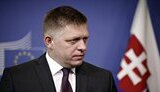 Together with Fico, several other representatives of Slovakia will travel to Moscow on May 9 In addition to Prime Minister Robert Fico, several other representatives of Slovakia will attend the so-called Victory Day parade in Moscow on May 9. 2 286 22 Previously in trend: 9th May in Russia
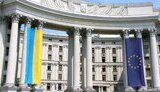 Foreign Ministry calls on countries around world not to participate in military parade in Moscow: Occupiers and war criminals will march there During Russia's full-scale invasion of Ukraine, Russian soldiers committed hundreds of thousands of war crimes, including killing 620 people, wounding almost 2,000, and deporting at least 20,000 Ukrainian children. 1 816 21 Previously in trend: 9th May in Russia
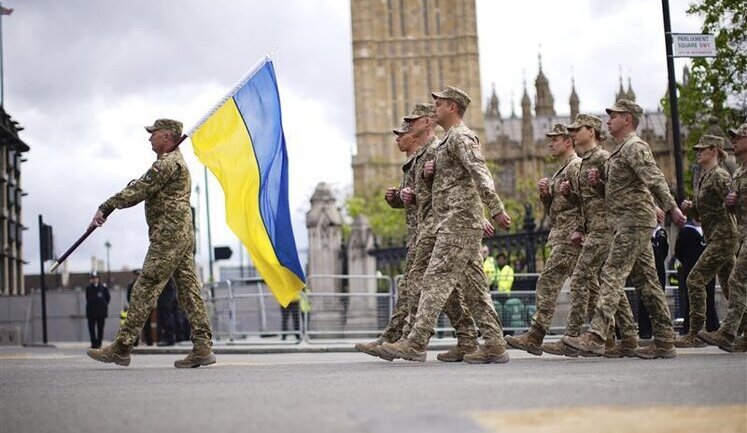
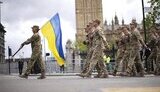 Ukrainian servicemembers take part in military parade in London. PHOTOS Ukrainian servicemembers undergoing training in the United Kingdom took part in a military parade marking Victory in Europe Day. The celebration took place in London. 10 561 22
 Peskov calls UK’s invitation to Ukrainian troops for military parade "disrespectful" and "blasphemous" The Kremlin has expressed dissatisfaction with the invitation of the Ukrainian Armed Forces to the parade in the UK on the occasion of the Victory Day in Europe, which will take place on May 5. 78 866 149 Previously in trend: AFU were invited to parade to the UK
 Ukraine cannot guarantee other countries security at parade in Moscow - Zelenskyy Ukraine cannot be held responsible for what will happen in Russia on May 9, the day of the parade to which Moscow has invited foreign guests. 16 131 79 Previously in trend: 9th May in Russia
 EU member states will face consequences if they decide to take part in May 9 parade in Moscow - Kallas The head of the EU diplomacy, Kaja Kallas, said that EU member states will face consequences if they decide to take part in the May 9 parade in Moscow. 2 879 14 Previously in trend: 9th May in Russia
 In US they plan to hold military parade on Trump’s birthday - Hill The White House plans to hold a military parade in Washington on 14 June to mark Donald Trump's 79th birthday. 4 860 87
 Fico says he will fly to Moscow for May 9 parade at Putin’s invitation Slovak Prime Minister Robert Fico said he had accepted Russian dictator Vladimir Putin's invitation to come to Moscow for the May 9 parade. 3 855 68
 None of ships reported by Ukraine to have been destroyed or damaged were shown at naval parade in Russia - BBC Only two ships of the Black Sea Fleet were demonstrated at the naval parade dedicated to the Russian Navy Day on Sunday, 28 July. None of the ships claimed to have been destroyed or damaged by Ukraine took part in the parade. 11 415 41
 Putin’s last parade, revival of Nazism, potatriot’s life hacks A selection of photo jokes from Censor.NET 11 716 6 Previously in trend: Political collages
 Truncated parade in Moscow may reflect Russia’s problems in providing for its troops, - NYT The annual parade on May 9 in Moscow is traditionally a grand spectacle designed to demonstrate Russia’s military power. This year, however, there was a lot missing. 9 426 84
 "Marine parade in honor of Victory Day": Tyumen walruses with tricolors and portraits of veterans swim in river. VIDEO The walruses of Tyumen, Russia, organised a swim with tricolours and portraits of veterans in a local pond to mark Victory Day. 10 457 55 Previously in trend: War
 MFA on participation of leaders of number of countries in parade in Moscow: display of contempt for people of Ukraine, who are fighting for freedom Ukraine sees the participation of the Prime Minister of Armenia, the presidents of Kazakhstan, Kyrgyzstan, Tajikistan, Turkmenistan and Uzbekistan in the "victory parade" in Moscow as an immoral and unfriendly step. 29 468 167
 On May 9, Kremlin may stage provocations in Russian cities, - General Staff Provocations may be arranged in Russian cities where parades are planned for 9 May. 5 108 22 Previously in trend: Russian aggression against Ukraine
 Kazakhstan will not hold parade on May 9 due to "calculation of budget savings" Kazakhstan will not hold a military parade on Victory Day this year to save budget funds. 4 027 41
 In Moscow, parade was canceled until May 1 - they are afraid of terrorist attacks The authorities of Moscow refused to hold a parade on May 1 due to the alleged "increased level of terrorist danger". 7 804 68
 National Security and Defense Council called "non-flying weather" manipulation at parades in Russia The Center for Combating Disinformation at the National Security and Defense Council of Ukraine called the cancellation of the aviation part of the May 9 parade in Russia due to "bad weather" a manipulation. 11 640 13
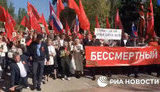 In Kherson, occupiers tried to organize "parade". Only few hundred people managed to gather. PHOTOS In order to provide a picture for Russian propagandists, the invaders had to bring to Kherson a plot of land from the occupied Crimea. Not even the occupying "mayor" appeared. 25 098 56 Previously in trend: Occupied territories - Crimea and Donbas
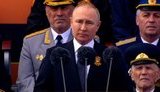 Putin didn't announce general mobilization at parade in Moscow The president of the aggressor state called the full-scale invasion of Ukraine "the only right decision" and "a preventive deterrent to aggression." 17 211 74 Previously in trend: War
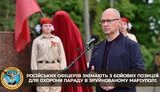 Russian officers are being removed from combat positions to guard "parade" in ruined Mariupol. Intelligence released list According to intelligence, the entire command staff of the 71st Motorized Rifle Regiment of the occupying forces will be forced to guard the Kremlin assassins, rapists, and false propagandists in Mariupol. 8 079 10 Previously in trend: War
 We expect provocations or intensification of enemy shelling on May 9, - spokesman of Ministry of Defense Motuzyanyk In connection with the May 9 celebrations in Russia, provocations or intensification of shelling by the Russian army are expected in Russia. 3 535 9 Previously in trend: War
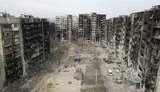 Russian occupiers are preparing to "celebrate" May 9 in Mariupol instead of Donetsk, - intelligence Ukrainian intelligence reports that the occupiers plan to "celebrate" Victory Day in ruined Mariupol instead of Donetsk, and Russian propagandists also say that May 9 will be a "holiday" in the occupied Mykhailivka, Zaporizhia region. 8 216 51 Previously in trend: War
 Team Zelenskyi reveal new format of Independence Day celebrations Head of the President's Office of Ukraine, Andrii Bohdan, has elaborated on the new format of Independence Day celebrations set to be introduced this year. 19 175 359
Page 1 of 2
more news