ENG




9661 visitors online
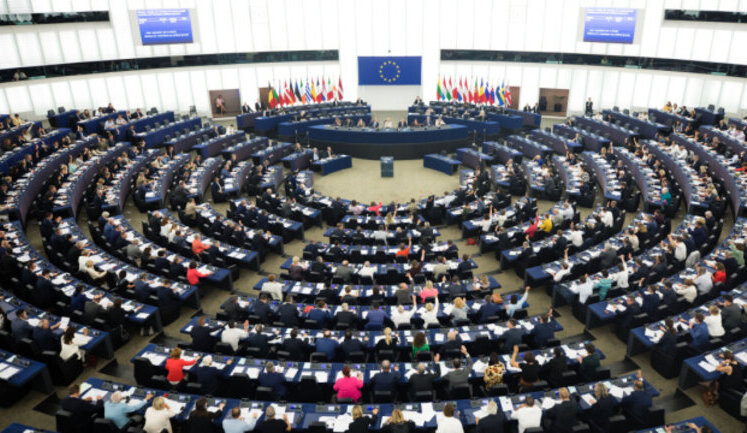
The European Parliament has voiced strong reactions to recent global developments. Bernd Lange, chair of the Committee on International Trade, criticized US President Trump's imposition of increased tariffs on European cars, labeling them unacceptable under international trade obligations. Meanwhile, in a significant move, the Parliament adopted a resolution to expedite the establishment of a Special Tribunal to address Russia's ongoing aggression against Ukraine, urging the EU to join efforts to ensure accountability. These actions highlight the European Parliament’s commitment to upholding international law and trade balance, while simultaneously addressing geopolitical conflicts and human rights violations.
What is the European Parliament's stance on US tariffs?
The European Parliament, through Bernd Lange, has criticized the US tariffs on EU cars as unacceptable. The criticism focuses on the violation of international trade obligations, despite the EU adhering to its commitments. This stance reflects the ongoing tension in EU-US trade relations, highlighting the need for balanced trade agreements and mutual respect for international trade rules.
Why does the European Parliament want a tribunal on Russian aggression?
The European Parliament seeks to establish a tribunal to address Russia's aggression against Ukraine to ensure accountability and justice. This move is part of broader efforts to respond to ongoing attacks on civilians and uphold international law. The tribunal aims to bring justice to victims and prevent further aggression, underscoring the EU's commitment to international peace and security.
What are the implications of European Parliament's resolution on Russia?
The resolution by the European Parliament has significant implications, including increased pressure on Russia for its actions in Ukraine. It calls for international cooperation to hold Russia accountable, potentially leading to diplomatic and economic consequences. The resolution reflects the EU's strategic approach to geopolitical stability and reinforces its role in global justice and human rights advocacy.
How do these decisions reflect on EU's international relations policy?
The European Parliament's stance on US tariffs and Russian aggression underlines its commitment to fair trade practices and international justice. These decisions are part of a larger strategy to uphold the EU's values of democracy, human rights, and rule of law. By addressing these issues, the EU seeks to strengthen its international relations framework and establish itself as a global leader in promoting stability and justice.
How might US-EU trade relations evolve after this criticism?
The European Parliament's criticism of US tariffs could strain US-EU trade relations, potentially leading to negotiations or retaliations. However, both parties may seek to resolve disputes through diplomatic channels to maintain beneficial trade ties. The outcome will depend on the willingness of both sides to address trade imbalances and adhere to international trade norms.
News European Parliament
 European Parliament has approved funding for testing of defence projects in Ukraine The European Parliament has approved amendments as part of the Omnibus V package, which will allow expenditure on testing defence projects in Ukraine to be funded from the European Defence Fund. 781 2 Previously in trend: Defense Forces funding
 European Parliament has called on Ukrainian authorities to refrain from political persecution and sanctions against opposition In a resolution dated July 8, the European Parliament called on the Ukrainian authorities to uphold the rule of law and refrain from politically motivated prosecutions. 7 054 44 Previously in trend: Ukraine EU accession
 IOC’s decision on Russia runs counter to logic behind sanctions, - Vlasiuk The International Olympic Committee’s decision to temporarily reinstate the Russian Olympic Committee’s membership runs counter to the logic of international sanctions. 1 043 10 Previously in trend: Return of Russian athletes to international competitions
 Will European Parliament support former Polish PM Morawiecki’s call to recognize UPA as "Nazi organization"? Vote in Censor.NET’s Telegram channel Polish MEPs from the European Conservatives and Reformists party are demanding that UPA (Ukrainian Insurgent Army) be recognized as a "Nazi organization." 2 873 46 Previously in trend: Poland and Ukraine relationship Scandal involving unit named after Heroes of the Ukrainian Insurgent Army
 European Parliament is ready to discuss Merz’s proposal on Ukraine’s European integration The European Parliament has described German Chancellor Friedrich Merz’s proposal regarding Ukraine’s "associated membership" as a basis for discussion among EU leaders. 1 256 3 Previously in trend: Ukraine EU accession
 European Parliament reacts to Trump’s new tariffs: "While EU is fulfilling its obligations, US continues to violate them" Bernd Lange, chair of the European Parliament’s Committee on International Trade, has called US President Donald Trump’s increase in tariffs on cars from the EU unacceptable. 2 714 9 Previously in trend: Trumps tariffs
 European Parliament adopts resolution on tribunal for Russia and calls on EU to join and finalize its creation Today, 30 April, during a plenary session, the European Parliament adopted the resolution "Ensuring accountability and justice in response to Russia’s ongoing attacks against civilians in Ukraine." The resolution calls on the EU to join and finalize the creation of a tribunal on Russia’s crime... 771 1 Previously in trend: special tribunal for the crimes of the Russian Federation
 On 30 April, European Parliament will vote on resolution regarding tribunal on Russian aggression, — media The European Parliament plans to vote on a resolution at its plenary session in Strasbourg on April 30 calling for the swift establishment of a Special Tribunal on the crime of aggression against Ukraine. 633 0 Previously in trend: special tribunal for the crimes of the Russian Federation
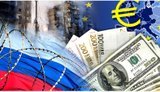 EU may join reparations commission for Ukraine This week, the European Parliament will consider the European Union’s accession to an international mechanism intended to serve as a key instrument for securing reparations from Russia for Ukraine. 1 086 1 Previously in trend: Losses due to Russian aggression International Register of Damage
 Zelenskyy to receive the European Order of Merit President of Ukraine Volodymyr Zelenskyy has become one of the first recipients of the European Order of Merit. 3 590 75
 EU may freeze approval of trade agreement with US due to "chaos" caused by Trump’s tariffs The European Parliament may suspend ratification of the trade agreement with the US due to chaos in the customs policy of Donald Trump's administration. 2 470 20 Previously in trend: Trumps tariffs
European Parliament approved 90 billion euro loan to Ukraine The European Parliament supported the European Commission's proposal to grant Ukraine a loan of €90 billion. 3 578 33 Previously in trend: Aid to Ukraine from Europe
 Politico: European Parliament fails to reach agreement on EU-US trade deal Members of the European Parliament's Committee on International Trade were unable to agree on a common position on the trade agreement between the European Union and the United States. 1 241 5 Previously in trend: US-EU trade agreement
 Threats from US regarding Greenland do not enhance security in Arctic, - European Parliament President Metsola The European Union supports the sovereignty of Denmark and the people of Greenland. Threats from the United States do not contribute to dialogue and security in the Arctic. 814 1 Previously in trend: US control over Greenland
European Parliament is preparing to approve "reparation loan" to Ukraine under accelerated procedure The European Parliament intends to apply the so-called urgency procedure to speed up the adoption of a "reparation loan" to Ukraine. This may happen after EU leaders agree on the use of frozen Russian assets for the benefit of Ukraine. 932 1 Previously in trend: Use of frozen assets of Russian Federation
 EU sanctions on Russia should only be lifted after peace deal with Ukraine is agreed, says European Parliament On 27 November, the European Parliament adopted a resolution titled "On the EU position on the proposed peace plan and the EU’s involvement in achieving a just and lasting peace for Ukraine". 1 276 15 Previously in trend: US peace plan
European Parliament will consider Ukraine’s inclusion in European Defense Fund by end of 2025 A draft EU legislative act providing for Ukraine's inclusion in the European Defense Fund will be put to a vote in the European Parliament by the end of 2025. 575 0 Previously in trend: Integration of Ukraine into the EU defense system
 Hungary says European Parliament is "politically motivatedly attacking" over its stance on war in Ukraine Hungarian MEP Kinga Gál from the Fidesz party said that the European Parliament’s adoption of a report on Hungary’s breaches of EU values is a "politically motivated attack" over Budapest’s stance on the war in Ukraine. 1 263 8 Previously in trend: Anti-Ukrainian statements in Hungary
European Parliament backs ban on gas and oil imports from Russia The European Parliament has backed proposals providing for the European Union’s complete phase-out of Russian energy resources. 1 899 15 Previously in trend: EU’s rejection of Russian energy resources
 Financing Ukraine strengthens its defence and Europe’s stability, - Metsola Without Ukraine's support, measures to strengthen Europe's stability will lose their meaning. 570 10 Previously in trend: EU support for Ukraine
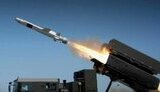 European Parliament resolution: Ukraine should strike deep into Russian territory with Western weapons Members of the European Parliament have adopted a resolution calling for the removal of restrictions on Ukraine’s use of Western weapons to strike military targets inside Russia. They also voiced support for using frozen Russian assets to assist Ukraine. 5 858 33 Previously in trend: strikes on russia Striking Russia
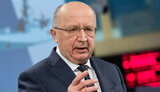 Kubilius to the Europeans: Prepare to surrender if you want peace on Putin’s terms European Commissioner for Defense and Space Andrius Kubilius warned that Europe must step up its defense efforts, as any agreement to "peace on Russia's terms" would amount to de facto surrender. 2 719 15 Previously in trend: Security of Europe Threat of Russian agression to EU
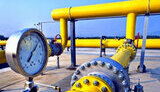 European Parliament considers speeding up phase-out of Russian oil and gas imports – Bloomberg The European Parliament is considering accelerating the phase-out of Russian oil and gas imports. 927 2 Previously in trend: refusal from Russian gas EU’s rejection of Russian energy resources
44 MEPs demand ban on Russian steel imports European politicians and steel companies are demanding a complete ban on imports of slabs and pig iron from Russia. 692 1
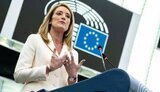 Europe will strengthen humanitarian, military, and diplomatic support for Ukraine, - Metsola Europe will continue to weaken Russia's military machine through coordinated and tough sanctions. 538 0 Previously in trend: Support for Ukraine
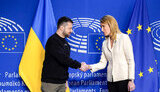 Zelenskyy and MEP President Metsola discuss EU membership and sanctions against Russia President of Ukraine Volodymyr Zelenskyy met with President of the European Parliament Roberta Metsola. 485 1
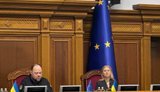 Permanent Representation of European Parliament to be opened in Kyiv - Metsola European Parliament President Roberta Metsola announced the opening of a permanent representation of the European Parliament in Kyiv. 682 3 Previously in trend: Meсola’s visit to Ukraine
 President of European Parliament Metsola arrived in Kyiv on visit. PHOTO The President of the European Parliament, Roberta Metsola, has arrived in Kyiv on a visit. 1 465 1
 European Parliament to consider two votes of no confidence in von der Leyen - Politico In early October 2025, the European Parliament intends to vote for two votes of no confidence in European Commission President Ursula von der Leyen. 3 790 19 Previously in trend: vote of no confidence von der Leyen
 Europe must protect Ukraine’s airspace, - MEP Hayer The incident with the violation of the airspace of Poland, a NATO country, only confirmed that Ukraine's security is the security of the entire EU. Europe must do more to protect Ukrainian airspace. 971 9 Previously in trend: Ukrainian Air defence Shaheds flew into Poland
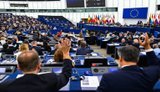 European Parliament adopts resolution on Ukraine: key messages Petro Poroshenko, who is in Strasbourg, reported on the key messages in the European Parliament's resolution that has just been adopted. It is about increasing aid for arms production, opening accession negotiations and supporting democracy in Ukraine. 2 891 10
Confiscating Russian frozen assets cannot be taboo anymore, - European Parliament The Group of Socialists and Democrats in the European Parliament has called for more decisive pressure on Russia and advocated the confiscation of frozen Russian assets. 1 454 4 Previously in trend: confiscation of frozen assets
European Parliament calls on Hungary and Slovakia to stop blocking EU sanctions against Russia The European Parliament calls on Hungary and Slovakia to cease blocking the implementation of European Union sanctions against Russia. 1 475 18 Previously in trend: EU sanctions against Russia
 Russian Federation does not give right to be Ukrainians in occupied territories — Austrian MEP The European Parliament should declare the need to send international observers, whether representatives of the Red Cross or another humanitarian organization, to the temporarily occupied territories of Ukraine and thus contribute to stopping the Russian Federation's practice of persecuting... 1 786 11 Previously in trend: Occupied territories - Crimea and Donbas
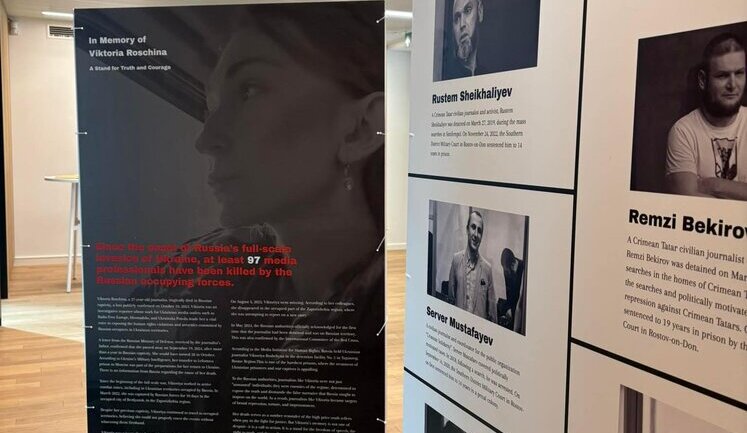
 Photo exhibition dedicated to Ukrainian journalists held in Russian captivity opened in European Parliament. PHOTO The Imprisoned Freedom photo exhibition dedicated to Ukrainian journalists illegally held in Russian captivity was opened in Brussels. The opening took place in the European Parliament's information hub. 896 0 Previously in trend: Ukrainian journalists in Russian captivity
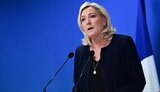 Le Pen found guilty of embezzlement of European Parliament funds National Front leader Marine Le Pen and eight other MEPs have been found guilty of embezzlement. 4 658 18 Previously in trend: Embezzlement of funds
European Parliament opposes forcing Ukraine to surrender to Russia On March 12, the European Parliament adopted a resolution condemning any attempts to blackmail Ukraine into surrendering to Russia in order to announce a peace agreement. 3 074 16 Previously in trend: ukraine’s surrender to russia
EU defense capability and support for Ukraine: Debate in European Parliament Today, March 11, the European Parliament held a debate on security issues and strengthening the EU's defense capabilities, as well as support for Ukraine. 1 097 9 Previously in trend: EU support for Ukraine
Ukraine is fighting for Europe, so Europe will be with Ukraine – Metsola Ukraine is fighting for Europe, and Europe needs to be together with those who are fighting for its security and values. 1 545 6 Previously in trend: Support for Ukraine Special summit
European Parliament does not recognize upcoming elections in Belarus, supporting sanctions against Lukashenko The European Parliament has overwhelmingly adopted a resolution calling on EU countries and the international community not to recognize the "presidential elections" scheduled for January 26 in Belarus. 1 036 9
Metsola: We have to increase our support. Only strong Ukraine can speak from position of strength President of the European Parliament Roberta Metsola called for increased support for Ukraine, as only a strong Ukraine can speak from a position of strength. 713 1
 European Parliament to set up special committee to counter disinformation Starting next year, the European Parliament will have a special committee on the European Shield of Democracy. It aims to counteract information interference and fight disinformation. 373 0
 All frozen assets of Russia should be used for weapons for Ukraine, - MEP Loizeau About three hundred billion dollars of frozen Russian assets should be given to Ukraine so that it can use these funds to arm itself and win the war against Russia. This amount can then be credited as reparations to Russia if the latter refuses to pay them. 735 4
 MEP Metsola calls for supplying Taurus to Ukraine Against the backdrop of Russia's escalating attacks on Ukraine, European Parliament Speaker Roberta Metsola called for the speedy delivery of German Taurus cruise missiles to Ukraine. 1 624 9 Previously in trend: War
 Ukraine deserves to make 2025 year of peace, - Zelenskyy in European Parliament On Tuesday, November 19, President of Ukraine Volodymyr Zelenskyy took part in an extraordinary plenary session of the European Parliament dedicated to 1000 days since the beginning of the full-scale war. 1 436 15 Previously in trend: War
Metsola in 1000 Days of Russian War: We will continue to support Ukraine today, tomorrow and every day, as long as it takes During an extraordinary meeting of the European Parliament on the occasion of 1000 days since the beginning of Russia's full-scale invasion of Ukraine, President of the European Parliament Roberta Metsola assured of continued support for Ukraine. 730 0 Previously in trend: Russian aggression against Ukraine War
 Zelenskyy to speak via video link at European Parliament special session on occasion of 1000 days of Russia’s war against Ukraine A special session of the European Parliament will be held on Tuesday to mark the 1000th day of Russia's war against Ukraine. President of Ukraine Volodymyr Zelenskyy will take part in it via video link. 1 005 15
 European Parliament demands tougher sanctions against Russia’s "shadow fleet" - resolution On Thursday, November 14, the European Parliament adopted a resolution demanding targeted sanctions against Russia's so-called shadow fleet. 710 1
Page 1 of 6
more news