ENG




16415 visitors online
Ukraine faces increased pressure in maintaining its territorial integrity amid ongoing tensions with Russia. European leaders, such as Kaja Kallas, have warned against giving into territorial concessions that could lead to unjust peace. The sentiment is echoed by Ukrainian President Zelenskyy, who asserts the inviolability of Ukraine's borders, refusing proposals that undermine sovereignty. The US faces scrutiny for suggesting security guarantees in exchange for Ukraine's territorial concessions, a move opposed by both Kyiv and the EU, highlighting the complex dynamics in peace negotiations. Maintaining inviolability remains vital for Ukraine's future.
What is the current situation regarding Ukraine's territorial integrity in peace talks?
Ukraine remains steadfast in refusing to cede any part of its territory to Russia in ongoing peace negotiations. This position is reinforced by Ukrainian President Zelenskyy, who stresses that any compromise should not come at the cost of Ukraine's sovereignty. European and international allies also support Ukraine's territorial inviolability, ensuring that peace talks do not compromise the nation's boundaries or reward aggression.
What are the international responses to Ukraine being pressured into territorial concessions?
International responses have shown substantial support for Ukraine maintaining its territorial integrity. European leaders, including EU's Kaja Kallas, have expressed concerns over pressuring Ukraine into territorial concessions, highlighting that such moves would reward Russian aggression and potentially violate international laws. There are calls for peace processes that respect Ukraine's sovereignty without compromising its borders.
How does President Zelenskyy view potential territorial concessions in peace agreements?
President Zelenskyy firmly opposes any territorial concessions in peace agreements with Russia. He emphasizes that maintaining Ukraine's territorial integrity is non-negotiable, asserting that compromises must not undermine the nation's sovereignty or reward aggression. Zelenskyy insists that any peace talks should align with international law and prioritize Ukraine's territorial inviolability.
What role does international law play in the inviolability of Ukrainian territories?
International law plays a crucial role in the inviolability of Ukrainian territories. It provides a framework that supports the sovereignty and territorial integrity of nations, prohibiting the forceful acquisition of land. Ukrainian officials and international allies advocate for solutions that comply with international standards, rejecting territorial concessions that could set dangerous precedents and destabilize global peace.
Are there any proposed solutions to address territorial issues in the Ukraine-Russia conflict?
Various solutions have been proposed to address territorial issues in the Ukraine-Russia conflict. Some international proposals suggest establishing demilitarized or economic zones to facilitate negotiations. However, Ukrainian leaders remain cautious, emphasizing solutions that do not compromise territorial integrity. Long-term peace requires respecting sovereignty, ensuring security, and adhering to international law in resolving disputes.
News inviolability of territory
 Certain ’major players’ want to replace me because I will never recognize any part of Ukraine as Russian territory, — Zelenskyy Ukrainian President Volodymyr Zelenskyy stated that he will not agree to recognize any part of Ukraine as Russian, even if an influential politician wants to replace him because of this stance. 4 395 55 Previously in trend: Zelenskyy on territorial concessions Territorial concessions
 "Anchorage agreements" are no longer subject of peace negotiations – Zelenskyy Recognition of Russia’s sovereignty over Crimea, the Donetsk and Luhansk regions, as well as the occupied parts of the Kherson and Zaporizhzhia regions, is no longer a subject of peace negotiations. 5 157 31 Previously in trend: Occupied territories - Crimea and Donbas Peace negotiations
 Putin is "patient zero" who must be stopped. He never has enough captured territory, Zelenskyy says Ukrainian President Volodymyr Zelenskyy said Russian dictator Vladimir Putin was always looking for pretexts for further aggression and posed a danger to the entire world. 3 492 23 Previously in trend: Zelenskyy on Putin Territorial concessions
 Return to normal life for Ukrainians is impossible without de-occupation of Crimea, - Zelenskyy A full return to normal life for the citizens of Ukraine after the war is impossible without the liberation of the Ukrainian Crimea, the restoration of security, the protection of people and a return to the fundamental principles of international law. 5 241 80 Previously in trend: Ukrainian Crimea Occupation of Crimea Crimea Platform Summit
 Kallas on concessions to Russia: It is not only about territories, but also about people who live there EU High Representative for Foreign Affairs Kaja Kallas has said that Ukrainians are the most interested in peace, but Russia currently shows no willingness to end the war and is further intensifying its attacks. 1 604 16 Previously in trend: Peace negotiations Territorial concessions
 Kushner: Territory remains most difficult issue in talks between Ukraine and Russia One of the US President’s envoys, his son-in-law Jared Kushner, has stated that the most difficult issue in the peace talks aimed at ending Russia’s war against Ukraine remains the question of territory. 7 445 117 Previously in trend: Peace negotiations Territorial concessions Witkoff’s visit to Ukraine
 Trump’s envoys bring updated versions of previous peace plans to Kyiv: Donbas remains main point of contention – FT US presidential special envoys Steve Witkoff and Jared Kushner brought updated versions of previous US peace proposals to Kyiv. The issue of territory in Donbas remains the key point of contention in the peace proposals. 9 212 55 Previously in trend: Ending the war Territorial concessions Witkoff’s visit to Ukraine
 Territorial issues can only be resolved at the leadership level, – Zelenskyy President Volodymyr Zelenskyy described the territorial issue as "complex" and stated that such matters can only be resolved at the leadership level. 9 066 114 Previously in trend: Zelenskyy on territorial concessions Territorial concessions
 Kellogg on Trump’s stance regarding Putin’s demands on Ukraine: "If you want land, fight for it" US President Donald Trump did not put pressure on Volodymyr Zelenskyy to have Ukraine voluntarily hand over the Donbas to Russia, as dictator Putin had wanted. Nor was he aware of the number of Ukrainian casualties during the Russian occupation of Crimea. 6 875 23 Previously in trend: Occupation of Crimea Territorial concessions Situation in the Donetsk region
 Women in Ukraine should be mobilised, as they are just as capable of fighting as men, - Kellogg The former special representative of US President Donald Trump for Ukraine, Keith Kellogg, has stated that Ukrainian women should be conscripted into the army, as they fight just as well as men. 10 345 89 Previously in trend: Mobilization of women to AFU Mobilisation in Ukraine
 Slovakia backs swift end to war without violating Ukraine’s territorial integrity – FM Slovak Foreign Minister Juraj Blanar said that Russia’s war against Ukraine must end as soon as possible in accordance with international law and the UN Charter, but without violating the territorial integrity of the Ukrainian state. 1 803 18 Previously in trend: Cooperation between Ukraine and Slovakia
 Russia wants our territory so it can seize territories of other states as well, - Zelenskyy President Volodymyr Zelenskyy noted that Ukraine always expresses its gratitude and clearly remembers who supported the country after the start of Russia’s full-scale invasion, and how. However, he stressed that "all partners must also remember that Ukraine is defending not only itself in this... 2 513 30 Previously in trend: Zelenskyy on territorial concessions
 Ukraine will not give up its territories. This is our history and our values, - Zelenskyy President Volodymyr Zelenskyy stated that Ukraine will not retreat from any of its territories, as that would be a betrayal of the people. 6 266 69 Previously in trend: Zelenskyy on territorial concessions Territorial concessions
 No one in Ukraine will ever agree to concede even single millimeter of our territory, - Budanov Kyrylo Budanov, Head of the Presidential Office, stated that Ukraine considers the United States a strategic ally. 2 785 47 Previously in trend: Kyiv security forum
 Putin wants more than just Donbas. Peace in Ukraine must be fair, — Kallas The European Union's High Representative for Foreign Affairs and Security Policy, Kaja Kallas, stated that the seizure of Donbas is not Russia's ultimate goal. 1 771 11 Previously in trend: Territorial concessions
 Kallas warned against Ukraine’s territorial concessions: U.S. approach is wrong, it is trap The European Union is concerned that the United States is pressuring Ukraine to give up territory in negotiations with Russia in exchange for security guarantees. 3 973 30 Previously in trend: Territorial concessions
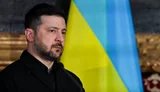 US ready to provide security guarantees if Ukraine hands over Donbas to Russia, - Zelenskyy Ukrainian President Volodymyr Zelenskyy has stated that the US is willing to provide Kyiv with security guarantees on condition that Ukrainian troops withdraw from the unoccupied parts of the Donetsk and Luhansk regions. 21 228 256 Previously in trend: Territorial concessions Security guarantees for Ukraine
 62% of Ukrainians oppose giving up Donbas in exchange for security guarantees – KIIS poll. INFOGRAPHICS Most Ukrainian citizens reject handing Donbas over to Russian control in exchange for security guarantees from the United States and Europe. 5 137 140 Previously in trend: Transfer of territories Territorial concessions
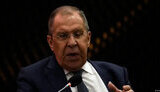 Russia will only be satisfied with entire Donbas region and change in current government in Ukraine, — Lavrov The Kremlin has stated that the Russian Federation seeks to "eliminate the root causes" of a full-scale war, and therefore Moscow will not accept a peace agreement that would allow the current government in Ukraine to remain in power. 9 342 87 Previously in trend: Territorial concessions Putin’s aims in Ukraine
 Russia will withdraw from peace talks if Ukraine does not give up Donbas, - Bloomberg In Russia, there is a growing belief that there is no point in continuing peace talks with Ukraine under the auspices of the United States if Kyiv is not prepared to cede territory in order to reach an agreement. 16 245 164 Previously in trend: Peace negotiations Territorial concessions
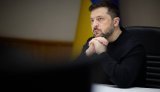 Zelenskyy on territorial concessions: Russia does not win, and Ukraine does not lose in war President Volodymyr Zelenskyy stated that Ukraine cannot regain its territories at this time, but Russia cannot win either. 2 915 39 Previously in trend: Peace negotiations Fighting in the east
Territorial issues should only be resolved at meeting with Putin, - Zelenskyy President Volodymyr Zelenskyy stated that issues regarding territories that cannot be agreed upon at the technical group level during peace talks must be resolved in a personal meeting with Kremlin leader Vladimir Putin. 2 641 63 Previously in trend: Territorial concessions Zelenskyy–Putin meeting
 Principle of "standing where we stand" is already big compromise in negotiations, - Zelenskyy President Volodymyr Zelenskyy has stated his readiness to compromise in negotiations, but not to the extent that would harm Ukraine's independence and sovereignty. 5 984 70 Previously in trend: Occupied territories - Crimea and Donbas Territorial concessions
 Ukrainians will not agree to peace deal that cedes Donbas to Russia – Zelenskyy President Volodymyr Zelenskyy is convinced that the Ukrainian people will reject a peace agreement that would include a Russian demand for the unilateral withdrawal of the Armed Forces of Ukraine from Donbas and the transfer of the region to Russia. 4 718 66 Previously in trend: Peace negotiations Zelenskyy on territorial concessions Territorial concessions
 Zelenskyy on "free economic zone" in Donbas: Ukraine must leave its territory — this is wrong President of Ukraine Volodymyr Zelenskyy once again spoke out against the creation of a so-called "free economic zone" in Donbas, an idea promoted by the United States as part of efforts to end Russia’s war. 4 079 29 Previously in trend: Zelenskyy on territorial concessions
 Neither Ukraine nor Russia are enthusiastic about idea of creating free economic zone in Donbas, - Zelenskyy The United States is proposing to create a so-called free economic zone as a buffer in the Donbas to end the Russian-Ukrainian war, but Ukraine is cautious about the idea. 2 944 20 Previously in trend: Territorial concessions buffer zone
 List of disputed issues on peace in Ukraine has narrowed significantly, but toughest remain – Rubio Marco Rubio said that after a year of United States negotiating efforts, the "checklist of outstanding issues" for reaching a peace deal between Ukraine and Russia has shrunk significantly, but the most difficult points remain unresolved. 5 947 36 Previously in trend: Peace negotiations Trilateral talks in the UAE
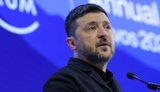 Without direct contact at leadership level, it is impossible to reach agreement on territorial issues, - Zelenskyy President Volodymyr Zelenskyy stated that territorial issues cannot be resolved by technical teams alone. He emphasized the need for direct contact at the leadership level. 8 507 141 Previously in trend: Peace negotiations Zelenskyy on territorial concessions
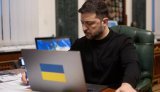 We are ready for compromises, but not those that lead to violation of territorial integrity, - Zelenskyy President Volodymyr Zelenskyy said that no compromise has been reached on Donbas yet. 1 869 21 Previously in trend: US peace plan Zelenskyy on territorial concessions
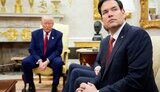 Rubio on Donbas issue in peace talks: "This is still bridge we haven’t crossed" U.S. Secretary of State Marco Rubio said Russia’s territorial claims to Donetsk Oblast are a key issue that remains unresolved in talks on ending the war in Ukraine. 4 244 40 Previously in trend: Peace negotiations Territorial concessions
 Germany criticises Russia for "stubborn insistence" on maximalist territorial demands German Foreign Minister Johann Wadephul condemned "Russia's stubborn insistence on a key territorial issue" following talks between Russian, Ukrainian, and American representatives in Abu Dhabi. 1 814 27 Previously in trend: Territorial concessions Trilateral talks in the UAE
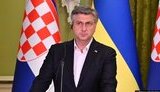 Croatian PM Plenković says Ukraine should never de jure give up occupied territories Croatian Prime Minister Andrej Plenković said that Ukraine should never de jure give up territories occupied by Russia, as this would amount to a reward for the aggressor. 1 198 10 Previously in trend: Territorial concessions Security guarantees for Ukraine
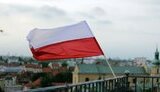 63% of Poles say Ukraine will be forced to cede part of its territory to Russia - poll Most Polish citizens pessimistically assess the outcome of Russia’s war against Ukraine and believe Kyiv will be forced to cede part of its territory. 3 244 78 Previously in trend: Territorial concessions Poll on war in Ukraine
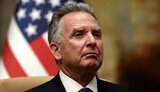 Witkoff on talks: territorial issue is most critical, we must reach compromises US President’s special envoy Steve Witkoff said significant progress had been made in peace efforts after the "Coalition of the Willing" meeting, but discussions on territories will continue. 3 213 49 Previously in trend: Territorial concessions Witkoff on peace talks
 Russian forces occupied about 4,300 sq km of Ukraine’s territory in 2025. INFOGRAPHICS In 2025, Russian forces captured more than 4,000 square kilometres of Ukrainian territory. 3 038 20 Previously in trend: Occupied territories - Crimea and Donbas Russian advance
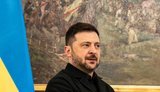 Zelenskyy ready to put peace plan to referendum if Russia agrees to ceasefire, - Axios President Volodymyr Zelenskyy said he is ready to put a U.S.-proposed peace plan to a referendum if Russia agrees to a ceasefire for at least 60 days. 8 171 120 Previously in trend: US peace plan Peace process
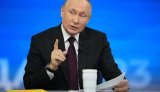 Russia allegedly agrees to temporary ceasefire to hold referendum on territories – Axios Russian representatives at the talks for the first time allowed the possibility of a temporary ceasefire in order to hold a referendum on the status of the territories. 8 822 80 Previously in trend: Territorial concessions ceasefire between Ukraine and Russia
 Serbian Minister Bratina apologizes for remark that Ukraine must "pay with territory for crimes" Serbia’s Minister of Information and Telecommunications, Boris Bratina, apologized to Ukraine for his statement claiming that Ukrainians, like Croats, had allegedly "paid with territory" for their "crimes." 6 503 29 Previously in trend: Occupied territories - Crimea and Donbas
 Trump declined to comment on what "free economic zone" in Donbas might look like US President Donald Trump believes that the peace agreement for Ukraine promoted by the US could work. According to him, many people want this. 6 062 47 Previously in trend: US peace plan Peace negotiations
 Zelenskyy on "free economic zone" in Donbas: Ukraine will not accept compromise from US President Volodymyr Zelensky believes that the US's "compromise vision" regarding control over Donbas in the event of a peace deal must be fair to Ukraine. 14 025 61 Previously in trend: US peace plan Peace negotiations
 US proposes demilitarised zone without requiring Russia to leave Donetsk and Luhansk regions, - FT The latest US proposals for a "peace plan" do not require Russia to withdraw its troops from the Donetsk and Luhansk regions, which are planned to be included in the demilitarised zone. 11 508 51 Previously in trend: Occupied territories - Crimea and Donbas
 Ukraine sends revised peace plan to US – Bloomberg Ukraine has sent a revised peace plan to Washington after US President Donald Trump held a phone call with European leaders. 4 775 16 Previously in trend: US peace plan
 Idea of swapping temporarily occupied parts of Donetsk region and ZNPP, proposed by partners, is not being considered, – Zelenskyy Ukraine has received a proposal from its partners to trade part of the temporarily occupied Donetsk region and the Zaporizhzhia Nuclear Power Plant for territories that Russia has not yet seized. Kyiv does not support this idea. 9 317 46 Previously in trend: Occupied territories - Crimea and Donbas Zelenskyy on the situation at the front
 Ukraine has no right "under the Constitution and moral law" to cede territory to Russia – Zelenskyy Ukraine has no right, "under the Constitution, international law and moral law", to cede territory to the aggressor state Russia as part of a peace agreement. 11 157 176 Previously in trend: US peace plan Zelenskyy on territorial concessions Territorial concessions
 Zelenskyy had difficult conversation with Witkoff and Kushner regarding territories, - Axios On Saturday, 6 December, President Volodymyr Zelenskyy held a two-hour telephone conversation with Donald Trump's advisers Steve Witkoff and Jared Kushner. The conversation focused on territorial issues and security guarantees for Ukraine. 15 974 91 Previously in trend: US peace plan Territorial concessions
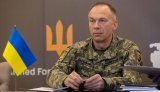 Simply giving up territory to Russia is unacceptable for Ukraine. It would be unjust peace, Syrskyi says It would be "unacceptable" for Ukraine to simply give up its territory in any peace deal with Russia. 4 112 42 Previously in trend: Territorial concessions
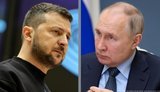 Russia still not ready to discuss any form of ceasefire, Ukraine not ready to cede territory – ABC News Russian dictator Vladimir Putin has made it clear he will not compromise on a "peace deal", believing he is making sufficient progress on the battlefield and is prepared to wait until Ukraine agrees to what he calls his "fair conditions". 6 961 38 Previously in trend: US peace plan
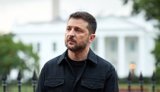 US peace plan for Ukraine has improved. Territorial issue remains toughest – Zelenskyy President Volodymyr Zelenskyy said that, following talks with the Americans, the peace plan on Ukraine now "looks better", but the territorial issue remains the most difficult one. 5 282 58 Previously in trend: US peace plan Territorial concessions
Page 1 of 4
more news