ENG




11507 visitors online
Volgograd has faced a series of drone attacks focusing primarily on its oil refineries, including the significant Lukoil facility. These attacks have resulted in substantial fires, severely damaging Russia's energy infrastructure. High-profile military targets, such as the Titan-Barrikady defense plant, were also struck by Ukraine's Defense Forces, using FP-5 Flamingo missiles. These coordinated strikes form part of a broader strategy to debilitate Russian military and logistical setups, further evidenced by the shutdown of the Volgograd airport and ongoing power outages across the region. The strategic targeting of crucial facilities is a critical move by Ukraine to leverage vulnerabilities in the military-industrial complex within Volgograd.
What impact have the drone attacks had on Volgograd's infrastructure?
The drone attacks on Volgograd have caused serious damage to its infrastructure, particularly targeting oil refineries and military facilities. Fires have erupted, and key operations at the Lukoil oil refinery have been disrupted, reflecting a significant hit to Russia's energy and military capabilities.
Why are the oil refineries in Volgograd being targeted?
The oil refineries in Volgograd are critical to Russia's energy supply chain, making them strategic targets to weaken Russia's economic strength. Their disruption can significantly impact Russia's operational capabilities, especially regarding military logistics and fuel supplies.
How has Ukraine's Defense Forces contributed to the attacks in Volgograd?
Ukraine's Defense Forces have significantly contributed by targeting Volgograd's strategic locations using missiles and drones. They aim to undermine Russian military strength and disrupt logistical support, as seen in the successful strikes on military-industrial sites and energy facilities in the region.
What are the consequences of the attacks on Volgograd's military targets?
The attacks on Volgograd's military targets have likely led to considerable setbacks for Russian defense operations. Strikes on facilities like the Titan-Barrikady defense plant impact production capabilities, while infrastructural damages further strain military logistics and readiness.
What specific military installations were affected by the attacks in Volgograd?
Key military installations affected include the Titan-Barrikady defense plant and Marinovka airfield, which were part of strategic strikes to lessen Russian military effectiveness. This highlights Ukraine's tactical focus on neutralizing crucial defense infrastructure within Volgograd.
How are drone attacks in Volgograd impacting local residents?
The drone attacks have deeply affected the local residents of Volgograd by causing widespread fires and power outages, creating a climate of fear and uncertainty. Additionally, the damage to facilities contributes to disruptions in daily life and services, complicating residents' everyday circumstances.
What measures are being taken in response to the drone attacks in Volgograd?
The immediate response to the drone attacks involves emergency measures to contain fires and repair infrastructure. Russian authorities are also likely deploying additional security and surveillance to safeguard potential future targets and to ensure minimal disruption to crucial operations.
Have there been any international reactions to the attacks in Volgograd?
The international community has been closely monitoring the situation, understanding these developments as part of the wider conflict involving Ukraine and Russia. Such strikes are likely influencing diplomatic discussions concerning conflict resolutions and strategic stability in the region.
What role do satellite images play in assessing the damage in Volgograd?
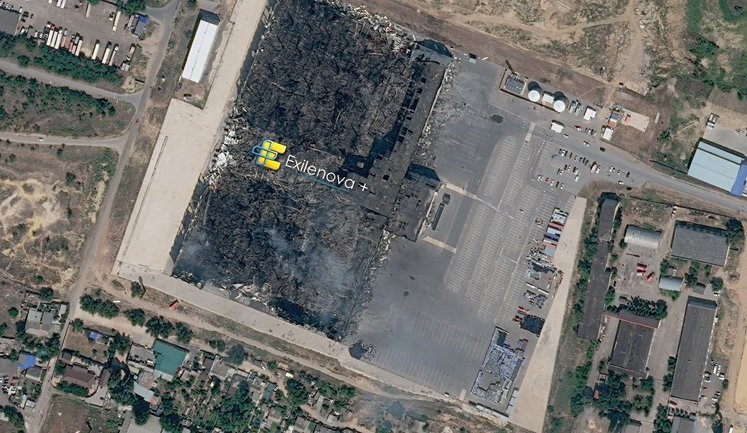
Satellite images are crucial in verifying the extent of damage in Volgograd, providing evidence of the destruction at targeted sites. They offer visual proof that aids both media coverage and strategic military assessments, allowing for informed analysis of the attacks' implications.
TOP news Volgograd
 Gas explosion in Volgodrag wounds 10, damages residential building. VIDEO 10 people, including three children, have been hospitalized in Volgograd after a household gas explosion. 58 650 208
 Result of UAV hitting military unit near Volgograd, Russia: "It smells like something nasty". VIDEO Videos have been published online showing the result of a fire in a military unit of the Russian army near Volgograd. 23 424 44 Previously in trend: War
 Russian man watches Ukrainian attack UAVs over Volgograd region: "F#ck, fourth one is coming! I’m grazing cows, and here are Khokhol’s fighters flying!". VIDEO A video recording of Ukrainian drones flying over the Volgograd region of Russia was posted online. 19 623 46 Previously in trend: War
 Ukraine destroys two Russian Su-34s at airfield in Russia’s Volgograd region, damages two more On the night of June 27, units of the Special Operations Forces of the Armed Forces of Ukraine and the Security Service of Ukraine, in coordination with other branches of the Ukrainian Defense Forces, carried out a strike on the Marinovka airfield in Russia’s Volgograd region. 18 384 50 Previously in trend: Massive destruction of Russian aircraft
 SSU’s drones "organized" fire at oil refinery in Volgograd - sources. VIDEO&PHOTOS Today’s "bavovna" at one of Russia’s largest oil refineries in Volgograd is the result of a successful attack by SSU’s drones. 18 008 41
 Fire broke out at the Volgograd Oil Refinery: regional authorities announced UAV attack On the night of 3 February, a fire broke out at a Volgograd oil refinery in Russia. According to the Emergencies Ministry, oil products were burning over an area of 300 square metres. 17 823 49
 "Flamingo" missiles struck a defence plant in Volgograd. VIDEO According to reports from Ukrainian monitoring sources, the Ukrainian Defence Forces have struck the JSC ‘FNPTS "Titan-Barrikady"’ in Volgograd with FP-5 ‘Flamingo’ cruise missiles. 17 706 90 Previously in trend: Striking Russia
 Fire Point shows moment "Flamingo" missiles launched at Russian GRAU arsenal in Volgograd region. VIDEO Defense company Fire Point has shown the moment FP-5 "Flamingo" cruise missiles were launched at one of Russia’s Defense Ministry’s largest arsenals in the Volgograd region. 15 478 156 Previously in trend: Drone attack on Russian regions Ballistic missiles production in Ukraine
 "Flamingo" missiles struck "Titan-Barikady" factory in Volgograd, where weapons are manufactured for Russian army, – Zelenskyy. VIDEO Last night, FP-5 ‘Flamingo’ missiles successfully struck the ‘Titan-Barikady’ plant in Volgograd. 14 781 106 Previously in trend: Drone attack on Russian regions
 Drones attacked Russian Volgograd. VIDEO+PHOTOS Drones attacked the Russian city of Volgograd on the night of 19 June 2025. 13 450 45 Previously in trend: UAV attacks on Russia Drone attack on Russian regions
 Footage of two Flamingo missiles hitting defence plant in Russia’s Volgograd. VIDEO A video has appeared online showing a strike on the Russian military-industrial enterprise Titan-Barrikady, located in Volgograd, which was hit by a precision missile strike by Ukraine’s Defence Forces. FP-5 Flamingo cruise missiles were used in the 27 June attack. 12 577 78 Previously in trend: Striking Russia
 Russia reports attack on refinery and oil depot in Volgograd. VIDEO At four o'clock in the morning on 31 January, Ukrainian drones allegedly attacked the area of an oil refinery, a thermal power plant and an oil depot in Volgograd. 12 431 21
 Ukrainian strike on airbase near Volgograd caused widespread damage to key infrastructure and equipment - British intelligence. PHOTO After the Ukrainian strike on the Marinovka airbase in the Volgograd region of the Russian Federation, large-scale destruction was recorded. 11 927 11
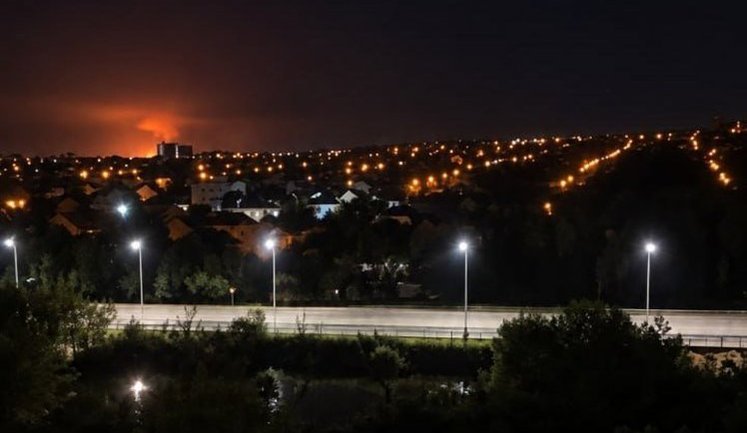
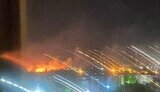 Drones attack Volgograd: fire breaks out at local oil refinery. VIDEO+PHOTO On the night of 19 August, residents of the Russian city of Volgograd reported a drone attack and powerful explosions. A fire broke out at an oil refinery. 11 804 32 Previously in trend: UAV attack on oil refinery of Russia
 Drone strike causes fire at oil depot in Volgograd region of Russia. VIDEO&PHOTOS The governor of the Volgograd region of Russia, Andrei Bocharov, said that Ukrainian drones attacked Kalach-on-Don and Frolovo that night. 10 299 28
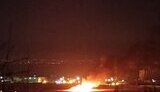 UAVs attacked oil refinery in Volgograd: 10 explosions were heard. VIDEO On the night of 15 March, unidentified drones attacked an oil refinery in Volgograd. 9 879 13 Previously in trend: UAV attack on oil refinery of Russia
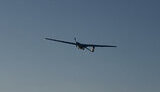 Drones launched massive attack on Volgograd, and "Carpet" plan was announced at number of airports in Russian Federation. VIDEO On the night of 11 October, Volgograd was attacked by drones. Air defence was operating in the city. 9 749 38 Previously in trend: UAV attacks on Russia
 Drones attacked oil refinery in Volgograd: at least eight explosions were heard. VIDEO On the night of 6 November, at least 8 to 10 explosions were heard in Volgograd, Russia. Flares were also reported in the area of the "Lukoil" oil refinery. 9 561 45 Previously in trend: Drone attack on Russian regions UAV attack on oil refinery of Russia
 Strike on Russian Federation’s GRAU arsenal in Volgograd region: large-scale fire, explosions and evacuation of population On the night of 12 February, a strike was carried out on the arsenal of the Russian Federation's Main Missile and Artillery Command near the village of Kotluban in the Volgograd region. 8 951 12 Previously in trend: Drone attack on Russian regions
 Volgograd Oil Refinery, one of largest in Russia, is hit - CCD The Ukrainian defence forces hit the Volgograd oil refinery, which is one of the largest in Russia. 8 911 18 Previously in trend: War
 Drones attacked Volgograd: "Lukoil" oil refinery on fire. PHOTO On the night of 29 May, a major fire broke out at the Lukoil oil refinery in Volgograd following a drone attack. 8 657 21 Previously in trend: UAV attack on oil refinery of Russia
Drones attacked Russian Volgograd: fire broke out in oil refinery area. VIDEO On the night of 26 December, drones attacked Volgograd. The local airport was closed due to the attack. 6 508 10 Previously in trend: Drone attack on Russian regions UAV attack on oil refinery of Russia
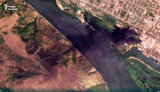 Consequences of drone strikes on oil depot in Volgograd region of Russia SATELLITE PHOTOS Satellite images show the aftermath of a fire at an oil depot in Kalach-on-Don, Volgograd Oblast, Russia, which was attacked by drones on the night of 9 July 2024. 6 351 16 Previously in trend: War
 Oil refinery hit in Russia’s Volgograd, fire breaks out. VIDEO+PHOTOS On the night of February 11, 2026, residents of Russia’s Volgograd reported a large number of explosions. The regional governor confirmed a fire at a plant in the south of the city. 6 343 31 Previously in trend: Drone attack on Russian regions Strikes on Russia’s oil refining sector
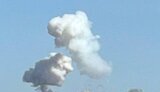 Explosions occurred in Volgograd at night: fire broke out at substation. VIDEO An explosion occurred at night at a substation in one of Volgograd's districts, which was followed by a fire 6 340 11
 Drone attack in Volgograd region: fires and power outages. VIDEO On the night of 9 October, drones attacked energy infrastructure facilities in the Volgograd region. 6 323 6 Previously in trend: Drone attack on Russian regions
 Drivers have pitched tents near petrol station in Volgograd, Russia: "We’re waiting for petrol". VIDEO A video filmed in Volgograd, Russia, has been shared on social media. The footage shows a queue at a local petrol station, as well as tents that drivers have pitched nearby so they can wait for fuel and their turn. 5 394 23 Previously in trend: Fuel shortage in the Russian Federation
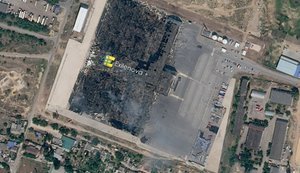
 Aftermath of FP-5 Flamingo missile strikes on Titan-Barrikady plant in Russia’s Volgograd. SATELLITE IMAGES Ukrainian FP-5 Flamingo missiles struck the Russian Titan-Barrikady plant in Volgograd on June 27. Iskanders are produced there. Journalists have published satellite evidence of destruction at the strategic enterprise of Russia's military-industrial complex. 5 312 8 Previously in trend: Striking Russia Strikes on Russian factories
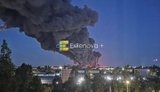 Drones attacked Volgograd: Wildberries and the Lukoil oil refinery may have been targeted. VIDEO+PHOTO On the night of 31 July, explosions were heard in Volgograd following a drone attack. Fires broke out at warehouses in the city’s Dzerzhinsky district and at a fuel and energy complex in the south of the city 4 767 19 Previously in trend: Drone attack on Russian regions
Military-industrial complex in Volgograd, Pantsir-S1 complex, and Petropavlovsk car ferry in Crimea hit, - General Staff On June 26 and during the night of June 27, as part of efforts to reduce the Russian aggressor’s military and economic capabilities, units of the Ukrainian Defense Forces struck a number of key targets belonging to the occupying forces. 4 621 13 Previously in trend: Drone attack on Russian regions Attacks on Crimea
 Afipsky oil refinery, oil depot in Uryupinsk and number of enemy targets in occupied territory have been hit, - General Staff Units of the Ukrainian Armed Forces have struck the Afipsky Oil Refinery (Krasnodar Krai, Russian Federation). 4 003 54 Previously in trend: Drone attack on Russian regions UAV attack on oil refinery of Russia
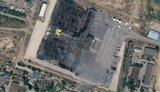 Wildberries warehouse attacked in Volgograd was completely burnt out. Satellite images The Wildberries warehouse in Volgograd, Russia, was completely burnt down following the attack. 3 933 14 Previously in trend: Drone attack on Russian regions
Defence forces struck GRAU arsenal near Volgograd and defence plant in Tambov region, - General Staff On the night of 12 February, units of the Ukrainian Defence Forces struck an arsenal for the comprehensive storage of missiles, ammunition and explosives belonging to the Main Missile and Artillery Directorate of the Russian Ministry of Defence in the vicinity of the village of Kotluban in the... 3 866 9 Previously in trend: Striking Russia
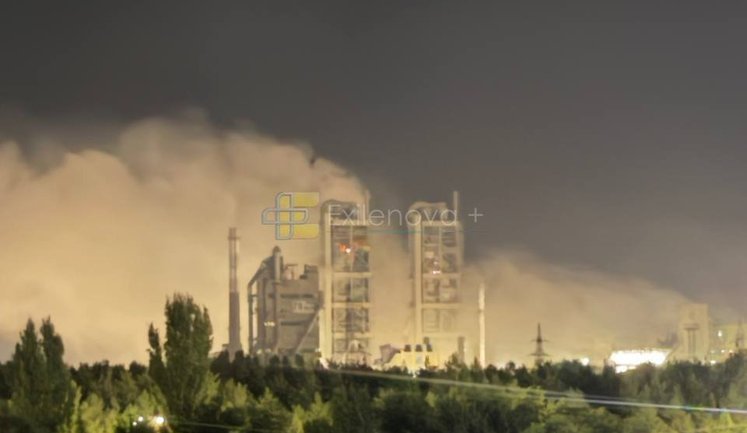
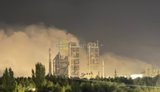 One of Russia’s largest cement plants was attacked by drones in Volgograd region. VIDEO+PHOTOS On the night of 15 September, explosions were heard in the city of Mikhaylovka in the Volgograd Region of the Russian Federation on the premises of the ‘Sebryakovcement’ plant – one of Russia’s largest cement producers. Following this, heavy smoke was observed at the site. 3 692 20 Previously in trend: Strikes on Russian logistics
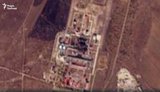 Aftermath of Ukrainian strike on Korobkovsky gas processing plant in Russia’s Volgograd region. SATELLITE PHOTOS Satellite images showing the aftermath of a strike on the Korobkovsky Gas Processing Plant in Russia’s Volgograd region — attacked by Ukrainian forces overnight on October 9, have appeared on social media. 3 653 1 Previously in trend: Drone attack on Russian regions
Attack on Volgograd region of Russian Federation: part of region left without electricity The "Balashovskaya" power substation in the Volgograd region has been attacked. A fire broke out, leaving some settlements without electricity. 3 624 28 Previously in trend: Drone attack on Russian regions
Drones attacked Volgograd: more than ten explosions heard in city On the night of 22 August, dozens of explosions were heard over Volgograd. Debris from drones caused dry grass to catch fire, and the airport went into "Carpet" mode. 3 568 7 Previously in trend: Drone attack on Russian regions
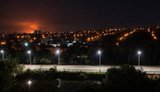 Fire has been reported at Lukoil oil refinery in Volgograd On the night of September 11, drones attacked Volgograd. A massive fire broke out at the "Lukoil-Volgogradneftepererabotka" oil refinery. 3 225 10 Previously in trend: UAV attack on oil refinery of Russia
 Lukoil’s Volgograd oil refinery shuts down after drone strikes – Reuters The Volgograd oil refinery owned by Russian company Lukoil has suspended operations following an attack by Ukrainian drones. 3 214 10 Previously in trend: Drone attack on Russian regions UAV attack on oil refinery of Russia
 Airport closed in Volgograd, Russia; drone hits industrial facility in Rostov region On the morning of 21 November, the Russian Civil Aviation Agency temporarily closed Volgograd airport. 2 936 0
 Russia claims to have shot down 141 UAVs: number of oil refineries attacked The Russian Ministry of Defence said that on the night of 14 December, Russian air defence forces allegedly shot down 141 UAVs over 13 regions and occupied Crimea. 2 673 11 Previously in trend: Drone attack on Russian regions
 Oil depot in Volgograd region, enemy UAV warehouse and number of targets in occupied territory have been hit, - General Staff On the night of January 10, units of the Ukrainian Defense Forces struck the Zhutovskaya oil depot (Oktyabrsky District, Volgograd Region, Russian Federation), which is involved in supplying fuel to the occupying forces. 2 601 7 Previously in trend: Drone attack on Russian regions
Drones attacked oil depot in Volgograd region of Russia In the Volgograd region, a fire broke out at an oil depot on the night of January 10 as a result of a drone attack. The incident occurred on the night of January 10. 2 114 13 Previously in trend: Drone attack on Russian regions
 "Volgogradskyi" oil refinery, warehouses and air defence systems of ruscists were hit by Defence Forces, - General Staff The defence forces struck an oil refinery, fuel and lubricant depots, air defence facilities, and locations where Russian occupiers were concentrated. 2 079 4 Previously in trend: UAV attack on oil refinery of Russia Striking Russia
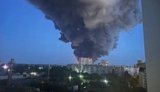 Defense Forces and SSU hit aircraft plant in occupied Crimea, port of Taman, and Volgograd Oil Refinery The Security Service of Ukraine, in coordination with the Ukrainian Defense Forces, has carried out another series of successful strikes against Russia’s military, logistical, and oil refining infrastructure. 1 715 4 Previously in trend: Drone attack on Russian regions Striking Russia
 Oil transportation infrastructure facility in Volgograd region was hit, as well as command posts and areas where Russian troops are concentrated, - General Staff On the night of June 13, 2026, units of the Ukrainian Defense Forces struck an oil processing and pumping facility in the Volgograd Oblast of the Russian Federation, near the village of Kotovo. 1 346 5 Previously in trend: Drone attack on Russian regions
 Volgograd Oil Refinery, Yaroslavl Oil Terminal, and other facilities in Russia were struck by Defense Forces The Ukrainian Armed Forces struck an oil refinery, an oil pumping station, air defense systems, warehouses, and other facilities belonging to the Russian occupiers. 1 186 4 Previously in trend: UAV attack on oil refinery of Russia Striking Russia
 Defense forces attacked Russian military facilities at night: electronic warfare, ammunition depot, and headquarters were hit, - General Staff On the night of July 31, the Ukrainian Defense Forces carried out strikes against an electronic warfare complex, an ammunition depot, and a command post of Russian troops as part of an operation to reduce Russia’s military capabilities. 905 0 Previously in trend: Striking Russia
Page 1 of 2
more top news