ENG




7325 visitors online
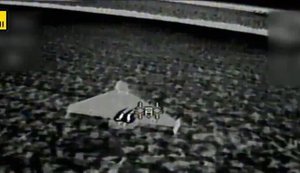
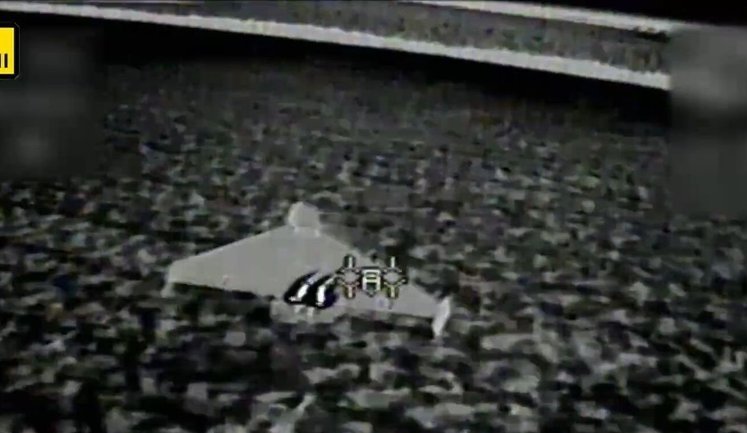
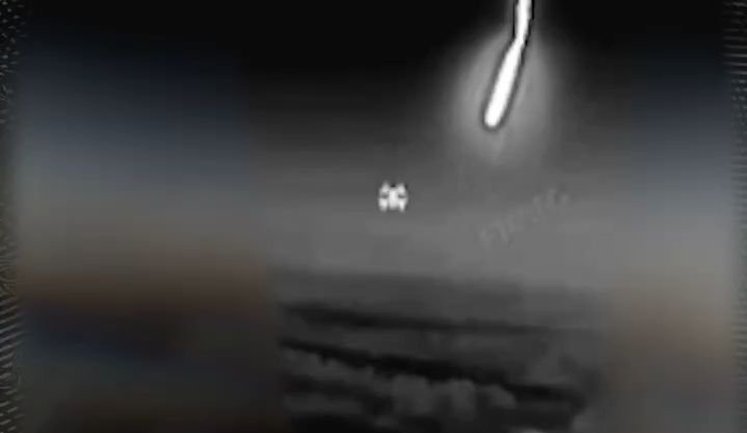
In recent developments, Ukrainian forces have achieved a historic milestone in air defense by successfully shooting down Shahed drones using cutting-edge unmanned systems. The 412th Nemesis Brigade made headlines as fighters shot down a Shahed-136 attack drone with an interceptor launched from a surface platform. This unprecedented feat highlights Ukraine’s evolving defense strategies in countering aerial threats. Additionally, various Ukrainian military units have reported significant achievements, such as the Foxtrot crew of the 1020th Anti-Aircraft Missile Regiment, which set a new record by destroying 28 Shaheds with Sting interceptors within 24 hours. Such successes underline Ukraine's robust response to drone attacks and its commitment to advancing defense technology.
How has Ukraine advanced in shooting down Shahed drones?
Ukraine has made significant advancements in air defense, particularly in shooting down Shahed drones. Ukrainian forces, such as the 412th Nemesis Brigade, have utilized innovative tactics, including launching interceptor drones from unmanned surface platforms. These efforts have resulted in multiple successful interceptions and record-breaking achievements in downing enemy drones, underscoring the country's commitment to modernizing its air defense capabilities.
What record did the Foxtrot crew of the 1020th Anti-Aircraft Regiment achieve?
The Foxtrot crew of the 1020th Anti-Aircraft Missile Regiment achieved a remarkable record by shooting down 28 Shahed drones and 2 Gerberas within a 24-hour period using Sting interceptors. This achievement not only highlights the effectiveness of Ukraine's air defense strategies but also sets a new benchmark for the number of drones intercepted in a single day, demonstrating the country's improved defensive prowess against aerial threats.
What role do unmanned surface platforms play in drone interception?
Unmanned surface platforms have become crucial in drone interception efforts. They provide a stable base for launching interceptor drones, allowing for precise targeting and engagement of enemy UAVs. The 412th Nemesis Brigade's successful use of unmanned surface platforms to take down a Shahed-136 attack drone exemplifies the innovative integration of technology in enhancing Ukraine's air defense capabilities, demonstrating new possibilities for combating aerial threats.
Who are significant Ukrainian military units involved in drone interception?
Several Ukrainian military units have played significant roles in drone interception operations. Key units include the 412th Nemesis Brigade, renowned for their use of interceptor drones from unmanned platforms, and the 1020th Anti-Aircraft Missile Regiment, which set a record for the number of drones downed in a day. These units, among others, exemplify Ukraine's strategic deployment of advanced interceptors and highlight the cohesive efforts of its defense forces in countering drone threats effectively.
How is Ukraine modernizing its air defense systems?
Ukraine is actively modernizing its air defense systems to bolster defenses against drone attacks, including Shaheds. The government has prioritized updating existing equipment and integrating advanced technologies such as interceptor drones and surface platforms. These efforts aim to enhance response capabilities, reduce vulnerabilities, and maintain strategic superiority in repelling aerial threats, ensuring the security of Ukrainian airspace in the face of evolving drone attack strategies.
Related TOP news Shooting down Shaheds
 No decision yet on NATO shooting down Russian drones over Ukraine – Sikorski Polish Foreign Minister Radosław Sikorski said he had spoken by phone with his Ukrainian counterpart Andrii Sybiha about the possible interception of Russian missiles and drones over Ukraine by NATO air defenses. 4 189 55 Previously in trend: Shooting down Shaheds Shaheds flew into Poland
 Air Force work against Shaheds is unsatisfactory. Defense Ministry conclusions to follow, Zelenskyy says Ukrainian President Volodymyr Zelenskyy criticized the work of the Air Force of the Armed Forces of Ukraine in countering Russian "Shaheds" amid massive attacks. There have been hits by enemy drones on the energy sector. 5 215 53 Previously in trend: Result of the work of the air force Shooting down Shaheds
 Flight of jet-powered "Shahed" was filmed by residents of Chernihiv region. VIDEO The flight of the Shahed kamikaze jet drone was filmed by local residents in the Chernihiv region. 14 532 51 Previously in trend: Shooting down Shaheds
 Ukraine destroyed "Shahed" guidance network from Belarus, - Fedorov Ukraine has managed to neutralise the technological infrastructure that Russia used to guide kamikaze drones from Belarusian territory. 8 972 47 Previously in trend: Shooting down Shaheds
 Ukraine building layered system to counter enemy Shaheds and Gerans – Syrskyi Commander-in-Chief of the Armed Forces of Ukraine Oleksandr Syrskyi said that work is underway within Ukraine’s Defense Forces to strengthen capabilities in countering Shahed-type attack drones. 3 176 46 Previously in trend: Shooting down Shaheds Countering Russian drones Interceptor drones
 Ukrainian F-16 shot down Russian "Shahed" with "Vulcan" cannon. VIDEO Ukrainian pilots flying Western fighter jets continue to demonstrate precision in defending Ukrainian airspace. According to Censor.NET, unique footage of an F-16 fighter jet from the 107th Air Wing of the Ukrainian Air Force has appeared online. 9 505 42 Previously in trend: Shooting down Shaheds
 World is not ready for massive attacks by Iranian drones. Systems need to be modernised, - Zelenskyy President Volodymyr Zelenskyy believes that the world is not ready for massive attacks by Iranian drones. Air defence systems in the Middle East can no longer withstand such intense attacks by "shaheds". 2 332 31 Previously in trend: Shooting down Shaheds regime change in Iran
 Unmanned Systems Forces intercept Shaheds using latest tool The Unmanned Systems Forces of the Armed Forces of Ukraine have announced a "newest tool" to combat enemy Shahed-136/131 attack drones. 8 095 29 Previously in trend: Shooting down Shaheds
 Interceptor drones supplied to Ukraine’s Armed Forces have already downed 444 Russian Shaheds and Gerberas – Sternenko Ukrainian interceptor drones proved effective in repelling a swarm of Russian Shaheds. The country needs to scale drone-based air defense as quickly as possible. 2 246 27 Previously in trend: Shooting down Shaheds Interceptor drones Drone industry
 Most Russian strike UAVs are now being destroyed specifically by interceptor drones – Syrskyi Commander-in-Chief of the Armed Forces of Ukraine Oleksandr Syrskyi held another working meeting on strengthening capabilities to counter enemy strike UAVs. 9 019 24 Previously in trend: Shooting down Shaheds Interceptor drones Drone industry
 97 out of 147 "Shaheds" shot down, another 25 drones lost in location - Air Force On the night of March 23, 2025, Russian troops attacked Ukraine with 147 Shahed-type attack UAVs and various types of imitation drones. 2 149 24 Previously in trend: Shooting down Shaheds
 Three Russian "Shaheds" shot down over Rivne region by American AGM-114 Hellfire missiles. VIDEO Footage has been published online showing the downing of three Russian "Shahed" kamikaze drones in the skies over the Rivne region. 10 086 49 Previously in trend: Shooting down Shaheds Destruction of Russian drones Shahed attack on Rivne region
 Ukraine has interceptor drones capable of downing Russian jet-powered Shaheds – Palisa Ukraine already has interceptor drones capable of shooting down Russian Shaheds, including jet-powered platforms. 3 294 22 Previously in trend: Shooting down Shaheds Interceptor drones
 Moldova to consider shooting down enemy drones Moldova's Ministry of Defense has drafted a new law on national airspace security. The authorities intend to respond to airspace violations by civilian and military aircraft, drones, and missiles. 1 121 21 Previously in trend: Wreckage of a Russian drone in Moldova and Romania Shooting down Shaheds
 Ukrainian forces shoot down Russian Shahed from Mi-8 helicopter. VIDEO A video posted on social media shows a Russian Shahed kamikaze drone being shot down. 4 386 20 Previously in trend: Shooting down Shaheds Drone shootings over Ukraine
 Ukraine working on interceptor drones to bolster defence against "Shaheds" – Zelenskyy Ukrainian President Volodymyr Zelenskyy announced new agreements with NATO partners regarding investments in the production of interceptor drones. 1 790 19 Previously in trend: Production of drones Shooting down Shaheds
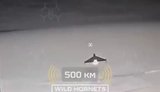 Pilot "Hulk" shot down two "Shaheds" at distance of 500 km using STING interceptors – world record has been set. VIDEO A Ukrainian pilot has set an absolute world record by shooting down "Shahed" drones using a STING interceptor from the "Wild Hornets " unit at a distance of 500 km. 13 319 71 Previously in trend: Shooting down Shaheds Destruction of Russian drones Drone operators Interceptor drones Drone industry
 Gunner from Yak-52 aircraft of Ukrainian Air Force shot down Russian "Shahed" over Odesa. VIDEO A gunner aboard a Yak-52 light aircraft of the Ukrainian Air Force shot down a Russian Shahed kamikaze drone over the coast of Odesa with small arms fire. 8 586 17 Previously in trend: UAV attack on Odesa Shooting down Shaheds Drone shootings over Ukraine
 Dead-center hit: Border guards in north shoot down Shahed with assault rifles. VIDEO Ukrainian soldiers continue to demonstrate remarkable accuracy, downing enemy attack UAVs even with small arms. As reported by Censor.NET, footage of a successful hunt by a unit of the State Border Guard Service of Ukraine in the north of the country has been released online. 4 937 16 Previously in trend: Shooting down Shaheds
 Ukrainian Mi-8 crew destroyed Russian-Iranian "Shahed". VIDEO The crew of a Ukrainian Mi-8 helicopter has successfully destroyed a Russian-Iranian Shahed-136 kamikaze drone during a combat mission. 4 924 15 Previously in trend: Shooting down Shaheds
 Soldier of 47th SMB "Magura" shoots down "Shahed" with "Igla" MANPADS. VIDEO A Ukrainian soldier from the 47th Separate Mechanised Brigade "Magura" shot down a Russian Shahed attack UAV using an "Igla" MANPADS. 6 474 15 Previously in trend: Shooting down Shaheds
 Combat operation of Iris-T anti-aircraft missile system against Russian cruise missiles. VIDEO On the night of 6 December 2025, during a massive attack by the Russian Federation, the Air Force of the Armed Forces of Ukraine engaged enemy cruise missiles and drones. 7 906 14 Previously in trend: Shooting down Shaheds Destruction of missiles and drones missile attack Drone shootings over Ukraine
Air defense forces down all 10 of 10 enemy jet-powered drones heading for Kyiv. VIDEO During the day on Wednesday, January 14, air defense forces shot down ten out of ten enemy jet-powered UAVs in Kyiv and Chernihiv regions. 3 279 14 Previously in trend: Result of the work of the air force Shooting down Shaheds
 One of Mi-8 crews of Naval Forces of AFU shot down 12 "Shaheds" in 3 hours. VIDEO During the March 24 attack, a crew of the Armed Forces of Ukraine Navy's Mi-8 helicopter spent three hours carrying out a mission to counter enemy attack drones, destroying a significant number of aerial targets. 6 210 15 Previously in trend: Shooting down Shaheds Destruction of Russian drones
 There were about 300 "Shaheds" today, rest are decoy UAVs - Ihnat During the massive UAV attack, Russia used only about 300 attack drones, the rest were decoys 2 630 13 Previously in trend: Attack of drones Shooting down Shaheds
 ’High-altitude attack’: Air Force on specifics of Russia’s latest Shahed strike Russia is resorting to a new tactic — mass launching of Shahed drones from high altitudes. This has significantly complicated their interception, but the effectiveness of Ukraine’s air defense system remains consistently high. 4 228 12 Previously in trend: Shooting down Shaheds
 Ukrainian Armed Forces to form first all-female crew to intercept Russian UAVs The first all-female crew for intercepting Russian drones is being formed within the Armed Forces of Ukraine. The unit is being created based at the 427th Separate Drone Systems Regiment "RAROH." 1 926 12 Previously in trend: Women in AFU Shooting down Shaheds
 Russia attacks Ukraine with strike drones – Air Force On the evening of October 8, Russian forces launched attack drones against Ukraine. 3 240 12 Previously in trend: War Attack of drones Shooting down Shaheds
 Mobile air defense groups destroyed almost 100 drones at night. Result is quite good - Ihnat On July 9, 2025, during a nighttime Russian attack on Ukraine, mobile fire groups destroyed almost 100 drones. 1 959 11 Previously in trend: Shooting down Shaheds
 Yak-52 aircraft crews shot down 8 Russian UAVs in skies over Odesa region. VIDEO Pilots from the 11th Separate Army Aviation Brigade "Kherson" shot down enemy drones in the skies over the Odesa region during one of the Russian attacks. 6 996 27 Previously in trend: Drone attack on Odesa Shooting down Shaheds Destruction of Russian drones
 In April, units of Unmanned Systems Forces of AFU hit and destroyed more than 83,000 targets, 8% increase compared to March. Defeat efficiency increased by another 5%, - Syrskyi In April, units of unmanned systems of the Ukrainian Defence Forces achieved decent results in destroying the enemy. 813 10 Previously in trend: Shooting down Shaheds
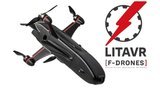 The 190th Training Center of the Unmanned Systems Forces was the first in the world to shoot down a "Shahed" remotely, - military analyst. VIDEO The 190th Training Center of the Unmanned Systems Forces is the first in the world to implement the remote shooting down of "Shaheds" using the LITAVR system from F-Drones. 6 970 16 Previously in trend: Shooting down Shaheds Drone operators Drone shootings over Ukraine
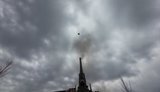 Defence Forces soldier in Kyiv region shot down Russian "Shahed" with M2 Browning machine gun. VIDEO Footage has been released online showing Ukrainian troops shooting down an enemy "Shahed" drone with an M2 Browning heavy machine gun during a Russian attack in the Kyiv region. 4 737 36 Previously in trend: Shooting down Shaheds Destruction of Russian drones
Unmanned systems forces destroyed 1,000th Shahed: $70 million that did not hit the target. VIDEO The unmanned systems forces have destroyed the thousandth "Shahed" of the Russian occupiers. 3 175 9 Previously in trend: Shooting down Shaheds Drone industry
 Third Corps air defenses shoot down 33 Shahed drones in one night as they head for civilian cities (updated). VIDEO On the night of February 3, during a massive Russian attack, air defense units of the Third Army Corps shot down 33 Shahed-type UAVs that were flying to attack civilian cities in eastern Ukraine. 2 975 9 Previously in trend: Attack of drones Shooting down Shaheds
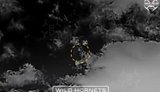 Pilot Hulk of "Bulava" unit shoots down 20 "Shaheds" with STING interceptors during March 24 attack. VIDEO During the March 24 attack, Ukrainian troops used STING interceptors to repel a strike by Shahed-type attack drones, destroying a significant number of aerial targets as a result. 8 723 13 Previously in trend: Shooting down Shaheds Destruction of Russian drones Drone operators
 DIU drone operators intercepted and destroyed Russian "Shahed" jet drone in mid-air. VIDEO Pilots from the Defence Intelligence shot down a Russian "Shahed" drone during one of the enemy's attacks. 3 908 10 Previously in trend: Shooting down Shaheds Drone operators
 Unmanned Systems Forces shoot down 52 Shahed drones using "advanced systems" Recently, the Darknode unit of the 412th Nemesis Regiment intercepted 52 Shahed-136 strike UAVs using advanced systems. 4 400 8 Previously in trend: Shooting down Shaheds
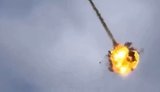 Defence Forces’ aviation destroyed Russian "Shahed" with missile. VIDEO Footage of a Russian drone being shot down during one of the attacks on Ukrainian cities has been published online. 5 005 8 Previously in trend: Shooting down Shaheds Destruction of Russian drones AFU aviation
 Moment Russian "Shahed" was shot down and detonated in mid-air. VIDEO Footage has been released online showing a mobile unit of the Cherkasy Territorial Community Volunteer Formation shooting down a Russian "Shahed". 5 182 11 Previously in trend: Shooting down Shaheds Destruction of Russian drones
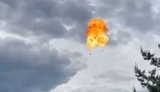 Soldier from Chernihiv detachment shot down "Shahed" with small arms: over past 24 hours, fighters have destroyed 71 Russian UAVs. VIDEO Border guards from the Chernihiv detachment shot down a Russian "Shahed"-type attack drone using small arms during another enemy air strike. 3 542 7 Previously in trend: Shooting down Shaheds Destruction of Russian drones Drone attack on the Kharkiv region Drone attack on Chernihiv region
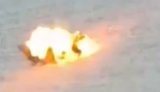 Ukrainian crew of Mi-8 helicopter shot down Russian Shahed with machine gun fire. VIDEO A video has been published online showing a Ukrainian Mi-8 helicopter crew shooting down a Russian drone. 5 406 7 Previously in trend: Shooting down Shaheds
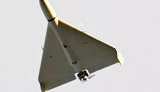 Enemy uses 60% Shaheds and 40% decoy drones in attacks – Air Force During attacks on Ukraine, Russian forces use about 60% Shahed-type strike drones and 40% decoy drones. 670 6 Previously in trend: Shooting down Shaheds
 Ukraine is stepping up modernisation of its combat aviation to repel air attacks, — Svyrydenko The government has adopted a decision that will significantly accelerate the modernization of aircraft and helicopters to counter aerial threats, including drones such as the "Shahed". 2 518 22 Previously in trend: Shooting down Shaheds Modernization of the Ukrainian air defense system
 For first time in world, fighters from 412th Nemesis Brigade shot down "Shahed" with interceptor drone from surface platform, - USF. VIDEO Operators from the 412th Nemesis Brigade of the Ukrainian Armed Forces’ Unmanned Systems Forces have, for the first time, successfully intercepted a Shahed-136 attack drone using an interceptor drone launched from an unmanned surface platform. 4 356 10 Previously in trend: Shooting down Shaheds Shooting Shahed from a surface platform
 National Guard fighters destroyed five Russian "Shaheds" during morning attack on Odesa. VIDEO Ukrainian defenders destroyed five Russian Shahed strike drones during the morning shelling of Odesa. 2 109 5 Previously in trend: UAV attack on Odesa Shooting down Shaheds Destruction of Russian drones Drone operators
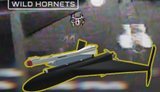 "Sapsan" crew shot down Russian "Shahed" carrying R-60 missile using STING interceptor drone. VIDEO Members of the "Sapsan" crew from the 105th "Chimera" Border Guard Detachment shot down a Russian "Shahed" using an R-60 guided missile. 3 939 6 Previously in trend: Attack of drones Shooting down Shaheds Destruction of Russian drones Interceptor drones
 Fighter from mobile fire group shot down "Shahed" with M2 Browning machine gun during attack by Russian drones. VIDEO A Ukrainian soldier from the Armed Forces of Ukraine skilfully shot down a Russian "Shahed"-type drone with a machine gun. 5 840 47 Previously in trend: Shooting down Shaheds Destruction of Russian drones
Page 1 of 3
pager_more_top_news