ENG




11576 visitors online
The topic of nuclear weapons remains central in global politics in 2026. Ukrainian President Zelenskyy seeks NATO membership as recompense for Ukraine's renunciation of nuclear arms, highlighting dissatisfaction with the Budapest Memorandum. Tensions surround Iran as US President Trump holds decision-making power over potential strikes, while Israel asserts Iran's inability to enrich uranium. Diplomatic moves see China and Russia attempting to block UN sanctions against Iran. Meanwhile, Russia warns of repercussions if Finland hosts nuclear arms. France, under Macron, plans arsenal expansion, ready to support European allies. Global leaders like the UN’s Guterres and Pope Leo XIV emphasize renewing US-Russia arms control treaties. These developments underscore the intricate balance of nuclear arms, disarmament talks, and geopolitical strategies.
Why does President Zelenskyy seek NATO membership as compensation?
President Zelenskyy believes NATO membership should compensate Ukraine for giving up nuclear weapons, referring to dissatisfaction with the Budapest Memorandum. The Memorandum saw Ukraine relinquish its nuclear arsenal in exchange for security assurances, which Zelenskyy now views as inadequate, thereby making NATO membership a reasonable recompense for the security that was promised.
What are the implications of recent discussions about nuclear weapons in the EU?
The discussions around nuclear weapons in the EU highlight a rising concern over security and deterrence amidst growing tensions. Belgian Defense Minister Theo Francken criticized the excessive talks, implying that it could escalate tensions and provoke unnecessary fear. Such dialogue reveals the delicate balance European countries must maintain between defense readiness and diplomatic relations.
What was Iran's response to recent international scrutiny over its nuclear program?
Iran, faced with scrutiny from the US and Israel, has publicly stated its intent to continue uranium enrichment, despite efforts to halt its nuclear development. This defiance is coupled with international diplomatic maneuvers, adding complexity to their geopolitical stance. Meanwhile, Iran's capabilities have been questioned by leaders like Netanyahu, who claim they are now unable to enhance their program significantly.
How has France responded to the changing nuclear landscape in Europe?
Under President Macron, France has announced plans to expand its nuclear arsenal, underscoring its commitment to European security amidst shifting geopolitical climates. By offering support and nuclear capabilities to European allies, France aims to deter potential threats and fortify the EU's defense posture. This expansion shows France's proactive stance in regional security enhancement.
Is there any global consensus on nuclear disarmament among major powers?
Global consensus on nuclear disarmament remains elusive as major powers like the US, Russia, and China grapple with internal challenges and strategic interests. Diplomatic efforts, such as those encouraged by the UN and Pope Leo XIV, aim to renew treaties like the START III to manage arms control. However, conflicting priorities and national security considerations often impede comprehensive agreements among these nations.
What positions have NATO and its member countries taken regarding nuclear arms?
NATO exercises like Steadfast Noon exemplify the Alliance's strategy of readiness and deterrence regarding nuclear arms. Member countries such as Finland and the UK are enhancing their capabilities, the latter through purchasing F-35 jets for nuclear missions. Additionally, the Alliance remains a pivotal forum for security discussions, balancing deterrence measures with diplomatic responsibilities in global and regional contexts.
News nuclear weapon
 Bundeswehr general: Russia plans to deploy nuclear weapons in space Russia is actively developing technologies to place nuclear weapons in orbit, which poses a direct threat to global security. 2 563 41 Previously in trend: Nuclear safety Russia’s nuclear blackmail
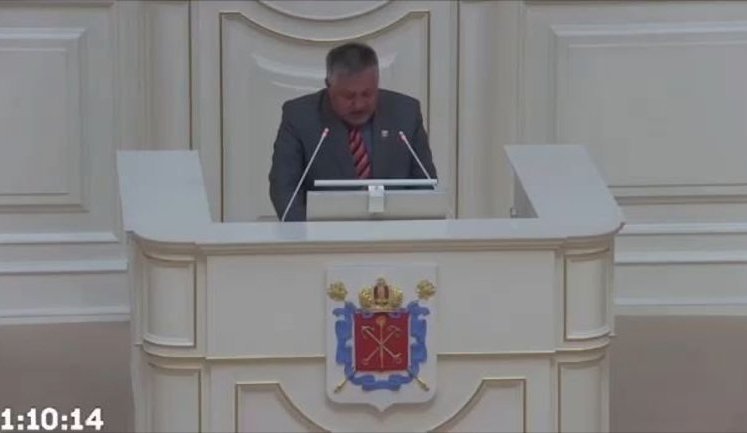
 St Petersburg MP calls for nuclear strike on Ukraine: "Putin was forced to launch SMO, but it all went wrong". VIDEO Russian politicians and fringe figures are once again resorting to nuclear blackmail and calls for the mass extermination of Ukrainians, in an attempt to find a way out of the military impasse into which the Kremlin has driven itself. According to Censor.NET, Viktor Perov, former leader of the... 8 437 53 Previously in trend: Russia’s nuclear blackmail
 Lithuania in talks with U.S. on deploying American nuclear weapons Lithuania is holding talks with the United States on the potential deployment of American nuclear weapons on its territory. 966 8 Previously in trend: Nuclear weapons Nuclear proliferation
 If nuclear weapons are used, consequences for Russia will be devastating – Rutte NATO Secretary General Mark Rutte said that if Russia uses nuclear weapons, the consequences for Russia will be devastating. 3 394 32 Previously in trend: miltary training of belarus and russia
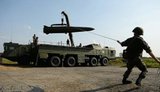 Russia announces nuclear drills involving nearly 8,000 pieces of equipment Russia has announced that from May 19 to 21, its army will hold exercises to prepare and use nuclear forces "amid the threat of aggression." 3 288 24 Previously in trend: miltary training of belarus and russia
 Trump said that Iran will indeed hand over its uranium to U.S. U.S. President Donald Trump stated that, as part of a potential peace agreement, Iran could transfer its highly enriched uranium to the United States. According to him, this would be a key element of the agreement aimed at preventing Tehran from developing nuclear weapons. 2 875 42 Previously in trend: Iran nuclear programme
 Risk of nuclear catastrophe now highest since Cold War – Grossi As of today, the threat of a nuclear catastrophe has reached a level not seen since the Cold War. 1 030 8 Previously in trend: Nuclear weapons Russia’s nuclear blackmail
 North Korea has ramped up its production of nuclear weapons, - IAEA North Korea has significantly expanded its capacity to produce nuclear weapons. 1 881 20 Previously in trend: Nuclear weapon of DPRK
 NATO membership is least Ukraine should receive in exchange for nuclear weapons, - Zelenskyy President Volodymyr Zelenskyy considers the Budapest Memorandum to be a mistake on the part of all the signatories. 1 773 50 Previously in trend: Nuclear weapons Security guarantees for Ukraine
 Could nuclear strike on Iran happen? White House responds White House Press Secretary Karoline Leavitt has said that US President Donald Trump is the only person who will make decisions on possible action against Iran. 10 720 95 Previously in trend: US strikes on Iran Closure of the Strait of Hormuz by Iran
 Iran has lost ability to enrich uranium and produce missiles, - Netanyahu Israeli Prime Minister Benjamin Netanyahu stated that Iran is no longer capable of enriching uranium or producing ballistic missiles, according to Censor.NET. 3 156 19 Previously in trend: Iran nuclear programme Israel’s strike against Iran US strikes on Iran
 China and Russia tried to block sanctions against Iran at UN Representatives of Russia and China in the UN Security Council attempted to disrupt discussions on sanctions against Iran, but their initiative was rejected. 3 474 12 Previously in trend: Sanctions against Iran
 Russia will respond if Finland deploys nuclear weapons on its territory, Kremlin says Russia has said it will respond if NATO member Finland deploys nuclear weapons on its territory, claiming that such a step would make the Nordic country "more vulnerable." 4 090 34 Previously in trend: Nuclear weapons Nuclear proliferation
 Tehran admits strike on nuclear center in Israel, - media Iran has announced the possibility of striking the Israeli nuclear facility in Dimona in the event of attempts by Israel and the US to change the government in Tehran. 5 843 27 Previously in trend: Israel’s strike against Iran US strikes on Iran
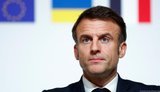 France is ready to deploy nuclear weapons in European allied countries, - Macron France has the capacity to provide its allies in Europe with strategic resources for "deployment as circumstances require." 2 523 22 Previously in trend: France Nuclear weapon Nuclear weapons
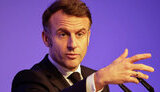 France will increase its nuclear arsenal, - Macron French President Emmanuel Macron has announced his intention to increase the country's nuclear arsenal. 1 457 14 Previously in trend: France Nuclear weapon
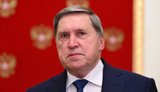 Russia will discuss with US "appearance of nuclear weapons" in Ukraine, - Putin’s aide Ushakov Russia will convey to the United States information about the alleged "appearance of nuclear weapons in Kiev." 5 877 77
 There is too much talk about nuclear weapons in EU, keep your mouth shut - Belgian Defense Minister Franken Belgian Defense Minister Theo Francken believes that European leaders talk too much about nuclear weapons. 2 948 17 Previously in trend: Nuclear weapons
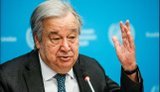 Guterres calls on US and Russia to resume nuclear talks UN Secretary-General António Guterres stressed the need to return to negotiations on nuclear arms control without delay after the expiration of the START treaty. 627 7 Previously in trend: Nuclear proliferation Nuclear safety
 United States and Russia must renew nuclear arms control treaty, - Pope Leo XIV Pope Leo XIV called on the United States and Russia to urgently renew the START III nuclear arms control treaty, which expires this week. 619 8 Previously in trend: Nuclear safety
 US has more nuclear weapons than Russia, Trump says US President Donald Trump said the United States has more nuclear weapons than any other country, including Russia. 2 888 41 Previously in trend: Nuclear weapons
 Security guarantees for Ukraine do not include "nuclear umbrella," - Zelenskyy Ukrainian President Volodymyr Zelenskyy stated that the issue of nuclear weapons within the framework of security guarantees for Ukraine is not up for discussion. 1 469 16 Previously in trend: Nuclear weapons Security guarantees for Ukraine
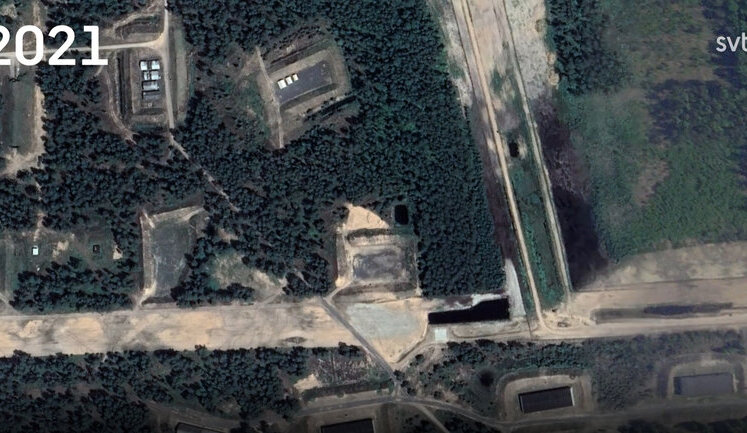
 Russia to assist Belarus in equipping "Polonez" complex with nuclear warhead Russia and Belarus have begun joint development work that will enable the Belarusian "Polonez" operational and tactical missile system to be equipped with a nuclear warhead. 3 496 56 Previously in trend: Nuclear weapons in Belarus Cooperation between Russia and Belarus
 US, China and Russia discuss nuclear arms reductions, - Trump US President Donald Trump announced that the US, China, and Russia are discussing reducing their nuclear arsenals and denuclearization. 1 431 23 Previously in trend: Trump on nuclear weapon Nuclear proliferation
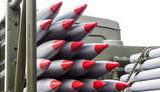 31% of Ukrainians consider creation of their own nuclear weapons to be best guarantee of security - poll. INFOGRAPHICS 31.1% of Ukrainians believe that the most effective guarantee of security for Ukraine is the creation of its own nuclear weapons. 2 259 230 Previously in trend: Nuclear weapons Poll on war in Ukraine
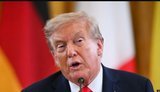 US has significant nuclear advantage and "could blow up the world 150 times" - Trump US President Donald Trump spoke about negotiations with Xi Jinping and Vladimir Putin on denuclearization and stated that the US has an advantage in its nuclear arsenal but does not seek to use it. 1 921 24 Previously in trend: Trump on nuclear weapon Nuclear proliferation
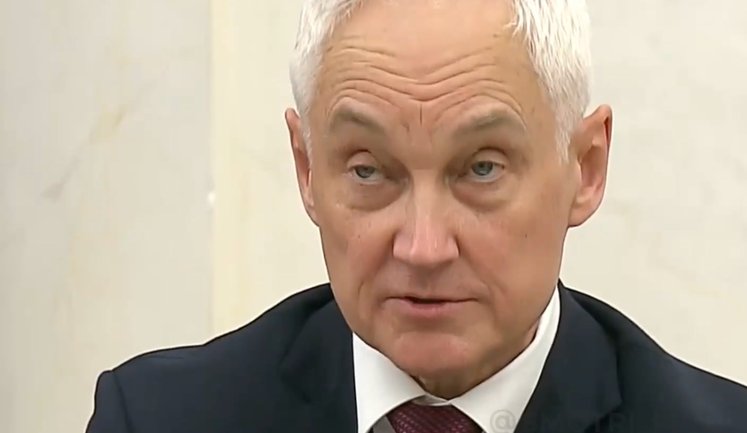
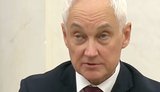 Putin is urged to immediately begin preparations for "full-scale nuclear tests". VIDEO Russian Defence Minister Andrei Belousov has proposed that Russian dictator Vladimir Putin immediately begin full-scale nuclear tests. 8 233 44 Previously in trend: Nuclear weapons Nuclear safety
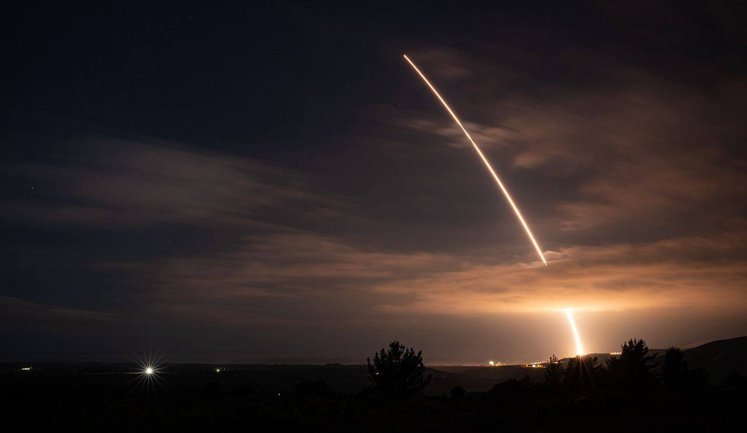
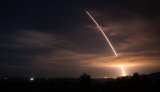 U.S. conducts test launch of intercontinental ballistic missile without nuclear warhead. VIDEO On 5 November 2025, the United States Air Force conducted a test launch of an unarmed Minuteman III intercontinental ballistic missile from Vandenberg Space Force Base in California. 5 455 15 Previously in trend: Intercontinental ballistic missile U.S. nuclear tests
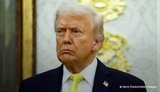 Trump after ordering resumption of nuclear weapons testing: I would like to see denuclearisation US President Donald Trump said that denuclearisation of the world would be an "extraordinary event," commenting on his order to the Pentagon to resume nuclear weapons testing. 2 868 41 Previously in trend: Nuclear safety
 US will begin immediate nuclear weapons testing, - Trump US President Donald Trump has instructed the Pentagon to immediately begin testing American nuclear weapons. 5 378 19 Previously in trend: Trump on nuclear weapon Nuclear safety
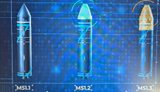 France has put its new M51.3 nuclear missile into combat service — range up to 10,000 km France has put into service the upgraded M51.3 ballistic missile with a TNO-2 nuclear warhead. It has a range of up to 10,000 km and will form the basis of the naval nuclear forces on Le Triomphant submarines. 5 033 31 Previously in trend: France Nuclear weapon
 Putin announced testing of Poseidon nuclear submarine Russian dictator Vladimir Putin reported on the "successful" testing of the Poseidon unmanned underwater vehicle with a nuclear power plant, which "has no equivalent in the world." 5 354 54 Previously in trend: Nuclear weapons
 Putin denounces agreement with US on weapons-grade plutonium Russian dictator Vladimir Putin has denounced an agreement with the United States, under which Moscow and Washington pledged to dispose of 34 tons of plutonium that is no longer needed for defense purposes. 4 125 7 Previously in trend: Nuclear weapons
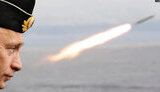 Norway’s intelligence confirms Russia’s test of Burevestnik nuclear missile Norway's military intelligence said that last week Russia tested its new long-range cruise missile with a nuclear power plant "Burevestnik", which was launched from the Arctic archipelago of Novaya Zemlya in the Barents Sea. 6 744 81 Previously in trend: Nuclear weapons
Trump on Putin’s testing of nuclear "Burevestnik": Our nuclear submarine is off their coast During his visit to Asia, US President Donald Trump responded to Russian dictator Vladimir Putin's statement about the allegedly successful test of the "Burevestnik" nuclear missile. 4 706 21 Previously in trend: Nuclear weapons Nuclear safety
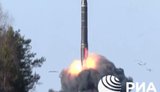 Russia conducted "nuclear exercises": intercontinental ballistic missile "Yars" was launched. VIDEO Russia has announced a "planned training of strategic nuclear forces". 8 849 16 Previously in trend: Nuclear weapons Intercontinental ballistic missile
 Iranian leader Khamenei rejects Trump’s proposal to resume nuclear talks Iran's Supreme Leader Ayatollah Ali Khamenei rejected US President Donald Trump's proposal to resume nuclear talks between Tehran and Washington. 2 297 27 Previously in trend: Nuclear deal between US and Iran Iran nuclear programme
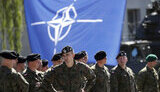 NATO’s Steadfast Noon 2025 nuclear exercise begins in Netherlands On Monday, October 13, NATO's annual Steadfast Noon 2025 nuclear exercises began in the Netherlands. The goal is to test the Alliance's readiness for nuclear deterrence. 800 0 Previously in trend: Nuclear exercise NATO
 Propagandist Solovyov again threatens nuclear strike on Europe: "You have to play your trump cards!". VIDEO Kremlin propagandist Vladimir Solovyov has once again proposed to launch a nuclear strike on Europe. He stated the need for a "full-scale war with the European Union", calling for strikes on key European capitals. According to Solovyov, Brussels, Berlin and Paris, as well as enterprises that... 6 627 39 Previously in trend: Solovyov’s propaganda
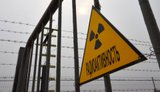 Russia denounces agreement with United States on utilization of plutonium for nuclear missiles On October 8, the Russian State Duma passed a law terminating the agreement between the US and Russia on the disposal of weapons-grade plutonium. 2 223 20 Previously in trend: Nuclear weapons US-Russia nuclear disarmament
 Trump on Medvedev: He is "really stupid person" who works for Putin U.S. President Donald Trump recalled nuclear threats made by Russian Security Council Deputy Chairman Dmitry Medvedev, calling him "a really stupid person." 9 491 29 Previously in trend: Trump statements Medvedev’s threats
 Threat of nuclear war is now at its highest level, - The Telegraph Russian dictator Vladimir Putin has his finger on the nuclear trigger. The threat of nuclear war is now at its highest level. 4 852 33 Previously in trend: Nuclear weapons
 Russia ready to respond to any "strategic threats" with military force – Putin Russian dictator Vladimir Putin says Moscow is supposedly ready to respond to "any strategic threats" from the West, not with words but with "military-technical measures." 7 989 39 Previously in trend: Nuclear proliferation US-Russia nuclear disarmament
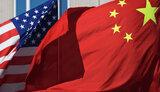 China has refused to participate in trilateral talks with US and Russia on nuclear disarmament, - Country’s Foreign Ministry China has called the US idea of holding trilateral nuclear disarmament talks involving Washington, Moscow, and Beijing "unwise." 1 735 7 Previously in trend: Nuclear weapons
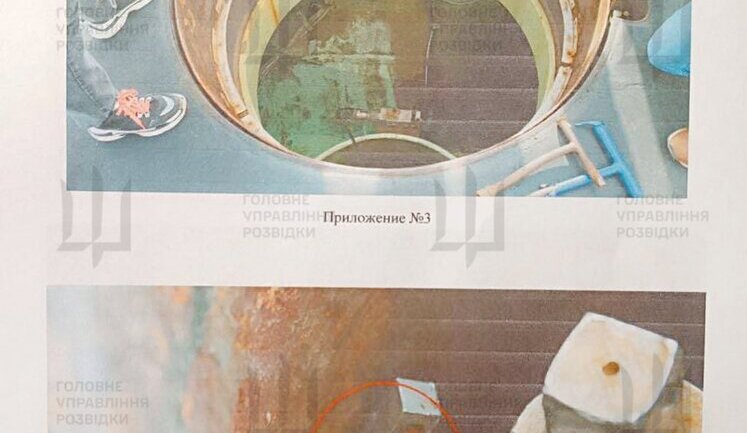
 DIU obtained comprehensive classified data on Russian Federation’s latest nuclear submarine cruiser, Knyaz Pozharsky. DOCUMENT Specialists of the Defence Intelligence of Ukraine have obtained classified internal documentation on Russia's newest submarine, the K-555 Knyaz Pozharsky strategic nuclear submarine of the 955A Borei-A project. 10 913 41 Previously in trend: Nuclear weapons
 Kremlin propagandist Solovyov proposes nuclear strike on western Ukraine. VIDEO Kremlin propagandist Vladimir Solovyov has proposed launching a nuclear strike on western Ukraine, calculating the wind direction so that radioactive fallout would cover Poland. He also called to wipe Lviv off the map, claiming that "Russia will rebuild a new city" in its place. 17 130 122
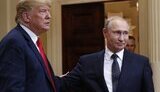 US plans to discuss future nuclear disarmament prospects with Russia – Trump U.S. President Donald Trump stated that he would like to prepare a new Strategic Arms Reduction Treaty (New START or START III) between the United States and Russia, which expires in early 2026. 1 368 41 Previously in trend: Nuclear proliferation US-Russia nuclear disarmament
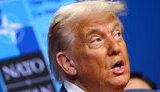 I’m not offering Iran anything, I’m not even talking to them. We have completely destroyed their nuclear facilities, - Trump US President Donald Trump is not currently in contact with Iran. 2 894 55 Previously in trend: US strikes on Iran
Page 1 of 10
more news