ENG




13709 visitors online
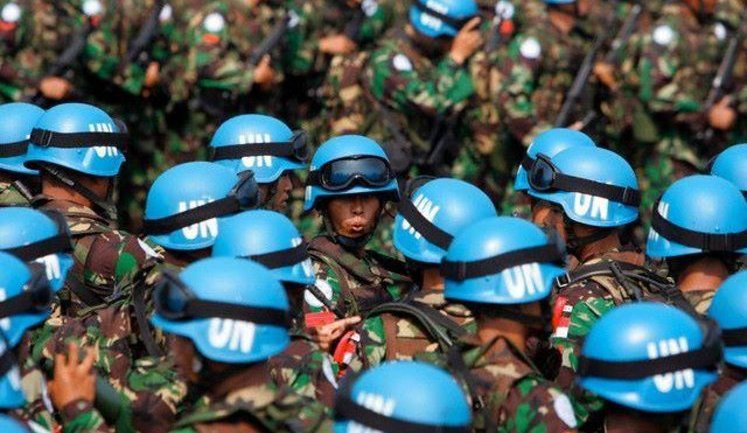
European countries are considering deploying up to 15,000 troops in Ukraine post-war as part of the "Coalition of the Willing." This deployment hinges on achieving a ceasefire or a peace agreement. Switzerland, under UN or OSCE mandates, and other nations like Estonia, UK, and Indonesia have expressed readiness to send peacekeepers. However, public opinion in some EU countries and Russia's opposition pose challenges. Germany and the US discuss security guarantees, while both France and Britain consider contingent parameters. President Zelenskyy highlights that any foreign military presence can only occur post-hostilities.
What is the role of the "Coalition of the Willing" in peacekeeping?
The "Coalition of the Willing" consists of nations prepared to deploy military forces in Ukraine post-war. Their role is to support peacekeeping efforts contingent upon a formal ceasefire or peace agreement. These countries are committed to ensuring stability and security in Ukraine as it transitions to peace, coordinating closely under internationally agreed mandates like those from the UN or OSCE.
Under what conditions can peacekeepers be deployed to Ukraine?
The deployment of peacekeepers to Ukraine is contingent upon reaching a ceasefire or a formal peace agreement between the involved parties. Several countries, including those in the "Coalition of the Willing," have stated their readiness to send troops only after hostilities have ended, ensuring that their presence is stabilizing rather than escalating tensions.
How are European nations preparing for potential deployment in Ukraine?
European nations are actively planning the deployment of peacekeepers to Ukraine. As part of this preparation, some nations have committed to sending troops as soon as hostilities cease. These preparations include understanding the logistical needs, securing legal mandates from organizations like the UN or OSCE, and addressing public opinion within their own countries to ensure any actions taken are widely supported.
What are the challenges in deploying peacekeepers to Ukraine?
The challenges in deploying peacekeepers to Ukraine include obtaining international agreements and mandates from bodies like the UN or OSCE, opposition from Russia, and lack of consensus among European countries due to public opinion. Furthermore, logistical issues such as troop numbers and the coordination of a multinational force add to the complexity of such deployment plans.
What stance has Russia taken on foreign troops in Ukraine?
Russia has firmly opposed the deployment of foreign troops in Ukraine, viewing it as an unacceptable intervention. The Russian government, through spokespeople like Dmitry Peskov, have reiterated their opposition and suggested that the presence of such forces would complicate dialogue and negotiating terms for peace. This stance remains a significant factor in international discussions regarding post-war stabilization efforts in Ukraine.
Is the United Nations involved in peacekeeping plans in Ukraine?
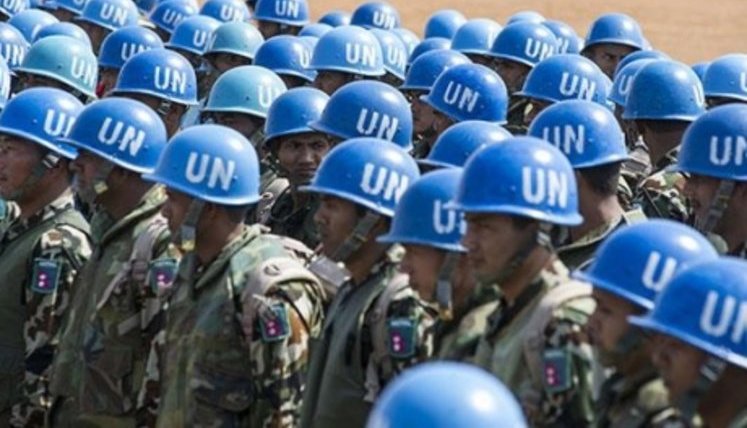
The United Nations could potentially play a role in peacekeeping missions in Ukraine through its mandate. Several countries have expressed willingness to participate under a UN mandate once a peace agreement is secured. The involvement of the UN is seen as a way to legitimize and coordinate international efforts to stabilize Ukraine once hostilities cease.
News peacekeepers
 Poland is prepared to provide logistical support for peacekeeping mission in Ukraine, but will not send its own troops, - Sikorski Poland has stated that it is prepared to provide logistical support to a potential international peacekeeping mission in Ukraine, whilst not planning to deploy its own military personnel to such an operation. 1 067 22 Previously in trend: foreign peacekeepers
 Hungary will not send either soldiers or weapons to Ukraine, - Magyar The newly elected government of Hungary has no intention of changing the country's previous course and continues to refuse to provide Ukraine with any military support. 2 834 55 Previously in trend: Relations between Ukraine and Hungary
 Real security guarantee for Ukraine is U.S. support – Rubio U.S. Secretary of State Marco Rubio believes that support from Washington is the only real security guarantee for Ukraine. There is already a shared understanding between the countries on this. 3 413 45 Previously in trend: foreign peacekeepers Security guarantees for Ukraine
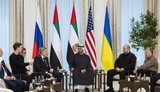 During negotiations in UAE, possible American peacekeeping mission in Donetsk Oblast was discussed, - NYT During two days of negotiations in Abu Dhabi, representatives of Ukraine and the United States discussed the deployment of US peacekeeping forces in the Donetsk region or the creation of a demilitarised zone. 2 454 18 Previously in trend: Peace negotiations foreign peacekeepers Territorial concessions
 Scotland is ready to send its troops to Ukraine if peace agreement is reached, - Minister Swinney Scotland has announced its readiness to send troops to Ukraine as part of a peacekeeping force, provided that a peace agreement is concluded in Ukraine's interests. 1 294 20 Previously in trend: Foreign troops in Ukraine
 Peace settlement remains unattainable without Russia’s consent, Merz says German Chancellor Friedrich Merz stressed that without Russia’s consent, a peaceful settlement remains unattainable. 2 711 41 Previously in trend: foreign peacekeepers
 Russia will consider Western troops in Ukraine as "legitimate targets," - Russian Foreign Ministry Russia says it will consider Western military personnel stationed in Ukraine as "legitimate targets." 6 797 42 Previously in trend: foreign peacekeepers
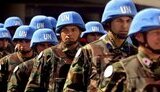 Britain and France could send up to 15,000 troops to Ukraine after peace deal, - Times The United Kingdom and France may send up to 15,000 soldiers to Ukraine if a peace agreement is reached. 1 039 16 Previously in trend: foreign peacekeepers
 Declaration of intent on deploying multinational forces in Ukraine after war signed, Zelenskyy says Ukraine, France and the United Kingdom signed a declaration of intent on January 6 regarding the future deployment of multinational forces in Ukraine following a meeting of the "Coalition of the Willing." 4 640 71 Previously in trend: foreign peacekeepers Coalition of the willing
Europe may deploy up to 15,000 troops in Ukraine after end of war, - Welt European countries that are ready to join the military component of the so-called "Coalition of the Willing" may deploy up to 15,000 of their troops to Ukraine within the first six months after the end of the war. 3 632 73 Previously in trend: foreign peacekeepers
 Despite Russia’s media claims, Ukraine-U.S. talks have not been derailed, Zelenskyy says President Volodymyr Zelenskyy denied Russian claims that talks with the United States had been derailed. 1 228 23 Previously in trend: Peace negotiations Negotiations with the USA
 Peacekeepers in Ukraine can be deployed only after hostilities cease – Zelenskyy President Volodymyr Zelenskyy said partners in the "Coalition of the Willing" are ready to deploy troops in Ukraine only in the event of a ceasefire or the end of the war. 841 9 Previously in trend: foreign peacekeepers
 Some European countries have made it clear that they are ready to send troops to Ukraine, - Rutte Several European countries have declared their readiness to send troops to Ukraine if necessary. 4 457 44 Previously in trend: Foreign troops in Ukraine
 Switzerland is ready to send military personnel to Ukraine under UN or OSCE mandate, - Ambassador Baumann Switzerland may participate in a peacekeeping mission in Ukraine after receiving a mandate from the UN Security Council or the OSCE. 2 131 51 Previously in trend: foreign peacekeepers
 Merz on possibility of sending German troops to Ukraine: There are questions that are not so easy to answer German Chancellor Friedrich Merz was unable to answer the question of whether Germany was prepared to send troops to Ukraine as part of security guarantees after the end of the war. 907 10 Previously in trend: foreign peacekeepers
 Peskov on foreign contingent in Ukraine: Russia’s position is well known, but it is subject for discussion Russian dictator Vladimir Putin’s spokesman Dmitry Peskov said Russia’s position on a foreign military contingent in Ukraine is well known, while calling the issue "a subject for discussion." 1 753 8 Previously in trend: Foreign troops in Ukraine
 The United Kingdom is preparing to deploy troops in Ukraine after the end of the war, - Healey The United Kingdom is preparing for the future deployment of troops in Ukraine after peace is established. 2 990 30 Previously in trend: Foreign troops in Ukraine
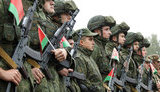 Belarus has announced its readiness to send "peacekeepers" to Ukraine The head of the Department of International Military Cooperation and Peacekeeping Activities of the Special Operations Forces Command of the Armed Forces of Belarus, Alexei Skabey, said that Belarusian peacekeepers are ready to be deployed in Ukraine if necessary. 3 866 37 Previously in trend: foreign peacekeepers
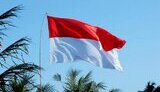 Indonesia is ready to send peacekeepers to Ukraine according to UN decision - President Subianto Indonesian President Prabowo Subianto stated at the UN General Assembly that the country is ready to participate in maintaining peace and send peacekeeping forces to Ukraine. 1 086 6 Previously in trend: foreign peacekeepers
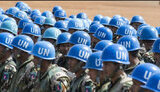 UN peacekeepers may be deployed in Ukraine after peace agreement - Baerbok The new President of the UN General Assembly, Annalena Baerbok, does not rule out the deployment of UN peacekeeping forces in Ukraine. However, this can only happen after the signing of a peace treaty. 2 337 65 Previously in trend: foreign peacekeepers
 Stubb: We will not send soldiers to Ukraine, but we will provide support Finnish President Alexander Stubb said that Finnish troops will not participate in combat operations in Ukraine, but the country is considering other forms of support. 2 081 24 Previously in trend: foreign peacekeepers Security guarantees for Ukraine
 EU has prepared plan to send troops to Ukraine: two separate land groups will be created, - WSJ As part of the plan for the deployment of troops in Ukraine, developed by the European military command, two separate ground groups will be created. 9 323 41 Previously in trend: Security guarantees from Europe Foreign troops in Ukraine Security guarantees for Ukraine
 Why should we care what Russia thinks about someone else’s troops in Ukraine? It’s not up to Moscow to decide, - Rutte NATO Secretary General Mark Rutte said that in discussing the potential presence of a deterrent contingent of partners in Ukraine, only Kyiv, not Moscow, should have a say. 3 929 42 Previously in trend: foreign peacekeepers
 Russia will not discuss deployment of foreign troops in Ukraine in any format, - Russian Foreign Ministry Russia has no intention of discussing the idea of deploying foreign troops in Ukraine in any format, calling it "unacceptable foreign intervention". 3 962 47 Previously in trend: Foreign troops in Ukraine Security guarantees for Ukraine
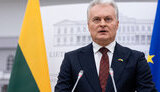 Nauseda: Europe should plan to send peacekeepers to Ukraine Lithuanian President Gitanas Nausėda called on the countries of the so-called "Coalition of the Willing" to begin concrete planning for the possible deployment of peacekeepers to Ukraine. 605 3 Previously in trend: foreign peacekeepers
 Putin and Xi Jinping did not discuss idea of deploying "Chinese peacekeepers" in Ukraine - Kremlin Russian dictator Vladimir Putin and Chinese leader Xi Jinping did not discuss the possibility of deploying a "Chinese peacekeeping contingent" in Ukraine during their meeting. 964 6 Previously in trend: foreign peacekeepers
 NATO’s European Commander Grynkewich may lead peacekeeping mission in Ukraine - Telegraph Europe has no experience in coordinating large-scale military missions, so a general from the US may be brought in for this purpose. The commander of NATO forces in Europe, Alexus Grynkewich, may head the peacekeeping mission in Ukraine. 1 724 11 Previously in trend: Foreign troops in Ukraine
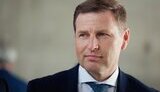 Estonia supports deployment of European forces in Ukraine after ceasefire - Defense Minister Pevkur Estonian Defense Minister Hanno Pevkur said that NATO membership would remain the best guarantee of security for Ukraine, but that additional mechanisms needed to be developed now, including sending European troops to Ukrainian territory with the support of the US. 523 10 Previously in trend: foreign peacekeepers
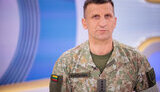 Lithuania supports idea of sending troops to Ukraine, but only after ceasefire - Armed Forces Commander Vaikšnoras The commander of the Lithuanian Armed Forces, Raimundas Vaitkūnas, expressed his support for the idea of sending foreign troops to Ukraine, noting that this would only be possible after a peace agreement or a ceasefire had been concluded. 533 4 Previously in trend: foreign peacekeepers
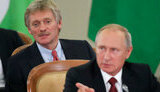 Kremlin is opposed to possible deployment of NATO troops in Ukraine, - Peskov The Kremlin has once again stated that it opposes the deployment of foreign troops on Ukrainian territory. 1 663 16 Previously in trend: foreign peacekeepers
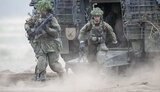 Europeans oppose sending troops to Ukraine - WSJ The plan to send European troops to Ukraine if a peace agreement is reached between Kyiv and Moscow faces an obstacle: public opinion in key EU countries does not support it. 3 664 64 Previously in trend: foreign peacekeepers
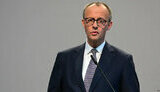 Germany is discussing sending troops to Ukraine, - NYT German political leaders are discussing whether to send troops to Ukraine after a peace agreement has been reached. 2 331 37 Previously in trend: foreign peacekeepers
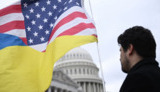 U.S. ready to provide air and intelligence support as part of post-war security guarantees for Ukraine – FT The United States is ready to provide Ukraine with intelligence resources and aerial battlefield monitoring as part of any security guarantees after the end of hostilities. Washington could also take part in building a European air defense shield for the country. 2 853 21 Previously in trend: Security guarantees for Ukraine
 Belgium ready to join peacekeeping mission in Ukraine "when necessary" – FM Prévot After a ceasefire in Ukraine, Belgium is ready to take part in a peacekeeping mission within the "Coalition of the Willing." 683 3 Previously in trend: foreign peacekeepers Foreign troops in Ukraine
 Polish military will not participate in potential peacekeeping mission in Ukraine - Tusk Poland will not send its troops to Ukraine after the war ends. 1 451 17 Previously in trend: foreign peacekeepers
 It is important that among countries that will send contingent to Ukraine are leaders of "Coalition of willing" - Zelenskyy President Volodymyr Zelenskyy said that it is important that the countries sending military contingents to Ukraine include the leading states of the "coalition of the willing." 1 029 22 Previously in trend: foreign peacekeepers
 China does not plan to send peacekeepers to Ukraine, - Chinese Foreign Ministry China has commented on reports that it is allegedly ready to send peacekeepers to Ukraine. 1 843 15 Previously in trend: foreign peacekeepers
 China has announced its readiness to send peacekeepers to Ukraine - Welt China has signaled that, under certain conditions, it may join the mission to deploy a peacekeeping contingent in Ukraine. 6 330 90 Previously in trend: foreign peacekeepers
 It is premature to talk about deployment of foreign troops in Ukraine - NATO Military Committee Chairman Dragone It is premature to discuss the potential deployment of foreign military contingents in Ukraine at this stage. 1 157 9 Previously in trend: Foreign troops in Ukraine
 Pavel on peacekeeping forces in Ukraine: Czech participation will depend on peace deal format Czech President Petr Pavel believes that the Czech Republic should take part in deploying peacekeeping forces in Ukraine. 527 1 Previously in trend: foreign peacekeepers Security guarantees for Ukraine
 Participation of Finnish military in operations for Ukraine requires serious discussion - Prime Minister Orpo Finnish Prime Minister Petteri Orpo said that the key task for Finland and its allies is to strengthen the Ukrainian army, and sending troops may be only one of the options for providing support. 780 6 Previously in trend: foreign peacekeepers Security guarantees for Ukraine
 We will not send Polish soldiers to Ukraine - Kosiniak-Kamysz The Polish government does not plan to send its troops to Ukraine after the end of hostilities. 3 508 59 Previously in trend: foreign peacekeepers
 It’s too early to talk about sending Latvian troops to Ukraine - President Rinkėvičs Latvian President Edgars Rinkēvičs believes that it will only be possible to discuss whether Latvian soldiers will participate in peacekeeping operations in Ukraine once it is clear what security guarantees will be in place and what role European countries will play. 685 5 Previously in trend: foreign peacekeepers Foreign troops in Ukraine
 Trump avoided answering question about sending peacekeepers to Ukraine: We are focused on lasting peace US President Donald Trump did not give a clear answer whether he is ready to send American peacekeepers to Ukraine after the war is over. 1 868 11 Previously in trend: Trump-Zelenskyy meeting
 Trump does not rule out deployment of US troops in Ukraine as part of security guarantees - Axios One of Donald Trump's advisers has not ruled out that the US could deploy troops on Ukrainian territory as part of potential security guarantees after the end of hostilities. 2 815 40 Previously in trend: foreign peacekeepers Security guarantees for Ukraine
 UK is ready to put boots on ground in Ukraine in case of ceasefire - Healey If a ceasefire is reached, the UK is ready to send troops to Ukraine. 3 279 29 Previously in trend: Foreign troops in Ukraine
 Plans to deploy peacekeepers to Ukraine are as ready as possible and set for implementation – Starmer The "Coalition of the Willing" is actively preparing to deploy deterrence forces to Ukraine — plans are nearly complete and ready for implementation once a ceasefire between the countries is achieved. 2 251 18 Previously in trend: foreign peacekeepers
 France and Britain believe deployment of Western troops in Ukraine is still possible - FT France and the United Kingdom believe that the plan to deploy a foreign contingent in Ukraine after the end of hostilities is still possible. 1 494 15 Previously in trend: foreign peacekeepers Foreign troops in Ukraine
Page 1 of 6
more news