ENG




13690 visitors online
Ukrainian President Volodymyr Zelenskyy's participation in the upcoming G-7 summit in Évian-les-Bains highlights the ongoing focus on Ukraine's geopolitical situation. Invited by French President Emmanuel Macron, Zelenskyy aims to drive home the pressing challenges facing Ukraine amid tensions with Russia. The summit, a congregation of the world's most influential economies, serves as a pivotal platform for Ukraine to engage in strategic dialogues. The anticipated discussions underline the summit's importance in pooling global support and crafting policies that impact the international economic landscape, with Ukraine's situation being a focal point for deliberations.
What is the significance of Zelenskyy attending the G-7 summit?
Zelenskyy's attendance at the G-7 summit is crucial for raising awareness and gaining international support for Ukraine amid the geopolitical dynamics involving Russia. The summit provides a platform for influential global leaders to discuss and potentially support measures that could help stabilize the situation in Ukraine and foster international cooperation.
Who invited Zelenskyy to the G-7 summit in France?
French President Emmanuel Macron extended the invitation to Ukrainian President Volodymyr Zelenskyy to participate in the G-7 summit. Macron's invitation underscores France's commitment to addressing and understanding the challenges faced by Ukraine within a global context alongside other major economies.
What topics are expected to be discussed regarding Ukraine at the summit?
At the G-7 summit, the discussions regarding Ukraine are expected to focus on the geopolitical tensions with Russia, the economic impacts of ongoing conflicts on Ukraine, and potential strategic assistance from the international community. These discussions aim to formulate a collective response to offer support and solutions to the challenges Ukraine faces.
How does the G-7 summit impact global economic policies?
The G-7 summit significantly impacts global economic policies as it brings together leaders from the world's largest economies to discuss and address pressing global issues, including finance, trade, and international security. Decisions made at the summit can lead to concerted efforts and coordinated policies that affect global markets and political relations.
When and where will the G-7 summit take place in France?
The G-7 summit is scheduled to take place on June 16 in Évian-les-Bains, France. This location will serve as a meeting point for world leaders to gather and engage in discussions about global economic issues and geopolitical challenges, including the situation in Ukraine.
News G-7
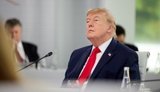 Photos of Lavra in flames following Russian strike prompted Trump to support Ukraine at G7 summit, - Politico The release of photos showing the Kyiv-Pechersk Lavra damaged by a Russian strike on June 15 served as the final impetus that convinced U.S. President Donald Trump to support Ukraine in a joint statement following the G7 summit in France. 2 796 9 Previously in trend: Zelenskyy-Trump meeting Strike on Kyiv-Pechersk Lavra
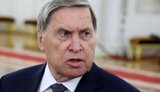 Kremlin said that Trump was "pumped" with harmful ideas at G7 summit An aide to the Russian dictator, Yuriy Ushakov, claimed that European leaders at the G7 summit were "feeding" U.S. President Donald Trump "harmful ideas." 2 740 19 Previously in trend: G7 Summit
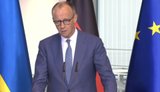 G7 joint statement on Ukraine is a real success, - Merz German Chancellor Friedrich Merz stated that the G7 countries' joint statement was a "real success," in part because they managed to convince U.S. President Donald Trump to sign on to the document. 1 539 6 Previously in trend: G7 Summit
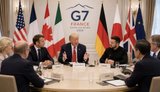 Number of G7 countries are set to produce long-range missiles in Ukraine, - media The US and the European countries of the ‘Group of Seven’ intend to establish licensed production in Ukraine not only of air defence systems but also of long-range weapons. 1 492 17 Previously in trend: US aid to Ukraine Aid to Ukraine from Europe Ukrainian weapons production
G7 partners will increase their military and financial support for Ukraine, - Merz The G7 countries will increase their financial and military support for Ukraine and step up pressure on Russia, in particular through sanctions. 504 0 Previously in trend: G7 supports Ukraine G7 Summit
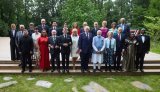 Zelenskyy on results of G7 summit: There will be strengthening of air defense and new steps to put pressure on Russia President Volodymyr Zelenskyy discussed the outcomes of the G7 summit for Ukraine. 1 135 9 Previously in trend: G7 Summit
 Putin did not receive invitation to meet with Zelenskyy on sidelines of G7 summit or in US, - Kremlin The Kremlin has stated that the Russian dictator Vladimir Putin did not receive an official invitation to meet with Ukrainian President Volodymyr Zelenskyy at the G7 summit in France. 2 376 25 Previously in trend: Zelenskyy–Putin meeting
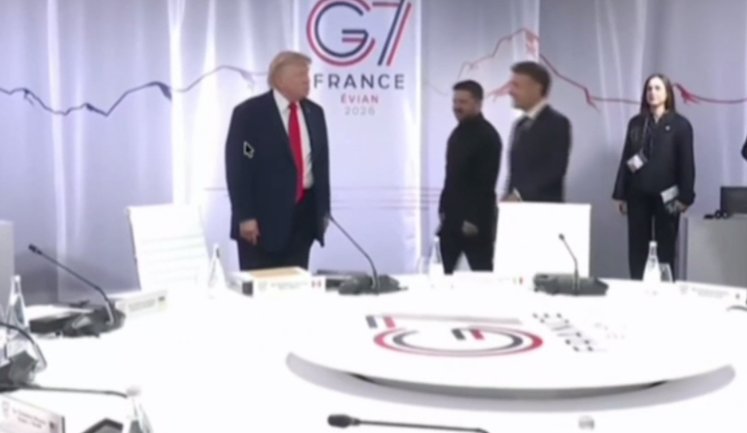
 Zelenskyy, Trump and Macron have arrived at G7 summit. VIDEO President Volodymyr Zelenskyy arrived at the G7 summit alongside Donald Trump and Emmanuel Macron. 3 437 15 Previously in trend: G7 Summit
 "Window of opportunity for diplomacy" to end war in Ukraine may be opening for first time, - Merz In the run-up to the G7 summit on Monday, 15 June, in Évian-les-Bains, France, the first signs emerged of a possible opening for a diplomatic end to Russia’s war against Ukraine. 1 859 10 Previously in trend: Peace negotiations Ending the war
 Support for Ukraine will be main topic at G7 summit, - Meloni Italian Prime Minister Giorgia Meloni has stated that support for Ukraine will be the main topic at the G7 summit. 994 6 Previously in trend: Massive combined attack
 Zelenskyy has proposed that Putin meet during G7 summit President Volodymyr Zelenskyy has stated that Ukraine has requested a meeting with dictator Putin during the G7 summit, which is due to take place on 15–17 June in Evian-les-Bains, France. 5 193 44 Previously in trend: Zelenskyy–Putin meeting
 G7 leaders will discuss stepping up pressure on Russia today, - von der Leyen During today's meeting, G7 leaders will discuss stepping up pressure on Russia to force Russian dictator Putin to the negotiating table. 826 5 Previously in trend: EU sanctions against Russia Massive combined attack
 Macron invited Zelenskyy to G7 summit in France on June 16 Ukrainian President Volodymyr Zelenskyy will take part on June 16 in a discussion on the situation in Ukraine during the G7 summit in Évian-les-Bains, France. 1 391 9 Previously in trend: G7 Summit
 Zelenskyy plans to attend G7 summit in France in late June - Politico Ukrainian President Volodymyr Zelenskyy plans to attend the G7 summit, which will take place later this month in France. 1 200 22 Previously in trend: G7 Summit
 G7 ambassadors continue their work in Ukraine G7 ambassadors have said they continue to work in Ukraine despite Russia’s threats of strikes on Kyiv. 575 2 Previously in trend: Massive combined attack
 On March 26, G7 foreign ministers, with participation of Sybiha, will discuss restoration of Chornobyl NPP protective arch A meeting of the foreign ministers of the G7 countries will take place in France on March 26–27, during which the foreign ministers—including Ukraine’s Foreign Minister Andriy Sybiga—will discuss plans to restore the protective arch over the Chornobyl Nuclear Power Plant, which was damaged by a... 507 0 Previously in trend: Drone strike on Chornobyl NPP
 Rubio is set to travel to France for G7 foreign ministers’ meeting: Ukraine will be among topics discussed U.S. Secretary of State Marco Rubio will visit France on March 27, where he will attend the G7 Foreign Ministers' Summit. 836 4 Previously in trend: Rubio’s statements
 Macron stated that rising oil prices are not a reason to lift sanctions against Russia The rise in oil prices due to the conflict in the Middle East cannot be a reason for easing sanctions against Russia. 1 094 0 Previously in trend: Sanctions against Russia
 G7 leaders plan meeting with Trump in Davos on security guarantees for Ukraine, - FT The leaders of Italy, Germany, France, Canada, and the United Kingdom, together with the President of the European Commission, plan to meet with US President Donald Trump at the World Economic Forum in Davos next week. 1 277 5 Previously in trend: Security guarantees for Ukraine
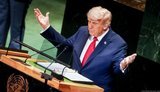 Trump administration discusses creating alternative to G7 with China and Russia, - Politico The administration of US President Donald Trump is discussing the creation of a new international association that could become an alternative to the G7 and include China and Russia. 5 977 72 Previously in trend: U.S.–Russia relations
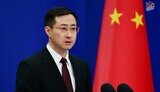 China rejects G7 accusations: does not supply weapons to Russia or Ukraine China has never provided lethal weapons to any party in the war in Ukraine and considers the accusations made by G7 ministers to be unfounded. 1 737 13 Previously in trend: China rejects accusations of supporting the war China on the war in Ukraine
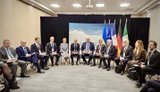 Sybiha to G7 ministers: Those involved in energy-sector corruption will be held accountable, this is president’s position Ukrainian Foreign Minister Andrii Sybiha commented on the recent exposure of corruption in the energy sector during a meeting with the foreign ministers of the G7 countries. 2 421 48 Previously in trend: Energy sector corruption
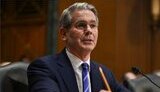 US will increase pressure on Russia together with its G7 partners, - Finance Minister Bessent The United States intends to increase pressure on Russia and those who finance its military machine, in cooperation with its G7 partners. 1 356 5 Previously in trend: Sanctions against Russia
 G7 developing plan to reduce Russia’s oil revenues, - Reuters The G7 countries intend to increase pressure on Russian oil exports, in particular by increasing production in Saudi Arabia and the UAE and reducing purchases of Russian oil in India and Turkey. 1 292 7 Previously in trend: Russian oil exports
 Approximately 676,000 foreign components found in drones and missiles launched by Russia against Ukraine in September In September 2025, Russia launched 7,313 drones and 270 missiles at Ukraine, which contained approximately 676,000 foreign-made components. 773 3 Previously in trend: Components for Russian weapons Supply of foreign components for Russian military intustry
 G7 prepares to tighten sanctions against Russia with focus on energy and defense - Bloomberg The Group of Seven (G7) countries are approaching an agreement on significantly strengthening sanctions against Russia due to its continued war against Ukraine. 722 2 Previously in trend: Sanctions against Russia
 G7 foreign ministers discuss additional sanctions against Russia The foreign ministers of the G7 countries held a meeting at the United Nations General Assembly in New York, after which they announced increased sanctions pressure on Russia. 618 1 Previously in trend: Sanctions against Russia
 U.S. to urge G7 partners to impose 50–100% secondary tariffs on China and India for buying Russian oil – Bloomberg The United States intends to propose that members of the G7 strengthen sanctions and customs pressure on Russia and develop a mechanism for confiscating frozen Russian assets. 1 775 37 Previously in trend: Sanctions against Russia U.S. sanctions against Russia
 EU plans to use €200 billion in frozen Russian assets to rebuild Ukraine after war - Politico On Saturday, August 30, European foreign ministers will discuss the use of frozen Russian assets for the reconstruction of Ukraine. 1 349 20 Previously in trend: Use of frozen assets of Russian Federation
 G7 partners ready to step up sanctions against Russia – Zelensky The Group of Seven countries are ready to step up sanctions against Russia. 797 31 Previously in trend: Sanctions against Russia
 G7 Foreign Ministers will hold virtual meeting today: They will discuss prospects for peace in Ukraine Today, August 24, a virtual meeting of the foreign ministers of the G7 countries will take place. 665 2 Previously in trend: Independence Day G7 supports Ukraine
 G7 ambassadors on Tsyvinskyi’s appointment: It promotes improving Ukraine’s business climate G7 ambassadors welcome Oleksandr Tsyvinskyi’s appointment as director of the Bureau of Economic Security (BES). 849 8 Previously in trend: Tsyvinskyi appointed as new director of BES
 G7 ambassadors welcome Zelenskyy’s announcements on NABU and SAPO. We offered help, - Mathernova. VIDEO The G7 ambassadors welcomed President Volodymyr Zelenskyy's promise to restore the independence of the NABU and the SAPO. 4 255 37 Previously in trend: Abolition of NABU and SAPO independence
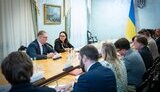 Svyrydenko informs G7 ambassadors about new presidential bill on independence of anti-corruption infrastructure Prime Minister Yulia Svyrydenko met with ambassadors of the G7 countries to discuss the anti-corruption policy of the new government. 6 832 88 Previously in trend: Abolition of NABU and SAPO independence
 Prosecutor General Kravchenko meets with G7 representatives to discuss NABU situation Prosecutor General Ruslan Kravchenko, together with Security Service of Ukraine (SSU) head Vasyl Maliuk and State Bureau of Investigations (SBI) director Oleksii Sukhachov, held talks with G7 representatives. The parties discussed, among other topics, ongoing investigations involving several... 5 184 32
G7 ambassadors express "serious concern" over attack on NABU, seek meeting with government Ambassadors of the Group of Seven (G7) countries have expressed "serious concerns" over the initiated investigations into several employees of the National Anti-Corruption Bureau of Ukraine (NABU). 7 669 64 Previously in trend: Search in NABU Pressure on NABU
 Trump left G7 summit early due to Zelenskyy and Macron – FT U.S. leader Donald Trump left the G7 summit in Canada early on June 17 due to a lack of interest in meeting with Ukrainian President Volodymyr Zelenskyy and frustration with French President Emmanuel Macron. 17 850 127 Previously in trend: Trump-Zelenskyy meeting G7 Summit in June 2025
 G7 Summit letdown for Ukraine — The Guardian Ukrainian diplomats are disappointed, and in some cases angry, with Donald Trump's refusal to make Ukraine a priority at the G7 summit. 7 558 45 Previously in trend: G7 Summit in June 2025
G7 leaders support Trump’s efforts to achieve peace in Ukraine and are determined to impose new sanctions against Russia, - Zelenskyy. PHOTO The G7 leaders expressed support for US President Donald Trump's efforts to achieve a just and lasting peace in Ukraine. 1 809 35 Previously in trend: G7 Summit in June 2025
 Zelenskyy leaves G7 summit ahead of schedule - CBC News President of Ukraine Volodymyr Zelenskyy is ending his official visit to the G7 summit in Canada ahead of schedule after yesterday's massive shelling of Kyiv. 10 471 40 Previously in trend: G7 Summit in June 2025
 Carney released his own statement instead of joint statement of G7 leaders Officials from the office of Canadian Prime Minister Mark Carney deny comments that the United States wanted to soften the statement on Russia's war in Ukraine made on the last day of the G7 summit in Alberta. 8 060 19 Previously in trend: G7 Summit in June 2025
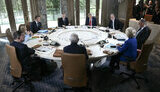 G7 leaders failed to persuade Trump to tighten sanctions against Russia - Bloomberg Discussions between the leaders of the "Group of Seven" countries during a dinner on 16 June did not affect US President Donald Trump's position on imposing tougher sanctions against Russia. 4 167 45 Previously in trend: Sanctions against Russia U.S. sanctions against Russia
G7 will not issue joint statement on war in Ukraine: US disagrees with tough wording on Russia, - Reuters The G7 leaders will not issue a joint statement on the war in Ukraine following the summit in Canada because of the US position. 10 265 82 Previously in trend: G7 Summit in June 2025
Zelenskyy and Carney discuss financial support for Ukrainian weapons production. PHOTO Ukrainian President Volodymyr Zelenskyy met with Canadian Prime Minister Mark Carney on the sidelines of the G7 summit. 1 891 28 Previously in trend: Canada’s support for Ukraine G7 Summit in June 2025
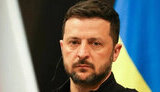 Zelenskyy touches down in Canada for G7 summit President Zelenskyy arrives in Canada to attend G7 summit, holds high-level meetings on sidelines 2 872 43 Previously in trend: G7 Summit in June 2025
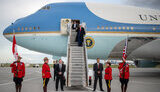 Trump arrives in Canada for G-7 summit United States President Donald Trump has arrived in Canada to participate in the G-7 summit. 1 784 15 Previously in trend: G7 Summit in June 2025
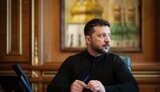 Ukraine plans to discuss use of frozen Russian assets and price caps on oil at G7 – Zelenskyy President Volodymyr Zelenskyy stated that Ukraine intends to raise the issue of increasing pressure on Russia, including introducing price caps on Russian oil, at the upcoming G7 summit in Canada. 612 6 Previously in trend: Sanctions against Russia G7 Summit in June 2025
 EU won’t cut Russian oil price ceiling without G7 support - media The European Union will not reduce the price ceiling for Russian oil from $60 to $45 per barrel on its own, as such an initiative is unlikely to be supported by the "Group of Seven". 6 474 32 Previously in trend: Оil prices
Page 1 of 7
more news