ENG




12248 visitors online
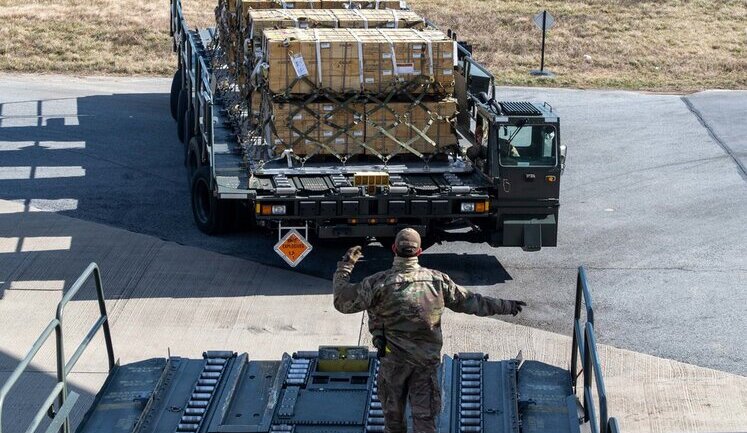
The US Senate Armed Services Committee has endorsed a significant increase in aid, allocating $750 million for Ukraine's security. This move underscores the United States' ongoing commitment to supporting Ukraine amid its defense challenges and geopolitical tensions. The funding aims to bolster Ukraine's military capabilities and enhance its defense infrastructure. This proposal has garnered bipartisan support, reflecting a recognition of Ukraine's strategic importance and the necessity of ample military assistance. As the proposal moves forward, its implementation will be pivotal in shaping Ukraine's defense posture in the coming months.
What is the amount of the new US aid package to Ukraine?
The new aid package approved by the US Senate Armed Services Committee allocates $750 million in security assistance to Ukraine, reinforcing its defense capabilities amidst ongoing challenges.
Why is the US increasing security assistance to Ukraine?
The increase in security assistance to Ukraine is driven by the need to support Ukraine's defense in response to geopolitical tensions. This funding aims specifically to enhance military capabilities and infrastructure.
Which US body approved the security aid increase for Ukraine?
The US Senate Armed Services Committee approved the increase in security assistance for Ukraine, highlighting a unified effort to support Ukraine's national security and sovereignty.
How does this aid affect Ukraine’s defense forces?
The $750 million aid package is designed to significantly bolster Ukraine's defense forces by improving military infrastructure, fortifying capabilities, and ensuring better preparedness against external threats.
What are the implications of US aid for Ukraine’s regional stability?
The substantial US aid package is expected to enhance regional stability by strengthening Ukraine's defense against potential aggressors, thus contributing to a more balanced geopolitical landscape in the region.
Who are the primary supporters of the increased aid to Ukraine?
The proposal for increased aid has received bipartisan support across the US Senate, demonstrating a collective political commitment to reinforcing Ukraine's security amidst ongoing international challenges.
When was the decision for increased aid announced?
The decision for increasing security aid to Ukraine was announced on June 11, 2026, following a meeting of the US Senate Armed Services Committee.
What strategic benefits does US gain from aiding Ukraine?
By aiding Ukraine, the US aims to enhance its strategic influence in Eastern Europe, counteract aggression, and uphold democratic values in regions where geopolitics require a steady presence and support.
Has there been international reaction to US aid to Ukraine?
International reactions have largely been supportive, as the increased aid displays a commitment to maintaining security balances and deterring escalation in tensions within the region.
w117_header_alt US aid to Ukraine
 US is prepared to spend $400 million on military aid to Ukraine, but without missiles for Patriot system, – Reuters The Donald Trump administration has made a legal commitment to spend almost all of the $400 million that the US Congress approved for military aid to Ukraine at the end of last year. However, interceptor missiles for the Patriot air defence system were not included in this package. 3 873 28 Previously in trend: US aid to Ukraine Patriot missiles for Ukraine Missiles for Patriot
 Trump has mentioned Biden nearly 900 times since start of year: in particular, he has criticised him for providing aid to Ukraine, – Reuters Since the start of 2026, US President Donald Trump has mentioned his predecessor Joe Biden 890 times in posts, speeches and comments — an average of at least three times a day — notably accusing the former president of providing excessive aid to Ukraine at the expense of American reserves. 1 735 35 Previously in trend: US aid to Ukraine Trump on war in Ukraine Trump about Biden Trump statements
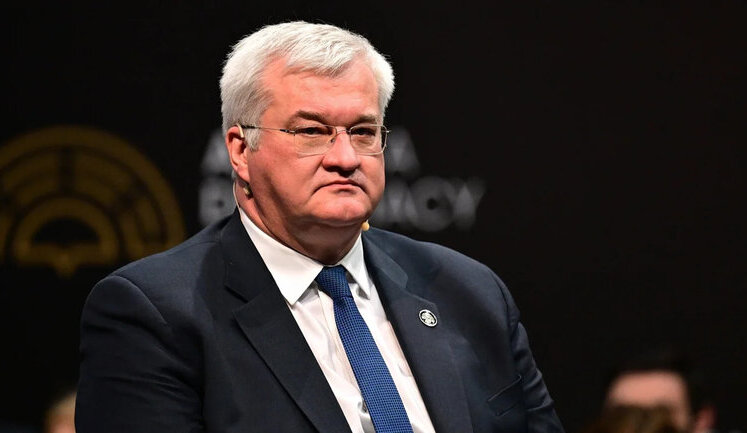
 Sybiha on Russia’s demand for US to end aid to Ukraine: Instead of genuine diplomacy, Moscow wants to continue war without any pause Foreign Minister Andrii Sybiha commented on a statement by Russian dictator's aide Yuri Ushakov that the United States should end all support for Ukraine in order to accelerate the end of the war. 1 401 3 Previously in trend: Ending the war US aid to Ukraine
 Russia expects to "break" Ukraine with large-scale winter strikes and force it to make concessions – Zelenskyy President Volodymyr Zelenskyy believes Russia is counting on inflicting enough damage on Ukraine over the winter to force Kyiv into further territorial concessions. 3 844 44 Previously in trend: US aid to Ukraine Territorial concessions Massive combined attack
 75% of missiles for Patriot systems and 90% of air defence munitions: NATO confirms PURL continues after Trump’s statements US weapons supplied to Ukraine under the PURL initiative and financed by NATO allies and partners continue to arrive. The Alliance confirmed that deliveries are ongoing despite statements by US President Donald Trump about a temporary suspension of ammunition exports. 1 737 2 Previously in trend: US aid to Ukraine NATO aid to Ukraine PURL program
 US has not yet approached EU about repayment of funds for aid to Ukraine – European Commission The European Commission has not yet received any official communication regarding a US demand for reimbursement for aid to Ukraine provided during Joe Biden’s presidency. 635 4 Previously in trend: US aid to Ukraine Trump statements
 Trump to demand payment from Europe for weapons US provided to Ukraine under Biden US President Donald Trump said that the United States has virtually unlimited amounts of mid- to high-grade ammunition and accused the administration of his predecessor, Joe Biden, of providing aid to Ukraine and NATO free of charge. 10 458 216 Previously in trend: US aid to Ukraine Trump statements
 Ukraine meets minimum fiscal transparency requirements – U.S. Department of State The US Department of State has published its 2026 Fiscal Transparency Report, which states that Ukraine meets the minimum requirements for transparency in public finances. 1 482 5 Previously in trend: US aid to Ukraine
 Discussions are ongoing in US regarding possible transfer of Patriot technology to Ukraine, - Congressman Turner The US and Ukraine are discussing the possibility of transferring technology for the production of Patriot systems. 2 662 51 Previously in trend: US aid to Ukraine Patriot missiles for Ukraine
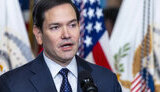 US will continue selling weapons to Ukraine through NATO mechanisms, Rubio says after meeting with Lavrov US Secretary of State Marco Rubio said that the United States has no intention of halting arms supplies to Ukraine through NATO under the PURL programme. 6 399 34 Previously in trend: US aid to Ukraine PURL program
 Zelenskyy meets US Ambassador to NATO Whitaker and General Buzzard: they discuss Patriot interceptor supplies and Drone Deal. PHOTO On Wednesday, 22 July, President Volodymyr Zelenskyy met in Kyiv with US Ambassador to NATO Matthew Whitaker and Lieutenant General Curtis Buzzard, commander of NATO Security Assistance and Training for Ukraine. 872 2 Previously in trend: US aid to Ukraine Patriot missiles for Ukraine Drone industry
 Ukraine to receive PAC-3 missiles for Patriot from US in coming days, Zelenskyy says Ukraine will soon receive a package of PAC-3 interceptor missiles for Patriot air defense systems from the United States. 3 047 26 Previously in trend: US aid to Ukraine Missiles for Patriot
 US Congress may approve new aid package for Ukraine by end of year – Democratic Senator Kaine The US Congress expects that a new aid package for Ukraine may be finally approved by the end of 2026. 1 149 10 Previously in trend: US aid to Ukraine
 Pentagon has ’lost’ $910 million in aid to Ukraine Due to delays with contracts, the Pentagon was unable to use part of the funds earmarked for the production of weapons for Ukraine. 10 138 21 Previously in trend: US aid to Ukraine
 Ukrainians hold their ground despite continuous Russian attacks. Trump has right approach, - Hegset U.S. Secretary of War Pete Hagseth stated that Donald Trump's approach could pave the way for peace negotiations in Ukraine. 2 299 19 Previously in trend: US aid to Ukraine
 US will consider issue of license for production of American missiles in Ukraine, - Trump The United States will consider granting Ukraine a license to manufacture American interceptor missiles. 2 283 22 Previously in trend: US aid to Ukraine Ukrainian weapons production
 Number of G7 countries are set to produce long-range missiles in Ukraine, - media The US and the European countries of the ‘Group of Seven’ intend to establish licensed production in Ukraine not only of air defence systems but also of long-range weapons. 1 469 17 Previously in trend: US aid to Ukraine Aid to Ukraine from Europe Ukrainian weapons production
 US Senate committee requests to allocate $750 million in security assistance to Ukraine The U.S. Senate Armed Services Committee on Thursday backed the continuation of security assistance to Ukraine and an increase in funding to USD 750 million. 1 517 3 Previously in trend: US aid to Ukraine
 US will continue to support Ukraine in war with Russia, says Congressman Fitzpatrick U.S. Congressman Brian Fitzpatrick commented on the decision to support Ukraine and stated that U.S. aid will continue despite the war with Russia. 1 286 12 Previously in trend: US aid to Ukraine
 US House of Representatives defies Trump, backs new military aid for Ukraine and sanctions against Russia The US House of Representatives backed a bill to allocate $1 billion in new military aid to Ukraine and impose new sanctions against Russia. The vote was made possible by Democrats joining forces with some Republicans, who defied the White House and Speaker Mike Johnson. 6 830 38 Previously in trend: US aid to Ukraine
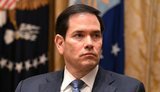 US preparing new $400m military aid package for Ukraine, - Rubio US Secretary of State Marco Rubio has stated that the process of approving a new $400 million military aid package for Ukraine is in its final stages. 2 887 17 Previously in trend: US aid to Ukraine
 US Congress advances $9 billion aid package for Ukraine The House of Representatives approved a resolution paving the way for consideration of a bill on a new package of support for Ukraine, which includes $1.3 billion in security assistance and up to $8 billion in loans. 2 653 12 Previously in trend: US aid to Ukraine
 US senators demand Pentagon unblock $400 million in aid to Ukraine A bipartisan group of US senators has called on Defence Secretary Pete Hagset to immediately release $400 million in aid to Ukraine. 2 914 13 Previously in trend: US aid to Ukraine
 Because of clash with Zelenskyy, Trump suspended aid to Ukraine and left US Embassy unprotected – former Ambassador Brink US President Donald Trump’s decision to suspend military aid to Ukraine in March 2025 put not only Ukrainians but also the staff of the US Embassy in Kyiv, which numbered around 1,000 people, under direct threat from Russian air strikes. 10 155 54 Previously in trend: Trump-Zelenskyy dispute US aid to Ukraine Trump suspends aid to Ukraine
 Hegseth evaded answer about helping Ukraine U.S. Secretary of Defense Pete Hagseth did not specify a timeline for the use of the $400 million in aid to Ukraine that Congress had previously approved. 3 120 10 Previously in trend: US aid to Ukraine
 US State Department approves sale of JDAM-ER bombs to Ukraine for $373 million The US Department of State has given the green light to a possible sale to Ukraine of JDAM-ER extended-range guided aerial bombs and related equipment worth a total of $373.6 million. 4 703 26 Previously in trend: US aid to Ukraine
 Biden, like "stupid fool," gave Ukraine significant part of US stockpiles worth $350 billion for free, Trump says US President Donald Trump has once again accused the previous White House administration of giving Ukraine $350 billion worth of weapons for free. 5 915 83 Previously in trend: US aid to Ukraine Trump statements
 Trump did not include military aid for Ukraine in US budget for 2027 The draft US defense budget for fiscal year 2027 does not provide funding for military assistance to Ukraine under the Ukraine Security Assistance Initiative (USAI). 4 336 53 Previously in trend: US aid to Ukraine Military aid to Ukraine
 Biden’s financial aid to Ukraine is one of reasons why war is still going on, - Trump US President Donald Trump believes that financial aid to Ukraine during Joe Biden’s term in office is one of the reasons why the Russian-Ukrainian war is continuing. 11 150 104 Previously in trend: US aid to Ukraine Trump on war in Ukraine Trump statements
US resumes $400 million aid supply to Ukraine, - Hegseth The Pentagon has officially resumed funding for a $400 million military aid package to Ukraine following prolonged political pressure from U.S. lawmakers. 4 167 12 Previously in trend: US aid to Ukraine
 Support for Ukraine can no longer be based solely on US, - Pentagon Elbridge Colby, a senior Pentagon official responsible for policy matters, stated that aid to Ukraine should no longer rely solely on the United States due to limited military supplies. 4 628 80 Previously in trend: US aid to Ukraine
 Svyrydenko discusses Ukraine’s defence needs and stepping up pressure on Russia with members of U.S. Congress Prime Minister Yuliia Svyrydenko, as part of her visit to the United States, held meetings with members of the U.S. Congress. The discussions focused on Ukraine’s key defence needs and the need to increase pressure on Russia. 1 170 8 Previously in trend: US aid to Ukraine
 Stopping funding Ukraine is one of things I’m proudest, - Vance US Vice-President J.D. Vance is proud that the US has stopped funding Ukraine. 26 015 198 Previously in trend: US aid to Ukraine Vance’s statements
 Zelenskyy predicts reduction in Patriot missile supplies due to war in Iran: Today we are not priority The protracted conflict between the United States and Israel and Iran could further weaken U.S. support for Kyiv. 5 064 83 Previously in trend: US aid to Ukraine US strikes on Iran
 US has not diverted weapons for Ukraine to Middle East, but it could happen – Rubio U.S. Secretary of State Marco Rubio said Washington has not redirected weapons intended for Ukraine to the Middle East, but may do so. 2 845 25 Previously in trend: US aid to Ukraine US strikes on Iran PURL program
 Pistorius cannot confirm diversion of US weapons for Ukraine to the Middle East German Defense Minister Boris Pistorius is cautious in his comments regarding the diversion of U.S. weapons intended for Ukraine to the Middle East. 953 2 Previously in trend: US aid to Ukraine
 Trump on redirecting weapons from Ukraine to Middle East: U.S. does this all time, this is not our war U.S. President Donald Trump does not deny media reports that the United States is considering redirecting some of the weapons intended for Ukraine to the Middle East. 11 611 85 Previously in trend: US aid to Ukraine Trump on war in Ukraine Trump statements
 U.S. should not send ammunition to Ukraine but use it for its own interests, - Hegseth Pentagon Chief Pete Hegseth believes that the United States should not send ammunition to Ukraine but should use it for its own interests. 8 734 83 Previously in trend: US aid to Ukraine
U.S. is not obliged to help Ukraine, Trump says U.S. President Donald Trump said that Washington is not obliged to provide military aid to Ukraine because it is located "thousands of miles away". 13 507 93 Previously in trend: US aid to Ukraine Trump statements
 "Stupid and incompetent" Biden gave lot of American weapons to Ukraine for free, - White House The Donald Trump administration has criticised former US President Joe Biden's "unwise decision" to transfer what is allegedly the best American weaponry to Ukraine. 10 709 131 Previously in trend: US aid to Ukraine Weapons supplies for Ukraine
 Zelenskyy discussed with U.S. senators Blumenthal and Whitehouse using Russian assets to buy missiles for Patriots President Volodymyr Zelenskyy met with U.S. Senators Richard Blumenthal and Sheldon Whitehouse. 1 020 8 Previously in trend: US aid to Ukraine Ukraine-US relations
 Pentagon seeks to fine contractors over delayed artillery ammunition deliveries for Ukraine - Bloomberg The US Army intends to levy a penalty on defense companies Northrop Grumman and Global Military Products over delays in delivering artillery ammunition to Ukraine. It is an example of the Pentagon’s efforts aimed at increasing accountability among defense contractors. 1 607 3 Previously in trend: US aid to Ukraine
 US will provide Ukraine with offensive weapons until peace is achieved, - Whitaker The US Permanent Representative to NATO, Matthew Whitaker, said that the United States will provide Ukraine with offensive weapons until peace is achieved. 9 851 40 Previously in trend: US aid to Ukraine
 "Ukrainians have shown courage, now it’s time for White House to show some," - US Congressman Hoyer During his speech at Ukrainian Week in Washington, D.C., Maryland Congressman Steny Hoyer called on the US administration to take decisive action and support legislative initiatives to help Ukraine. 2 652 21 Previously in trend: US aid to Ukraine
 Fedorov discusses Patriot use and drone cooperation with U.S. Chargé d’Affaires Julie Davis Defense Minister Mykhailo Fedorov met with U.S. Chargé d’Affaires ad interim in Ukraine Julie Davis. The sides discussed, in particular, cooperation on air defense and drones. 1 396 1 Previously in trend: US aid to Ukraine Development of air defence in Ukraine Drone industry
 Congressman Bacon urges Trump to provide Ukraine with long-range weapons and air defense systems Republican Congressman Don Bacon urged U.S. President Donald Trump’s administration to provide Ukraine with long-range weapons and air defense systems amid Russian attacks on energy facilities. 2 560 12 Previously in trend: US aid to Ukraine Massive rocket attack
 Weapons deliveries to Ukraine have not dropped since US policy shift – NATO NATO has said the volume of weapons supplies to Ukraine has not decreased following a shift in U.S. policy on military aid after President Donald Trump took office. 1 195 10 Previously in trend: US aid to Ukraine
 US Senate approves record-breaking defense budget with $800 million earmarked for Ukraine On December 17, the US Senate backed a sweeping 2026 defense policy bill totaling a record $901 billion. The document includes $800 million in military aid for Ukraine over two years. 3 598 22 Previously in trend: US aid to Ukraine
Page 1 of 4
more news