ENG




8744 visitors online
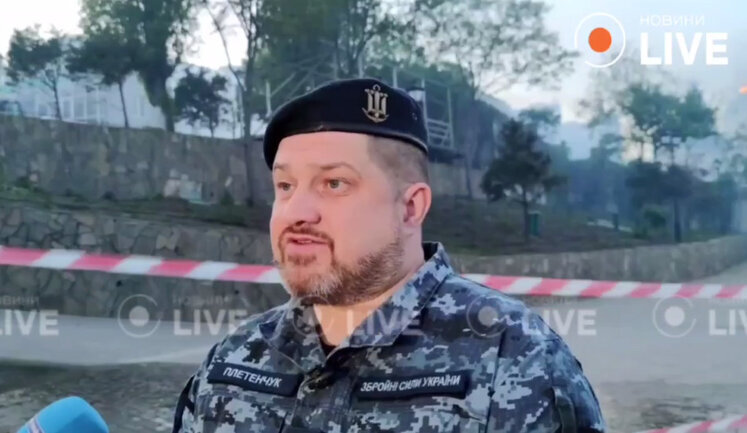
Pletenchuk Dmytro has been vocal about the evolving tactics of Russia in the Black Sea amidst ongoing conflict. According to him, Russia is increasingly relying on its submarine fleet, utilizing GPS spoofing technology for transporting sanctioned oil, and adapting to adverse weather conditions which limit their missile launch capabilities. Notably, Pletenchuk highlighted incidences such as Russian forces striking their own aircraft in Crimea and the use of record numbers of Shahed drones in Odesa. He also pointed out that the Russian Navy can't influence hostilities effectively due to Ukrainian countermeasures. These adaptations reflect Russia's strategic pivot in response to Ukrainian naval and aerial defenses.
What is Pletenchuk Dmytro's view on Russian Black Sea fleet tactics?
Pletenchuk Dmytro notes that Russia has shifted to using submarines in the Black Sea, making them harder to detect and counter. This change is part of their strategy to adapt to increasing threats and challenges in the region.
How has Pletenchuk Dmytro reported on the use of drones by Russia?
Pletenchuk reported that Russia uses a record number of Shahed drones to attack locations like Odesa, integrating them with missile strikes. This strategy indicates an evolving and aggressive use of unmanned aerial vehicles (UAVs).
Why are Russian ships less active in the Black Sea according to Pletenchuk Dmytro?
According to Pletenchuk Dmytro, harsh weather conditions and Ukrainian defenses have made it difficult for Russian ships to operate in the Black Sea, leading to a decreased presence and activity in the region during storms and military confrontations.
What are the implications of GPS spoofing used by Russia, as mentioned by Pletenchuk Dmytro?
Pletenchuk highlights that Russia uses GPS spoofing to transport sanctioned oil discreetly, avoiding detection and penalties. This tactic shows their attempt to circumvent international sanctions and continue their economic activities.
What challenges does the Russian Navy face in logistics according to Pletenchuk Dmytro?
Pletenchuk mentions that logistical challenges are significant for the Russian Navy, especially in the Mediterranean, due to the closed Bosphorus strait. These issues complicate resupply and affect their operational capabilities in distant regions.
News Pletenchuk Dmytro
 In August, Russia used Kalibr carriers only once to strike Ukraine from sea, - Pletenchuk In August, Russia used cruise missile launchers to strike Ukraine from the sea only once, whereas there were three such attacks in July. 744 6 Previously in trend: Kalibr attack from the Black Sea
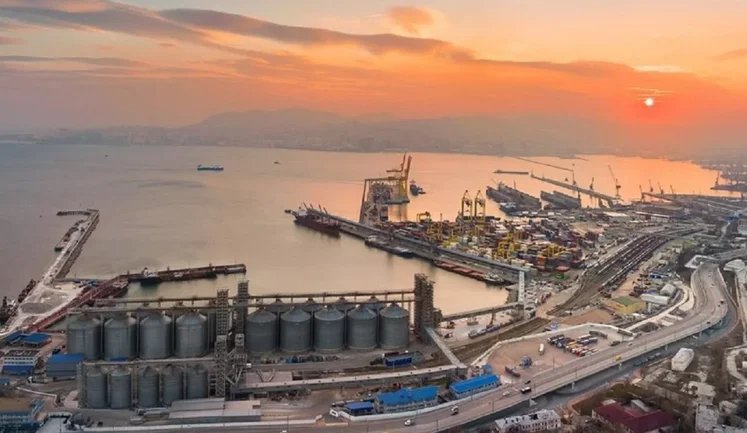
 Russia will not withdraw its fleet from Novorossiysk after strike, - Pletenchuk Russia will not withdraw its fleet from Novorossiysk despite the massive strike on Russian ships. 15 443 35 Previously in trend: Russian vessel hit
 Iranian military logistics supplying Russia are lawful military target – Pletenchuk Any military logistics used to supply weapons to the Russian occupation army constitute a lawful military target for Ukraine. 1 964 18 Previously in trend: Cooperation between Russia and Iran Threats to Ukraine from Iran
 Strikes on Russian logistics in occupied Crimea are part of multi-stage operation, - Navy Ukraine’s strikes against Russian logistics infrastructure in the occupied Crimea are part of a comprehensive, multi-stage operation that has been ongoing for a long time. 2 943 24 Previously in trend: Attacks on Crimea
 Following strikes, port of Tuapse has suspended oil shipments, - Navy The Ukrainian Defence Forces’ strikes on Russian oil infrastructure not only reduce the Kremlin’s resources for waging war, but also weaken a key sector of the Russian economy. 2 215 8 Previously in trend: Drone attack on Russian regions UAVs attacked Tuapse
 Russian Federation disguises fuel trucks as civilian transport due to Ukrainian Armed Forces strikes on logistics in Crimea, - Navy Due to regular strikes by the Ukrainian Defense Forces on logistics routes in the occupied territories of the Kherson and Zaporizhzhia regions, Russian troops have begun disguising fuel tankers as civilian vehicles. 3 683 39 Previously in trend: Strikes on Russian logistics
 Ukrainian Navy confirmed defeat of Russian ship in Kerch Strait: it was guarding Crimean Bridge area A Russian ship that was providing security for the area around the Crimean Bridge has been struck in the Kerch Strait. The results of the strike are currently being verified. 3 685 8 Previously in trend: Destruction of Russian equipment
 "This day has come": Ukraine has established drone surveillance of roads in Crimea, - Navy Russian forces are unlikely to be able to significantly reduce the effectiveness of Ukraine’s drone surveillance of key supply routes to occupied Crimea this summer. 7 423 32 Previously in trend: Occupation of Crimea
 Russia used ships to launch missiles only once in past month, - Navy The Russian Navy has virtually no presence in the Black and Azov Seas, and the use of naval platforms to launch cruise missiles has become rare. 545 1 Previously in trend: missile attack
 Russian troops attacked merchant vessel with Chinese crew using Shahed drone in Ukraine’s territorial waters, Navy says (updated). PHOTO On the morning of May 18, Russian troops attacked a Chinese merchant vessel in Ukraine’s territorial waters with a Shahed drone. 8 640 23
 Russia uses record number of Shahed drones in attacks on Odesa – Pletenchuk Russia is using a record number of drones and missiles during strikes on Odesa, carrying out combined attacks from several directions, including from Crimea. 1 389 6 Previously in trend: Shelling of Odesa Shelling of Odessa region
 Enemy struck with ballistic missiles from Crimea. Ships are not being deployed to Black Sea for combat duty, - Pletenchuk On the night of February 26, Russia attacked Ukraine with ballistic and hypersonic missiles from Crimea. 1 073 1 Previously in trend: Massive rocket attack Massive combined attack
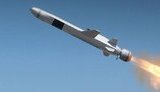 Russia will be unable to launch sea-based Kalibr missile attacks on Ukraine until spring, Pletenchuk says Stormy weather in the waters of the Black and Azov seas will limit Russia’s ability to carry out missile launches against Ukraine at least until spring. 4 456 12 Previously in trend: missile attack
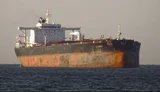 Russia is changing GPS data to transport sanctioned oil, - Pletenchuk Russians are using GPS spoofing technology to transport sanctioned oil so that these ships can avoid punishment. 1 307 0 Previously in trend: Russia’s shadow fleet sanctions circumvention
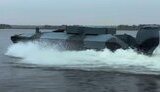 Russia is copying Ukrainian naval drones, their effectiveness is yet to be tested – Pletenchuk Russians are trying to copy Ukrainian uncrewed surface vessels (USV). Their capabilities are currently unknown. 3 235 21 Previously in trend: Russia will produce naval drones Drone industry sea drones
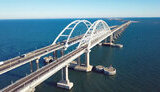 Russia has banned electric cars on Crimean Bridge due to fears of sabotage Russia has restricted the passage of electric vehicles across the Crimean Bridge: battery packs can be used to conceal explosives. 1 847 10 Previously in trend: Situation around the Kerch Bridge
 Russians have effectively destroyed Kinburn Spit and "Askania-Nova," - Pletenchuk Russian occupiers have effectively destroyed the Kinburn Spit and the "Askania-Nova" Nature Reserve through their military operations in southern Ukraine. 4 428 23 Previously in trend: Animals in combat zone
 At moment of Defense Forces’ strike on oil terminal in Tuapse, there were at least three ships in port, - Pletenchuk At the time of the Ukrainian Defense Forces' strike on the infrastructure of the RN-Tuapse Oil Refinery in the Krasnodar Krai region of the Russian Federation, there were at least three ships at the terminal. Their owners have already been identified. 5 041 8 Previously in trend: Drone attack on Russian regions
 Ships of Russian Black Sea Fleet have not been going out to sea for long time, - Navy Russian ships have been staying at the base for a long time, while Russian aircraft continue to conduct reconnaissance and strikes around the clock. 1 327 6 Previously in trend: Situation in the Black Sea
 Russians shot down their own plane while repelling drone attack over Crimea - Pletenchuk In the temporarily occupied Crimea, Russian air defense shot down its own military aircraft while trying to repel an attack by drones. 7 251 25 Previously in trend: Shooting down Russian Su Explosions in Crimea The Russians shot down their plane
 Russia is strengthening air defense in occupied Crimea - Navy The occupiers are deploying additional air defense systems due to the successful strikes by the Ukrainian Defense Forces on military facilities on the peninsula. 1 480 3 Previously in trend: Occupation of Crimea Attacks on Crimea
 Russian ships are currently absent from Black Sea due to weather conditions - Navy Due to bad weather conditions, there are currently no Russian warships in the Black Sea. 1 168 8 Previously in trend: Russian Navy
 Russian ships cannot stay in Novorossiysk permanently due to threat of Ukrainian strikes - Ukrainian Navy The Russian warships based in Novorossiysk cannot stay there permanently because of the threat of being hit by the Ukrainian Defense Forces. 1 602 4 Previously in trend: Russian Navy Situation in the Black Sea
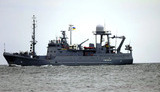 Russian drone strikes Ukrainian Navy ship: two dead, search and rescue operations continue Search and rescue operations are continuing at the site of the attack on a Ukrainian Navy ship by Russian forces yesterday. A second fatality and several injured have been reported. 7 703 39 Previously in trend: Strike on Ukrainian Navy ship
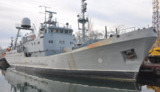 Russian drone struck Ukrainian Navy ship: one sailor killed Russian occupation forces struck one of the Ukrainian Navy ships. One crew member was killed and several were wounded. 8 759 51 Previously in trend: Ships of the Navy of the Armed Forces of Ukraine Strike on Ukrainian Navy ship
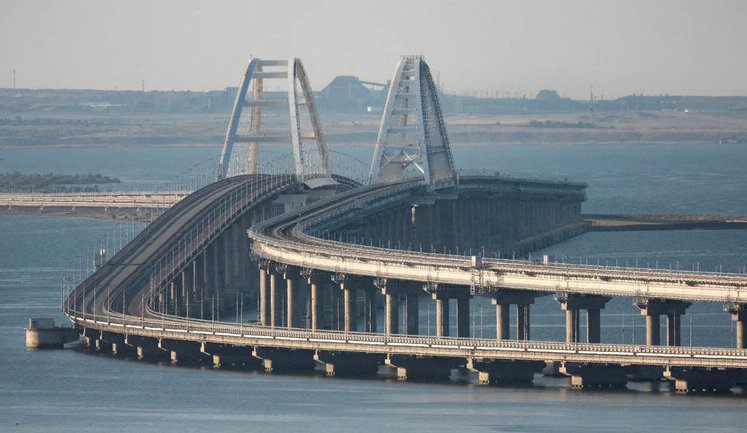
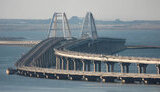 Crimean Bridge still performs its function, but it is no longer on same scale - Pletenchuk The Russian occupiers have not significantly restored the operation of the Crimean bridge after the previous strikes. Although railroad trains with heavy equipment do not run through it, the flow of civilian traffic, including "tourists," continues. 14 599 14 Previously in trend: strike on Kerch bridge
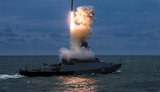 Russia has 8 Kalibr carriers, mostly uses submarines in Black Sea - Pletenchuk As of today, Russia has five surface and three submarine launchers for Kalibr missiles, which it uses to strike at the territory of Ukraine. Recently, however, it has been using mostly submarine launchers from the Black Sea. 1 074 4 Previously in trend: Kalibr attack from the Black Sea
No missile launches from Black Sea recorded today – Ukrainian Navy No missile launches from the Black Sea were recorded during the combined Russian attack on the night of June 6. 1 618 8 Previously in trend: Massive rocket attack
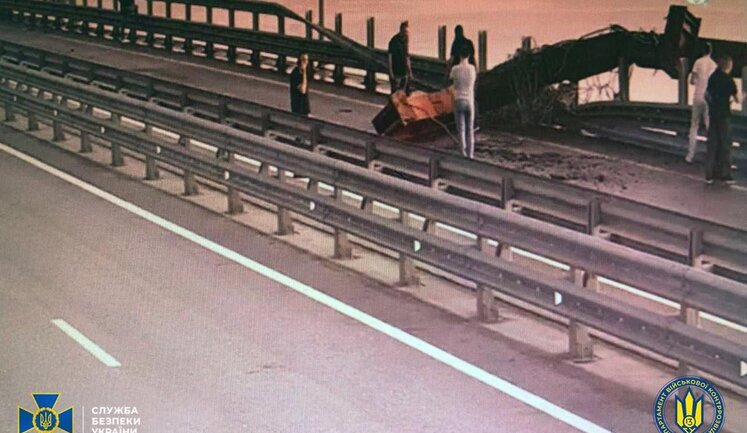
 Blowing up Crimean bridge will affect occupiers’ logistics, - Ukrainian Navy The attack on the Crimean bridge will have a certain impact on the enemy's logistics, as the structure has been heavily damaged. 4 700 13 Previously in trend: blow up of a Crimean bridge
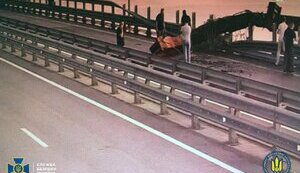
Key and complex part of Crimean Bridge was damaged as result of SSU’s operation, - Ukrainian Navy On 3 June, a structurally complex part of the Kerch Bridge was attacked as part of a special SSU operation. 28 481 88 Previously in trend: SSU special operation blow up of a Crimean bridge
 Logistics in Mediterranean is quite complicated for Russian Federation - Ukrainian Navy For the Russian fleet in the Mediterranean, given the closed Bosphorus, logistics is quite difficult. 1 359 9 Previously in trend: Russia in the Mediterranean
 After end of so-called "truce", Russians resumed air strikes on Ukraine from occupied Crimea, - Navy After the end of the so-called "truce" from the territory of the temporarily occupied Crimea, Russia immediately resumed air strikes against Ukraine. Currently, there is one missile carrier in the Black Sea. 3 802 17 Previously in trend: Shellings from Crimea
Russia has not shelled Ukraine’s port infrastructure since Black Sea ceasefire, Pletenchuk said As of April 10, Russia has not carried out any strikes on Ukraine’s port infrastructure following the partial ceasefire agreement in the Black Sea. 1 630 10 Previously in trend: Ceasefire in the Black Sea
 Russia lost naval base in Mediterranean Sea - Pletenchuk Russia no longer has a full-fledged naval base in the Mediterranean Sea, and its presence in the region has become much more difficult after the loss of the base in Tartus. 6 421 24 Previously in trend: Russia in the Mediterranean
Russia continues to strengthen Kerch Bridge - Pletenchuk Russia continues attempts to strengthen the Kerch Bridge and restore damaged barriers in the Black Sea. 1 982 10
 Pletenchuk: Russians refuse to repair their warships in occupied Crimea Due to the threat of Ukrainian strikes, the Russian invaders refused to repair their warships in the occupied Crimea. 1 838 5 Previously in trend: Occupied territories - Crimea and Donbas
Effectiveness of "Kalibrs" used by Russia to attack Ukraine has decreased - Ukrainian Navy Russian Kalibr cruise missiles, which the occupiers are using to attack Ukraine, are showing less and less effectiveness. 2 799 3 Previously in trend: War
 It may take up to five years for Ukraine to dispose of 400 mines in Black Sea - Navy It may take five years for Ukraine to dispose 400 mines in the Black Sea, as demining in the sea is very different from demining on land. 742 7
 There are no ships with launchers for "Oniks" and "Zircons" in Russian Black Sea Fleet - Ukrainian Navy The Russian Black Sea Fleet has no ships with launchers for "Oniks" and "Zircon" missiles. 2 159 6 Previously in trend: War
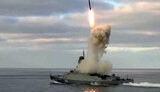 Russian Navy can no longer influence course of hostilities - Pletenchuk The Russian Navy has lost the ability to influence the course of hostilities in Ukraine. 2 191 4 Previously in trend: War
 Pletenchuk on strikes on oil depot in Feodosia: this object caused much more emotion than previous oil depots The occupiers of Crimea should feel for themselves where they got to, and understand that there was no point in poking their nose into the peninsula. 5 747 7
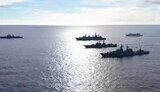 Russians withdrew missile carriers to Black Sea because they felt danger of staying at base - Navy The Russians do not feel safe in their bases, so they take their missile carriers to the Black Sea. 1 076 3
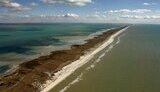 Kinburn spit is now actually zone of hostilities, and quite active ones - Pletenchuk As a result of the hostilities, the Kinburn spit in the Mykolaiv region is now actually a combat zone, the Russians have set up their positions there, from where they periodically fire and receive a response. 2 764 2 Previously in trend: Russian aggression against Ukraine War
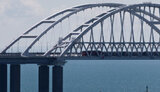 Storm season may "adjust" protective structure near Crimean bridge - Pletenchuk The structure that Russia is trying to build near the Crimean bridge does not look fundamental and could be damaged during the storm season. 5 478 48 Previously in trend: War
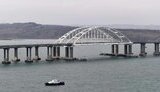 Russians have sacralized Crimean bridge, as well as Crimea itself. All available air defense systems of various ranges are located on peninsula, - Pletenchuk The occupiers have deployed all available air defence systems of various ranges on the Crimean peninsula, including those to protect the Crimean bridge. 5 664 15
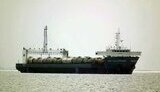 Navy of Ukraine destroyed Russian ferry "Conro Trader" in port "Kavkaz" - Pletenchuk The Navy of the Armed Forces of Ukraine officially confirmed the destruction of the Russian ferry "Conro Trader" in the port of "Kavkaz" in the Krasnodar Territory of the Russian Federation. 7 398 14
 Russians begin construction of permanent anti-drone defences near Kerch Bridge, being built parallel to bridge - Ukrainian Navy Russians are setting up a structure along the Crimean bridge that resembles a bridge. 7 039 14
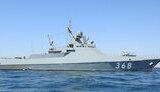 Most of released water area of seas remains "gray" zone - Navy There are no ships and boats of the Russian Federation, but Russian aviation continues to operate on the coasts of the occupied Crimea. 1 575 5 Previously in trend: War
Page 1 of 2
more news