ENG




11197 visitors online
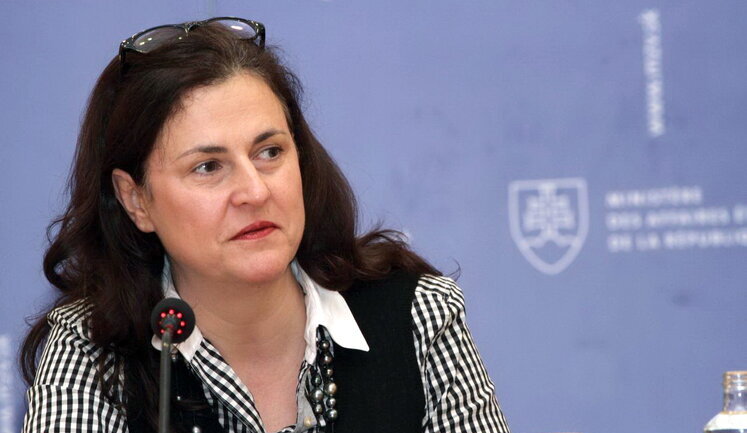
EU Ambassador to Ukraine, Katarina Mathernová, plays a significant role in Ukraine's attempt to join the EU. Her efforts focus on anti-corruption reforms, security guarantees, and civil society empowerment. Mathernová has raised concerns about the slowing pace of reforms in Ukraine, highlighting the necessity to uphold the independence of institutions like NABU and SAPO. Additionally, she emphasized Ukraine's valuable progress despite challenges. Furthermore, Mathernová actively participated in discussing energy security and condemned Russian military aggression. Her insights and advocacy reinforce the EU's commitment to Ukraine's European journey, encouraging reforms and security measures vital for integration.
How has Katarina Mathernová contributed to Ukraine's EU integration?
EU Ambassador Katarina Mathernová has significantly influenced Ukraine's EU integration by advocating for crucial reforms, emphasizing the importance of anti-corruption measures, and supporting institutional independence. Furthermore, she has addressed the challenges and opportunities within Ukraine's EU accession process, underscoring the critical role of security guarantees and reinforcing the EU's commitment to Ukraine's progress.
What are the main challenges Ukraine faces in its EU integration process?
Ukraine's path to EU integration is hindered by several challenges, including maintaining the pace of critical institutional reforms, particularly in the rule of law and corruption sectors. Additionally, ensuring energy security, protecting territorial integrity, and coping with Russian military aggression pose significant obstacles. Ambassador Mathernová emphasizes the necessity to resolve these issues to foster EU membership aspirations.
What role does Katarina Mathernová play in addressing Ukraine's energy concerns?
Katarina Mathernová actively addresses Ukraine's energy concerns by advocating for EU assistance in strengthening Ukraine's energy infrastructure and resilience. By facilitating discussions and support from the EU and its partners, such as Germany, Ambassador Mathernová has helped allocate substantial funds for enhancing Ukraine's energy efficiency, ensuring the country is prepared for the winter months, and mitigating the impact of Russian attacks on infrastructure.
How does Mathernová view the security situation in Ukraine?
Mathernová acknowledges the complex security situation in Ukraine, emphasizing the crucial need for strong security guarantees to achieve lasting peace. She has pointed out Russia's continued aggression despite attempts at ceasefire negotiations and highlighted the importance of international collaboration in sanctions and military support to help Ukraine maintain sovereignty and withstand external threats.
Why are anti-corruption reforms important for Ukraine's future in the EU?
Anti-corruption reforms are vital for Ukraine's EU ambition as they foster institutional integrity, transparency, and public trust, key components in meeting EU accession criteria. Ambassador Mathernová stresses that preserving the independence of entities like NABU and SAPO is essential in demonstrating Ukraine's commitment to fighting corruption, positively impacting its reputation and furthering EU integration endeavors.
What recent developments have Katarina Mathernová commented on regarding Ukraine's domestic affairs?
Katarina Mathernová has remarked on various recent developments, including the appointment of key officials essential for EU integration, such as the head of Ukraine's Economic Security Bureau. She has asked for progress on judicial and decentralization reforms and discussed trade negotiations with the EU, highlighting these matters' significance for enhancing Ukraine's administrative and economic landscape.
News Katarina Mathernová
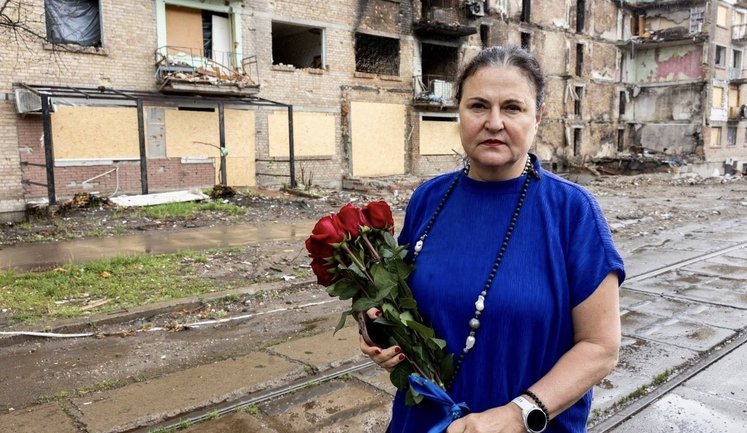
 Maternova on Russian strike on Kyiv: This is not war on battlefield Russia isn't just fighting against military personnel; it's killing civilians and bombing residential buildings and hospitals. 1 733 15 Previously in trend: Massive combined attack
 Mathernová on changes at Ukraine’s Defence Ministry: I hope this will not lead to major delays in European funding EU Ambassador Katarína Mathernová expressed hope that the change in the leadership of Ukraine’s Ministry of Defence would not delay European funding for Ukraine’s defence needs. 754 12 Previously in trend: Fedorov’s resignation
 EU is practically single-handedly keeping Ukraine afloat, - Ambassador Maternova The European Union has stood by Ukraine from the very first day of the war, providing public services and supporting its budget. 1 362 14 Previously in trend: Aid to Ukraine from Europe Ukraine EU accession
 EU sees that Ukraine is ready to fulfill all conditions for accession, - Ambassador Maternova The EU is convinced that Ukraine is ready to meet all the conditions for accession to the European Union. 464 8 Previously in trend: Ukraine EU accession
 Yermak’s case demonstrates the resilience of Ukraine’s anti-corruption system, - Maternova The EU Ambassador to Ukraine, Katarina Mathernova, has stated that the court proceedings in the case of Andrii Yermak demonstrate the maturity and resilience of Ukraine’s anti-corruption institutions. 2 444 30 Previously in trend: Notice of suspicion for Yermak
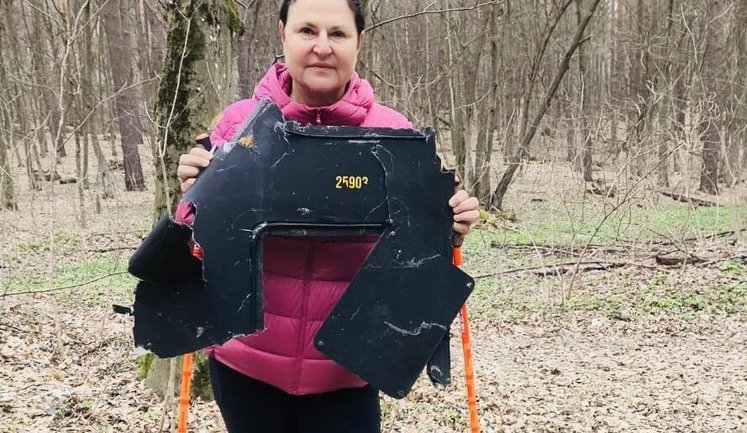
 EU Ambassador Mathernova discovered fragment of Russian "Shahed" drone during walk in Kyiv. PHOTO The EU Ambassador to Ukraine, Katarina Mathernova, discovered a fragment of a Russian "Shahed" attack drone whilst walking in a forest in Kyiv. 4 462 36 Previously in trend: Shahed attack on Kyiv
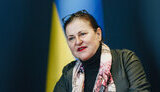 EU Ambassador Maternova wanted to inspect damage to Druzhba oil pipeline, Ukraine refused permission, — FT EU Ambassador to Ukraine Katarina Mathernova appealed to the Office of the President of Ukraine with a request to grant permission to inspect the damaged Druzhba pipeline or to send other European diplomats there, but received a refusal in response. 12 093 54 Previously in trend: Oil supplies through "Druzhba" pipeline Oil transit via Druzhba pipeline
 Ukraine’s integration into EU has slowed down over past six months, - Maternova EU Ambassador to Ukraine Katarina Mathernova stated at a meeting of the Verkhovna Rada Committee on Ukraine's Integration into the European Union that Ukraine had implemented complex institutional changes, but the pace of reforms in the areas of the rule of law and the fight against corruption... 1 202 24 Previously in trend: Ukraine EU accession
EU Ambassador Maternova on Russian strikes: "Is this what ceasefire looks like?" EU Ambassador to Ukraine Katarina Mathernova responded to the latest Russian strikes on Ukrainian cities. She noted that Russian terror continues despite peace talks and Russia's alleged agreement to a "week-long truce." 2 158 11 Previously in trend: Attack of drones Shelling of Zaporizhzhia Attack on Dnipro
EU Ambassador Mathernova: Ukrainian communities must be fully prepared for unpredictable Ukraine should enhance incentives for energy production and distribution among local communities and ensure they are ready for various situations. Ambassador of the European Union to Ukraine Katarina Mathernova made these remarks during the extraordinary session of the Kyiv Security Forum (KSF)... 83 0 Previously in trend: Shelling of energy and gas infrastructure
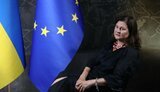 Ukraine’s progress in EU depends on preserving independence of NABU and SAPO, - Ambassador Maternova The European Union Ambassador to Ukraine, Katarina Maternova, emphasized that anti-corruption reforms are critically important for Ukraine's further progress towards EU membership. 1 017 12 Previously in trend: Abolition of NABU and SAPO independence
EU has supported Ukraine’s energy system with €3 billion since beginning of 2022, - Mathernova The European Union Ambassador to Ukraine, Katarina Mathernova, condemned Russia's latest attack on Ukraine's critical infrastructure and stressed the importance of strengthening Ukraine's energy capabilities ahead of the winter season. 489 0 Previously in trend: Financial assistance to Ukraine
EU Ambassador Mathernova spent night on bathroom floor during shelling: Enough of this war. PHOTO EU Ambassador Katarina Mathernova said that she spent the night in the bathroom during Russia's massive strikes on Kyiv. 7 857 36 Previously in trend: Massive combined attack
 EU supports Ukraine during blackout in Chernihiv region – Mathernová The European Union is aware of the difficult situation in Chernihiv following the latest Russian attacks and continues to implement its "winter assistance" program for Ukraine, which was prepared at the end of the previous heating season. 904 1 Previously in trend: EU support for Ukraine Drone attack on Chernihiv
 Europe will not support peace that means Ukraine’s surrender, - Mathernova The European Union's Ambassador to Ukraine, Katarina Mathernova, has called the "peace" that requires Ukraine to give up the unoccupied parts of Donetsk region unacceptable. 4 179 40 Previously in trend: Territorial concessions
Maternova welcomes Tsyvinskyi’s appointment as BES head: It is key reform for EU accession The European Union Ambassador to Ukraine, Katarina Maternova, called the appointment of Oleksandr Tsyvinskyi as head of the Economic Security Bureau "great news" and an important step toward Ukraine’s EU membership. 923 9 Previously in trend: Tsyvinskyi appointed as new director of BES
EU welcomes signing of ARMA law. This is in line with Ukraine Facility commitments for 1st quarter, - Mathernova EU Ambassador Katarina Mathernova welcomed the signing of the law on the ARMA. 1 022 3 Previously in trend: Ukraine Facility reform of ARMA
G7 ambassadors welcome Zelenskyy’s announcements on NABU and SAPO. We offered help, - Mathernova. VIDEO The G7 ambassadors welcomed President Volodymyr Zelenskyy's promise to restore the independence of the NABU and the SAPO. 4 221 37 Previously in trend: Abolition of NABU and SAPO independence
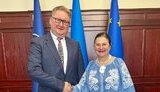 Maternova on new Vice Prime Minister for European Integration Kachka: He has many years of experience working on Ukraine’s integration into EU Ambassador of the European Union to Ukraine Katarina Maternova met with the newly appointed Deputy Prime Minister for European and Euro-Atlantic Integration Taras Kachka and noted his many years of experience. 1 566 10 Previously in trend: Ukraine’s Membership in the EU
Maternova: Ukraine should complete reforms of courts, decentralisation and energy EU Ambassador to Ukraine Katarina Mathernova believes that the judiciary, decentralisation and energy remain among the areas where Ukraine needs to complete reforms. 1 094 21 Previously in trend: Reforms in Ukraine
 Maternova on new trade conditions with EU: Agreement could be concluded in few months Negotiations between Ukraine and the European Union on new trade conditions after the end of the preferential regime may be completed within a few months. 444 1 Previously in trend: Trade visa-free regime with EU
EU sanctions against Russia will be more effective if applied together with US - Maternova The European Union is preparing to introduce the 18th package of sanctions against Russia. To be effective, the restrictions must be applied by all partners. 625 8 Previously in trend: EU sanctions against Russia
EU and Germany allocate €18 million to Ukraine’s Energy Efficiency Fund – Mathernová The European Union, together with Germany, is allocating €18 million to support the Energy Efficiency Fund of Ukraine. 687 0 Previously in trend: Support of Ukrainian energy
Mathernová: Russia can only be forced to stop its terror against Ukraine Russia can only be compelled to end its terrorist actions against Ukraine through force, as it shows no willingness to do so voluntarily. 637 9 Previously in trend: Russian aggression against Ukraine
Building near EU Delegation damaged during night attack in Kyiv - Mathernova A building located next to the EU Delegation in Ukraine was damaged as a result of a massive Russian attack with drones and missiles. 1 430 3 Previously in trend: Shahed attack on Kyiv
 Mathernova on Sumy missile strike: Russia once again resorts to atrocities against civilians European Union Ambassador to Ukraine Katarína Mathernová has condemned the latest Russian rocket strike on the city of Sumy on June 3. 1 378 5 Previously in trend: Strike on Sumy
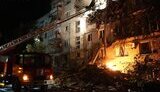 EU Ambassador Mathernova on massive attack on Ukraine: Russians are mockin world, US and any attempts to achieve peace European Union Ambassador to Ukraine Katarina Mathernova reacted to another massive Russian attack on Ukraine on the night of May 25. 1 731 29 Previously in trend: Massive strike on May 25, 2025
EU Ambassador Mathernova reacts to largest-scale Russian drone attack on Ukraine: Russia understands only language of force The European Union Ambassador to Ukraine, Katarina Mathernova, condemned a large-scale Russian drone attack on the night of Sunday, May 18. 1 280 6 Previously in trend: Attack of drones
 EU Ambassador Mathernova: Death of journalist Roshchyna is one of worst war crimes of Russian Federation EU Ambassador to Ukraine Katarina Mathernova called the death of Ukrainian journalist Victoriia Roshchyna in Russian custody one of Russia's "most heinous war crimes." 2 506 8 Previously in trend: Death of Victoria Roshchyna
 Mathernova on enemy shelling of Dnipro: Russia responds to peace talks with escalation The only path to a just peace is through providing Ukraine with more weapons and air defense systems. 507 2 Previously in trend: Attack on Dnipro
 "Another in series of war crimes" - Mathernova on Russia’s missile attack on Sumy on Palm Sunday European Union Ambassador to Ukraine Katarina Mathernova condemned Russia's missile attack on Sumy, calling it another war crime. 2 071 16 Previously in trend: Strike on Sumy
EU will never recognize Russia’s illegal occupation of Ukrainian territories - Mathernova The European Union will never recognize Russia's illegal annexation and occupation of Ukraine's territories. 1 468 31 Previously in trend: Occupied territories - Crimea and Donbas
EU can become real security provider for Ukraine - Mathernova Europe has enough tools to become a real security provider for Ukraine. 2 311 11 Previously in trend: Aid to Ukraine
Ambassador Mathernova: EU is confident about where funds provided for Ukraine are going The European Union has robust processes in place to monitor where funds are spent in Ukraine. 2 093 23 Previously in trend: Financial assistance to Ukraine
Decision on when to hold elections in Ukraine does not depend on EU, - Ambassador Mathernova The decision to hold elections in Ukraine will be made within the country, but not before the end of the war. 1 401 60
EU Ambassador Mathernova on ceasefire in Ukraine: Peace is impossible without security guarantees EU Ambassador to Ukraine Katarina Mathernova emphasized the critical importance of security guarantees for Ukraine during any peace negotiations. 615 10
War is no excuse for tolerating corruption, - EU Ambassador to Ukraine Mathernova There is always a corruption component in war, but war is not a justification for tolerating corruption. 4 502 41 Previously in trend: Fighting corruption in Ukraine War
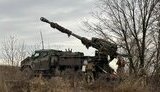 EU has already allocated 400 million euros from frozen Russian assets to purchase Ukrainian weapons - Ambassador Mathernova The European Union has already allocated 400 million euros from the frozen assets of the Russian Federation to purchase Ukrainian weapons. 774 5 Previously in trend: Aid to Ukraine
 EU Ambassador Mathernova: AFU offensive in Kursk region has changed narratives on war in West EU Ambassador to Ukraine Katarina Mathernova believes that the Ukrainian Armed Forces offensive in the Kursk region has brought tangible results. 2 312 20 Previously in trend: War
Ukraine should be allowed to strike deep into territory of Russian Federation with Western weapons - EU Ambassador Maternova The Ambassador of the European Union to Ukraine, Katarina Maternova, shares the opinion of the High Representative of the EU, Josep Borrell, regarding the need to allow Kyiv to strike deep into Russia with Western weapons. 807 6 Previously in trend: War
Most dangerous thing that can happen to West is victory of Russia - EU Ambassador Maternova The victory of Russia in Ukraine will be the greatest danger for the countries of the West. 1 154 5 Previously in trend: War
 2030 is realistic date for Ukraine’s accession to EU - EU Ambassador Mathernova EU Ambassador Katarina Mathernova believes that Ukraine could join the EU in 2030. 2 171 18
EU Ambassador Mathernova on Russia’s attack on Chernihiv: Russia must pay for these war crimes European Union Ambassador to Ukraine Katarina Mathernova said that Russia must pay for its war crimes. 1 844 14 Previously in trend: Russian aggression against Ukraine War
Ukraine’s accession to EU by 2030 is realistic deadline, says Ambassador Mathernova Ukraine can become a full member of the European Union by the end of 2030. This timeframe for accession is realistic. 3 503 61
Corruption in Ukraine has not disappeared, but there are institutions that fight this problem - EU Ambassador Mathernova Corruption has not disappeared in Ukraine, but there are institutions that are working to solve this problem. 1 146 26 Previously in trend: Fighting corruption in Ukraine
We have always set conditions for providing assistance to Ukraine - EU Ambassador Mathernova Supporting and respecting democratic institutions has always been a conditionality of assistance to Ukraine. 2 898 14 Previously in trend: Aid to Ukraine
EU Ambassador Mathernova on trade liberalization with Ukraine: Agreement provides not ban, but restrictions for three items The continuation of the trade liberalization regime between the EU and Ukraine provides for quantitative restrictions for three agricultural products, but not their prohibition. 1 567 6
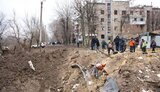 EU Ambassador Mathernova reacts to Russian attack: Ukraine now needs additional support to save lives European Union Ambassador to Ukraine Katarina Mathernova reacted to another Russian attack on Ukraine, emphasizing that Russia will be brought to justice. 1 391 3 Previously in trend: Russian aggression against Ukraine
Page 1 of 2
more news