ENG




7595 visitors online
Vitalii Shabunin has emerged as a vocal critic of Ukraine's judicial and political climate, notably emphasizing the challenges in anti-corruption efforts. Shabunin has accused President Zelenskyy's government of inadequate reforms and a tendency to protect political allies from corruption charges. He argues that competitive processes in appointing state prosecutors are sidelined, leading to insufficient accountability in high offices. Shabunin also criticized lawmakers for blocking anti-corruption bills crucial for international aid, further asserting that Ukraine's path to European integration is at risk without substantial administrative reforms.
What are Vitalii Shabunin's main criticisms against Zelenskyy's administration?
Vitalii Shabunin criticizes Zelenskyy's administration for failing to combat corruption effectively, protecting allies instead of initiating necessary legal reforms, and hindering the nation's European integration prospects. He believes that corruption among high-ranking officials remains unchecked, and the government is preventing key anti-corruption legislation from passing to secure international aid.
How does Shabunin view recent appointments in Ukraine's judicial system?
Shabunin views recent appointments, like that of the acting Prosecutor General, as evidence of cronyism and lack of transparency. He highlights that crucial positions are often filled without a competitive process, leading to oversight failures such as ignoring suspicious asset declarations. This undermines public trust in the judicial system.
Why does Shabunin believe Ukraine's European integration is jeopardized?
Shabunin argues that Ukraine's European integration is at risk due to persistent corruption and stalled reforms in state institutions like the State Bureau of Investigation and Prosecutor General's Office. These issues create barriers to meeting EU standards and receiving needed international support, critical for integration.
What impact does Shabunin think corruption has on Ukraine's international relations?
Shabunin believes that corruption significantly impairs Ukraine's international relations by eroding trust required for foreign investment and aid. Failed legislative reforms that align with international anti-corruption norms threaten financial assistance and partnerships vital for Ukraine's development and integration into global frameworks.
What specific instances of government actions has Shabunin criticized?
Shabunin has criticized actions such as the removal of anti-corruption bills from legislative agendas, non-transparent judicial appointments, and political maneuvers that protect corrupt officials. He decries these as strategic moves to weaken anti-corruption bodies, thus maintaining a politico-economic status quo detrimental to national progress.
How does Shabunin view the role of Ukraine's legislators in anti-corruption efforts?
Shabunin views legislators, particularly from Zelenskyy's party, as obstructing anti-corruption progress by failing to pass necessary reform bills. This legislative inaction jeopardizes Ukraine's eligibility for international financial support and hampers critical reforms needed to root out systematic corruption.
News Shabunin Vitalii
 AntAC has filed complaint regarding crime committed by "Servant of People" member Arakhamia with Acting Prosecutor General Kovalskyi, – Shabunin. DOCUMENT The Anti-Corruption Action Centre has filed a criminal complaint against Davyd Arakhamia, leader of the ‘Servant of the People’ parliamentary group, with the Office of the Prosecutor General. 35 566 74 Previously in trend: payments in envelopes to servant of the people
 Zelenskyy’s MPs have not considered single one of laws on which receipt of 32 billion hryvnias in aid depends – Shabunin This week,the Verkhovna Rada did not consider three anti-corruption bills on which €650 million in EU aid depends. 4 324 27 Previously in trend: Aid to Ukraine from Europe Anti-corruption reforms
 Zelenskyy appointed as acting Prosecutor General person who "failed to notice" corruption on part of his own deputy, - Shabunin The new acting Prosecutor General, Anton Kovalsky, whilst heading the Khmelnytskyi Regional Prosecutor’s Office, failed to notice a number of issues in the asset declarations and activities of his subordinates. 8 159 52 Previously in trend: New Prosecutor General
Unfortunately, there is currently no chance that next Prosecutor General will be selected through competitive process, - Shabunin Vitalii Shabunin, chairman of the board of the Anti-Corruption Action Center, believes that following Ruslan Kravchenko’s resignation, Ukraine is unlikely to get a new prosecutor general selected through a competitive process. 4 863 11 Previously in trend: Operation Carthage Kravchenko’s resignation
 Zelenskyy’s MPs have enough votes to destroy NABU/SAPO, but not enough for reforms to receive aid, - Shabunin Vitalii Shabunin, chairman of the board of the Center for Combating Corruption, criticized lawmakers from the "Servant of the People" party for the failure of important bills on which Ukraine’s receipt of billions of dollars in international financial aid depends. 5 385 18 Previously in trend: Aid to Ukraine from Europe Verkhovna Rada session
 Zelenskyy has "ultimately become president of cops, venal prosecutors and corrupt SSU officers," – Shabunin President Volodymyr Zelenskyy bears responsibility for the return of "repressive practices from the Yanukovych era", particularly in the case involving the planted drugs linked to Oleksandr Shyrshyn, the former commander of the 47th SMB. 13 152 89 Previously in trend: Drugs were planted on Shyrshyn
 At request of ’servant’ Buzhanskyi, Verkhovna Rada has scrapped anti-corruption bills on which 120 billion hryvnias in aid depends, – Shabunin MPs from the ‘Servant of the People’ party have removed anti-corruption bills from the agenda. The receipt of 120 billion hryvnias in aid from partners depends on these bills. 24 778 83 Previously in trend: Fighting corruption in Ukraine
 Shabunin: I am convinced that Mudra received instructions from president regarding case of Halushchenko’s bail Vitalii Shabunin, head of the Anti-Corruption Action Centre, believes that Iryna Mudra, deputy head of the President’s Office, acted on the direct instructions of President Volodymyr Zelenskyy in the case concerning the arrangement of a 150 million hryvnia bail for former Energy Minister Herman... 16 469 67 Previously in trend: Forrest Gump operation
 Zelenskyy is losing his chances of re-election due to high levels of corruption, - Shabunin. VIDEO According to the latest opinion polls, the incumbent president, Volodymyr Zelenskyy, is losing ground in his bid for re-election in the next presidential election. 4 104 118 Previously in trend: Corruption in Ukraine
 Zelenskyy is "squandering" Ukraine’s chance for European integration, - Shabunin Vitalii Shabunin, chairman of the board of the Center for Combating Corruption, believes that President Volodymyr Zelenskyy is squandering Ukraine’s chance at European integration. 5 753 53 Previously in trend: Ukraine’s Membership in the EU
 Arakhamiia co-authored decision to dismiss Fedorov – Shabunin Vitalii Shabunin, head of the Anti-Corruption Action Center, said that Servant of the People parliamentary faction leader Davyd Arakhamiia was directly involved in Mykhailo Fedorov’s dismissal as Defence Minister. 4 983 38 Previously in trend: Fedorov’s resignation
 Shabunin on Fedorov’s resignation: "President has opted for old corruption schemes and Soviet generals". VIDEO Vitalii Shabunin, Chairman of the Board of the Anti-Corruption Action Centre (ACAC), has stated that the resignation of Ukraine’s Defence Minister is indicative of a rollback of reforms in the defence sector. 6 588 62 Previously in trend: Syrskyi–Fedorov conflict Fedorov’s resignation
 MPs want to ban law enforcement from publishing evidence of corruption involving top politicians, – Shabunin A proposal has been put forward in the Rada to imprison law enforcement officers for publishing evidence of corruption and other crimes committed by high-ranking officials. 7 759 103 Previously in trend: Fighting corruption in Ukraine
 Zelenskyy is doing everything he can to ensure that SBI remains capable only of political persecution, - Shabunin President Volodymyr Zelenskyy does not want the State Bureau of Investigation to be an independent, effective law enforcement agency. 1 503 14 Previously in trend: Reboot of SBI
 Tatarov is more dangerous enemy for Ukraine than Yermak, - Shabunin Oleh Tatarov is needed by a president who relies not on the law and institutions, but on personally targeting political opponents. 4 605 19 Previously in trend: Yermak’s influence
 Without reform, SBI and Prosecutor General’s Office, we have no chance of joining the EU, - Shabunin Ukraine will have no chance of joining the European Union without reforming the State Bureau of Investigation and the Office of the Prosecutor General. 1 415 21 Previously in trend: Reforms in Ukraine
 Supporting Umerov is biggest mistake AntAC has ever made, - Shabunin After his dismissal, Rustem Umerov left behind a devastated Ministry of Defense and chaos. 5 660 32 Previously in trend: Defense Ministry appointments
 Force pressure, manipulation, media attack: how authorities shape discredit of Shabunin and AntAC – media The Anti-Corruption Action Center (AntAC) works at the intersection of advocacy, investigative journalism, and public pressure. The case of the State Bureau of Investigation (SBI) pressuring Vitalii Shabunin, head of AntAC, based on trumped-up charges, is a perfect illustration of how the system... 2 395 12 Previously in trend: Searches on Shabunin Suspicion against Shabunin
 Shabunin: They will send me and soldier without fingers to Kupiansk-Vuzlovyi to hang anti-drone nets The head of the Anti-Corruption Action Centre, Vitalii Shabunin, stated that the soldier without fingers is being sent with him to Kupiansk-Vuzlovyi to hang anti-drone nets. 26 724 136 Previously in trend: Suspicion against Shabunin
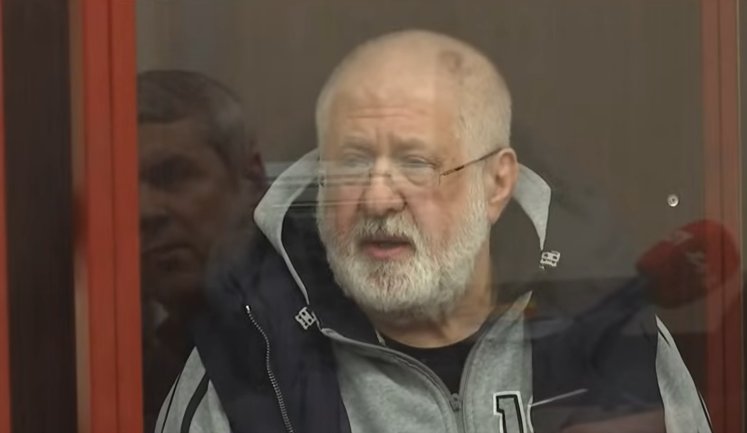
 In court, Kolomoiskyi asked why Shabunin was not defending him as Mahamedrasulov’s father. He replied. VIDEO During the court hearing, oligarch Ihor Kolomoyskyi asked why Vitalii Shabunin, head of the Anti-Corruption Action Centre, was not defending him as Mahamedrosulov's father. 19 403 66 Previously in trend: Kolomoisky’s cases
Prosecutor’s Office has no connection to leak of Shabunin’s intimate photos online, - Prosecutor General’s Office The prosecutor's office stated that it had nothing to do with the dissemination of photos from the phone of Vitalii Shabunin, chairman of the AntAC board. 6 222 45
"SBI and PGO leaked my intimate photos from my phone, which was seized during search, to Telegram channels," - Shabunin Military officer and head of the Anti-Corruption Action Centre Vitalii Shabunin stated that the State Bureau of Investigation and the Office of the Prosecutor General leaked his intimate photos from a phone seized during a search on social media. 18 330 95 Previously in trend: Searches on Shabunin Suspicion against Shabunin
 65-year-old father of NABU detective Mahamedrasulov remains behind bars: Court of Appeal was "mined" before the hearing, - Shabunin The 65-year-old father of NABU detective Sentyabr Mahamedrasulov will remain behind bars. 4 181 10 Previously in trend: Ruslan Mahamedrasulov’s case
 Zelenskyy’s inner circle has been stealing from protection of energy facilities, - Shabunin President Volodymyr Zelenskyy's inner circle was involved in embezzlement while protecting energy facilities. 10 214 104 Previously in trend: Fighting corruption in Ukraine
 Shabunin on Zelenskyy’s accusation that Kudrytskyi failed to ensure energy security: "This is disaster" Vitalii Shabunin, head of the Anti-Corruption Action Center (AntAC), commented on President Volodymyr Zelenskyy’s statement that former Ukrenergo CEO Volodymyr Kudrytskyi "was supposed to ensure energy security but failed to do so." 10 259 46 Previously in trend: Kudrytskyi’s case
 President’s Office using "titushky" against opposition MPs. Yanukovych-era tactics return, says Zhelezniak. VIDEO The government has decided to revive the practices of former President Viktor Yanukovych’s era — bringing back the titushky. These are athletic young men with no clear explanation, showing up at courts and rallies against the opposition. 5 573 30 Previously in trend: ’Titushky’ against opposition to the government
 Shabunin: I would have been notified of suspicion of high treason if they had succeeded to liquidate NABU and SAPO The head of the AntAC board, Vitalii Shabunin, commented on media reports that he was about to be notified of suspicion of high treason. 2 080 18 Previously in trend: The case concerning Shabunin’s official trip Suspicion against Shabunin
 Zelenskyy’s goal is to neutralise NABU and SAPO, or to liquidate cases against his entourage, - Shabunin By attacking anti-corruption bodies, the authorities are trying to neutralise their influence. 2 012 5
 "Fire Point" is owned by Skalyha, involved in organising film shoots, - Shabunin. DOCUMENT 100% of "Fire Point" is owned by Yehor Skalyha, who previously organised film shootings. 21 470 108 Previously in trend: Mindich’s business
 "Zelenskyy’s SSU fabricated suspicion against witness over his testimony — that’s how Russia operates," Shabunin says Law enforcement officers are allegedly pressuring a witness in the case against NABU detective Ruslan Mahamedrasulov, as his testimony completely refutes the charges brought against the investigator. 7 954 71 Previously in trend: Ruslan Mahamedrasulov’s case
Prosecution did not question key witnesses before serving me with suspicion, - Shabunin. VIDEO Vitalii Shabunin, Chairman of the AntAC Board, said during the court hearing that the prosecution had interrogated key witnesses in his case only after being notified of suspicion. 3 876 19 Previously in trend: Suspicion against Shabunin
Pecherskyi District Court extended Shabunin’s preventive measure until 2 November. VIDEO&PHOTOS The Pecherskyi District Court of Kyiv extended the preventive measure against Vitalii Shabunin, chairman of the board of the AntAC, until 2 November. 3 874 15 Previously in trend: The case concerning Shabunin’s official trip Suspicion against Shabunin
 Shabunin on witness testimony in Mahamedrasulov case: It is now clear that Zelenskyy’s security forces have been falsifying case from very beginning The case of NABU detective Ruslan Mahamedrasulov was falsified from the very beginning. 10 733 84 Previously in trend: Pressure on NABU Ruslan Mahamedrasulov’s case
 Zelenskyy’s goals have not changed - he is continuing to destroy NABU and SAPO, - Shabunin Some opinion leaders turn a blind eye to the fact that President Volodymyr Zelenskyy is continuing to destroy the NABU and the SAPO. 5 813 57 Previously in trend: Pressure on NABU
 Pecherskyi District Court seeks to "quietly" extend preventive measure for Mahamedrasulov – Shabunin Today, the Pecherskyi District Court is attempting to extend the pre-trial detention of NABU detective Ruslan Mahamedrasulov. 5 304 19 Previously in trend: Ruslan Mahamedrasulov’s case
 Pecherskyi District Court sets nearly UAH 3 million bail for NABU detective Tiebiekin in violation of law – Shabunin The Pecherskyi District Court has imposed a preventive measure on NABU detective Vitalii Tiebiekin, whom the SBU (Security Service of Ukraine) suspects of making false declarations. 4 334 7 Previously in trend: Pressure on NABU
 Political SSU is lying when it claims that suspicion against General Vitiuk is revenge by NABU, - Shabunin The political wing of the Security Service of Ukraine (SSU) is lying when it says that the suspicion of illegal enrichment of General Vitiuk is revenge by the National Anti-Corruption Bureau (NABU). 9 058 48 Previously in trend: cases of illicit enrichment
 Tomorrow Verkhovna Rada will vote to "protect president’s friends" from punishment for corruption - Shabunin On August 21, the Verkhovna Rada will consider a bill that would protect officials from punishment for corruption. 12 613 78 Previously in trend: Fighting corruption in Ukraine Corruption in Ukraine
 Pechersk District Court extended Shabunin’s preventive measure until 19 October. VIDEO The Pechersk District Court of Kyiv ruled to extend the preventive measure for Vitalii Shabunin, the AntAC's chairman of the board. 4 066 21 Previously in trend: Suspicion against Shabunin
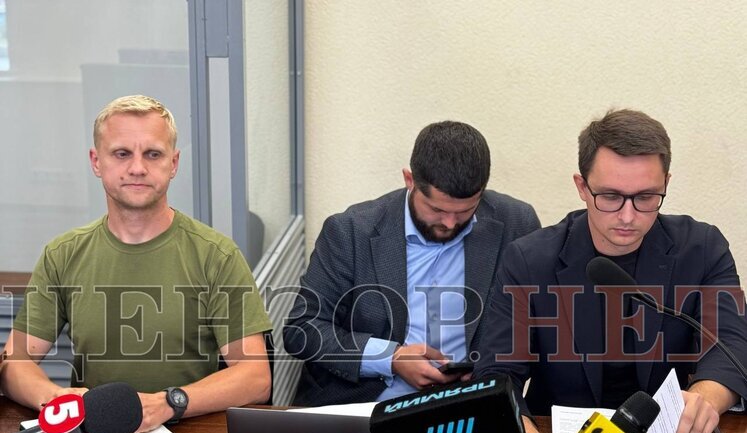
 Pechersk District Court considers extension of preventive measure against Shabunin. PHOTOS Pechersk District Court of Kyiv is considering the extension of the preventive measure for Vitalii Shabunin, the AntAC's chairman of the board. 2 159 14 Previously in trend: Suspicion against Shabunin
Shabunin to be tried for evading military service: SBI completes investigation. PHOTOS The investigation into the case against the AntAC head Vitalii Shabunin has been completed. He is accused of evading military service with the assistance of a military unit commander. 20 299 141 Previously in trend: The case concerning Shabunin’s official trip Suspicion against Shabunin
 SBI changes Shabunin’s suspicion and informs his commander of new one The State Bureau of Investigation has served a new suspicion on the commander of a military unit in Kyiv region and handed over the updated suspicion to Vitalii Shabunin, the AntAC's chairman of the board. 8 014 69 Previously in trend: Suspicion against Shabunin
 Nothing about "illegal" car appeared in updated SBI suspicion - Shabunin Vitalii Shabunin, Chairman of the AntAC Board, said that the updated suspicion from the State Bureau of Investigation still does not contain information about his alleged illegal use of the car. 1 911 10 Previously in trend: Suspicion against Shabunin
Investigators from State Bureau of Investigation will present Shabunin with updated charges - Anti-Corruption Action Centre SBI investigators arrived in Kharkiv region, where Vitalii Shabunin, chairman of the board of the Anti-Corruption Action Centre, serves, to serve him with a suspicion notice. 7 346 77 Previously in trend: Suspicion against Shabunin
After conducting 49 searches at NABU, Zelenskyy’s oprichniki managed only to come up with fictional story about Dagestan, even though it was actually about Uzbekistan, - Shabunin. AUDIO The SSU distributed a transcript of an audio recording of a NABU detective accusing his father of selling cannabis to Dagestan. However, the file clearly shows that it is about Uzbekistan. 81 005 36 Previously in trend: Pressure on NABU Abolition of NABU and SAPO independence
 DPA delivered just 23% of drones from all contracts for Armed Forces of Ukraine this year – Shabunin As of early July, the Ministry of Defense’s Defense Procurement Agency has delivered only 23% of drones contracted for 2025 to the Defense Forces. 18 396 20 Previously in trend: Purchases of the DPA Drone industry
 Zelenskyy’s goals remain unchanged, he will continue offensive against NABU and SAPO – Shabunin President Volodymyr Zelenskyy’s goals regarding the crackdown on anti-corruption agencies remain unchanged. He will continue the offensive against NABU and SAPO. 9 891 49 Previously in trend: Abolition of NABU and SAPO independence
 Former Minister Umerov signed only one contract for interceptor drones, - Shabunin Former Ukrainian Defence Minister Rustem Umerov signed only one contract for interceptor drones. 4 482 30 Previously in trend: Drone industry
Page 1 of 4
more news