ENG




13822 visitors online
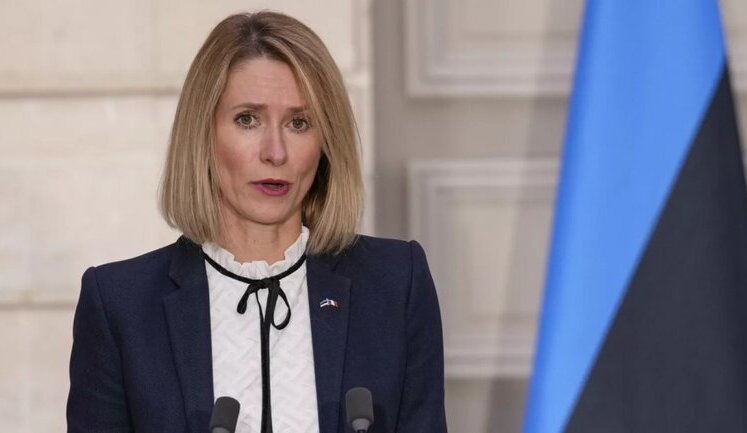
Kaja Kallas, the EU High Representative for Foreign Affairs and Security Policy, has been at the forefront of the European Union's diplomatic and strategic responses to ongoing challenges, most notably the conflict between Ukraine and Russia. Recently, the EU has struggled to reach a consensus on delivering additional Patriot missiles to Ukraine while agreeing on a €6.6 billion aid package. Kallas has been vocal about the necessity of tightening sanctions against Russia, which includes visa restrictions and efforts targeting Russia's commercial fleet. She underscores the need for cohesive European strategies to counteract military threats while advancing Ukraine's EU accession talks, insisting on the importance of European unity in negotiating terms with Russia. Within this context, Kallas emphasizes support for Ukraine through financial, military, and humanitarian aid, reflecting a steadfast commitment to regional security and stability.
What is Kaja Kallas' role in the European Union?
Kaja Kallas serves as the EU High Representative for Foreign Affairs and Security Policy, leading diplomatic efforts and shaping foreign policy strategies. She plays a critical role in addressing conflicts such as the Russian aggression towards Ukraine and in coordinating EU responses like sanctions and diplomatic initiatives to maintain regional stability and security.
How does Kaja Kallas view the EU's role in the Russia-Ukraine conflict?
Kaja Kallas perceives the EU's role as pivotal in supporting Ukraine both militarily and financially while applying strategic pressure on Russia through sanctions and diplomatic measures. She advocates for increasing aid to Ukraine and tightening restrictions on Russia, emphasizing the EU's commitment to its principles and regional security.
How has the EU responded to military threats under Kallas' leadership?
Under Kaja Kallas' leadership, the EU has focused on bolstering its defense capabilities through unified sanctions against Russia, considering further military aid supply to Ukraine, and improving security policies. The establishment of high-level groups to address new military threats exemplifies her strategic approach in ensuring European defense readiness.
What are Kaja Kallas' views on European Union expansion?
Kaja Kallas supports the acceleration of the EU's enlargement process, advocating for the admission of new member states. She views EU expansion as a step towards strengthening the Union's geopolitical position and maintaining the stability of its neighboring regions, particularly in the context of Ukraine's eventual membership.
How does Kaja Kallas address the issue of international sanctions against Russia?
Kaja Kallas has been a strong proponent of international sanctions against Russia, believing in their effectiveness to undermine Russia's military capabilities and economic stability. She emphasizes the need for cohesive and coordinated efforts by EU member states to implement sanctions that can pressure Russia towards complying with international demands and ending its aggressive actions.
What strategy does Kallas propose for EU relations with Russia?
Kaja Kallas proposes a strategy based on clear conditions and unified action, urging EU member states to align their policies before engaging in dialogue with Russia. She warns against independent negotiations without a collectively agreed-upon European position, emphasizing the importance of maintaining EU integrity and leveraging collective influence in diplomatic engagements.
News Kallas Kaja
 US has been pushing Ukraine to capitulate on Putin’s terms for year and half, but Europe has prevented it from surrendering – Kallas EU High Representative for Foreign Affairs and Security Policy Kaja Kallas said that US negotiators have been trying for a year and a half to secure Ukraine’s capitulation on Russian dictator Vladimir Putin’s terms. According to her, support from European countries has enabled Kyiv to reject... 2 517 15 Previously in trend: Ending the war
 EU is trying to convince US to increase pressure on Russia, - Kallas The European Union is trying to persuade the United States to increase pressure on Russia in order to end the war and prevent further acts of aggression. 555 10 Previously in trend: Relations between USA and EU
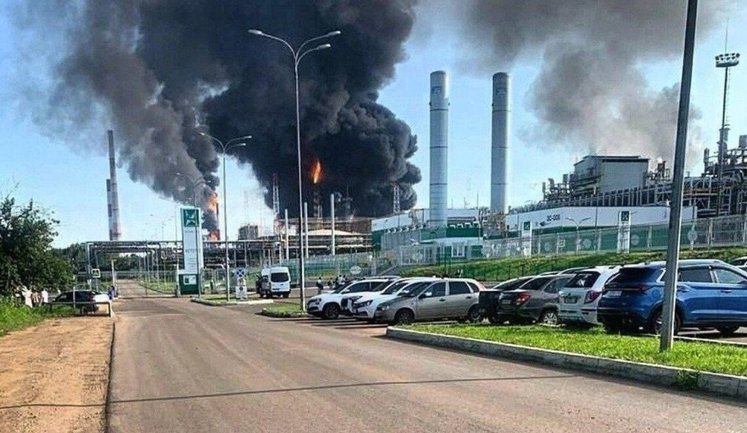
 Ukraine’s strikes on Russian oil refineries are bringing end of war closer, - Kallas EU Foreign Policy Chief Kaja Kallas expressed support for the resumption of Ukrainian strikes on Russian oil refineries. According to her, limiting Russia’s oil revenues will help deprive it of funds for the war. 1 338 15 Previously in trend: Strikes on Russia’s oil refining sector
 EU Council has approved sanctions against 1,600 entities and individuals linked to Russia’s defense-industrial complex, - Kallas Today, October 12, the EU Foreign Affairs Council approved sanctions targeting 1,600 items linked to the Russian military-industrial complex. 649 3 Previously in trend: EU sanctions against Russia
"Energy truce" should not apply only to oil refineries, because that benefits Russians," - Kallas EU High Representative Kaja Kallas believes that an "energy truce" would play into Russia's hands. 1 200 19 Previously in trend: Establishment of energy truce
On 12 October, EU plans to adopt most extensive list of sanctions against Russia since start of war, - Kallas On Monday, 12 October, EU foreign ministers are set to adopt the most extensive package of sanctions against Russia’s war machine since the start of the war. 2 983 15 Previously in trend: EU sanctions against Russia
 EU will not reinstate sanctions against Usmanov and Fridman in near future, - Kallas The EU’s High Representative, Kaja Kallas, has stated that the European Union will not, in the near future, raise the issue of reimposing sanctions on the Russian oligarchs Alisher Usmanov and Mikhail Fridman, who were recently removed from the sanctions lists. 1 390 4 Previously in trend: EU sanctions against Russia
 EU fails to agree on supplying Ukraine with additional batches of Patriot missiles – Kallas The defense ministers of EU member states were unable to make new commitments to provide Ukraine with interceptor missiles. 3 774 32 Previously in trend: Patriot missiles for Ukraine
 EU agrees on terms for allocating €6.6 billion from European Peace Facility for Ukraine EU member states have agreed on the terms for allocating €6.6 billion from the European Peace Facility for Ukraine. 1 584 3 Previously in trend: Aid to Ukraine from Europe
 Elimination of Russian General Grunis, shutdown of two Rosneft oil refineries and criminal liability for fraudulent call centres: top news stories for 16 September. VIDEO Unmanned aerial systems have eliminated Russian Major General Anton Grunis. Russia launched strikes on Sumy, Kropyvnytskyi, and Kyiv, destroying the warehouses of the Olena Zelenska Foundation and the ‘Kvartal 95’ studio. The Verkhovna Rada passed, and the President signed, a law on criminal... 3 036 4
 Kallas on concessions to Russia: It is not only about territories, but also about people who live there EU High Representative for Foreign Affairs Kaja Kallas has said that Ukrainians are the most interested in peace, but Russia currently shows no willingness to end the war and is further intensifying its attacks. 1 612 16 Previously in trend: Peace negotiations Territorial concessions
EU will tighten visa restrictions on Russians and may ban combatants from entering, - Kallas Most European Union member states support tighter visa restrictions for Russian tourists and a ban on entry to the EU for former Russian combatants. 1 102 10 Previously in trend: Sanctions against Russia
 EU has not approved new deliveries of Patriot missiles to Ukraine: no new decisions have been taken, - Kallas The European Union has not yet taken any specific decisions regarding new deliveries of interceptor missiles for the Patriot systems to Ukraine. 5 737 72 Previously in trend: Patriot missiles for Ukraine
 EU is to set up high-level group to respond to new military threats: Ukraine will take part The EU’s High Representative for Foreign Affairs and Security Policy, Kaja Kallas, has announced the establishment of a high-level group on the bloc’s defence capabilities to develop new approaches to responding to military threats. 941 5 Previously in trend: Security of Europe EU defence sector
Strike on Kryvyi Rih is absolute and complete cruelty. EU will strengthen sanctions against Russia, - Kallas The EU High Representative for Foreign Affairs and Security Policy, Kaja Kallas, strongly condemned the Russian strike on Kryvyi Rih, which killed at least 16 people. 1 932 17 Previously in trend: Drone attack on Kryvyi Rih EU sanctions against Russia
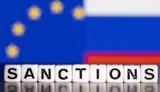 EU imposes new sanctions against Russia after massive attacks on Ukraine On August 7, the European Union approved new sanctions against Russia in response to the recent massive missile and drone strikes on Ukraine. 998 4 Previously in trend: EU sanctions against Russia
Kallas on EU’s 21st package of sanctions against Russia: We are hitting Putin where it "hurts" most The EU's top diplomat, Kaja Kallas, provided details on the EU's 21st package of sanctions against Russia. 2 041 11 Previously in trend: EU sanctions against Russia
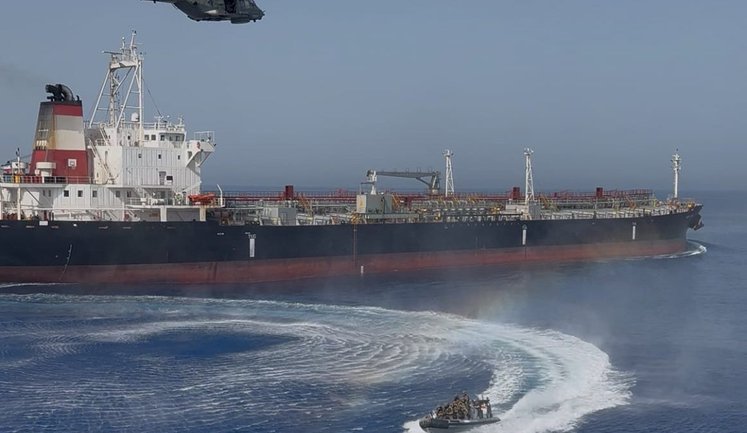
 EU is launching maritime inspections of vessels belonging to Russia’s shadow fleet, - Kallas The European Union will step up pressure on Russia’s so-called shadow fleet by deploying naval missions. 741 0 Previously in trend: Russia’s shadow fleet
 EU has detained tanker that may belong to Russia’s ’shadow fleet’, - Kallas. PHOTO On Monday, 20 July, law enforcement agencies in the European Union detained the tanker MV South Star on suspicion of sailing under a false flag. It may belong to Russia’s ‘shadow fleet’. 992 3 Previously in trend: Russia’s shadow fleet
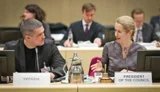 Kallas on change of defense minister: This is Ukraine’s internal affair, but stability is important for European integration Kaja Kallas, the EU’s High Representative for Foreign Affairs and Security Policy, stated that personnel changes in the Ukrainian government are an internal matter for Ukraine, but she emphasized the importance of continuing reforms and maintaining stable cooperation with European partners. 1 373 10 Previously in trend: Fedorov’s resignation
Kallas: 21st sanctions package against Russia not adopted, expected on 15 July EU foreign ministers failed to agree on a new, 21st package of sanctions against Russia on 13 July. 883 6
 EU may expand its sanctions list against Russia to include 250 individuals and companies, but 21st package has not yet been agreed upon, - Kallas European Union countries have not yet reached a final agreement on the 21st package of sanctions against Russia, but as early as Monday they may expand the current sanctions list to include another 250 individuals and entities. 416 2 Previously in trend: EU sanctions against Russia
Massive shelling of Kyiv: Kallas announced new EU sanctions against Russia The EU's top diplomat, Kaja Kallas, said she would propose expanding sanctions against companies that support the Russian military-industrial complex in response to the massive attack on Kyiv. 5 392 47 Previously in trend: EU sanctions against Russia Massive combined attack
 EU has imposed new sanctions against Russia’s defence industry and shadow fleet Today, 15 June, the EU Council adopted a series of restrictive measures to counter Russia’s war of aggression against Ukraine. 1 834 4 Previously in trend: Sanctions against Russia EU sanctions against Russia
EU’s 21st package of sanctions against Russia will target more than 30 companies in drone manufacturing sector, - Kallas The new EU sanctions package against Russia will include more than 30 companies involved in the manufacture of drones. 599 2 Previously in trend: EU sanctions against Russia
 Russia has lost up to $1.5 trillion due to Western sanctions, - Kallas Western sanctions imposed on Russia over its aggression against Ukraine have already cost Moscow up to $1.5 trillion. 700 2 Previously in trend: EU sanctions against Russia
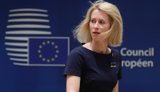 First tranche of loan for Ukraine will be disbursed this month and will be used to purchase drones, - Kallas The first tranche of the €90 billion loan from the EU to Ukraine will be used to purchase drones. 885 9 Previously in trend: Aid to Ukraine from Europe
Ukrainian drone attacks are sowing panic in Kremlin, - Kallas Strikes by Ukrainian drones deep inside Russia are causing concern among Russian leaders. 2 194 13 Previously in trend: Striking Russia
Russia bears full responsibility for actions that threaten security of EU citizens, - Kallas Kaja Kallas, the High Representative of the European Union, issued a statement on behalf of the EU strongly condemning Russia’s violation of EU airspace. 780 4 Previously in trend: shot down of drones in Romania
Europe cannot be mediator, we must push Ukraine and Russia towards direct negotiations, Kallas says Europe should push Ukraine and Russia towards direct negotiations, as it cannot act as a mediator because it defends Europe’s interests and Ukraine’s interests, since Ukraine is also part of Europe. 1 363 21 Previously in trend: Peace negotiations
Kallas’ statement on "evacuation" of US Embassy from Kyiv was misunderstanding – European Commission The statement by EU foreign policy chief Kaja Kallas about the alleged departure of the US Embassy from Kyiv was a mistake and the result of a misunderstanding. The European Union does not plan to close its mission or leave the Ukrainian capital. 2 030 8 Previously in trend: Putin’s threats
If Ukraine is required to limit its army, same should apply to Russia, - Kallas EU High Representative Kaja Kallas believes that concessions must come not only from Ukraine, but also from Russia. 2 268 26 Previously in trend: Peace negotiations
Kallas warns EU against direct talks with Russia without clear conditions EU High Representative Kaja Kallas is warning certain countries against conducting independent negotiations with Russia without a coordinated European position. 785 7 Previously in trend: Peace negotiations
 Reports that U.S. Embassy is leaving Kyiv are untrue, - Ukraine’s Foreign Ministry (updated) EU High Representative Kaja Kallas said that the U.S. Embassy is leaving Kyiv following Russian threats to strike the Ukrainian capital. 8 559 66 Previously in trend: Putin’s threats
 EU to transfer first tranche of €90bn loan to Ukraine in June: it will be allocated for drones The European Union will transfer the first tranche from a new €90 billion loan package to Ukraine in June, with the funds to be used to purchase drones for the Ukrainian army. 745 9 Previously in trend: Aid to Ukraine from Europe Drone industry
EU will officially join Special Tribunal for Russian aggression against Ukraine this week – Kallas The European Union will officially join the Special Tribunal for the crime of aggression by Russia against Ukraine this week. 807 6 Previously in trend: special tribunal for the crimes of the Russian Federation Abduction of children by Russia
All negotiation clusters for Ukraine’s EU accession could be opened by summer – Kallas EU foreign policy chief Kaja Kallas believes that all six negotiation clusters regarding Ukraine's accession to the European Union can be opened by summer. 828 30 Previously in trend: EU Membership
 Council of EU has granted mission in Ukraine greater powers The European Union is expanding the mandate of its advisory mission in Ukraine. The decision was adopted on May 11 during a meeting of the EU Foreign Affairs Council. 471 0 Previously in trend: EU meeting
Schröder is Russian lobbyist, he cannot be mediator between Russia and EU, – Kallas The EU’s High Representative, Kaja Kallas, believes that former German Chancellor Gerhard Schröder cannot act as the EU’s negotiator on ending the war in Ukraine. 3 217 25 Previously in trend: Resumption of EU-Russia dialogue
Negotiations with Russia involving U.S. are going nowhere. EU needs to agree on exactly what to discuss with Putin, - Kallas Ahead of potential EU negotiations with Russia on a peaceful settlement for Ukraine, EU member states must first agree on exactly which issues should be on the agenda. 1 496 14 Previously in trend: Peace negotiations
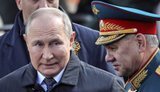 Kallas on parade in Russia without heavy equipment: This says lot about course of war EU High Representative Kaja Kallas commented on Russia's decision to hold a parade on May 9 without heavy military equipment. 14 283 6 Previously in trend: 9th May in Russia
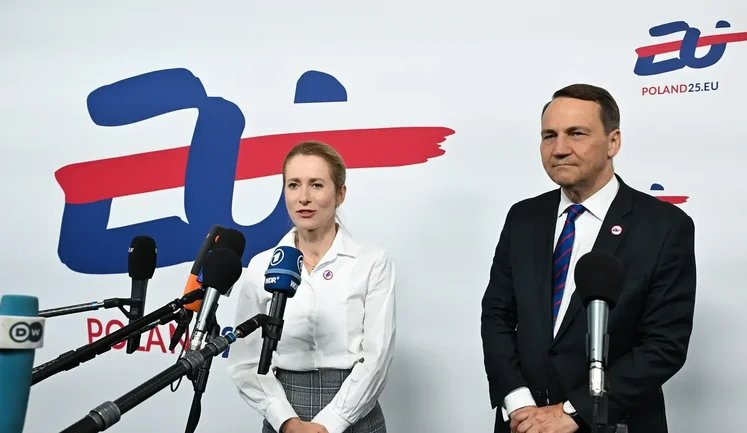
 Sikorski on Kallas: I wish some men had same determination as she does. PHOTO Polish Foreign Minister Radosław Sikorskipraised Kaia Kallas’s uncompromising stance on Russia following her comments regarding the Kremlin’s unwillingness to engage in negotiations. 2 366 11 Previously in trend: negotiations with Russia
Kallas on unblocking loan for Ukraine and sanctions against Russia: Deadlock over The European Union will support Ukraine until Russian dictator Vladimir Putin realizes that the war "has no prospects whatsoever." 1 351 9 Previously in trend: Aid to Ukraine from Europe EU sanctions against Russia
 Kallas’ statement that there is no "good news" is hint to MPs that they should vote in favor of IMF’s package of bills, - "Servant of People" MP Vasylevska-Smahliuk The European Union is waiting for Ukraine to adopt the necessary decisions regarding the IMF’s package of draft laws. 2 814 24 Previously in trend: Aid to Ukraine from Europe
Putin wants more than just Donbas. Peace in Ukraine must be fair, — Kallas The European Union's High Representative for Foreign Affairs and Security Policy, Kaja Kallas, stated that the seizure of Donbas is not Russia's ultimate goal. 1 772 11 Previously in trend: Territorial concessions
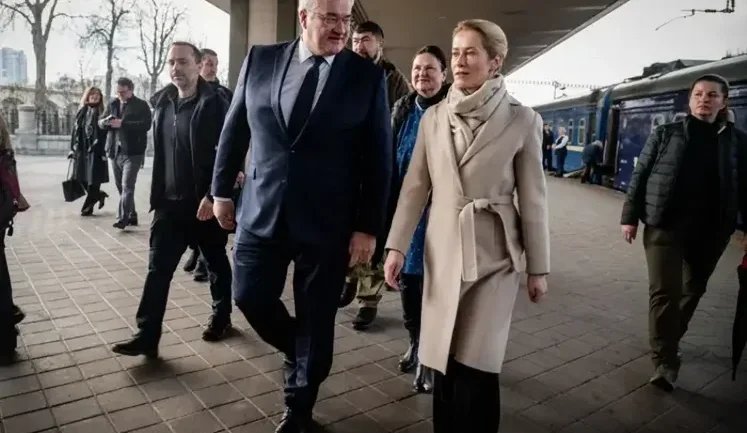
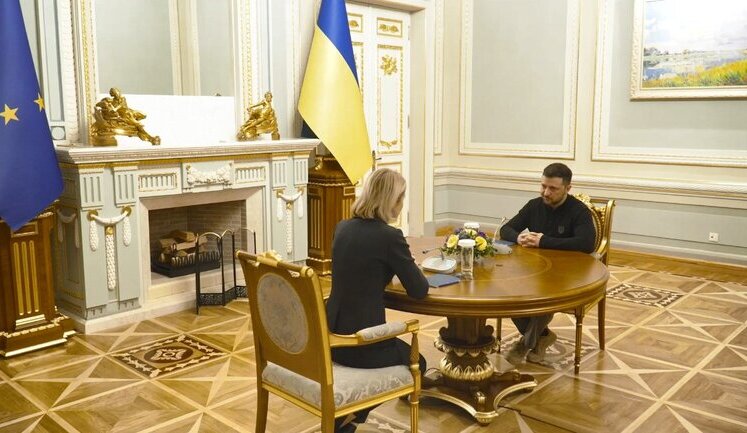
 Zelenskyy met with Kallas: they discussed release of €90 billion loan for Ukraine President Volodymyr Zelenskyy met with the European Union’s High Representative for Foreign Affairs and Security Policy, Kaja Kallas, who arrived in Kyiv on March 31. 1 538 4 Previously in trend: Aid to Ukraine from Europe
 Kallas on 20th sanctions package and €90 billion loan: There is no good news, work is ongoing EU High Representative Kaja Kallas said that the bloc is working on the adoption of the 20th sanctions package against Russia and on providing a €90 billion loan for Ukraine. 4 596 18 Previously in trend: EU sanctions against Russia Orban’s blocking of a loan for Ukraine
EU is discussing complete ban on maritime services for shadow fleet, - Kallas Kaja Kallas, the EU’s High Representative for Foreign Affairs and Security Policy, stated that the European Union should move toward a complete phase-out of Russian oil, even in light of the sharp rise in energy prices. 871 10 Previously in trend: Russia’s shadow fleet
Page 1 of 5
more news