ENG




11795 visitors online
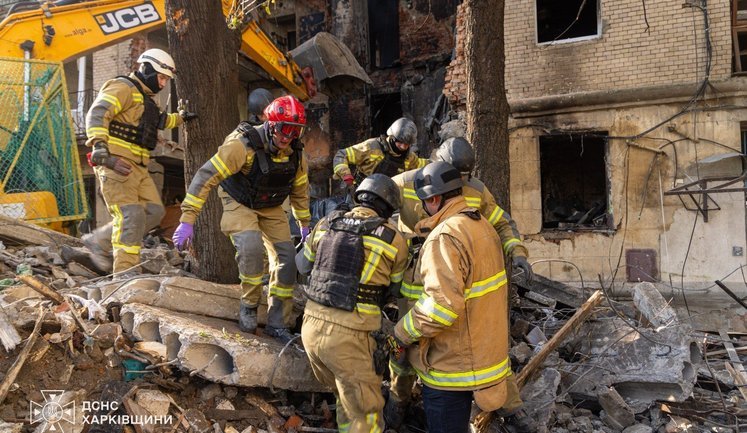
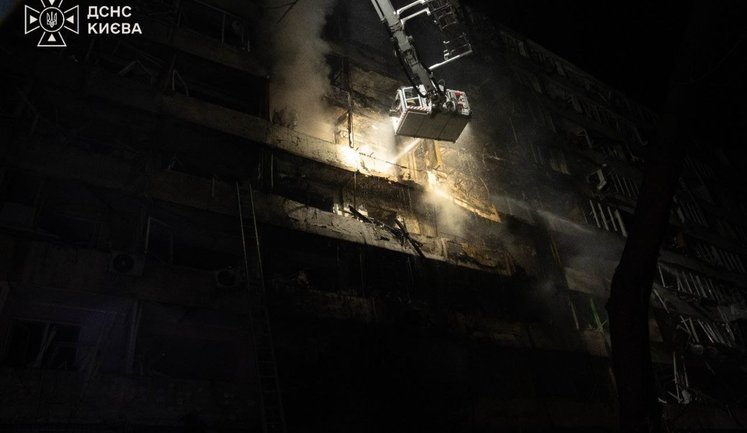
The State Emergency Service of Ukraine (SES) plays a crucial role in responding to the aftermath of Russian attacks. From rescuing citizens in embattled cities like Kyiv and Zaporizhzhia to tackling fires in Kharkiv and beyond, the SES is at the forefront of emergency response. Recent attacks have resulted in fatalities, injuries, and significant infrastructural damage across multiple regions. The SES continues to conduct emergency rescue operations, fire extinguishing efforts, and bomb disposal under challenging conditions. Their resilience and dedication serve as a testament to their commitment to protecting civilians during ongoing assaults.
What are the primary responsibilities of the State Emergency Service of Ukraine?
The State Emergency Service of Ukraine (SES) is primarily responsible for emergency response efforts, including fire extinguishing, rescue operations, and dealing with the consequences of natural and man-made disasters in the country. During conflicts, they also manage bomb disposal and work to protect civilian lives and infrastructure.
How has the State Emergency Service of Ukraine responded to the recent attacks?
The SES has been actively involved in rescue operations, clearing damaged structures, extinguishing fires, and providing assistance to individuals affected by the attacks. They've also been involved in coordinating with international entities like NATO for demining support.
What impact have the Russian attacks had on Ukraine's infrastructure?
Russian attacks have caused extensive damage to residential, commercial, and industrial structures across various regions. Fires, partially collapsed buildings, and disrupted services are among the major impacts necessitating comprehensive emergency responses by the SES.
What challenges do SES personnel face during their operations?
SES personnel encounter numerous risks, particularly the ongoing threat of subsequent attacks during rescue and fire extinguishing operations. They face dangerous conditions while clearing debris and dealing with unexploded ordnance, highlighting the high stakes involved in their work.
How does the public perceive the efforts of the State Emergency Service of Ukraine?
The public generally views the SES with immense respect and gratitude for their bravery and tireless efforts in safeguarding lives and properties. Their quick and coordinated responses play a pivotal role in restoring safety and order during such crises.
What role does international cooperation play in supporting Ukraine's emergency services?
International cooperation, such as NATO's demining assistance, is crucial in enhancing the capacity of the SES to manage disaster and conflict-related situations more effectively, thereby ensuring greater protection for civilians and infrastructure.
How are SES personnel trained to handle emergencies during wartime?
SES personnel undergo extensive training focused on emergency management, including dealing with bomb disposal, fire simulations, and mass casualty scenarios. They are trained to adapt quickly to the changing dynamics of wartime emergencies to mitigate their impact effectively.
News State Emergency Service of Ukraine
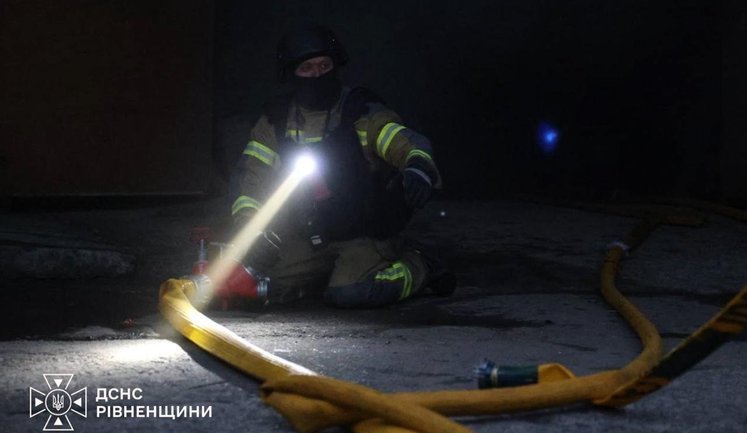
 Enemy shelling of business in Rivne region: two people injured, fire broke out. VIDEO+PHOTOS Two people were injured as a result of enemy shelling at a factory in the Rivne region. 778 0 Previously in trend: Shelling of Rivne region
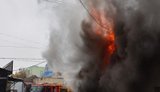 Six killed, 13 injured: rescue operations completed at site of Russian strike in Lutsk. VIDEO+PHOTOS (updated) Six people were killed, and another 13 were injured, including a child, in Russian strikes on Lutsk. 6 378 18 Previously in trend: Shelling of Volyn
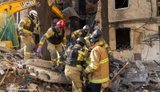 Emergency rescue operations completed at site of Russian missile strike in Kharkiv: 4 killed, 41 injured. VIDEO+PHOTOS Emergency rescue operations have been completed at the site of a Russian missile strike on a four-storey residential building in the Kholodnohirskyi district of Kharkiv. 817 1 Previously in trend: Shelling of Kharkiv
 Consequences of Russian attack on Kyiv: 5 killed, over 30 injured, strikes in several districts (updated). VIDEO+PHOTOS Three people have been killed as a result of Russian shelling of Kyiv; clean-up operations are ongoing in three districts of the capital. 6 760 14 Previously in trend: Missile and drone attack on Kyiv Massive combined attack
 Two people injured, fires break out: aftermath of Russian attack on Hlukhiv. PHOTOS Russian forces struck Hlukhiv in the Sumy region on October 12. Preliminary reports indicate that two people were injured. Private residential properties and a non-residential building were damaged, and fires broke out. 447 0 Previously in trend: UAVs attack on the Sumy region
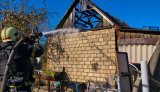 Russian drones strike Kharkiv region: woman killed in Lozova, 7 people, including child, injured. PHOTOS Russian forces attacked a residential area of private houses in Lozova, Kharkiv region, with drones on October 12. A woman was killed and seven other people were injured, including a child. 465 0 Previously in trend: Drone attack on the Kharkiv region
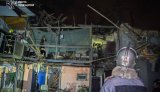 Enemy struck Odesa: flats in residential block destroyed. VIDEO+PHOTOS Russian forces have once again attacked Odesa. This was reported by Censor.NET, citing the State Emergency Service press centre. 2 080 3 Previously in trend: UAV attack on Odesa
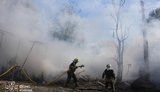 Consequences of Russian missile strike on Kyiv: 5 injured, one person in critical condition. PHOTOS Five people have been injured as a result of a Russian attack in the Obolon district of Kyiv; one of them is in serious condition. Medical staff are providing the necessary treatment. 5 048 12 Previously in trend: Missile and drone attack on Kyiv
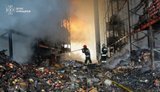 Logistics facility in Kyiv region was attacked by Russia: fire broke out. VIDEO+PHOTOS A fire broke out at one of the logistics facilities in the Bucha district of the Kyiv region following an attack by Russian UAVs. 2 636 0 Previously in trend: Shelling of the Kyiv region
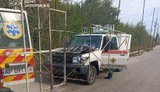 Enemy drone attacked SES bomb disposal vehicle in Zaporizhzhia: rescue workers managed to jump out before strike. PHOTO In Zaporizhzhia, a Russian drone carried out a targeted attack on a vehicle belonging to the State Emergency Service’s bomb disposal unit, which was on its way to carry out a mission. The bomb disposal experts managed to jump out of the vehicle a moment before the strike. 997 1 Previously in trend: Shelling of Zaporizhzhia
 Consequences of Russia’s attack on Kyiv: two dead, fires broke out. PHOTOS A Russian attack on Kyiv on the night of 7 October claimed the lives of two people. Fires broke out in two districts. 7 330 11 Previously in trend: Shelling of Kyiv Massive combined attack
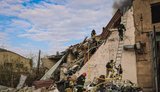 Rescuers complete operations after strikes with three KABs on Kharkiv: 6 people killed Rescuers and municipal services have completed emergency rescue operations at the sites hit by Russian guided aerial bombs (KABs) in the Slobidskyi district of Kharkiv. 992 2 Previously in trend: Kharkiv region
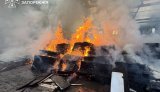 One killed and two injured in warehouse fire: Russians attack Zaporizhzhia region. PHOTOS A Russian UAV attacked a settlement in the Zaporizhzhia region. Three people were injured in the strike. A warehouse also caught fire. 778 3 Previously in trend: Drone attacks on Zaporizhzhia region
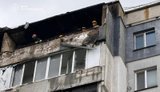 Aftermath of Russian strike on high-rise building in Berdychiv: one person injured. VIDEO+PHOTOS One person has been reported injured following a Russian attack on Berdychiv in the Zhytomyr region. 1 592 1 Previously in trend: Shelling of Zhytomyr region
 Rescuer Yevhen Konovalov was killed by Russian FPV drone strike on Marhanets, - State Emergency Service. PHOTO A firefighter and rescue worker from the State Emergency Service of Ukraine in the Dnipropetrovsk region, Civil Protection Sergeant Yevhen Konovalov, has died. 1 238 3 Previously in trend: losses of Ukraine
 Rescuers ’treated’ with ordinary mud: scam worth nearly one million hryvnias at State Emergency Service’s rehabilitation centre has been exposed – State Bureau of Investigation. PHOTOS Misappropriation of public funds has been uncovered in connection with the procurement of therapeutic mud for the ‘Odesa’ Medical Rehabilitation Centre of the State Emergency Service of Ukraine. 2 759 9 Previously in trend: Embezzlement of budget funds
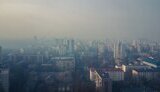 Kyiv blanketed in thick fog due to aftermath of shelling: air quality has deteriorated (updated). VIDEO There is thick fog in Kyiv. This is the result of previous shelling. 4 179 25
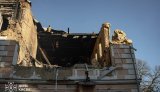 National Academy of Sciences of Ukraine building after Russian strike: Rescuers dismantle damaged structures. PHOTOS In Kyiv’s Shevchenkivskyi district, rescuers are carrying out emergency repair work at a National Academy of Sciences of Ukraine building damaged by a Russian strike. 3 166 2 Previously in trend: Russian strike on the National Academy of Sciences of Ukraine
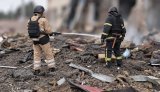 Russian forces struck Zhytomyr Oblast; administrative buildings were damaged and one person was injured. PHOTOS Russian occupiers have attacked the Korosten district in the Zhytomyr region. 1 755 0 Previously in trend: Shelling of Zhytomyr region
 Houses and cars damaged in Kyiv region following Russian attack: fires have been extinguished. PHOTO In the Brovary district of the Kyiv region, rescue workers are dealing with the aftermath of Russian attacks. A fire broke out in a warehouse in the evening, and the roof of an outbuilding caught fire during the night. 2 376 0 Previously in trend: Shelling of the Kyiv region
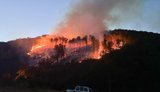 Rescue workers, foresters and local residents have been fighting large-scale forest fire in Zakarpattia for second day. PHOTO In the Mukachevo district of Zakarpattia, efforts are continuing for a second day to bring under control a large-scale forest fire that has engulfed 7 hectares. The fire spread rapidly due to the mountainous terrain and strong gusts of wind. 1 754 8 Previously in trend: Chornobyl fire
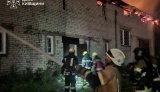 Russian attacks in Kyiv region: fires broke out in two districts. PHOTOS In the Kyiv region, rescue workers have dealt with the aftermath of enemy attacks. Fires broke out in the Bucha and Fastiv districts. 2 079 2 Previously in trend: Shelling of the Kyiv region
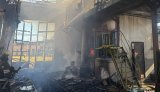 Three injured and fire at factory: Russia attacked Sloviansk. PHOTOS Russian troops carried out an air strike on Sloviansk in the Donetsk region. As a result of the attack, three people were injured and a fire broke out on the roof of a building on the factory premises. 1 428 1 Previously in trend: Shelling of Sloviansk
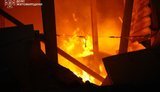 Consequences of Russian strike on Zhytomyr region: warehouse and production building were on fire; there have been fatalities. PHOTOS Russian occupiers have attacked the Korosten district in the Zhytomyr region, resulting in fatalities and injuries. 3 753 6 Previously in trend: Shelling of Zhytomyr region
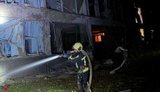 Higher education institution building damaged in Kyiv’s Holosiivskyi district: fire breaks out. PHOTOS A building belonging to a higher education institution in Kyiv’s Holosiivskyi district was damaged in a Russian attack. 3 542 0 Previously in trend: UAV attack on Kyiv
 Russia attacked Zaporizhzhia with drones: one man killed, four women injured. PHOTOS On the morning of 15 September, Russian forces attacked Zaporizhzhia with drones. A man was killed and four women were injured when a drone struck an infrastructure facility. 859 1 Previously in trend: UAV attack on Zaporizhzhia
 Plotting terrorist attacks, arson and assassination attempt: former deputy head of State Emergency Service among suspects, - SSU. VIDEO&PHOTOS A group planning terrorist attacks, arson and attempts on people’s lives in Ukraine has been uncovered. Among the suspects is a former deputy head of the State Emergency Service. 5 575 26 Previously in trend: Terrorist attacks in Ukraine Detention of arsonists attempted murder
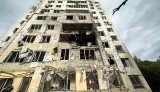 Massive attack on Odesa region: rescue services have dealt with aftermath; 24 people were injured, including two children. VIDEO+PHOTOS In the Odesa region, rescue workers have dealt with the aftermath of yet another large-scale Russian attack. 2 899 4 Previously in trend: Shelling of Odessa region
 Occupying forces attacked fire and rescue station in Kramatorsk: four firefighters injured. PHOTOS The enemy has once again carried out a targeted attack on the fire and rescue station in Kramatorsk, Donetsk region, resulting in injuries. 1 351 2 Previously in trend: Shelling of Kramatorsk Attack on rescuers
 Clean-up operations following enemy attack are continuing in Kyiv region. PHOTOS On the evening of 10 September, Russian invaders attacked the Bucha district in the Kyiv region. The strike caused a fire in some warehouse buildings. 2 972 1 Previously in trend: Drone attack on Kyiv region
 Drones attacked Kyiv overnight: fires broke out in two districts. PHOTOS On the night of 9 September, the enemy once again attacked Kyiv with strike drones. 5 672 5 Previously in trend: UAVs attack on Kyiv
 Night-time attack on Kyiv: firefighting operations continue in two districts. PHOTOS Rescue workers are continuing to deal with the aftermath of the enemy shelling. Firefighters are currently extinguishing fires in non-residential buildings at several locations in the Holosiivskyi and Podilskyi districts. 5 062 2 Previously in trend: Shelling of Kyiv
 Rescuers battle warehouse fire in Kyiv region under threat of follow-up strikes. VIDEO+PHOTOS Rescuers continue battling a fire that broke out in the Boryspil district following a Russian strike. 2 237 10 Previously in trend: Shelling of the Kyiv region
 In Sumy region, rescuer Yevhen Abramchuk was killed whilst carrying out his duties. PHOTO Yevhen Abramchuk, squad commander of the 18th Fire and Rescue Unit of the 2nd Fire and Rescue Brigade of the Main Directorate of the State Emergency Service of Ukraine in the Sumy region, died whilst on duty in the Hlukhiv community in the Sumy region. He was 43 years old. 1 268 2 Previously in trend: losses of Ukraine
 Consequences of Russian Federation’s massive attack on Kyiv region: four people killed in Boryspil; house, business premises and service station were damaged (updated). PHOTOS Four people were killed and 13 injured as a result of an enemy attack on the Kyiv region. 4 623 8 Previously in trend: Shelling of the Kyiv region
 Kyiv under attack from Russia for fourth day running: emergency services extinguished fire covering an area of 3,000 square metres. VIDEO+PHOTOS Russia has been attacking Kyiv for the fourth day running: a major fire has broken out in the Holosiivskyi district 3 961 50 Previously in trend: UAV attack on Kyiv Shelling of Kyiv
 Consequences of Russian Federation’s evening attacks on Kyiv: at least three people injured, residential high-rise building ablaze. PHOTOS At least three people were injured as a result of the Russian Federation’s evening attack on Kyiv. 3 849 3 Previously in trend: Shahed attack on Kyiv
 Non-residential building is on fire in Holosiivskyi district of Kyiv following attack by Russian Federation. PHOTOS In the early hours of 30 August 2026, Russian forces once again attacked Kyiv with strike drones. 2 736 1 Previously in trend: Drone attack on Kyiv
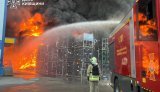 Another Russian attack on Kyiv region: rescue services are extinguishing large-scale fires at logistics facilities. VIDEO+PHOTOS Rescue workers are dealing with the aftermath of a second Russian attack on the Kyiv region. 4 027 9 Previously in trend: UAV attack on Kyiv region
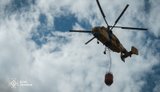 Russia strikes Kyiv region in waves: 28 more attacks recorded after overnight strike, rescue workers extinguish fires. PHOTOS Following the overnight attack, Russian troops carried out another 28 strikes on the Kyiv region during the day. Air raid alerts were sounded 11 times in the region and lasted for more than 14 hours. Rescue workers dealing with the aftermath of the attacks have been forced to suspend their work... 2 484 10 Previously in trend: Shelling of the Kyiv region
 Tragedy at mine in Kryvyi Rih area: Three miners killed during underground work. PHOTO Three miners were killed in the Kryvyi Rih area while carrying out underground work. 2 715 3 Previously in trend: Rescue operations by SES
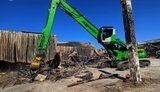 Emergency rescue operations have been completed at site of the Russian strike on shopping centre in Kryvyi Rih: 16 dead, 136 injured. PHOTOS In Kryvyi Rih, Dnipropetrovsk Oblast, emergency and rescue operations have been completed at the site of the strike on the shopping centre. 1 632 5 Previously in trend: Shahed attack on Kryvyi Rih
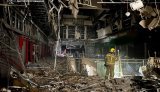 Russian forces shelled shopping and entertainment centre in Dnipropetrovsk region: three people were injured in region. PHOTOS On the night of 25 August, following an attack in Slobozhanske, Dnipro District, fires broke out on the grounds adjacent to the shopping centre and inside the building. 1 831 1 Previously in trend: Shelling of the Dnipropetrovsk region
 Consequences of enemy attack on Kyiv: high-rise block has been damaged. PHOTOS On the night of 25 August, a high-rise residential block was damaged in the Holosiivskyi district of Kyiv as a result of Russian shelling. 3 833 0 Previously in trend: Shelling of Kyiv
 SES sapper Yurii Onatskyi dies in line of duty in Kharkiv region. PHOTO Driver-sapper and Chief Master Sergeant Yurii Onatskyi of the State Emergency Service (SES) of Ukraine’s Interregional Centre for Humanitarian Demining and Rapid Response died in the line of duty in the Kharkiv region. 1 942 6 Previously in trend: losses of Ukraine
 Emergency repair work has been completed in Solomianskyi district of Kyiv: 16 people were killed, 42 were injured and 12 were rescued, - SES. PHOTOS Emergency repair work in the Solomianskyi district of Kyiv has been completed. Meanwhile, rescue workers plan to resume work at the site this morning. 6 289 15 Previously in trend: Shelling of Kyiv
 Russia’s attack on Kyiv: aftermath of shelling in Holosiivskyi district cleared – SES. VIDEO+PHOTOS Emergency workers dealt with the aftermath of the shelling in Kyiv’s Holosiivskyi district following the second Russian attack on the capital within 24 hours. 2 379 1 Previously in trend: UAV attack on Kyiv
 Rescue operations have been completed following Russian Federation’s missile attack on Pechenihy. PHOTOS Emergency and rescue operations have been completed at the site of the Russian missile strike in Pechenihy, in the Kharkiv region. 3 026 2 Previously in trend: Shelling of Kharkiv region
Page 1 of 24
more news